

- What Is A Neck Lift?
- What Is A Lower Facelift?
- How The Neck, Jawline And Lower Face Are Connected
- Key Differences Between Neck Lift And Lower Facelift Surgery
- When A Neck Lift May Be Considered
- When A Lower Facelift May Be Considered
- When Combined Surgery May Be Discussed
- How Platysma Bands Affect Planning
- How Jowls And Jawline Changes Affect Planning
- How Under-Chin Fullness Is Assessed
- Incisions And Scar Placement
- Recovery Differences Between Neck Lift And Lower Facelift
- How Dr Michael Kernohan Helps Patients Compare Options
- Questions To Ask Before Choosing A Procedure
- What Risks Should Patients Understand?
- Facelift Before and After Photos
- How Should Patients Prepare For Recovery?
- What Alternatives May Be Considered?
- Who May Be Suitable For A Neck Lift?
- Who May Be Suitable For A Lower Facelift?
- Who May Need Combined Planning Or Another Option?
- Are Costs Different For Neck Lift And Lower Facelift Surgery?
- Neck Lift vs Lower Facelift Summary
- Take the Quiz
- Discuss Neck Lift And Lower Facelift Options With Dr Michael Kernohan
- FAQs About Neck Lift vs Lower Facelift
- Download Dr Kernohan’s Face and Neck Lift Surgery Guide
- Further Reading
Dr Michael Kernohan is a Specialist Plastic & Reconstructive Surgeon in Sydney. A neck lift and lower facelift treat related but different areas, and the right option depends on whether the main concern is the neck, jawline, lower face or a combination.
A neck lift is usually focused on the neck, under-chin area and platysma bands. A lower facelift is usually focused on the lower face and jawline, often with connected neck planning.
Many patients do not fit neatly into one category. Lower-face changes and neck changes often occur together, which is why combined planning may be discussed during consultation.
Dr Michael Kernohan assesses facial structure, skin quality, tissue laxity, neck anatomy, platysma bands, under-chin fullness, medical history and recovery needs before discussing neck lift, lower facelift, combined surgery, another option or no surgery.
Key points:
- A neck lift focuses mainly on the neck and under-chin area.
- A lower facelift focuses mainly on the lower face and jawline.
- Platysma bands may be treated during neck lift planning.
- Jowls and jawline changes are usually lower facelift concerns.
- Under-chin fullness may be superficial, muscular, deep or gland-related.
- Some patients need combined lower facelift and neck lift planning.
- Skin quality, anatomy and scar placement affect procedure choice.
- Recovery may differ depending on the extent of surgery.
- Non-surgical treatments may suit selected mild concerns.
- Dr Michael Kernohan explains which option may fit the patient’s anatomy and goals during consultation.
The aim is not to choose the procedure with the most appealing name. The aim is to identify which structures are contributing to the concern and whether surgery is appropriate.
What Is A Neck Lift?
A neck lift is a surgical procedure focused on the neck and under-chin area. It may be discussed when loose neck skin, platysma bands or selected under-chin fullness are the main concerns.
- A neck lift focuses on the neck rather than the whole face.
- It may address loose neck skin in selected patients.
- It may include work on platysma bands.
- It may involve under-chin or behind-ear incision planning.
- It does not primarily treat lower-face heaviness or jowls.
Some neck concerns come from deeper anatomy, such as muscle position, gland prominence, deeper fat or skeletal support. Dr Michael Kernohan assesses the neck in layers before discussing whether a neck lift is likely to address the main concern.
What Is A Lower Facelift?
A lower facelift is a surgical procedure focused on the lower face and jawline. It may be discussed when jowls, jawline laxity or lower-face tissue descent are the main concerns.
- A lower facelift focuses on the lower face and jawline.
- It may be considered when jowls are a key concern.
- It may include connected neck planning in selected patients.
- It is different from treatments that only target skin texture.
- Incision planning often involves the area around the ear and hairline.
A lower facelift does not mean every part of the face is being treated. Dr Michael Kernohan explains whether the lower face is the main concern and whether the neck should also be considered as part of the plan.
How The Neck, Jawline And Lower Face Are Connected
The neck, jawline and lower face are closely connected. This is why the choice between a neck lift and lower facelift is not always a simple either-or decision.

- Jawline changes can affect how the neck appears.
- Neck laxity can make the jawline look less defined.
- Platysma movement can affect both the lower face and neck.
- Skin quality can influence both areas.
- Tissue movement in one area may affect the appearance of another.
A patient who notices neck changes may also have lower-face changes contributing to the concern. Dr Michael Kernohan assesses the lower face, jawline and neck together so the surgical discussion is based on anatomy rather than procedure names alone.
Key Differences Between Neck Lift And Lower Facelift Surgery
The main difference is the area of focus. A neck lift is usually centred on the neck and under-chin area, while a lower facelift is usually centred on the lower face and jawline.
- Neck lift focus: neck skin, under-chin area and platysma bands.
- Lower facelift focus: lower face, jowls and jawline.
- Neck lift incisions may include under-chin access in selected patients.
- Lower facelift incisions are commonly planned around the ear and hairline.
- Combined planning may be discussed when both areas are involved.
Neither procedure should be chosen simply because it sounds less involved. The right operation depends on which tissues need to be addressed and whether the patient is medically suitable for surgery.
When A Neck Lift May Be Considered
A neck lift may be considered when the main concern sits in the neck rather than the lower face. This may include loose neck skin, platysma bands or under-chin fullness that matches neck lift planning.
- The main concern is the neck.
- Platysma bands are visible or bothersome.
- Under-chin fullness is part of the concern.
- Lower-face jowls are mild or not the main issue.
- The patient understands scars, risks and recovery.
A neck lift may not be enough if the patient’s main concern is jowling or lower-face tissue descent. Dr Michael Kernohan explains whether a neck-focused plan is likely to match the patient’s anatomy and expectations.
When A Lower Facelift May Be Considered
A lower facelift may be considered when the main concern involves the lower face or jawline. This often includes jowls, lower-face tissue descent or a jawline that has changed with time.
- The main concern is jowls.
- Jawline laxity is a key concern.
- Lower-face tissue descent is present.
- Neck changes are secondary or connected.
- The patient wants one plan for the lower face and jawline.
A lower facelift may still include discussion about the neck. Dr Michael Kernohan considers whether treating the lower face alone would leave connected neck concerns unaddressed.
When Combined Surgery May Be Discussed
Combined lower facelift and neck lift planning may be discussed when the lower face and neck are both contributing to the concern. This is common because the jawline and neck often change together.
- Jowls and neck laxity are both present.
- Lower-face and neck tissues appear connected.
- A neck-only procedure may not address jawline concerns.
- A lower-face procedure alone may not address neck concerns.
- Combined surgery may involve more extensive recovery planning.
Combined surgery is not automatically needed for every patient. Dr Michael Kernohan discusses whether the added extent of surgery is appropriate based on anatomy, health, recovery needs and expected benefit.
How Platysma Bands Affect Planning
Platysma bands are vertical bands in the neck related to the platysma muscle. They may become more visible with ageing, movement, skin changes or muscle activity.
- Platysma bands are neck concerns, not jowl concerns.
- They may be more visible when speaking or tensing the neck.
- Neck lift planning may include platysma work in selected patients.
- Some bands may persist or recur over time.
- Treatment choice depends on anatomy and expectations.
Platysma bands should not be assessed in isolation. Dr Michael Kernohan also considers skin laxity, under-chin fullness, jawline changes and deeper neck structures before discussing a surgical plan.
How Jowls And Jawline Changes Affect Planning
Jowls are usually lower-face and jawline concerns. They may make the lower face and neck appear connected, but they are not treated the same way as isolated neck bands.
- Jowls relate to tissue changes along the jawline.
- Jawline laxity can affect the neck outline.
- Neck-only surgery may not address jowls adequately.
- Lower facelift planning may address jawline concerns in selected patients.
- Skin quality and tissue descent affect the surgical plan.
Patients sometimes ask for a neck lift when the main concern is actually the jawline. Dr Michael Kernohan assesses both regions so the recommended option matches the patient’s visible concern and underlying anatomy.
How Under-Chin Fullness Is Assessed
Under-chin fullness is not always caused by the same tissue layer. It may come from superficial fat, deeper fat, platysma position, gland prominence, skin laxity or the structure of the chin and jaw.
- Superficial fat sits closer to the skin.
- Subplatysmal fat sits deeper, beneath the platysma muscle.
- Platysma bands can contribute to central neck changes.
- Submandibular gland prominence may affect the area under the jaw.
- Chin, jaw and hyoid position can influence the neck outline.
This is why under-chin fullness should be assessed in person where possible. Dr Michael Kernohan examines the neck in layers before discussing whether neck lift surgery, liposuction, deeper neck work, combined surgery, another pathway or no surgery may be appropriate.
Incisions And Scar Placement
Both neck lift and lower facelift surgery involve permanent scars. Neck lift incision placement may include behind-ear or under-chin access, while facelift incision planning commonly involves the ear and hairline.
- Neck lift incisions may include behind-ear planning.
- An under-chin incision may be used in selected neck lift plans.
- Lower facelift incisions commonly involve the area around the ear.
- Hairline, ear shape and skin quality affect scar placement.
- Scars mature over months and vary between patients.
Scar planning should be discussed before surgery so patients understand where incision lines may sit. Dr Michael Kernohan explains likely scar placement as part of informed consent and surgical planning.
Recovery Differences Between Neck Lift And Lower Facelift
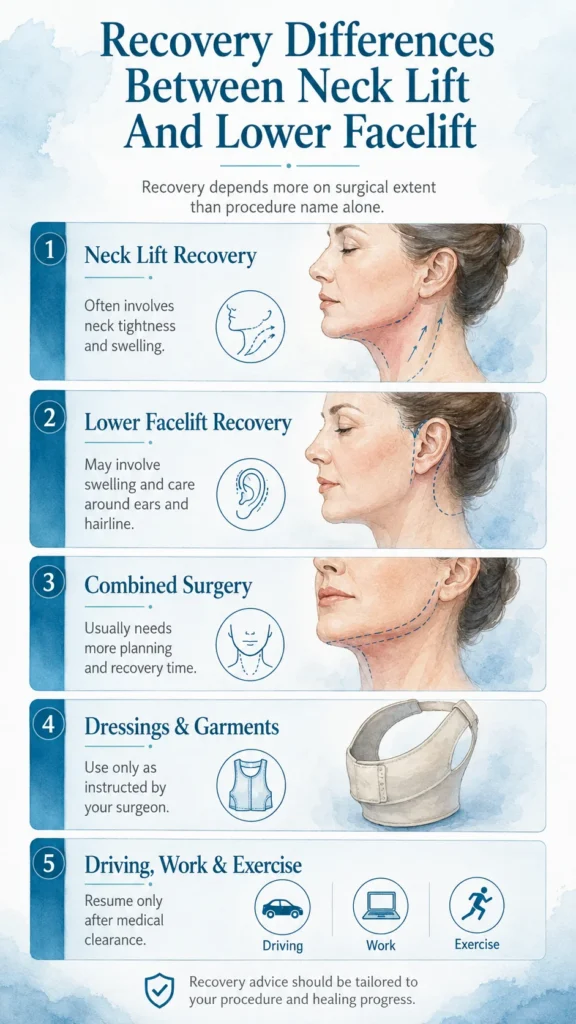
Recovery depends on the extent of surgery rather than the procedure name alone. A limited neck-focused procedure may recover differently from combined lower facelift and neck lift surgery.
- Neck lift recovery may involve neck tightness and swelling.
- Lower facelift recovery may involve swelling and incision care around the ears and hairline.
- Combined surgery may involve more recovery planning.
- Dressings or garments should be used only as instructed.
- Driving, work and exercise should wait until clearance is given.
Patients should not compare their timeline with someone else’s surgery. Dr Michael Kernohan provides recovery advice based on the operation performed, wound healing, swelling, pain levels and follow-up findings.
How Dr Michael Kernohan Helps Patients Compare Options
Dr Michael Kernohan helps patients compare options by assessing the lower face, jawline and neck together. The consultation focuses on what is causing the concern rather than choosing a procedure name first.
- Lower-face tissue position is assessed.
- Jowls and jawline changes are reviewed.
- Neck skin, platysma bands and under-chin fullness are examined.
- Skin quality and scar placement are discussed.
- Medical history, medicines and nicotine use are reviewed.
The discussion may include neck lift, lower facelift, combined surgery, non-surgical care, delayed surgery or no surgery. The aim is to give patients clear information about suitability, risks, recovery and alternatives.
Questions To Ask Before Choosing A Procedure
Patients should ask practical questions before choosing between a neck lift and lower facelift. Clear questions can help patients understand whether their main concern is neck-led, lower-face-led or combined.
- Is my main concern the neck, jawline or lower face?
- Would a neck lift address my main concern?
- Would a lower facelift address my main concern?
- Do I need combined lower facelift and neck lift planning?
- Where would scars be placed?
- Will I need an under-chin incision?
- What risks apply to me?
- What recovery should I plan for?
Patients should also ask about alternatives, including non-surgical options or delaying surgery. Dr Michael Kernohan encourages patients to understand the reasoning behind any recommended plan before deciding.
What Risks Should Patients Understand?
Both procedures involve surgical risks. Patients considering lower-face surgery can also read more about facelift risks and complications. Risks vary depending on the procedure, anatomy, health, medicines, nicotine use and recovery factors.
- Bleeding or haematoma.
- Infection.
- Delayed wound healing.
- Scarring, including widened, raised or thickened scars.
- Altered sensation or numbness.
- Facial nerve irritation or weakness.
- Asymmetry.
- Hairline, ear or earlobe contour changes.
Other risks may include skin healing concerns, fluid collection, anaesthetic risks, blood clot risks or the need for further treatment in selected cases. Dr Michael Kernohan explains which risks are most relevant to the individual patient and procedure plan.
Facelift Before and After Photos
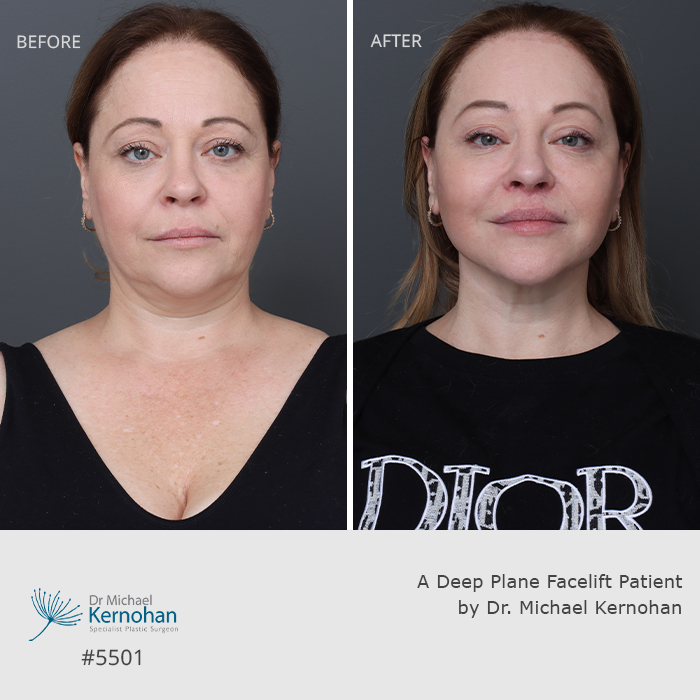
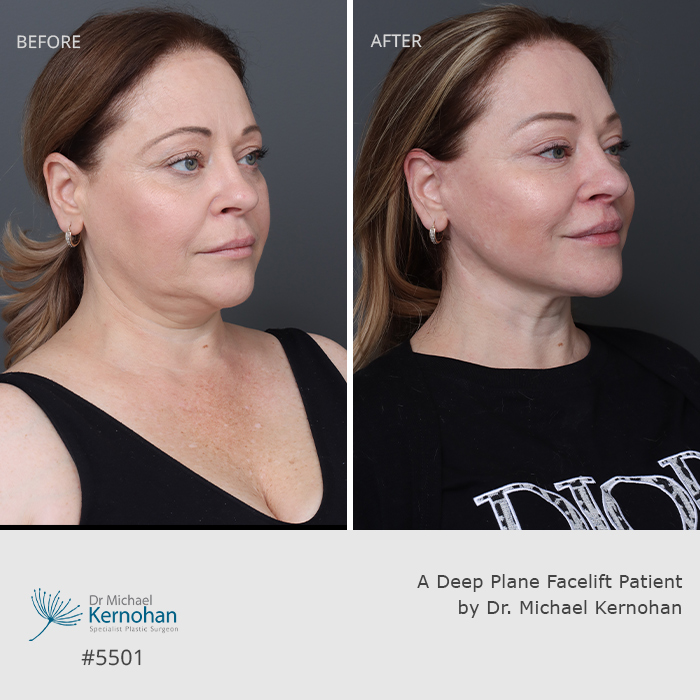
Disclaimer: All surgical or invasive procedures come with inherent risks, and results can vary widely between individuals due to factors like lifestyle, anatomy, overall health, weight, and nutrition. We encourage you to conduct thorough research and consider seeking a second opinion from a qualified healthcare provider.
How Should Patients Prepare For Recovery?
Recovery preparation should start before surgery. Patients should plan for swelling, bruising, tightness, incision care, support at home and time away from work or daily duties.
- Arrange transport home after surgery.
- Have a responsible adult available during early recovery.
- Follow incision care instructions.
- Use dressings or garments only as advised.
- Avoid strenuous activity until cleared.
- Attend follow-up appointments.
- Ask when hair washing, hair colouring, skincare and makeup may resume.
Patients should report sudden swelling, increasing pain, bleeding, fever, discharge, chest pain or shortness of breath. Early contact with the clinic can help determine whether a symptom needs review.
What Alternatives May Be Considered?
Alternatives depend on the concern, anatomy and whether surgery is appropriate. Some patients may be better suited to no surgery, delayed surgery, staged surgery or a less extensive option.
- No surgery.
- Delaying surgery.
- Skin care and sun protection.
- Non-surgical treatments for selected mild concerns.
- Neck liposuction in selected patients with superficial fat and suitable skin quality.
- Neck lift alone.
- Lower facelift alone.
- Combined lower facelift and neck lift.
- Staged surgery.
A second opinion may be appropriate if the patient is uncertain. Dr Michael Kernohan discusses alternatives as part of informed consent so patients can make a considered decision.
Who May Be Suitable For A Neck Lift?
A neck lift may be suitable for patients whose main concern is the neck rather than the lower face. Suitability depends on anatomy, skin quality, medical history and whether the concern matches what neck lift surgery may reasonably address.
- The main concern is neck skin laxity.
- Platysma bands are present.
- Under-chin fullness matches neck lift planning.
- Lower-face jowls are mild or not the main issue.
- The patient is medically suitable for surgery and anaesthesia.
- The patient understands scars, risks and recovery.
A neck lift is not the right option for every neck concern. Dr Michael Kernohan assesses whether the issue is superficial, muscular, deeper, gland-related or connected to lower-face changes.
Who May Be Suitable For A Lower Facelift?
A lower facelift may be suitable for patients whose main concern is the lower face or jawline. It may be discussed when jowls or lower-face tissue descent are more important than isolated neck changes.
- The main concern is jowls.
- Jawline laxity is present.
- Lower-face tissue descent is contributing to the concern.
- Neck concerns are secondary or connected.
- The patient is medically suitable for surgery and anaesthesia.
- The patient understands scars, risks and recovery.
Lower facelift planning may still include neck assessment. Dr Michael Kernohan considers whether treating the lower face alone would be enough or whether connected neck planning should also be discussed.
Who May Need Combined Planning Or Another Option?
Some patients need combined lower-face and neck planning because their concerns cross both areas. Other patients may need delayed surgery, non-surgical care, medical review or no surgery.
- Jowls and neck laxity are both present.
- The concern crosses the jawline and neck.
- Deeper neck fullness or gland prominence is present.
- The patient has high surgical or anaesthetic risk.
- The patient smokes, vapes or uses nicotine and cannot stop as advised.
- The patient is unsure about proceeding.
Combined surgery is not always necessary, and no surgery may be the right choice for some patients. Dr Michael Kernohan discusses options based on anatomy, health, recovery needs and informed consent.
Are Costs Different For Neck Lift And Lower Facelift Surgery?
Costs can differ between neck lift, lower facelift and combined surgery. The final cost depends on procedure complexity, operating time, anaesthetic planning, facility needs and whether additional review or treatment is required.
- Neck lift alone may differ from lower facelift alone.
- Combined lower facelift and neck lift may involve different operating time.
- Revision surgery may involve additional planning.
- Anaesthetic and facility fees may vary.
- Garments, medicines, dressings or tests may vary.
Individual cost information is provided after consultation. Cost should not be the main factor when deciding which procedure is suitable, because the plan should be based on anatomy, risks, recovery and expected benefit.
Neck Lift vs Lower Facelift Summary
Neck lift and lower facelift surgery treat related but different concerns. A neck lift focuses mainly on the neck and under-chin area, while a lower facelift focuses mainly on the lower face and jawline.
- Neck lift planning may suit neck-led concerns.
- Lower facelift planning may suit lower-face and jawline concerns.
- Jowls, platysma bands and under-chin fullness have different causes.
- Some patients need combined lower-face and neck assessment.
- Suitability depends on anatomy, health, risks and recovery needs.
Dr Michael Kernohan, Specialist Plastic & Reconstructive Surgeon in Sydney, assesses the lower face, jawline and neck together before discussing suitable options. A consultation can help clarify whether neck lift, lower facelift, combined surgery, another pathway or no surgery may be appropriate.
Take the Quiz
Discuss Neck Lift And Lower Facelift Options With Dr Michael Kernohan
If you are unsure whether a neck lift, lower facelift, combined surgery, another option or no surgery may be appropriate, a consultation can help clarify what is contributing to your concerns. Dr Michael Kernohan, Specialist Plastic & Reconstructive Surgeon in Sydney, can assess your lower face, jawline, neck, skin quality, platysma bands, under-chin fullness, medical history and recovery needs.
- Ask whether your concern is neck-led, lower-face-led or combined.
- Discuss scar placement and incision planning.
- Review risks, recovery and alternatives.
- Ask whether non-surgical care, delayed surgery or no surgery may be appropriate.
- Understand the reason behind any recommended procedure.
A consultation can help patients make a considered decision based on anatomy, suitability and recovery needs. It can also clarify whether neck lift, lower facelift or combined planning may be discussed.

FAQs About Neck Lift vs Lower Facelift
Download Dr Kernohan’s Face and Neck Lift Surgery Guide

Further Reading
- Read Dr Kernohan’s Blog on Isolated Neck Lift or Combined Procedures
- Read Dr Kernohan’s Blog on What Is Involved in a Lower Facelift?
- Read Dr Kernohan’s Blog on Managing the Heavier Neck
- Read Dr Kernohan’s Blog on Neck Lift Incisions
- Read Dr Kernohan’s Blog on Facelift Scars & Incisions

What is a Ponytail Facelift?
A Less Invasive Facelift for Natural-Looking Results The ponytail facelift is a cutting-edge, short scar…

How to Sleep after a Facelift
What to Expect & How to Sleep After Your Facelift Procedure If you are considering…

How to Choose a Facelift Surgeon in Sydney
Dr Michael Kernohan, Specialist Plastic & Reconstructive Surgeon in Sydney, understands that choosing a facelift…