

Dr Michael Kernohan is a Specialist Plastic & Reconstructive Surgeon based in South West Sydney. Many of his patients ask whether they should lose weight before surgery, how much is reasonable, and how to do this safely. Weight is only one part of your overall health, but it can affect your anaesthetic risk, wound healing and how you feel during recovery. This is why planning ahead with your GP and your surgeon is an important step.
This article shares practical, steady ways to work on weight and general health before plastic or reconstructive surgery. It is not a quick-fix diet or a promise of a certain result. Instead, it outlines how Dr Michael Kernohan and your wider healthcare team can help you set realistic goals, avoid extreme approaches, and prepare your body as well as possible in the time you have before your operation.
Take the Quiz
How Weight Can Affect Surgery
✓ Extra Weight and Surgical Risk
Extra body weight can place more strain on your body during and after an operation. This can mean:
- The heart and lungs may work harder under anaesthetic
- Breathing can be more difficult when lying flat
- There may be a higher chance of blood clots in the legs or lungs
- Wounds can take longer to heal, and infection may be more likely
This does not mean surgery is “not allowed” at higher weights. It means your team – including your GP, anaesthetist and Dr Michael Kernohan – will look at your health in more detail and may suggest steps before surgery.
Risks can vary between:
- Face procedures (Facelift Surgery, Neck Lift, Deep Plane Facelift,)
- Breast procedures (Breast Reduction, Breast Augmentation, Breast Lift)
- Body contouring after large weight loss (Abdominoplasty – Tummy Tuck, Belt Lipectomy, Upper Body Lift)
- Reconstructive surgery after trauma or cancer
Why Crash Diets Are Not Helpful
It can be tempting to try extreme diets, shakes-only plans or detox programs right before surgery. These might cause fast weight loss, but they can also:
- Reduce muscle
- Lower your energy
- Affect your immune system
- Make it harder for your body to heal
Dr Michael Kernohan in Sydney prefers steady, realistic changes. Very strict or sudden diets without medical supervision are rarely a good idea before an operation.
Weight Loss vs Weight Stability
In some body procedures, Dr Kernohan may recommend weight loss followed by a period of weight stability before surgery. This is because large changes in weight after surgery can affect the results and may increase some risks.
In other situations, such as reconstructive surgery, the focus may be more on good nutrition, protein intake and overall strength than on losing weight.
During your consultation, Dr Michael Kernohan will talk through what matters most in your specific case.
Setting Safe, Realistic Goals With Your Healthcare Team
✓ Start With Your GP
Before planning weight changes, it is important to see your GP in Sydney or your local area. Your GP can:
- Review your medical history and current medications
- Check for conditions such as diabetes, heart disease or sleep apnoea
- Talk with you about any previous weight-loss attempts
- Help set realistic targets before your planned surgery date
Dr Michael Kernohan often works with GPs across Sydney and regional NSW to coordinate pre-operative care.
✓ Goals That Fit Your Timeline
How much you can change before surgery depends on:
- How far away your surgery date is
- Your starting weight and health
- Other life factors such as work, caring duties and travel
Slow weight changes over months are usually more achievable and sustainable than sudden changes in the last few weeks before an operation. If your weight shifts a lot while you are on the wait list, Dr Kernohan may review your plan and adjust the timing or details of surgery.
✓ Support From a Dietitian or Weight Clinic
An accredited practising dietitian can create an eating plan that fits:
- Your cultural and family food traditions
- A busy work schedule or shift work
- Religious or personal food preferences
This can be particularly useful in Sydney and Melbourne, where many patients come from diverse backgrounds and may have different staple foods. Instead of asking you to “give up everything”, the dietitian can help you adjust portions, cooking methods and meal timing.
Evidence-Based Ways to Lose Weight Before Surgery
✓ Everyday Food Changes
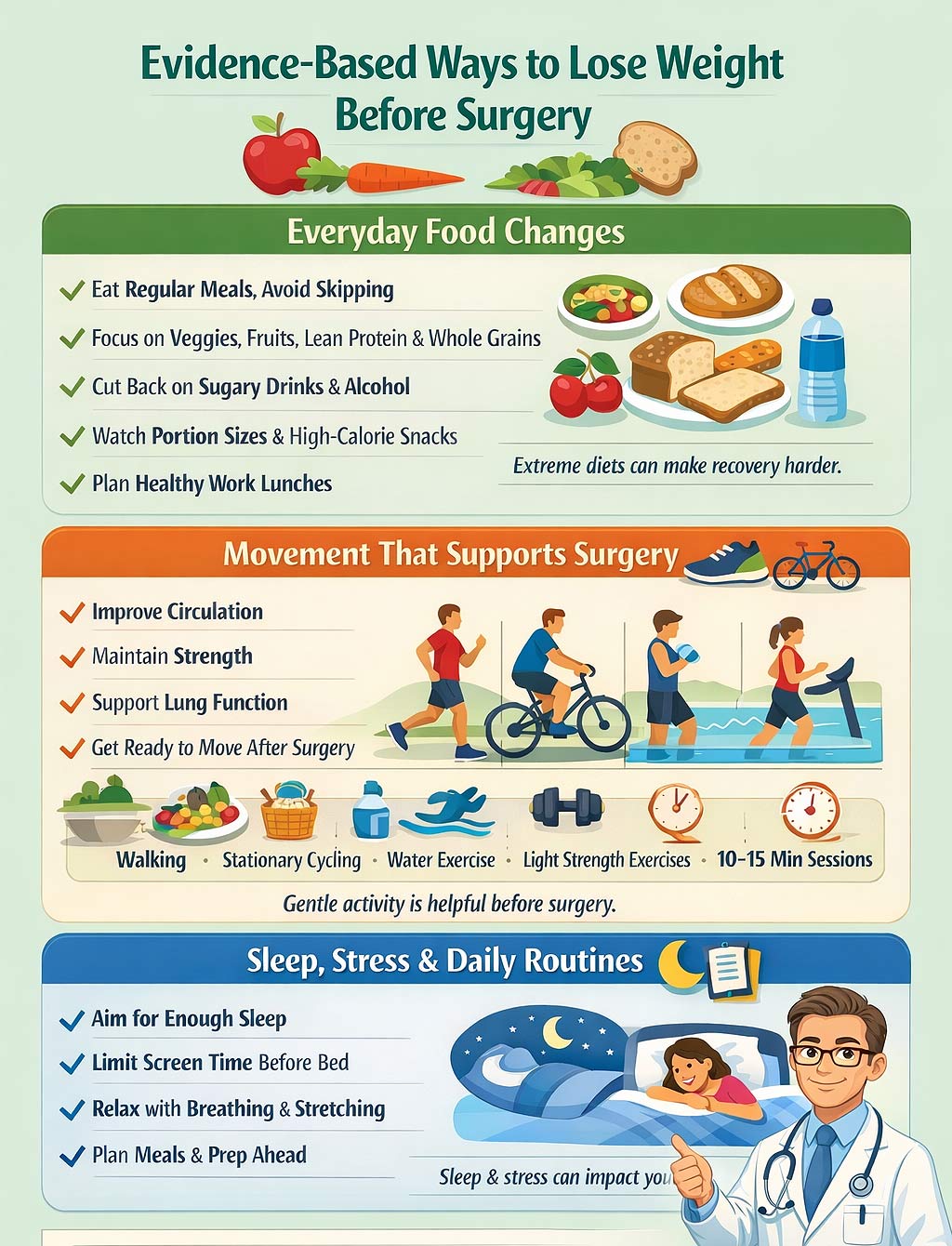
You do not need a perfect diet. Small, steady changes can make a real difference before surgery. For example:
- Include regular meals instead of skipping and then overeating
- Focus on vegetables, fruit, lean protein and whole grains most of the time
- Reduce sugary drinks, energy drinks and alcohol where possible
- Watch portion sizes, especially for take-away and high-calorie snacks
- Plan work lunches and snacks so you are not relying on vending machines or fast food
Dr Michael Kernohan encourages patients to avoid very restrictive plans without medical guidance. Under-eating can leave you tired and make recovery harder.
✓ Movement That Supports Surgery
Before surgery, gentle activity (as approved by your GP) can help:
- Improve circulation
- Maintain muscle strength
- Support lung function
- Prepare you for getting up and moving after your operation
Options may include:
- Walking at a pace where you can still talk
- Stationary cycling
- Water-based exercise if a pool is available and appropriate
- Simple strength exercises suggested by a physiotherapist or exercise physiologist
Even short bouts, such as 10–15 minutes a few times a day, can be useful. Avoid starting intense new training programs close to surgery unless your medical team has cleared this.
Sleep, Stress and Daily Routines
Sleep and stress are often overlooked, especially in busy cities like Sydney and Melbourne. Poor sleep and high stress can:
- Increase hunger, especially for high-sugar foods
- Make it harder to stick to plans
- Lower your energy for exercise
Practical steps can include:
- A regular bedtime and wake time, where possible
- Limiting screens in the hour before bed
- Short relaxation practices such as breathing exercises, stretching or a quiet walk
- Planning time for food shopping and preparation so you are not always rushing
Special Tools for Weight Management
✓ Weight-Management Medicines
Some people may be prescribed weight-management medicines by their GP or specialist. These medicines:
- Are not suitable for everyone
- Can have side effects
- Need monitoring and follow-up
If you use these medications, it is important to tell Dr Michael Kernohan and your anaesthetist. They may need to adjust your pre-operative plan. Never start or stop prescription medicines without medical advice.
✓ Bariatric Surgery as a Separate Pathway
Bariatric (weight-loss) surgery is a separate treatment option for some people with severe obesity and related health conditions. It usually involves:
- Assessment by a bariatric surgery team
- Nutritional and psychological evaluation
- A very low-energy diet in the weeks before surgery in many programs
After major weight loss, some patients later see a Specialist Plastic & Reconstructive Surgeon like Dr Michael Kernohan in South West Sydney to talk about skin folds or body contouring procedures. In these cases, surgeons often prefer the weight to be stable for a period before further surgery is planned.
Download Dr Kernohan’s Cost of Plastic Surgery Guide
Planning Your Surgery and Weight-Loss Timeline With Dr Kernohan
✓ What Happens at Consultation
At your consultation, Dr Michael Kernohan, Specialist Plastic & Reconstructive Surgeon, will:
- Take a detailed medical and weight history
- Ask about your goals and any symptoms that concern you
- Examine the areas you are considering for surgery
- Talk about options, risks, limitations and expected recovery
He may recommend:
- Further tests, such as blood tests or sleep studies
- A review with your GP or a physician
- Input from a dietitian, physiotherapist or psychologist
As Dr Kernohan often tells patients:
“Surgery is one part of a much bigger plan. Good preparation helps us manage risk and set clear expectations from the start.”
✓ If Your Weight Changes Before Surgery
If your weight changes more than expected, your surgical plan might also need to change. This can include:
- Adjusting technique or timing
- Re-thinking which areas to treat first
- Allowing more time for prehabilitation (pre-surgery preparation)
This is not a “setback”. It is part of tailoring care to your current health, not just the original date.
✓ Travelling to Sydney for Surgery
Some people travel from regional NSW, the ACT or cities such as Melbourne for plastic or reconstructive surgery in South West Sydney. If you are travelling, it can help to:
- Arrive early enough to settle, shop for groceries and rest
- Plan access to balanced meals near your accommodation
- Discuss who will support you after you return home
- Have clear follow-up arrangements with your GP and with Dr Kernohan’s team
When Weight Loss Before Surgery May Not Be Appropriate
Sudden or Unexplained Weight Loss
If you are losing weight without trying, it is important to see your GP promptly. Sudden or unexplained weight loss can signal:
- Hormonal problems
- Gut or liver conditions
- Mental health concerns
- Cancers or other serious illnesses
Elective surgery should usually wait until these issues are understood and managed.
Eating Disorders and Disordered Eating
Strict dieting and intense exercise can sometimes hide or worsen disordered eating patterns, such as:
- Binge eating followed by restriction
- Very rigid food rules
- Excessive exercise driven by guilt or body image distress
If these patterns are present, Dr Michael Kernohan may recommend support from a psychologist, psychiatrist or specialist eating-disorder team before planning surgery.
Underweight or Poor Nutrition
Being underweight or lacking protein and key vitamins can:
- Slow wound healing
- Increase the chance of infection
- Make you feel weak during recovery
In this case, the priority may be to improve nutrition and strength rather than to focus on further weight loss.
Dos and Don’ts Before and After Surgery
✓ Pre-Operative Do’s
- Do see your GP early to review your health and medications.
- Do discuss your weight history honestly with Dr Michael Kernohan.
- Do consider a referral to a dietitian for a tailored eating plan.
- Do build light to moderate activity into most days, if medically appropriate.
- Do plan your food, transport and home support for the recovery period.
✘ Pre-Operative Don’ts
- Don’t start extreme diets or fasting plans without medical supervision.
- Don’t begin intense new exercise programs just before surgery.
- Don’t hide prescription medicines, supplements or substance use from your team.
- Don’t ignore sudden or unexplained weight loss – see your GP promptly.
- Don’t rely only on online advice; always check with qualified health professionals.
✓ Post-Operative Do’s
- Do follow Dr Kernohan’s post-operative instructions carefully.
- Do attend all follow-up appointments.
- Do aim to continue balanced eating and gentle activity as advised.
- Do contact the clinic or your GP if you notice concerning symptoms such as fever, increasing pain, redness or swelling.
✘ Post-Operative Don’ts
- Don’t restart heavy exercise or lifting until you are cleared to do so.
- Don’t return to very restrictive diets while wounds are still healing.
- Don’t smoke or vape if you have been advised to stop.
- Don’t ignore signs of low mood, anxiety or disordered eating; reach out for help.

FAQs about losing weight before surgery
Start Your Surgery Journey by Planning With Steady, Realistic Steps
Losing weight before surgery is not about chasing an ideal body shape. It is about supporting your health so you can go into surgery as prepared as reasonably possible.
Key ideas to keep in mind:
- Aim for gradual, sustainable changes rather than last-minute diets
- Work closely with your GP, dietitian and other health professionals
- Keep Dr Michael Kernohan informed about any changes to your weight or health
- Ask questions whenever something is unclear
If you would like to discuss your weight, health and surgical options with Dr Michael Kernohan, Specialist Plastic & Reconstructive Surgeon in Sydney, you can contact our team via the contact page to arrange an appointment. If you prefer to start with an online review, you can submit images and information through our complimentary photo assessment form, and our team will guide you on possible next steps.