
Tummy Tuck Surgery by Dr Michael Kernohan
Abdominoplasty, also known as Tummy Tuck surgery, is a major surgical procedure that removes excess abdominal skin and fat. It may be considered for concerns such as abdominal skin excess, muscle separation, skin irritation, or changes after pregnancy, weight changes, or major weight loss.
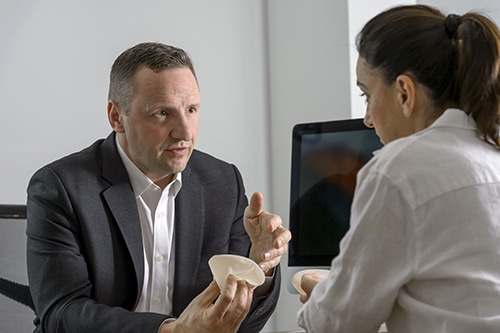
Dr Michael Kernohan is a Specialist Plastic & Reconstructive Surgeon consulting in Sydney, with clinic locations including Gregory Hills and Surry Hills. He operates at accredited hospitals and will assess your health, anatomy, concerns, and suitability during consultation.
Abdominoplasty at a Glance
Abdominoplasty is a body surgery procedure that addresses excess abdominal skin and fat. In some patients, it may also include repair of separated abdominal muscles when this is clinically appropriate.
The procedure is usually performed under general anaesthesia. Recovery can take several weeks, and patients need to plan for restricted activity, wound care, follow-up appointments, and support at home.
At a glance:
- Procedure: Abdominoplasty
- Anaesthesia: Usually general anaesthesia
- Procedure time: Varies depending on the type of abdominoplasty and surgical plan
- Hospital stay: May involve an overnight stay
- Recovery: Several weeks of restricted activity are usually needed
- Scarring: A lower abdominal scar and scar around the umbilicus are expected
- Risks: May include bleeding, infection, fluid collection, wound healing issues, blood clots, changes in sensation, and visible scarring
- Consultation: Required to assess suitability, risks, and surgical options
Am I a Suitable Candidate for Abdominoplasty?
Suitability for abdominoplasty depends on your health, anatomy, medical history, previous surgery, smoking status, weight stability, and expectations. It is not based on appearance alone.
Abdominoplasty may be discussed with patients who have excess abdominal skin, abdominal muscle separation, or abdominal changes after pregnancy or weight loss. It may not be suitable for people with certain medical risks or those planning future pregnancy.
Suitability may depend on:
- Whether your weight is stable
- Whether you smoke or vape
- Your medical history and current medications
- Whether you have had previous abdominal surgery
- Whether you are planning future pregnancy
- The amount and location of excess skin
- Whether abdominal muscle separation is present
- Whether you have support at home during recovery
Abdominoplasty may not be suitable if:
- You are not medically fit for surgery
- You have unmanaged health conditions
- You smoke or vape and are unable to stop as advised
- You are planning pregnancy in the near future
- Your main concern is internal abdominal fat
- Your expectations are not aligned with the limits of surgery
Download Dr Michael Kernohan’s Abdominoplasty Surgery Guide
What Changes May Abdominoplasty Help With?
Abdominoplasty may address excess abdominal skin and fat. In some patients, it may also involve repair of separated abdominal muscles.
It is not a weight-loss procedure and does not remove internal fat around the organs. The amount of change varies between patients and depends on anatomy, skin quality, healing, scarring, and the surgical plan.
Abdominoplasty may be considered for:
- Excess abdominal skin after pregnancy
- Excess abdominal skin after weight changes
- Abdominal muscle separation
- Skin irritation caused by overhanging abdominal skin
- Changes after major weight loss
- Concerns that have not changed with non-surgical measures
Abdominoplasty does not:
- Replace weight loss
- Remove internal abdominal fat
- Prevent future body changes
- Guarantee a specific appearance
- Suit every patient
- Remove the need for recovery time
What Is The Difference Between Abdominoplasty And Liposuction?
Abdominoplasty and liposuction are different procedures. Liposuction removes selected areas of fat but does not remove excess skin or repair separated abdominal muscles.
Abdominoplasty may remove excess skin and fat. In some patients, it may also include muscle repair. Some patients may need one procedure, some may need a combined approach, and some may not be suitable for surgery.
The main differences are:
- Liposuction: Removes selected fat deposits
- Abdominoplasty: Removes excess skin and some fat
- Muscle repair: May be included with abdominoplasty if needed
- Skin excess: Usually not corrected by liposuction alone
- Assessment: Required to determine what may be suitable
- Recovery after Surgery: Depends on the procedure and patient factors
Take The Quiz
Do I Need A Full, Partial Or Extended Abdominoplasty?
Not every abdominoplasty is the same. The type of surgery discussed will depend on where the excess skin sits, whether the abdominal muscles have separated, previous scars, your health, and your recovery needs.
Dr Michael Kernohan, Specialist Plastic & Reconstructive Surgeon in South West Sydney, will assess these factors during consultation before discussing which approach may be suitable.
The main types discussed on this page are:
- Full abdominoplasty
- Partial abdominoplasty
- Extended abdominoplasty
- Other approaches for major weight loss patients, where relevant
What Is A Full Abdominoplasty?
A full abdominoplasty is usually considered when there is excess skin above and below the umbilicus. It may also be discussed when abdominal muscle separation is present.
This procedure often involves removing excess lower abdominal skin and fat, repositioning the umbilicus, and repairing separated abdominal muscles if clinically appropriate.
A full abdominoplasty may involve:
- A lower abdominal incision
- Removal of excess skin and fat
- Repositioning of the umbilicus
- Muscle repair if needed
- A lower abdominal scar
- A scar around the umbilicus in many cases
- A recovery period with restricted lifting and activity
What Is A Partial Abdominoplasty?
A partial abdominoplasty may be considered when the concern is mainly below the umbilicus. It usually treats a smaller area than a full abdominoplasty.
The umbilicus may not need to be repositioned. Muscle repair may be limited or may not be needed, depending on the patient’s anatomy.
A partial abdominoplasty may involve:
- Treatment of the lower abdomen
- A lower abdominal incision
- Removal of a smaller amount of excess skin
- No repositioning of the umbilicus in some patients
- A scar that may be shorter than a full abdominoplasty scar
- Individual assessment of whether muscle repair is needed
- Recovery instructions based on the surgical plan
What Is An Extended Abdominoplasty?
An extended abdominoplasty may be considered when excess skin continues beyond the front of the abdomen toward the hips or flanks. It may be discussed after significant weight loss or when excess skin is more widespread.
This approach removes a wider area of excess skin and fat than a full abdominoplasty. The umbilicus is usually repositioned, and the scar is usually longer.
An extended abdominoplasty may involve:
- Removal of excess skin across a wider area
- Treatment of the lower abdomen and side areas
- Repositioning of the umbilicus
- Muscle repair if needed
- A longer lower abdominal scar
- A scar that may extend toward the hips or flanks
- A recovery plan that reflects the larger surgical area
How Do I Know Which Type Of Abdominoplasty May Apply To Me?
These descriptions are a general guide only. They are not a way to self-diagnose or choose a procedure without medical assessment.
Dr Michael Kernohan will assess your abdomen, skin, abdominal wall, previous scars, health, and recovery needs before discussing which approach may be suitable.
As a general guide:
- A full abdominoplasty may be discussed when excess skin is present above and below the umbilicus
- A partial abdominoplasty may be discussed when the concern is mainly limited to the lower abdomen
- An extended abdominoplasty may be discussed when excess skin continues toward the hips or flanks
- Muscle repair depends on abdominal wall assessment
- Scar placement depends on the type of procedure and the amount of skin removed
- Recovery planning depends on the procedure and your general health
What Happens During Abdominoplasty Surgery?
Abdominoplasty is usually performed under general anaesthesia. The surgical steps vary depending on the type of abdominoplasty and the patient’s anatomy.
In general, surgery may involve an incision low on the abdomen, removal of excess skin and fat, muscle repair if required, and repositioning of the umbilicus in some cases. Drains, dressings, and a compression garment may also be used.
Surgery may include:
- General anaesthesia
- A lower abdominal incision
- Removal of excess skin and fat
- Repair of separated muscles if required
- Repositioning of the umbilicus in some procedures
- Dressings and wound support
- Drains in some cases
- A compression garment if recommended
The details of surgery will be discussed during consultation. Dr Michael Kernohan will explain what may apply to your situation, including the likely scar position, recovery needs, and risks.
What Scars Should I Expect After Abdominoplasty?
Scarring is expected after abdominoplasty. Most patients will have a lower abdominal scar, and some patients will also have a scar around the umbilicus.
The length and position of the scar depend on the type of abdominoplasty, the amount of skin removed, previous scars, and individual anatomy. Scars usually change over time, but some may remain visible, raised, wide, or thickened.
Scar considerations include:
- Lower abdominal scar placement
- Scar around the umbilicus – in all except partial abdominoplasty
- Longer scars with extended procedures
- Individual healing patterns
- Scar care after surgery
- Possible thickened, raised, or widened scars
- How scars may change over time
Dr Michael Kernohan will discuss scar position and scar care during consultation. It is important to understand that scar appearance varies between patients.
What Is Recovery Like After Abdominoplasty?
Recovery after abdominoplasty varies between patients. The type of procedure, your health, your work, and your home responsibilities can all affect your recovery plan.
Many patients need several weeks away from heavy lifting, strenuous activity, and some work duties. You may need help at home during the early recovery period, especially with children, pets, driving, shopping, and household tasks.
Recovery may involve:
- Time away from work
- Restricted lifting and exercise
- Wearing a compression garment if recommended
- Wound care and dressing changes
- Follow-up appointments
- Sleeping in a supported position
- Walking gently as advised
- Monitoring for signs of complications
Recovery instructions are personalised to the patient and procedure. Dr Michael Kernohan and his team will provide guidance on activity, wound care, garments, medication, and follow-up appointments.
How should I care for myself at home after surgery?
At home, you will need to follow your post-operative instructions carefully. These instructions are designed to support wound care, comfort, movement, and complication monitoring.
You should contact the clinic promptly if you notice increasing pain, swelling, redness, discharge, fever, shortness of breath, calf pain, or any concern that feels unusual for you.
At-home care may include:
- Taking medications as prescribed
- Wearing your garment if recommended
- Keeping dressings clean and dry
- Walking gently as advised
- Avoiding heavy lifting
- Avoiding strenuous activity
- Attending all follow-up appointments
- Contacting the clinic if symptoms change
Do not change dressings, garments, medication, or activity levels unless advised by your clinical team. If you are unsure about a symptom, contact the clinic for guidance.
Watch The Abdominoplasty Related Videos by Dr Kernohan
What Are The Risks And Complications Of Abdominoplasty?
Abdominoplasty is major surgery that has risk considerations. Understanding these risks is an important part of informed consent.
Possible risks may include bleeding, infection, fluid collection, wound healing problems, blood clots, changes in skin sensation, visible scarring, asymmetry, delayed healing, and the need for further treatment or surgery. Risks vary between patients.
Risks may include:
- Bleeding
- Infection
- Fluid collection
- Wound healing problems
- Blood clots
- Changes in sensation
- Visible or thickened scars
- Asymmetry
- Delayed healing
- Need for further treatment or surgery
- Anaesthetic risks
Risk may be affected by:
- Smoking or vaping
- Medical conditions
- Previous abdominal surgery
- Body weight
- Medication use
- Healing history
- Activity during recovery
- Your ability to follow post-operative instructions
Dr Michael Kernohan will discuss these risks during consultation. You should ask which risks are most relevant to your medical history and surgical plan.

How Much Does Abdominoplasty Cost In Sydney?
The cost of abdominoplasty in Sydney varies depending on the type of procedure, hospital, anaesthetist, surgical plan, and whether additional treatment is required.
A personalised quote can only be provided after consultation with Dr Michael Kernohan. This allows the surgical plan, risks, hospital requirements, and aftercare needs to be considered.
Cost may depend on:
- Type of abdominoplasty
- Surgical complexity
- Hospital fees
- Anaesthetist fees
- Surgical assistant fees
- Garments or dressings
- Follow-up care
- Whether additional procedures are required
The clinic can provide information about fees after consultation. Patients should review all written information carefully before making a decision.
Tummy Tuck- Abdominoplasty Before and After Photos
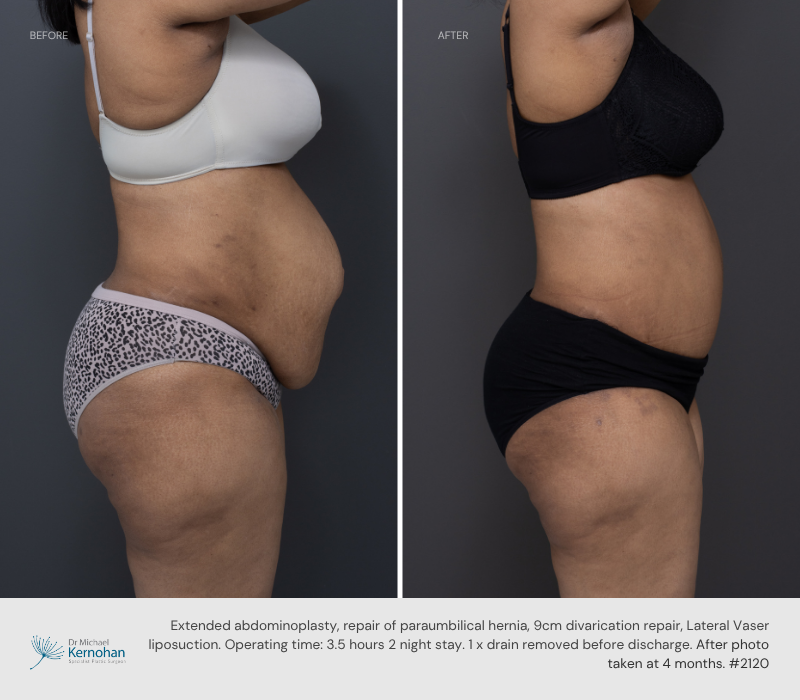
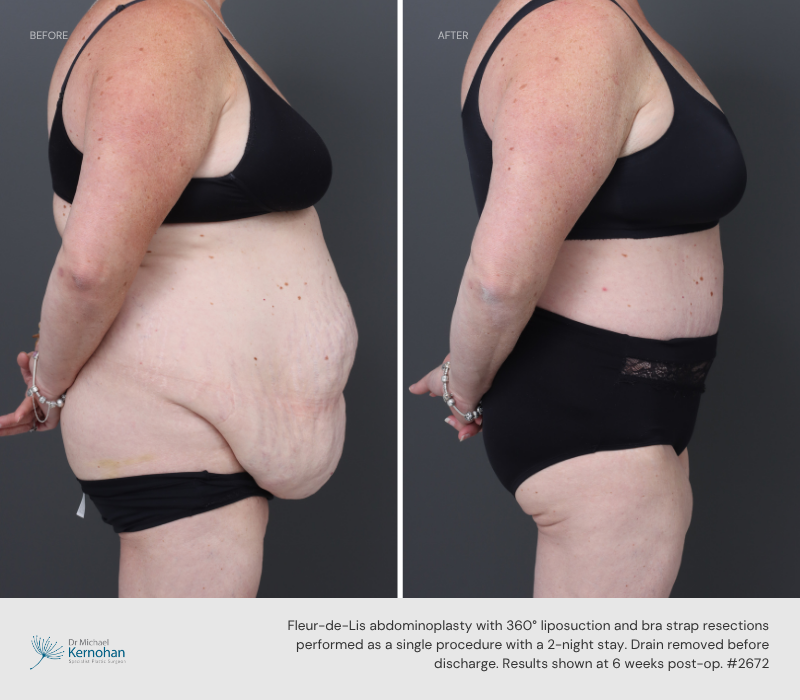
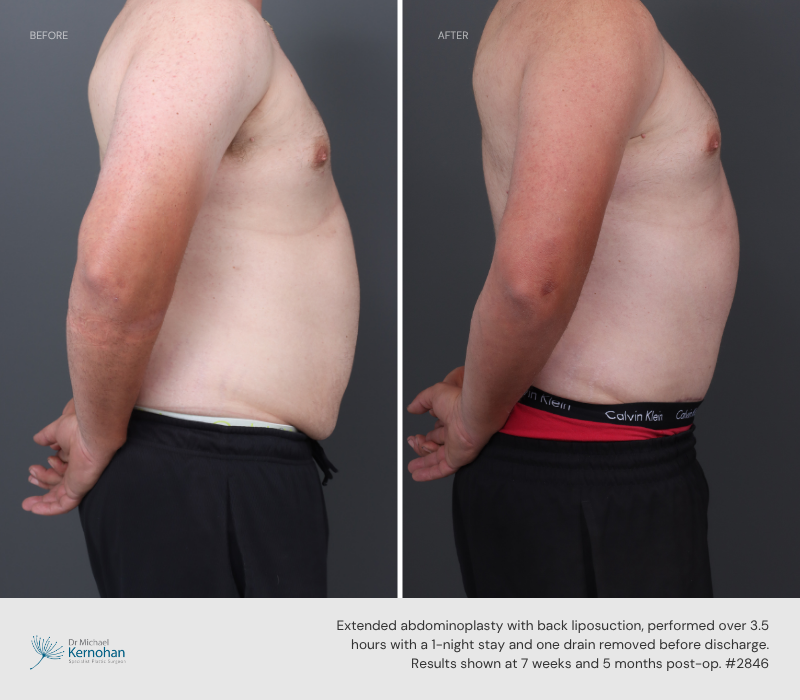
Before and after photographs may be discussed during consultation to help explain procedure planning, scar placement, and realistic expectations.
Results vary between patients. Photos should be viewed as general examples only, not as a prediction of your own outcome.
When viewing photos, consider:
- Patient anatomy varies
- Scars vary between patients
- Healing varies
- Lighting and posture can affect appearance
- Photos do not guarantee your result
- Consultation is needed to discuss what may apply to you
Dr Michael Kernohan can explain how differences in anatomy, skin quality, scarring, and healing may affect surgical planning and recovery.

Abdominoplasty FAQs
Here is a list of frequently asked questions we get regarding abdominoplasty:
What Should I Do Next If I Am Considering Abdominoplasty?
If you are considering abdominoplasty, you can book a consultation with Dr Michael Kernohan, Specialist Plastic & Reconstructive Surgeon in South West Sydney. During consultation, Dr Kernohan can assess your health, anatomy, concerns, and whether surgery may be suitable.
Before your appointment, it may help to:
- Write down your questions
- List your medications and medical history
- Note any previous abdominal surgery
- Consider your recovery support at home
- Check whether a GP referral is needed
During consultation, you can ask about suitability, procedure options, scarring, risks, recovery, and alternatives to surgery.
Take time to review the information provided before deciding whether to proceed.
Why Choose Dr Michael Kernohan For Abdominoplasty In Sydney?
Dr Michael Kernohan is a Specialist Plastic & Reconstructive Surgeon consulting in South West Sydney. He sees patients considering abdominoplasty after pregnancy, weight changes, abdominal muscle separation, or major weight loss.
During consultation, Dr Kernohan will assess your anatomy, health, concerns, and suitability. He will also discuss procedure options, scarring, recovery, risks, and whether surgery may be appropriate.
Patients may choose to consult Dr Kernohan for:
- Specialist plastic surgery qualifications
- South West Sydney clinic locations
- Individual assessment and surgical planning
- Clear discussion of risks, recovery, and limitations
- Follow-up care after surgery
Next Steps
To book a consultation, contact Dr Michael Kernohan’s clinic by phone or through the online enquiry form. The clinic team can provide information about appointment availability, referral requirements, and what to bring.
Before your appointment, prepare your medical history, current medications, previous surgery details, and any questions you would like to ask.
During consultation, you can discuss:
Next steps before making a decision:
- Whether abdominoplasty may be suitable for you
- Full, partial, or extended abdominoplasty options
- Muscle repair, scarring, risks, and recovery
- Alternatives to surgery
Further Reading
- Read Dr Kernohan’s Procedure on Belt Lipectomy Sydney
- Read Dr Kernohan’s Procedure on Extended Abdominoplasty
- Read Dr Kernohan’s Procedure on Corset Abdominoplasty Surgery Sydney
- Read Dr Kernohan’s Procedure on Fleur De Lis Abdominoplasty Surgery Sydney