
Revision blepharoplasty is eyelid surgery performed after a previous eyelid operation when concerns remain about eyelid comfort, function or appearance. At his clinic in Gledswood Hills, Dr Michael Kernohan, Specialist Plastic & Reconstructive Surgeon, cares for patients from across Sydney, including Gledswood Hills, Campbelltown, Liverpool and the surrounding suburbs, who are seeking an informed opinion about revision eyelid surgery.
This procedure sits at the intersection of reconstructive, functional and appearance-related surgery. For some people, the main concern is that the eyelids do not close comfortably or sit in a stable position. Others are troubled by changes in the fold, contour or shape of the eyelids following their first operation. Because the eyelids are delicate structures and have already been operated on, revision blepharoplasty needs careful examination, planning and clear discussion of what may and may not be possible.
Take the Quiz
What Is Revision Blepharoplasty?
Revision blepharoplasty, also known as revision eyelid surgery or secondary blepharoplasty, refers to surgery on the upper eyelids or lower eyelids after a previous blepharoplasty. The procedure is aimed at addressing persisting or new issues that have arisen since the first operation. These issues may relate to eye comfort, eyelid closure or position, or to the way the eyelids now look.
The eyelids help to protect the eye surface, spread the tear film and allow comfortable blinking and closure. When the eyelids change position or tension, the eye can feel dry, gritty or irritated. Some people experience watering, burning, light sensitivity or discomfort when reading or using screens. After blepharoplasty, these symptoms may appear or become more noticeable if the eyelids are too tight, too loose or not closing fully.
In addition to these functional aspects, some patients become concerned that the shape or fold of the eyelids has changed in a way they did not expect. An upper eyelid crease may sit higher or appear doubled. The lower eyelid may seem pulled down, or there may be contour irregularities where tissue has been removed or repositioned. Revision blepharoplasty aims to address such features where it is safe and reasonable to do so.
Unlike a first-time blepharoplasty, revision surgery takes place in an area where there is already scar tissue and altered anatomy. Skin and supporting structures may have been reduced or tightened. This means revision procedures need to be approached differently, with the understanding that the aim is improvement within the limits of the tissues rather than a return to a pre surgical state.
Who May Consider Revision Blepharoplasty
People who consider revision blepharoplasty typically do so for clear functional or anatomical reasons. Many have lived with their current eyelid situation for some time and are seeking an explanation as much as a possible solution.
Some patients have difficulty closing their eyes fully, particularly during sleep. They may wake with a feeling of dryness, burning or irritation. Others notice persistent redness or tearing that seems to be related to the position of the eyelids rather than to allergies or infection alone. In some cases, the lower eyelid is pulled down, showing more of the white of the eye and leaving the eye less protected. The lid may turn outwards and fail to rest properly against the eye, causing ongoing irritation and light sensitivity.
There are also people whose primary concern is the way the eyelids now appear. An upper eyelid fold may sit considerably higher than before, or there may be two folds where previously there was one. The upper lid can look hollow if too much tissue appears to have been removed. The lower lid may retain fullness in the form of bags that were not addressed, while other areas look flat or uneven. Scars may be visible, or the transition between the eyelid and the cheek may seem irregular.
Some patients experience a combination of these problems, for example a lower lid that both feels uncomfortable and looks different from the other side. Others feel unsettled by the change itself and wish to understand whether what they are noticing is within the expected range of outcomes or something that might be improved.
A detailed consultation with Dr Michael Kernohan, Specialist Plastic & Reconstructive Surgeon, allows these issues to be carefully explored. The focus is on describing the findings in clear clinical terms and looking at whether revision surgery, non surgical measures or observation would be most appropriate.
Download Dr Kernohan’s Blepharoplasty Surgery Guide

Benefits Of Revision Blepharoplasty
The potential benefits of revision blepharoplasty are best understood in two broad categories, functional improvement and appearance-related refinement. It is important to recognise that not all benefits apply to every patient and that expectations must be aligned with what the tissues and eye health will allow.
For some, the main potential benefit is more comfortable eyelid function. Adjusting lid position and support may help the eyes close more completely, especially at night. This can reduce irritation in some cases and may create a more stable environment for the ocular surface. Reinforcing a lower eyelid that has sagged or turned outwards can improve the way the lid contacts the eye and may assist with tear distribution. In situations where scar tissue is pulling on the eyelid, releasing those bands can ease tightness and allow a more natural movement.
From an appearance perspective, revision blepharoplasty may be able to lower a very high upper eyelid crease or reduce the appearance of multiple folds so that the two sides are closer in height and shape. In selected cases, it can address hollowing by repositioning or adding tissue. It may also reduce persistent lower eyelid fullness while smoothing abrupt transitions between areas of removed and preserved tissue.
Throughout this process, Dr Michael Kernohan emphasises that revision surgery cannot recreate the eyelids as they were before any operation or before ageing changes occurred. The goal is to make measured, thoughtful adjustments that offer a meaningful improvement, while acknowledging that some asymmetry and irregularity are part of normal human anatomy and may remain after surgery.
Before And After Photos
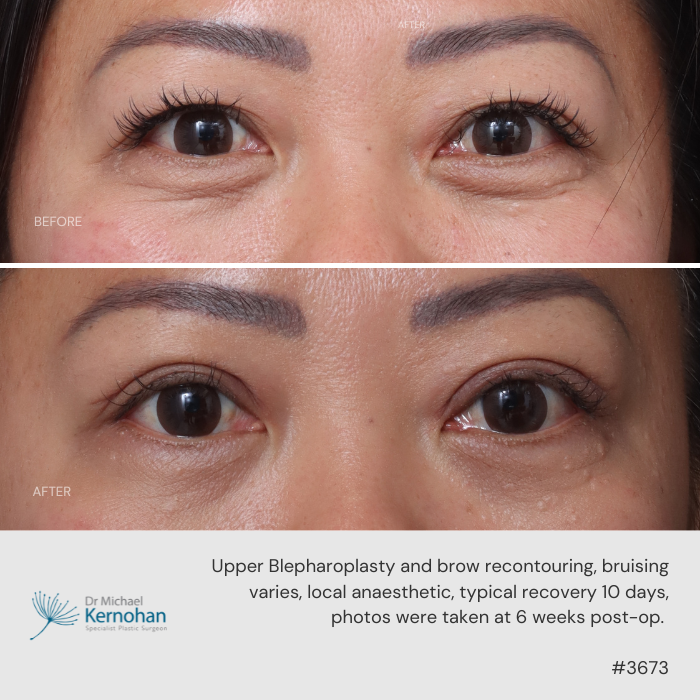
Patients often ask about before and after photographs when considering revision eyelid surgery. These images, when viewed in the right way, can be a useful educational tool. They help demonstrate the types of changes that may be achievable in certain situations and show how eyelids can look in the months and years after surgery once swelling has settled and scars have matured.
At Dr Kernohan’s practice, any use of imagery is guided by current AHPRA requirements. Photographs do not promise specific results and are not used to suggest that one person’s outcome can be replicated in another. Instead, they serve as a starting point for conversation about objectives, limitations and the wide variation in eyelid shape, skin quality and facial structure.
Some images may be available in an online gallery, while others may be discussed privately during consultation in Gledswood Hills. During these discussions, Dr Michael Kernohan, Specialist Plastic & Reconstructive Surgeon, will link examples back to your own anatomy and explain how your circumstances differ from or resemble those in the photographs. This approach keeps the focus on realistic, individual planning rather than on comparison.
Consultation For Revision Blepharoplasty
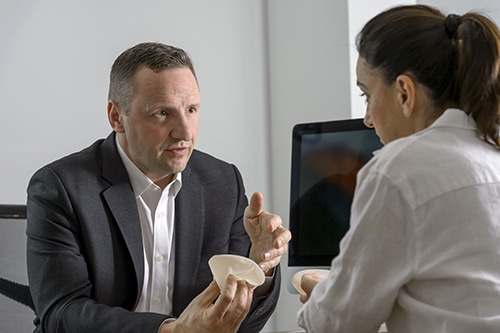
The consultation is a central part of revision eyelid surgery. For many patients, sitting down with a surgeon who can explain what has happened to their eyelids already brings a sense of clarity, whether or not further surgery is pursued.
When you see Dr Michael Kernohan in South West Sydney, the discussion begins with your story. You will be asked about your original blepharoplasty, when and where it took place, what you were told at the time and how the recovery progressed. You can also describe how your eyelids feel now, including any changes in comfort, vision or activities such as reading, driving or using screens. Previous eye conditions, contact lens use, laser eye surgery and general health issues such as thyroid disease or autoimmune conditions are all relevant and you will have time to go through them.
The physical examination then focuses on how the eyelids sit, move and support the eyes. Dr Kernohan will look at the height and shape of the upper and lower lids, the position of the brow and how the lower lids respond when gently moved. Scars are assessed for their quality and impact on movement. The eye surface is examined for signs of dryness, redness or exposure. Photographs are often taken from several angles to record the findings and assist with planning.
Once this information is gathered, Dr Kernohan will explain what he sees in straightforward language. Together, you will review whether non surgical measures, such as ocular surface treatment or observation, may be appropriate. In some cases, revision blepharoplasty is discussed as an option, and in others it may be combined with additional procedures to support the lids. You will be given time to ask questions and, if surgery is being considered, to think about whether it fits with your health, work and family commitments.
How Revision Blepharoplasty Is Performed

Revision blepharoplasty is usually carried out in an accredited hospital or day surgery facility, with a qualified anaesthetist present. The type of anaesthetic chosen will depend on the extent of the procedure, your health status and your preferences. Some revision operations are performed under local anaesthesia with sedation, while others are done under general anaesthesia. These details are discussed thoroughly before the day of surgery so you know what to expect.
On the day, careful markings are made on the eyelids while you are awake and sitting upright. This allows Dr Michael Kernohan, Specialist Plastic & Reconstructive Surgeon, to plan according to how the lids look and move in their natural position. Markings may outline where skin is to be adjusted, where folds currently sit and where support is needed.
During the operation, incisions are placed in locations designed to access the problem areas while respecting existing scars. In upper eyelid revision, the incision is often placed within or close to the existing crease. In lower eyelid revision, the incision may be made just below the lashes or on the inner surface of the lid, depending on the technique and aims.
The next stage involves working through the layers of tissue that were altered in the first operation. Scar tissue may be gently released to free the eyelid. Skin and muscle can be adjusted if there is excess or if they are contributing to tightness. Fat pads may be repositioned or reshaped to address fullness or hollowing. If the lower lid is loose or pulled down, supporting structures such as the outer corner of the eyelid may be tightened and reinforced. In some cases, graft material is used to help support the lid or replace missing tissue.
Throughout the procedure, the focus is on maintaining or improving function while addressing the issues identified in the consultation. At the end, the incisions are closed with fine sutures and ointment is applied. The length of surgery varies with complexity and will be discussed during pre operative planning so that you have a realistic sense of the duration and recovery.
Recovery After Revision Blepharoplasty
Recovery following revision eyelid surgery is a process rather than a single event. The experience is influenced by the complexity of the operation, your general health, your eye surface condition and the way your body responds to surgery.
In the first few days, it is common to notice swelling and bruising around the eyelids. The area may feel tight or heavy. Some patients experience watery eyes, while others feel temporarily more dry and sensitive to light. You will usually be advised to rest with your head elevated, use cold compresses for short periods as instructed and apply any prescribed eye drops or ointments. Reading and screen time may be limited initially if they make the eyes feel tired or sore.
Over the next week or two, bruising generally fades and the swelling gradually settles, although it can remain visible for some time. If non dissolving sutures have been used, they are often removed around the one week mark, depending on the plan discussed with Dr Kernohan. Many people begin to feel more comfortable out in public during this phase, but it is important not to rush into heavy lifting, high intensity exercise, swimming or contact sports.
As the weeks pass, the eyelids continue to change. Swelling diminishes further and the contour becomes more defined. It is normal to experience subtle changes in sensation as nerves recover and the tissues reorganise. Dry eye symptoms may require ongoing attention with lubricants and eye care routines, especially if they were present before surgery.
Full maturation of scars and final settling of the eyelid shape can take several months or longer. Follow up appointments with Dr Michael Kernohan, Specialist Plastic & Reconstructive Surgeon, allow your progress to be monitored and any concerns to be addressed. You will be given clear written instructions about home care, as well as guidance on when it is appropriate to return to work, driving and more vigorous activities, based on your particular circumstances.
You will also be advised about specific warning signs such as severe pain, sudden changes in vision, increasing redness, discharge or rapid swelling, and what steps to take if they occur. Prompt communication with the clinic or hospital in such situations is an important part of safe surgical care.
Blepharoplasty Before and After Photos

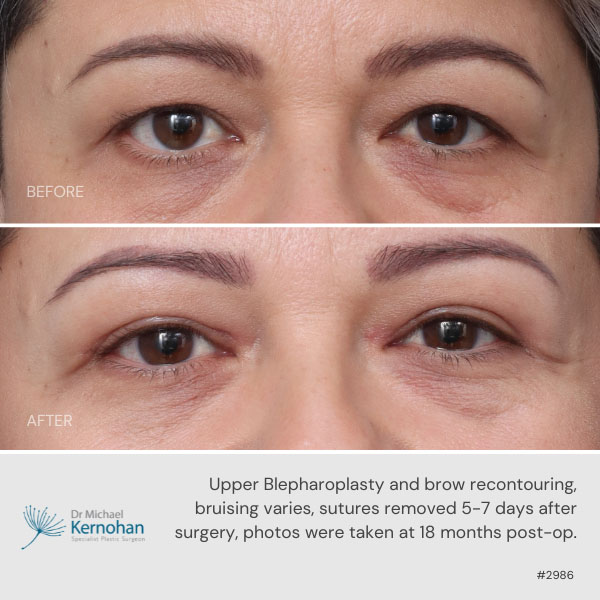
Disclaimer: All surgical or invasive procedures come with inherent risks, and results can vary widely between individuals due to factors like lifestyle, anatomy, overall health, weight, and nutrition. We encourage you to conduct thorough research and consider seeking a second opinion from a qualified healthcare provider.
Risks And Possible Complications Of Revision Blepharoplasty
Every surgical procedure involves risk and revision blepharoplasty is no exception. Because the eyelids have already been operated on, some risks can be heightened by the presence of scar tissue and altered anatomy.
General surgical risks include bleeding, infection and delayed wound healing. Around the eyes, bleeding can sometimes form a collection known as a haematoma, which may need urgent attention. Infection, although uncommon, can occur and is treated with appropriate medication and monitoring.
There is also the possibility of scarring that is more visible or firm than expected. While scars usually soften and fade over time, the pattern is not entirely predictable. Prolonged swelling and bruising are possible, particularly when complex revisions have been undertaken.
Specific to the eyelids and eyes, there is a risk of persistent or increased dry eye symptoms, difficulty with complete closure or altered lid position. The lower eyelid may sit too low or, less commonly, too high. The upper lid may remain asymmetric in height compared with the other side. Changes in sensation around the eyelids are common in the short term and usually improve as healing progresses, but can occasionally persist.
Changes in vision are rare but are considered a serious potential complication. Careful pre operative assessment and post operative monitoring are important for this reason. During your consultation, Dr Michael Kernohan will provide a thorough explanation of the risks most relevant to your situation and how they are managed. You will also be directed to the practice information on surgical risks so that your consent is informed and considered.
Cost Of Revision Blepharoplasty
The cost of revision blepharoplasty is influenced by multiple factors and is therefore individual rather than fixed. The complexity of your particular case plays a significant role. Surgery that involves both upper and lower eyelids, significant scar release or lid support procedures will generally require more time in theatre than a more limited revision.
Hospital or day surgery fees reflect the use of an accredited facility, including nursing staff, equipment and operating theatre time. Anaesthesia costs depend on the type of anaesthetic used and the length of the procedure. Follow up care, dressings and prescribed medications are also part of the overall picture.
Because these elements can vary, an accurate cost estimate can only be given after a full consultation and surgical plan have been established with Dr Michael Kernohan, Specialist Plastic & Reconstructive Surgeon. The practice team can explain how the estimate is structured and answer practical questions, but specific dollar amounts are not provided here, as they may change over time and are best discussed directly with the clinic. Patients can also refer to the Fees and Costs page on the website for general information about how charges are arranged.
Medicare Coverage And Private Health Insurance
In some situations, eyelid surgery may attract a Medicare item number when it is performed for a defined functional or medical reason. This may include certain cases where eyelid position interferes with vision or where there is significant malposition of the lid. Whether revision blepharoplasty meets these criteria depends on the findings of your clinical assessment and on the relevant item number descriptions at the time.
To determine this, Dr Michael Kernohan will need to examine your eyelids, review your symptoms and consider any supporting investigations such as visual field tests or photographs. If it appears that a Medicare item number may apply, the practice can provide you with that information so you can discuss it directly with Medicare and your private health insurer.
Private health insurance, where applicable, may cover part of the hospital fee when a recognised item number is used and your level of cover includes that category of surgery. The details vary between policies, which is why patients are encouraged to contact their fund with the item numbers and estimated fees to clarify potential benefits and any excess that may apply.
Not all revision eyelid procedures fall under a Medicare item number, particularly when they are sought for primarily appearance-related reasons without associated functional issues. In those cases, the costs are usually met by the patient. Clear communication about this forms an important part of the consultation with Dr Kernohan and his team.
Why Choose Dr Michael Kernohan
Revision eyelid surgery is a nuanced field that calls for an understanding of both reconstructive principles and the subtleties of eyelid appearance. Many patients seeking revision are already feeling uncertain after a previous experience, so the choice of surgeon can feel especially important.
Dr Michael Kernohan is a Specialist Plastic & Reconstructive Surgeon, FRACS in Plastic Surgery, with extensive experience across both reconstructive and aesthetic procedures. He holds a senior consultant role at Liverpool Hospital and has trained and worked in the United Kingdom and Australia. This background has exposed him to a wide range of complex cases, including post traumatic and post surgical challenges involving the face and eyelids.
In his South West Sydney practice, Dr Kernohan works closely with a multidisciplinary network, including ophthalmologists and other specialists where appropriate. His approach to revision blepharoplasty places equal weight on function and appearance, with eye health and safety at the centre of planning. Consultations are structured to give patients time to speak, to ask questions and to consider options without pressure.
Conveniently located in Gledswood Hills and working across Campbelltown, Liverpool and the broader South West Sydney region, Dr Michael Kernohan, Specialist Plastic & Reconstructive Surgeon, offers a local setting for patients who might otherwise need to travel further for this type of assessment and care.

FAQs About Revision Blepharoplasty
Schedule A Consultation
If you are concerned about your eyelids after previous surgery and would like a clear, medically grounded assessment of your options, arranging a consultation with Dr Michael Kernohan, Specialist Plastic & Reconstructive Surgeon, is a practical next step. During your visit, you can discuss your history, undergo a detailed examination and receive tailored advice about whether revision blepharoplasty, non surgical care or observation may be suitable.
Dr Michael Kernohan, Specialist Plastic & Reconstructive Surgeon, welcomes patients from Gledswood Hills, Campbelltown, Liverpool and the greater South West Sydney area. You can visit the clinic at Suite 17, Level 2, 13 Digitaria Drive, Gledswood Hills NSW 2557, call (02) 8310 9026 or email [email protected] to arrange a confidential consultation.