

- When Is an Isolated Neck Lift Appropriate Compared With Combined Procedures?
- What Is an Isolated Neck Lift?
- What Concerns May an Isolated Neck Lift Address?
- What Are the Limits of an Isolated Neck Lift?
- What Are Combined Procedures in Neck and Facial Surgery?
- Why Might Procedures Be Combined?
- Can Procedures Be Staged Instead of Combined?
- When May an Isolated Neck Lift Be Appropriate?
- When Is the Neck the Main Concern?
- Why Might Patients Prefer an Isolated Neck Lift?
- When May Combined Procedures Be More Appropriate?
- When Does the Lower Face Affect the Neck?
- When Might Other Facial Procedures Be Discussed?
- Why Do the Neck, Jawline and Lower Face Need to Be Assessed Together?
- Why Is the Jawline So Important?
- What Factors Influence the Decision Between Isolated and Combined Surgery?
- What Are the Considerations When Choosing Between Isolated and Combined Surgery?
- What Are the Risks and Limitations of Isolated Neck Lift or Combined Procedures?
- Facelift Before and After Photos
- What Is Recovery Like After Isolated Neck Lift Compared With Combined Procedures?
- What Alternatives Should Patients Consider?
- Who May Be Suitable for Isolated Neck Lift or Combined Surgery?
- Take the Quiz
- Who May Not Be Suitable for Isolated Neck Lift or Combined Surgery?
- Are Costs Relevant When Comparing Isolated Neck Lift and Combined Procedures?
- In Conclusion
- Isolated Neck Lift vs Combined Procedures FAQs
- Download Dr Kernohan’s Facelift Surgery Guide
- Next Steps: Consult With Dr Kernohan When Considering a Neck Lift
- Book a neck lift consultation
- Further Reading
Dr Michael Kernohan, Specialist Plastic & Reconstructive Surgeon in Sydney, assesses the neck, jawline and lower face together when patients ask whether they need an isolated neck lift or combined face procedures. An isolated neck lift may be appropriate when the main concern is in the neck, while combined surgery may be considered when the lower face, jawline or other areas also contribute.
Many patients notice changes such as neck bands, loose neck skin, fullness under the chin or a less defined jawline. These concerns can appear to be neck-related, but the cause may involve the lower face, jowls, platysma muscle, skin quality, deeper neck structures or a combination of factors.
This is why the decision is not simply “neck lift or more surgery.” The more useful question is whether the visible concern is mainly isolated to the neck or whether connected areas need to be assessed as part of the same plan.
This article explains when an isolated neck lift may be suitable, when combined procedures may be discussed, and what Dr Michael Kernohan considers before making a recommendation. It is general information only and does not replace a personal consultation.
When Is an Isolated Neck Lift Appropriate Compared With Combined Procedures?
An isolated neck lift may be appropriate when the main concern is neck skin laxity, platysma bands or under-chin fullness, and the lower face has reasonable support. Combined procedures may be discussed when jowls, jawline laxity, facial tissue descent, eyelid concerns or other areas also need assessment.
- An isolated neck lift focuses mainly on the neck and under-chin area.
- Combined procedures may include facelift, neck lift, eyelid surgery or another procedure when clinically appropriate.
- Jowls and neck laxity often overlap.
- A neck lift alone may not address lower-face descent.
- Combined surgery may involve broader recovery and risk planning.
- Suitability depends on anatomy, health, expectations and recovery capacity.
The right choice depends on what is causing the concern, not only where the patient notices it. Dr Michael Kernohan assesses the neck, lower face and jawline together before discussing whether one procedure or a combined plan may be appropriate.
What Is an Isolated Neck Lift?
An isolated neck lift is surgery focused mainly on the neck and under-chin region. It may address neck skin laxity, platysma bands, selected under-chin fullness and the transition between the jawline and neck.
- The procedure focuses on the neck rather than the whole lower face.
- It may involve incisions around the ears, under the chin or both, depending on the surgical plan.
- Platysma bands may be treated if they are contributing to the concern.
- Skin and selected fat may be managed where clinically appropriate.
- It does not fully address jowls or lower-face descent when those are the main causes.
An isolated neck lift may be considered when the neck is the dominant concern and the lower face remains reasonably supported. Dr Michael Kernohan explains the limits of an isolated neck lift so patients understand what may remain untreated.
What Concerns May an Isolated Neck Lift Address?
An isolated neck lift may address selected neck concerns when they are caused by skin, muscle or local tissue changes in the neck area. The exact approach depends on the patient’s anatomy and whether deeper neck structures are involved.
- Vertical platysma bands in the front of the neck.
- Loose neck skin that is mainly below the jawline.
- Fullness under the chin when suitable for surgical management.
- Reduced definition between the chin and upper neck.
- Tissue laxity that is mostly neck-focused.
These concerns can look similar from patient to patient but may have different causes. Dr Michael Kernohan assesses the skin, platysma muscle, under-chin area and lower face before deciding whether an isolated approach is suitable.
What Are the Limits of an Isolated Neck Lift?
An isolated neck lift has limits because the neck is connected to the lower face and jawline. If jowls, lower-face descent or facial tissue laxity are contributing to the concern, treating the neck alone may not fully address the visible issue.
- It may not correct significant jowls.
- It may not improve lower-face tissue descent.
- It may not address midface or cheek changes.
- It may not treat eyelid, brow or skin texture concerns.
- It may leave a mismatch if the lower face also needs support.
Understanding these limits helps patients make a more informed decision. A smaller procedure is not always the most appropriate choice if the main concern comes from more than the neck.
What Are Combined Procedures in Neck and Facial Surgery?
Combined face procedures involve addressing more than one anatomical area when the neck concern is connected to other facial changes. This may include a neck lift with facelift surgery, or assessment of other areas when clinically relevant.

- A neck lift may be combined with a facelift when jowls and neck laxity overlap.
- Lower-face support may be included when the jawline contributes to the neck concern.
- Eyelid or brow surgery may be assessed separately if those areas are also a concern.
- Some procedures may be staged rather than performed at the same time.
- Safety, anaesthesia, recovery and risk must guide the plan.
Combined procedures are not recommended simply because they are available. Dr Michael Kernohan discusses combined surgery only when assessment suggests that more than one area is contributing to the patient’s concern.
Why Might Procedures Be Combined?
Procedures may be combined when treating one area alone would leave another connected concern untreated. This is common when the lower face, jawline and neck have changed together.
- Jowls can affect the transition between the face and neck.
- Neck skin laxity can make the jawline appear less defined.
- Platysma bands may remain if only lower-face tissues are treated.
- Facial tissue descent may limit what a neck lift alone can achieve.
- Treating connected areas may reduce the risk of mismatch.
The aim is not to do more surgery for its own sake. The aim is to match the surgical plan to the actual anatomy causing the concern.
Can Procedures Be Staged Instead of Combined?
Yes, procedures can sometimes be staged rather than performed together. Staging may be discussed when health, recovery needs, patient priorities or surgical complexity make a step-by-step approach more appropriate.
- A patient may choose to address the neck first if it is clearly the main concern.
- A facelift may be considered later if lower-face changes become more relevant.
- Staging can allow recovery from one procedure before deciding on another.
- Previous surgery or scar tissue may influence staging.
- Some patients may not need a second procedure at all.
Staging has advantages and disadvantages. Dr Michael Kernohan explains whether staged or combined planning is more appropriate based on anatomy, safety and patient priorities.
When May an Isolated Neck Lift Be Appropriate?

An isolated neck lift may be appropriate when the main visible concern is genuinely in the neck. This usually means the lower face and jawline still have reasonable support, and jowls are not the dominant issue.
- The main concern is loose neck skin, neck bands or under-chin fullness.
- The lower face has reasonable tissue support.
- Jowls are mild or not the main concern.
- Skin quality supports a neck-focused approach.
- The patient understands that lower-face concerns may remain.
An isolated neck lift can be a useful option for selected patients, but only when the anatomy supports it. Dr Michael Kernohan assesses whether the neck concern is truly isolated before recommending this approach.
When Is the Neck the Main Concern?
The neck may be the main concern when changes sit below the jawline and are not driven by lower-face descent. This can include platysma bands, skin laxity under the chin or fullness that is mainly neck-based.
- The front of the neck shows visible platysma banding.
- Under-chin fullness is the main issue.
- The jawline remains relatively supported.
- Jowls are mild or not present.
- The patient is not seeking changes to the cheeks, eyelids or brow.
When the neck is the main concern, an isolated neck lift may be considered. However, the lower face still needs to be assessed because it can influence the final neck appearance.
Why Might Patients Prefer an Isolated Neck Lift?
Some patients ask about an isolated neck lift because they want to focus only on the area that bothers them most. Others may be trying to avoid broader surgery, longer recovery or changes to areas they do not wish to treat.
- The patient may feel the lower face is not a concern.
- The patient may prefer a more focused surgical discussion.
- The recovery plan may differ from combined surgery.
- The patient may not want facial surgery if it is not clinically needed.
- The patient may want to understand whether neck-only treatment is enough.
Preference is important, but it cannot replace anatomical assessment. Dr Michael Kernohan will explain whether the patient’s preference matches what surgery can reasonably address.
When May Combined Procedures Be More Appropriate?
Combined procedures may be more appropriate when the neck concern is linked to the lower face, jawline or other facial areas. This is often the case when jowls, lower-face descent and neck laxity are present together.
- Jowls and neck laxity are both visible.
- Lower-face descent affects the jawline-neck transition.
- A neck lift alone may not address the main visible concern.
- The neck and lower face need coordinated planning.
- Combined surgery may involve broader recovery and risk discussion.
A combined approach should be based on anatomy, not on doing more surgery by default. Dr Michael Kernohan explains why combined surgery may or may not be suitable after examining the face and neck together.
When Does the Lower Face Affect the Neck?
The lower face affects the neck when jowls or tissue descent blur the jawline and change the face-neck transition. In these patients, a neck-only operation may not fully address what the patient sees in the mirror.
- Jowls can hang over the jawline and affect the upper neck.
- Lower-face laxity can reduce definition along the jaw.
- Neck skin can look more noticeable when the jawline loses support.
- Under-chin fullness may be worsened by surrounding tissue changes.
- Treating only the neck may leave lower-face laxity unchanged.
This is why neck lift and facelift surgery are often discussed together. Dr Michael Kernohan assesses whether the lower face is contributing before recommending isolated or combined surgery.
When Might Other Facial Procedures Be Discussed?
Other facial procedures may be discussed when the patient’s concerns are not limited to the neck or lower face. This does not mean all procedures should be done together, but each area should be assessed honestly.
- Eyelid concerns may require separate eyelid assessment.
- Brow position may need separate review.
- Midface changes may not be addressed by a neck lift.
- Skin texture and pigmentation require different treatment planning.
- Previous surgery or treatments may affect what is appropriate.
Combined planning should remain patient-specific and safety-focused. Dr Michael Kernohan discusses related procedures only when they are relevant to the patient’s stated concerns and clinical assessment.
Why Do the Neck, Jawline and Lower Face Need to Be Assessed Together?
The neck, jawline and lower face need to be assessed together because they form one connected visual and anatomical region. A concern that appears to sit in the neck may partly come from jowls, jawline laxity or lower-face descent.
- The jawline is the transition between the face and neck.
- Jowls can make the upper neck appear less defined.
- Neck laxity can affect how the jawline appears.
- The platysma and lower-face support layers are closely related.
- Treating one area alone can sometimes leave mismatch.
A careful assessment helps identify where the concern starts and which structures are involved. Dr Michael Kernohan uses this assessment to explain why an isolated neck lift, combined approach or no surgery may be more appropriate.
Why Is the Jawline So Important?
The jawline is important because it is where the lower face and neck meet. Small changes in this area can make it difficult for patients to tell whether their concern is facial, neck-related or both.
- Jowls can soften the jawline.
- Neck skin laxity can reduce the face-neck angle.
- Under-chin fullness can affect the profile.
- Chin and jaw structure influence neck appearance.
- Neck bands can draw attention to the lower face.
The jawline is often the key decision point in neck lift planning. If the jawline is affected by lower-face descent, an isolated neck lift may not be enough.
What Factors Influence the Decision Between Isolated and Combined Surgery?
The decision between isolated neck lift and combined surgery depends on anatomy, health and the cause of the visible concern. Dr Michael Kernohan assesses whether the issue is mainly in the neck or whether the lower face, jawline or other facial areas also contribute.
- Skin quality and elasticity can affect whether a neck-focused approach is suitable.
- Platysma bands may require direct neck treatment.
- Jowls and lower-face descent may require facelift assessment.
- Under-chin fullness may involve skin, fat, muscle or deeper neck structures.
- Medical history, medications, smoking status and recovery capacity influence surgical planning.
No single factor decides the operation by itself. The final recommendation should reflect the patient’s anatomy, health, expectations and willingness to accept the recovery and risks involved.
What Are the Considerations When Choosing Between Isolated and Combined Surgery?
Matching the surgical approach to the anatomical cause of the concern may reduce the chance of treating one area while leaving another connected issue unaddressed. This can reduce the chance of treating one area while leaving another connected issue unaddressed.
- It may reduce mismatch between the lower face and neck.
- It may help avoid under-treating jowls when they contribute to the neck concern.
- It may avoid broader surgery when the concern is genuinely neck-focused.
- It supports clearer recovery planning.
- It helps patients understand the trade-offs between isolated and combined surgery.
Choosing the right approach is not about choosing the largest procedure. Dr Michael Kernohan’s assessment focuses on whether isolated neck lift, combined surgery, staged planning or no surgery is most appropriate.
What Are the Risks and Limitations of Isolated Neck Lift or Combined Procedures?
Both isolated neck lift and combined procedures involve surgical risks and limitations. Combined procedures may involve a broader treatment area, longer operating time and more detailed recovery planning.
- Bleeding or haematoma can occur after surgery.
- Infection and delayed wound healing are possible.
- Scars may be more visible, wider or raised than expected.
- Altered sensation, numbness or tingling can occur.
- Nerve-related movement changes are uncommon but important to discuss.
- Asymmetry, contour irregularity, residual laxity or residual fullness may remain.
A neck lift alone may not address significant jowls, while a combined procedure may involve a broader risk profile. Dr Michael Kernohan explains these trade-offs during consultation so patients can make an informed decision.
Facelift Before and After Photos
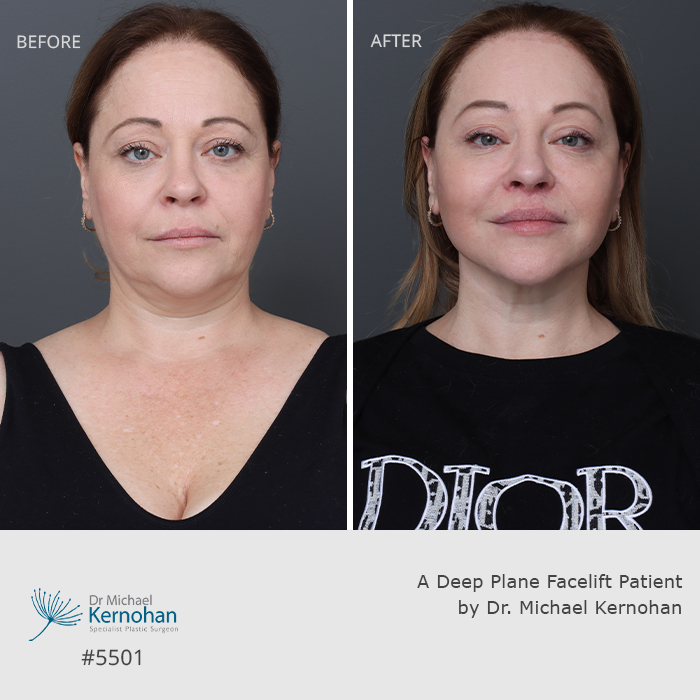
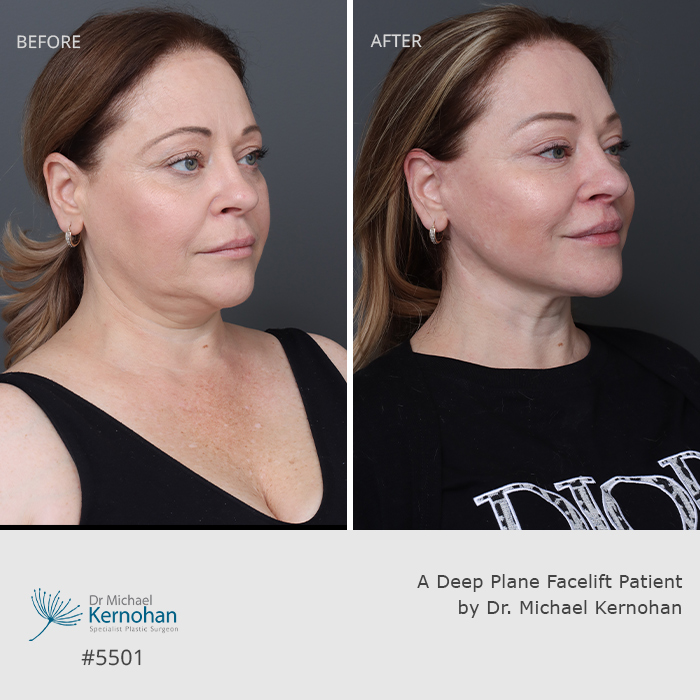
Disclaimer: All surgical or invasive procedures come with inherent risks, and results can vary widely between individuals due to factors like lifestyle, anatomy, overall health, weight, and nutrition. We encourage you to conduct thorough research and consider seeking a second opinion from a qualified healthcare provider.
What Is Recovery Like After Isolated Neck Lift Compared With Combined Procedures?
Recovery after isolated neck lift may be more focused on the neck, while recovery after combined procedures can involve the lower face, jawline and neck together. The timeline depends on the extent of surgery, the patient’s health and how the tissues heal.
- Swelling and bruising are common after both isolated and combined procedures.
- Tightness, altered sensation or numbness may occur around the neck, jawline or ears.
- Compression, dressings or drains may be used depending on the surgical plan.
- Activity restrictions are usually required during early healing.
- Combined procedures may involve broader swelling and longer recovery planning.
Patients should not assume that isolated surgery always means a minor recovery or that combined surgery is always necessary. Dr Michael Kernohan provides aftercare advice based on the specific procedure performed and the patient’s healing progress.
What Alternatives Should Patients Consider?
Alternatives should be discussed before deciding on isolated neck lift or combined procedures. The most appropriate option may be no surgery, delayed surgery, staged surgery, skin-focused treatment or another procedure depending on the cause of the concern.
- No surgery may be appropriate if the concern is mild or risks are not acceptable.
- Delaying surgery may be sensible if weight, health or expectations need more time.
- Staged procedures may be considered when treating everything at once is not appropriate.
- Skin-focused treatments may help texture or pigmentation but do not replace lifting surgery.
- A facelift or combined face and neck lift may be considered when lower-face descent contributes.
Alternatives are part of informed consent. Dr Michael Kernohan discusses them so patients understand that surgery is only one possible pathway.
Who May Be Suitable for Isolated Neck Lift or Combined Surgery?
A patient may be suitable for isolated neck lift or combined surgery if their anatomy matches what the procedure can address and they are medically suitable for surgery. Suitability also depends on realistic expectations, recovery capacity and willingness to accept scars and risks.
- Isolated neck lift may suit patients whose concern is mainly neck skin laxity, platysma bands or under-chin fullness.
- Combined surgery may suit patients with both neck changes and lower-face descent.
- Patients should be in suitable general health for anaesthesia and surgery.
- Smoking, vaping or nicotine use should be discussed and managed before surgery.
- Patients should understand recovery, scars, risks, limitations and alternatives.
Suitability cannot be confirmed from photos or online research alone. Dr Michael Kernohan assesses the neck, jawline, lower face, health history and goals before discussing whether surgery is appropriate.
Take the Quiz
Who May Not Be Suitable for Isolated Neck Lift or Combined Surgery?
Some patients may not be suitable for surgery, or may need to delay surgery until risk factors are addressed. This may include patients whose medical risk is high, whose expectations do not match what surgery can achieve, or whose concerns are better treated another way.
- Uncontrolled blood pressure, diabetes or other medical concerns may need review first.
- Smoking or nicotine use can increase wound-healing and skin-related risks.
- Blood-thinning medicines and some supplements may complicate surgery planning.
- Patients seeking a guaranteed appearance may not be suitable.
- Patients with mainly skin texture or pigmentation concerns may need another pathway.
Not being suitable now does not always mean surgery is never possible. Dr Michael Kernohan may recommend medical review, waiting, another treatment option or no surgery depending on the patient’s situation.
Are Costs Relevant When Comparing Isolated Neck Lift and Combined Procedures?
Costs may be relevant when comparing isolated and combined procedures, but they should not be the main reason for choosing a surgical plan. Costs can vary because combined procedures may involve different operating time, anaesthetic needs, theatre requirements and follow-up planning.
- Isolated neck lift and combined procedures may involve different theatre and anaesthetic time.
- A combined face and neck lift may involve broader surgical planning.
- Garments, dressings, pathology, medications and follow-up needs may vary.
- Revision or staged procedures may have different cost considerations.
- An individual quote can only be provided after consultation and assessment.
Choosing a smaller procedure for cost reasons can leave concerns untreated if the anatomy needs broader planning. Dr Michael Kernohan can explain the recommended approach and clinic-specific cost information after assessment.
In Conclusion
An isolated neck lift may be appropriate when the main concern is in the neck and the lower face has reasonable support. Combined procedures may be considered when jowls, jawline laxity, lower-face descent or other facial concerns also contribute.
The decision should be based on anatomy, health, recovery needs, risk and realistic expectations. Treating the wrong area can leave concerns untreated or create a mismatch between the neck, jawline and lower face.
Dr Michael Kernohan, Specialist Plastic & Reconstructive Surgeon in South West Sydney, assesses each patient individually before recommending isolated neck lift, combined procedures, staged surgery, another option or no surgery. The aim is to provide clear information so patients can make an informed decision.

Isolated Neck Lift vs Combined Procedures FAQs
Download Dr Kernohan’s Facelift Surgery Guide

Next Steps: Consult With Dr Kernohan When Considering a Neck Lift
If you are wondering whether an isolated neck lift is enough, or whether a combined procedure would suit you better, a structured consultation is the most useful next step.
Meeting Dr Michael Kernohan, Specialist Plastic & Reconstructive Surgeon in Sydney, gives you the chance to talk through what bothers you about your neck and lower face, have your anatomy and skin quality assessed in detail, review your medical history and lifestyle, and explore both neck-only and combined options with their pros and cons clearly laid out.
You can bring old and recent photos, a list of medicines and written questions about isolated versus combined surgery. Dr Kernohan’s clinic website has a contact page and a complimentary photo assessment page for convenient sending of enquiries, images, or appointment requests. The aim is thoughtful, evidence-informed decision-making, not a rushed choice
Book a neck lift consultation
"*" indicates required fields
Further Reading
- Read more about Deep Neck Lift Sydney
- Read more about Partial Neck Lift Sydney
- Read Dr Kernohan’s Blog on Exercise After a Neck Lift for Excess Skin Removal
- Read Dr Kernohan’s Blog on Managing and Treating Necklift Scars
- Read Dr Kernohan’s Blog on How to Sleep Better After Neck Lift Surgery
- Read more about How Long Does a Neck Lift Last?

Facelift Vs Non‑Surgical Tightening: What’s Right For Your Facial Goals
Introduction Dr Michael Kernohan is a Specialist Plastic & Reconstructive Surgeon in Sydney. Facelift surgery…

How to Choose a Facelift Surgeon in Sydney
Dr Michael Kernohan, Specialist Plastic & Reconstructive Surgeon in Sydney, understands that choosing a facelift…

Male Neck Lift Considerations – Why Techniques Differ for Men
Introduction Dr Michael Kernohan is a Specialist Plastic & Reconstructive Surgeon in Sydney. Male neck…