

Dr Michael Kernohan is a Specialist Plastic & Reconstructive Surgeon in Sydney who provides structured aftercare for facelift patients. Facelift recovery usually involves early swelling and bruising, followed by gradual improvement over several weeks and continued tissue healing for several months.
Knowing what to expect after facelift surgery can help you plan time away from work, prepare your home and recognise when to contact your surgical team. Recovery varies between patients, so this guide explains common healing stages rather than a fixed schedule for everyone.
What Happens During the First 24 to 72 Hours After Facelift Surgery?
The first 24 to 72 hours after facelift surgery are usually the most intense part of the early recovery period. Swelling, bruising, tightness and tiredness are common as the body begins its healing response.
- Keep your head elevated while resting, using pillows or a recliner if advised by your surgical team.
- Use cold compresses only if recommended, and avoid placing pressure directly on incision areas.
- Take prescribed pain relief exactly as instructed by Dr Michael Kernohan and your anaesthetist.
- Move gently around the home to support circulation, unless you have been advised otherwise.
- Avoid bending, lifting, straining or sudden movements that may increase pressure in the face and neck.
These early days help set the foundation for the rest of your facelift recovery timeline. Contact the clinic promptly if swelling becomes severe, one-sided, painful or associated with bleeding.

What Changes Are Common From Day 4 to Day 7 After a Facelift?
From day 4 to day 7, many patients notice that swelling and bruising begin to change rather than disappear completely. Bruising may shift in colour, and the face may still feel firm, tight or uneven as healing continues.
- Bruising may change from darker tones to yellow, green or brown as the body absorbs blood pigments.
- Gentle walking around the house is usually encouraged to support circulation.
- Stitches or clips may be reviewed or removed during this period, depending on the surgical plan.
- Head elevation remains important while resting or sleeping.
- Avoid judging your appearance too early, as swelling can change from day to day.
This stage can feel encouraging because discomfort may start to ease, but the face is still in an early healing phase. Continue to follow your written aftercare instructions rather than relying on how you feel alone.
What Should You Expect During Week Two of Facelift Recovery?
During week two, visible swelling and bruising often begin to reduce, although they may still be noticeable. Some patients feel ready for light daily tasks, but the tissues are still healing internally.
- Swelling is often less than during the first week, but firmness around the jawline and neck may remain.
- Bruising may fade, although some residual colour can persist around the cheeks, jaw or under-eye area.
- Light desk-based work may be possible for some patients, depending on comfort and appearance.
- Makeup should only be used when incisions are closed and your clinical team has cleared it.
- Strenuous exercise, heavy lifting and bending should still be avoided.
Week two is often a transition stage between early rest and gradual return to normal daily activity. Dr Michael Kernohan will guide your activity level based on how your own recovery is progressing.
What Happens During Weeks Three to Four After Facelift Surgery?
Weeks three to four are often when patients feel more socially comfortable, although healing is not complete. Swelling continues to reduce, bruising usually fades further and the face may begin to look more settled.
- Many patients resume non-strenuous work or social activities during this stage.
- Mild swelling may remain around the jawline, neck or cheeks.
- Numbness, tingling or altered sensation can still be present.
- Gentle activity may increase gradually if cleared by your surgeon.
- Incision care and sun protection remain important.
This stage can feel like a major improvement, but internal tissue recovery is still active. Continue avoiding heavy exercise or strain until Dr Michael Kernohan confirms it is appropriate.
What Should You Expect Around Months Two to Three?
By months two to three, many visible signs of early recovery have improved significantly. Some swelling, firmness or sensory changes may still remain as deeper tissues continue to settle.
- Most bruising has usually resolved by this stage.
- Mild swelling may persist, especially in the morning or after activity.
- Tightness may continue to soften gradually.
- Sensation changes around the cheeks, ears, jawline or neck may improve slowly.
- Scar tissue continues to mature and soften over time.
This stage is often when patients feel more settled in everyday routines. However, ongoing changes can continue beyond this point, so it is still too early to judge the long-term outcome fully.
What Happens From Months Four to Six After a Facelift?
Months four to six are part of the longer healing phase after facelift surgery. Swelling is usually much less noticeable, but scar maturation and deep tissue remodelling can continue.
- Subtle contour changes may continue as swelling reduces.
- Incision lines often soften and fade, although scars remain permanent.
- Some patients still notice mild tightness or firmness in certain areas.
- Skin and deeper tissues continue adapting to their new position.
- Sun protection remains important for scar care and skin health.
By this stage, most patients have moved beyond the early recovery period. Dr Michael Kernohan will continue to advise on scar care, review appointments and any ongoing concerns.
How Can You Support Facelift Recovery at Home?
Good home preparation can make the facelift recovery period easier to manage. The aim is to reduce avoidable strain, support healing and make it easier to follow post-operative instructions.
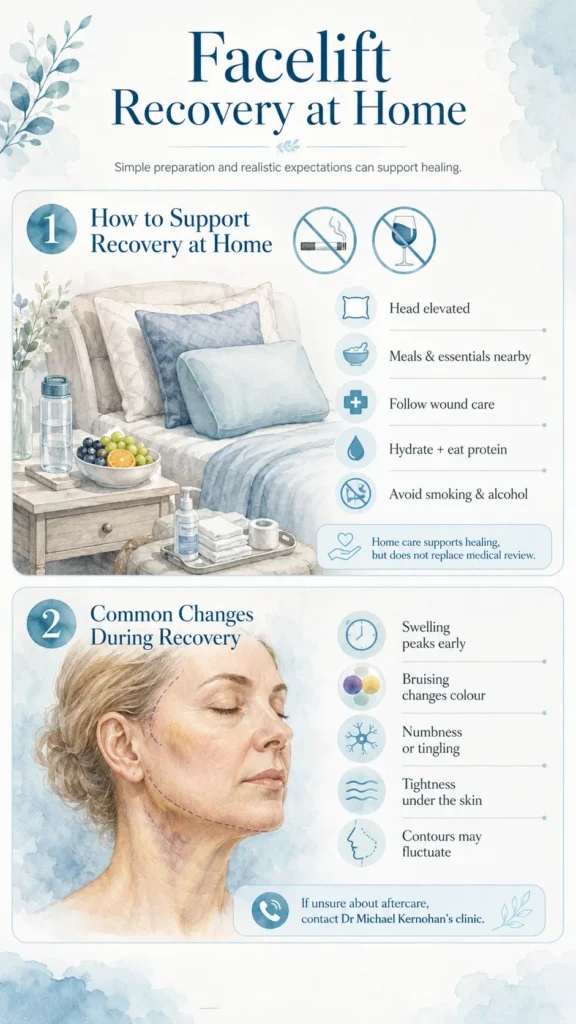
- Set up a comfortable rest area with pillows to keep your head elevated.
- Prepare simple meals and keep commonly used items within easy reach.
- Follow all dressing, wound care and compression instructions if these are provided.
- Stay hydrated and eat balanced meals with adequate protein.
- Avoid smoking and alcohol, as they can affect healing and circulation.
Home care does not replace medical review, but it can support a more organised recovery. If you are unsure about any part of your aftercare, contact Dr Michael Kernohan’s clinic for guidance.
What Common Changes Might You Notice During Facelift Recovery?
Facelift recovery can involve changes that feel unfamiliar, even when they are part of normal healing. Swelling, bruising, numbness, tightness and temporary contour changes are common during the recovery timeline.
- Swelling often peaks early and then gradually improves.
- Bruising may change colour before it fades.
- Numbness or tingling can occur as nerves recover.
- Firmness or tightness may be felt under the skin.
- Early contour changes can fluctuate as swelling moves and reduces.
These changes usually improve with time, but they should still be monitored. If symptoms worsen suddenly or feel unusual, it is better to ask your clinical team than to wait.
When Should You Contact the Clinic During Facelift Recovery?
You should contact the clinic if symptoms change suddenly, worsen after improving or feel outside your expected recovery pattern. Early review can help identify problems such as bleeding, infection or wound-healing concerns.
- Contact the clinic if swelling becomes sudden, painful, hard or one-sided.
- Seek advice if you notice increasing redness, warmth or discharge from incision areas.
- Report persistent fever or discomfort that does not match your recovery instructions.
- Ask for review if you notice sudden facial weakness or unexpected changes in sensation.
- Seek urgent medical care for chest pain, breathing difficulty or sudden vision changes.
It is not always possible to tell from home whether a symptom is serious. Dr Michael Kernohan’s team can help decide whether you need reassurance, clinic review or urgent care.
How Does Dr Michael Kernohan Support Facelift Aftercare?
Dr Michael Kernohan provides structured follow-up and personalised aftercare for facelift patients in Sydney. Recovery guidance is tailored to the operation performed, the patient’s health and how healing progresses.
- Follow-up appointments allow incision sites, swelling and healing progress to be reviewed.
- Activity guidance can be adjusted as recovery develops.
- Scar care advice may be provided once incisions are ready.
- Concerns about swelling, bruising, tightness or sensation can be discussed.
- Recovery planning can be adapted for work, family and lifestyle needs.
Clear communication during recovery helps small concerns be addressed early. Patients are encouraged to contact the clinic if they are unsure about symptoms, wound care or activity restrictions.
What Is the Typical Timeline for Facelift Recovery?
Most patients experience the most visible swelling and bruising during the first week after facelift surgery. Improvement usually continues through weeks two to four, with deeper healing and subtle settling over several months.
- First 24 to 72 hours: swelling, bruising, tightness and rest are common.
- Days 4 to 7: bruising may change colour and discomfort may begin to ease.
- Week two: many patients feel more comfortable with light daily activity.
- Weeks three to four: visible signs often continue to reduce.
- Months two to six: swelling, scars and tissue firmness continue to settle.
This timeline is a guide only, not a guarantee. Your recovery may be shorter or longer depending on your procedure, health, skin quality and aftercare.
When Can You Return to Work After a Facelift?
Return to work depends on your healing, the type of work you do and how comfortable you feel being seen during recovery. Many patients with non-strenuous roles consider returning after the early swelling and bruising have reduced.
- Desk-based work may be possible earlier than physical work.
- Jobs involving lifting, bending or exertion usually need more time.
- Bruising and swelling may still be visible when you feel otherwise well.
- Makeup should only be used once incisions are closed and cleared.
- Dr Michael Kernohan will advise based on your progress at follow-up.
It is sensible to allow flexibility rather than planning a tightly timed return. If your work is physically demanding, ask for specific guidance before resuming normal duties.
How Long Does Swelling Usually Last After a Facelift?
Swelling usually peaks in the first few days and then gradually improves over the following weeks. Some mild residual swelling can remain for several months, especially around the jawline and neck.
- Early swelling is part of the body’s normal healing response.
- Swelling may look uneven from side to side in the first weeks.
- Morning swelling may be more noticeable for some patients.
- Activity, heat and salt intake can sometimes make swelling more noticeable.
- Persistent or worsening swelling should be reviewed by your surgical team.
Swelling should generally trend downward over time, even if it fluctuates day to day. Sudden, painful or one-sided swelling should be assessed promptly.
Download Dr Michael Kernohan’s Facelift Surgery Guide
What Activities Should Be Avoided During Facelift Recovery?
Activities that raise blood pressure or strain healing tissues are usually restricted during early facelift recovery. This helps reduce the risk of bleeding, swelling and wound-healing problems.
- Avoid heavy lifting until cleared by your surgeon.
- Avoid vigorous exercise during the early recovery period.
- Avoid bending forward for long periods.
- Avoid straining, pushing or pulling heavy objects.
- Avoid swimming or exposing incisions to unapproved products until cleared.
Light walking is often encouraged, but exercise should return gradually. Dr Michael Kernohan will advise when it is appropriate to increase activity based on your healing.
Can You Use Makeup to Hide Bruising After a Facelift?
Makeup may be possible once incisions are fully closed and your clinical team has cleared you to apply products. It should not be used too early or near healing incision lines without advice.
- Do not apply makeup over open or healing wounds.
- Wait until the clinic confirms incisions are closed enough.
- Use clean applicators to reduce contamination risk.
- Avoid irritating products near incision areas.
- Remove makeup gently without rubbing the skin.
Makeup can help cover residual bruising in some patients, but timing matters. Always follow Dr Michael Kernohan’s advice before applying products during recovery.
Facelift Before and After Photo
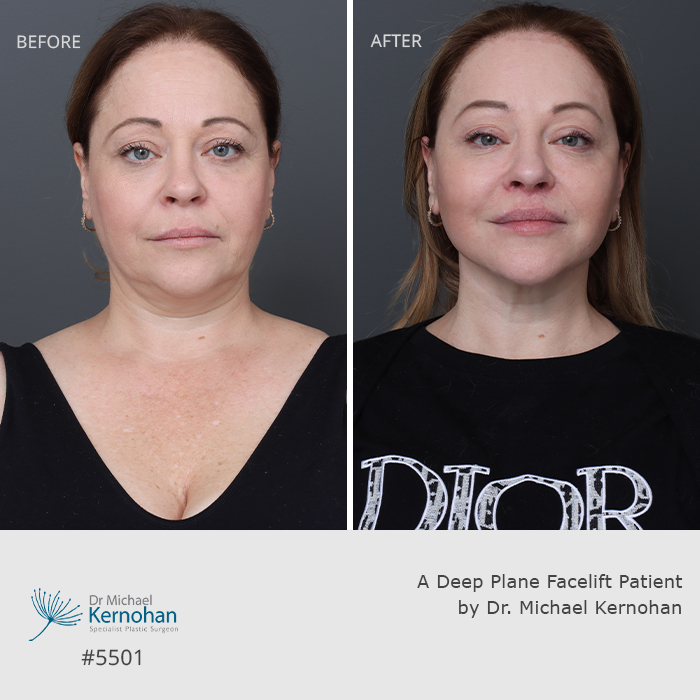
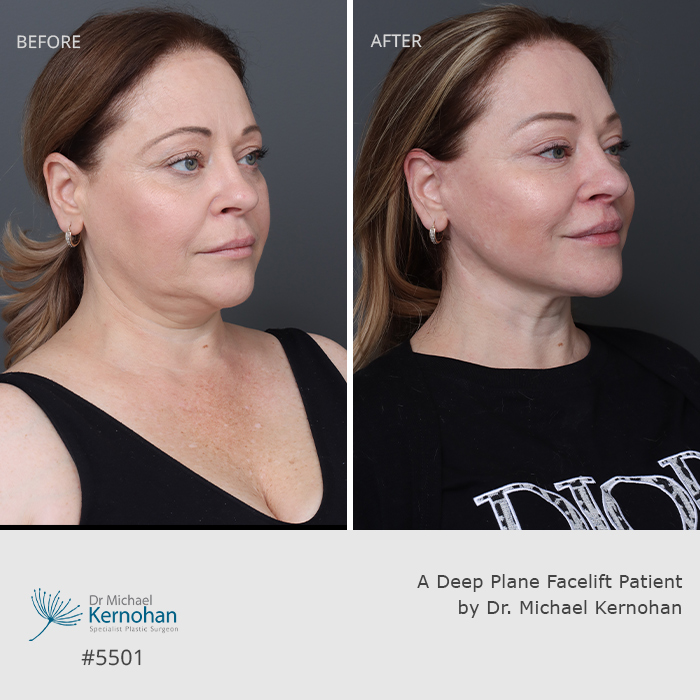
Disclaimer: All surgical or invasive procedures come with inherent risks, and results can vary widely between individuals due to factors like lifestyle, anatomy, overall health, weight, and nutrition. We encourage you to conduct thorough research and consider seeking a second opinion from a qualified healthcare provider.
Is Numbness or Tingling Normal After Facelift Surgery?
Temporary numbness, tingling or altered sensation can occur after facelift surgery as nerves recover. These sensations often improve gradually, but recovery can take weeks to months.
- Numbness may occur around the cheeks, ears, jawline or neck.
- Tingling or hypersensitivity can happen as sensation returns.
- Sensation changes may improve unevenly.
- Persistent or worsening symptoms should be discussed at follow-up.
- Sudden weakness or unexpected movement changes should be reviewed promptly.
Altered sensation is a common recovery concern, but it should still be monitored. Dr Michael Kernohan can explain what is expected for your specific operation and when further review is needed.
What Are Practical Tips for Managing Swelling and Discomfort?
Swelling and discomfort are common in the early facelift recovery period, but careful aftercare can make this stage easier to manage. The most important steps are to follow the instructions given by your surgical team.
- Keep your head elevated while resting during the early recovery period.
- Use cold compresses only if recommended and only as instructed.
- Take prescribed medication on schedule rather than waiting for pain to build.
- Drink enough fluids and eat balanced meals.
- Avoid smoking, alcohol and strenuous activity unless cleared.
These measures can support comfort and reduce avoidable strain on healing tissues. If discomfort increases or feels unusual, contact the clinic for advice.

Is Facelift Recovery the Same for Everyone?
Facelift recovery is not the same for every patient. Healing can vary due to surgical technique, age, skin quality, medical history, medications and how closely aftercare instructions are followed.
- Some patients bruise more than others.
- Swelling can last longer in some people.
- Sensation changes may settle at different speeds.
- Recovery may be slower if smoking, illness or medication issues are present.
- Combined procedures can change the recovery timeline.
Comparing your recovery too closely with another person’s can be misleading. Dr Michael Kernohan will guide you based on your own procedure and healing pattern.

Facelift Recovery Timeline FAQs
Taking the Next Step: Planning Your Facelift Recovery With Dr Kernohan
If you are contemplating facelift surgery or are in the early stages of post‑operative care, a targeted consultation with Dr Michael Kernohan can help set expectations and personalise your aftercare plan. Contact the clinic in Sydney to schedule an appointment or to submit photos for a complimentary image review. Thoughtful planning and informed support help patients move through their recovery with confidence and clarity.
Take the Quiz
Further Reading
- Read Dr Kernohan’s Procedure page on Neck Lift Surgery Sydney
- Read Dr Kernohan’s Procedure page on Deep Plane Facelift NSW
- Read Dr Kernohan’s Procedure page on Partial Facelift Surgery NSW
- Read Dr Kernohan’s Procedure page on Revision Facelift Sydney
- Read Dr Kernohan’s Facial Surgery page on Facial Surgery NSW