
- What Are Facelift Garments?
- Are You Ready for Surgery? Find Out
- Why Are They Important in Recovery?
- Download Dr Kernohan’s Facelift Surgery Guide
- When and How to Wear Them
- Choosing a Suitable Garment
- Looking After the Garment
- Facelift Before and After Photo
- Facelift Recovery Tips for Sydney Patients
- FAQs About Facelift Garments
- A Word from Dr. Michael Kernohan
- Further Reading
Facelift surgery can bring subtle yet meaningful changes to the lower face and neck. Just as important as the surgery itself is what happens afterward. The recovery phase is where tissues settle and results start to take shape.
Dr. Michael Kernohan, Specialist Plastic & Reconstructive Surgeon in South West Sydney, works closely with patients to guide them through each part of this process. A key part of this care often includes wearing a facelift garment – a compression aid that offers physical support while the face heals.
For patients from Sydney and surrounding areas, understanding how and why these garments are used can make the recovery experience more manageable and less uncertain.
What Are Facelift Garments?
Facelift garments are flexible, wrap-around supports worn after surgery to help reduce swelling and stabilise the face. They’re usually made from breathable fabric with adjustable fastenings to support a comfortable fit. Some cover the chin and neck, while others may include additional straps for the back of the head.
They’re not just generic medical items – Dr. Kernohan confirms that each garment is suited to the individual’s surgical needs and personal comfort. Patients are shown how to wear and care for them before leaving the clinic.
Are You Ready for Surgery? Find Out
Why Are They Important in Recovery?
1. Keeping Tissue Supported
After facial surgery, tissues need time to reattach and settle. Even small movements – during sleep, talking, or turning the head – can place stress on healing areas. Facelift garments hold everything gently in place, which may help reduce unnecessary movement in the early days.
Dr. Kernohan often explains that it’s not just about keeping things in place – it’s about creating the right environment for tissues to recover naturally.
2. Reducing Swelling
Swelling is expected after surgery. These garments apply gentle, even pressure that can help guide excess fluid away from the surgical area. This support is especially useful during the first week, when puffiness tends to be at its peak.
Many Sydney patients appreciate the practical aspect of wearing something that helps them feel more secure and in control during recovery.
3. Managing Bruising and Sensitivity
Compression can also help limit bruising and reduce some of the tenderness that comes with early healing. Patients often say they feel more comfortable and less sensitive when wearing the garment, especially during activities like walking or resting.
Download Dr Kernohan’s Facelift Surgery Guide
When and How to Wear Them
The First Few Days

In the first few days after surgery, the garment is usually worn around the clock. It may only be removed briefly for face washing or changing dressings, depending on Dr. Kernohan’s instructions. The goal is to maintain steady support during this high-activity healing period.
Wearing the garment can feel unusual at first, but most patients quickly adjust. It’s helpful to remember that its role is to protect and guide healing, not to compress tightly or cause discomfort.
Adjusting Over Time
As swelling improves, the amount of time spent wearing the garment often changes. Patients may move to wearing it only at night or while resting. Dr. Kernohan reviews this timeline during follow-up visits, adjusting it based on how the tissues are settling.
Consistency is more important than perfection. Patients are encouraged to focus on regular, proper use rather than wearing it every moment out of concern.
Choosing a Suitable Garment
✓ Getting the Fit Right
The garment should be firm but not restrictive. If it feels too tight, slips off, or creates skin marks, it’s worth having it checked or replaced. A good fit offers support without irritation.
Patients sometimes try on different styles to find the one that works best. Dr. Kernohan or a member of his team can help with this process.
✓ Material and Features
Garments made from breathable, hypoallergenic fabric are ideal. Some have more structured areas for under the chin or behind the ears. Others are simpler, designed for shorter-term use. The choice depends on the surgery and personal preference.
✓ Dr. Kernohan’s Advice
Dr. Kernohan helps select a garment suited to each patient’s needs. During consultations, he discusses what to expect and how to use it effectively – so patients feel informed and prepared rather than guessing their way through recovery.
Looking After the Garment
✓ Cleaning and Care
These garments should be washed regularly using mild soap and cool water. Air drying keeps the fabric in good shape. Patients often alternate between two garments, allowing one to dry while the other is worn.
This routine isn’t just about cleanliness – it helps protect the skin from irritation, especially during warm Sydney weather.
✓ Knowing When It’s Time for a New One
Like any item used regularly, facelift garments can wear out. If the fabric becomes loose or the fastenings no longer hold, the garment may not provide the support it should. When this happens, replacing it is a practical step in supporting your recovery.
Facelift Before and After Photo

Disclaimer: All surgical or invasive procedures come with inherent risks, and results can vary widely between individuals due to factors like lifestyle, anatomy, overall health, weight, and nutrition. We encourage you to conduct thorough research and consider seeking a second opinion from a qualified healthcare provider.
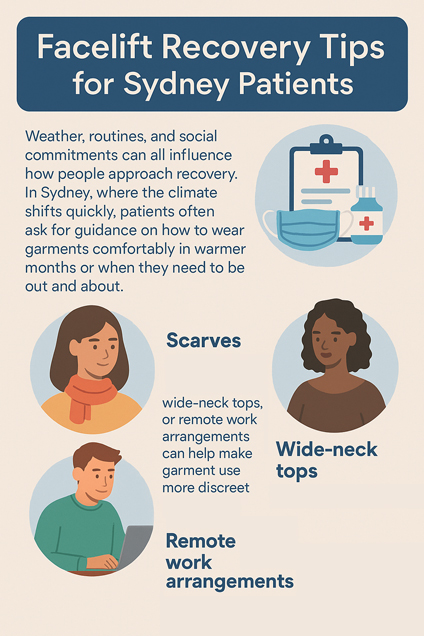
Facelift Recovery Tips for Sydney Patients
Weather, routines, and social commitments can all influence how people approach recovery. In Sydney, where the climate shifts quickly, patients often ask for guidance on how to wear garments comfortably in warmer months or when they need to be out and about.
Scarves, wide-neck tops, or remote work arrangements can help make garment use more discreet. Dr. Kernohan’s team supports patients from all over Victoria, offering suggestions that fit their lifestyle while still meeting clinical goals.
FAQs About Facelift Garments

A Word from Dr. Michael Kernohan
“Facelift garments might not seem like a major part of recovery, but they often make a real difference,” says Dr. Kernohan. “They offer structure and support – both physically and emotionally – during those early days when patients are adjusting.”
At his South West Sydney clinic, Dr. Kernohan takes time to confirm each patient understands every aspect of recovery. His care extends to those travelling from Sydney or regional centres, with a focus on personalised advice and clear follow-up planning.
Recovery doesn’t need to feel complicated. With the right information and support, including how to use a garment correctly, most patients find their rhythm quickly.
Further Reading
- Read Dr Michael Kernohan’s Blog about SMAS vs Deep Plane Facelift
- Read Dr Michael Kernohan’s Blog about Facelift for Men: What You Need to Know
- Read Dr Michael Kernohan’s Blog about What is a Ponytail Facelift?
- Read Dr Michael Kernohan’s Blog about Complications in Facelift Surgery and How to Address Them

Incisions in a Neck Lift – Where They Are Placed and Why
When people start looking into neck lift surgery, one of the most common questions is, “Where are the cuts…

How Weight Changes Affect Neck Appearance
Many people in their 40s, 50s and 60s notice the same thing in photos: even when they feel quite…

How Long Does a Neck Lift Last?
“How long will it last?” is one of the first questions people ask about neck lift surgery. In Sydney,…