

- What Causes Swelling After a Facelift?
- Early Measures in Hospital and the First Few Days
- At-Home Strategies to Help Swelling Settle
- What Is Normal Swelling – and What Is Not?
- Longer-Term Swelling and Lifestyle Factors
- Facelift Before and After Photos
- Do’s and Don’ts to Help Reduce Swelling After a Facelift
- Reducing Swelling After a Facelift FAQs
- Take the Quiz
- Next Step: Discuss Facelift Swelling With Dr Kernohan
- Download Dr Kernohan’s Facelift Surgery Guide
- Further Reading
Swelling after facelift surgery is very common, but it can still feel worrying when you are the one looking in the mirror.
In Sydney, Dr Michael Kernohan, Specialist Plastic & Reconstructive Surgeon, spends a lot of time helping patients understand what is normal, what can help at home, and when swelling needs an early review. Swelling forms part of the body’s healing response after surgery and may be most noticeable around the cheeks, jawline and neck.
This article looks at practical, evidence-based ways to help manage swelling after a facelift, with a focus on patients seeing Dr Michael Kernohan in Sydney. It is general information only and does not replace a personal consultation or written instructions from your own surgical team.
What Causes Swelling After a Facelift?

✓ Normal healing, not a sign that something has gone wrong
During a facelift, deeper tissues of the face and neck are lifted, tightened or repositioned. Small blood vessels and lymphatic channels are disturbed as part of this process. Your body responds with inflammation and extra fluid in the tissues – what you see as swelling. This is a standard part of the healing process after most operations, including facial surgery.
In his article on managing swelling, Dr Michael Kernohan describes swelling as your body’s way of bringing healing cells and nutrients to the area after facelift surgery, especially around the cheeks, jawline and neck.
✓ Typical swelling timeline
Most facelift recovery guides describe a similar pattern:
- Swelling usually peaks in the first few days, often between days three and five.
- It then gradually settles over the next couple of weeks. Many people feel more “presentable” somewhere around two to three weeks, although there is still some puffiness.
- A small amount of firmness or residual swelling can take several months to completely resolve, especially around the ears and under the chin.
When you see Dr Michael Kernohan in Sydney, he will explain how this general pattern is likely to apply to you, based on your health, the technique used and how much work has been done around the neck.
Early Measures in Hospital and the First Few Days
✓ Dressings, bandages and drains
Immediately after your facelift, you may have:
- A dressing or supportive bandage around your face and head to help limit early swelling and bruising.
- Small drains near the incisions to remove excess fluid or blood for a short period.
These are planned parts of the operation. They are there to help control swelling and create a more stable healing environment. Dr Michael Kernohan will usually review you soon after surgery in Sydney and decide when dressings or drains can be removed or changed.
✓ Head elevation and rest
Keeping your head slightly raised is one of the simplest ways to help swelling settle. Many facelift recovery resources suggest:
- Resting with your head elevated on extra pillows or in a recliner for the first days after surgery.
- Avoiding long periods lying flat, which can allow more fluid to pool around the face.
When you go home after surgery with Dr Michael Kernohan in Sydney, his team will give you written advice on sleeping position and rest. This is an easy step that can make a noticeable difference to swelling and comfort.
✓ Cool compresses – if your surgeon advises them
Many plastic surgery guides describe carefully used cool compresses as a helpful comfort measure in the first 48 hours after facelift surgery. Cool packs can reduce surface temperature, narrow small blood vessels and ease the feeling of tightness.
However, it is important to follow your own surgeon’s instructions. If Dr Michael Kernohan recommends cool compresses in Sydney, he will usually suggest:
- Wrapping a cool pack or frozen peas in a soft cloth (never placing ice directly on the skin).
- Applying it gently for short periods, with breaks in between.
- Avoiding heavy pressure on the operated areas.
Some patients are advised not to use cold therapy at all, depending on their circulation, skin type or specific operation. Always check before you start.
At-Home Strategies to Help Swelling Settle
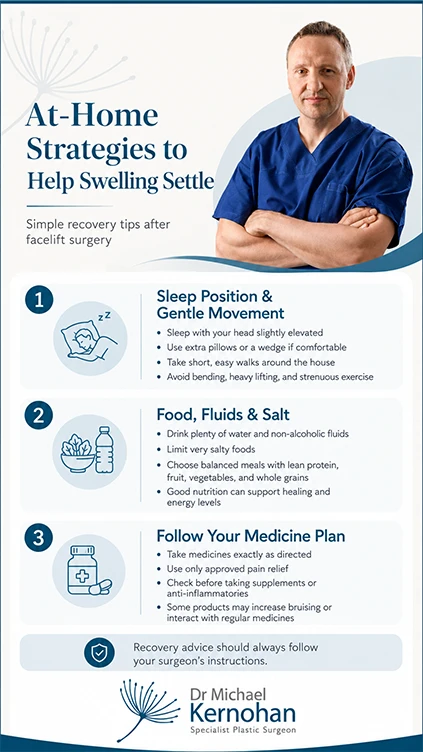
✓ Sleep position and gentle movement
Once you are home, two of the most important tools are how you sleep and how you move.
Sleeping with your head slightly elevated – using extra pillows or a wedge where comfortable – can help fluid drain away from the face and neck overnight. This tip appears consistently in facelift recovery guides and is reinforced in Dr Michael Kernohan’s own facelift swelling article.
At the same time, a little movement is better than none. Short, easy walks around the house can help circulation and reduce general stiffness, as long as you avoid bending, heavy lifting or strenuous exercise until Dr Michael Kernohan clears you.
✓ Food, fluids and salt
What you eat and drink can influence swelling. Several post-facelift recovery articles suggest:
- Staying well-hydrated with water and other non-alcoholic drinks.
- Limiting very salty foods, as high sodium intake can encourage your body to hold onto more fluid.
- Choosing balanced meals with lean protein, vegetables, fruit and whole grains to support healing.
You do not need a special “facelift diet” in Sydney, but eating in a steady, nutritious way and moderating salt can help swelling and energy levels.
✓ Following your medicine plan
To keep swelling under control and reduce risk of complications, Dr Michael Kernohan may prescribe:
- Pain relief that is suitable after facial surgery.
- Sometimes other medicines, depending on your health and the complexity of your facelift.
It is important to:
- Take medicines exactly as directed.
- Avoid over-the-counter anti-inflammatories or supplements that have not been checked by your surgeon or GP, as some can increase bruising or interact with your regular medicines.
If you are unsure about any tablet or vitamin after your facelift in Sydney, check with Dr Michael Kernohan’s rooms before using it.
What Is Normal Swelling – and What Is Not?
✓ Changes that are usually expected
Most people will notice:
- Puffiness and a feeling of tightness around the cheeks, jawline and neck in the first week.
- Bruising that shifts colour and position as it fades.
- Some areas feeling firmer, heavier or slightly numb for several weeks.
This can look uneven when you are very close to the mirror, especially in the early days. It does not usually mean something has gone wrong. Dr Michael Kernohan will arrange review appointments in Sydney to check that these changes are following a normal pattern.
✓ Warning signs that need urgent review
Information from facelift recovery articles suggests contacting your surgeon promptly if you notice:
- Sudden, marked increase in swelling on one side of the face or neck.
- Swelling that becomes very tense, painful or hard.
- New redness, warmth or pus-like discharge around the incisions.
- Fever or feeling unwell.
These can be signs of a facelift complication such as a collection of blood (haematoma) or infection, which may need early treatment. If you have had surgery with Dr Michael Kernohan in Sydney and notice any of these features, contact his rooms or the hospital straight away, rather than waiting for the next routine review.
Longer-Term Swelling and Lifestyle Factors
✓ Patience over weeks to months
Even when the main swelling has gone, it is normal to have minor changes for some time. International facelift recovery guides note that:
- By around three to four weeks, much of the swelling is usually gone, and most people feel comfortable going back to work and social activities.
- Subtle puffiness, firmness and altered sensation can continue to improve over several months, sometimes up to a year.
At follow-up appointments in Sydney, Dr Michael Kernohan will check how your tissues are settling and talk with you about what further changes are likely over the next stages.
✓ Smoking, alcohol and heat
Your long-term habits also influence swelling and general tissue health:
- Smoking and nicotine can reduce blood flow and affect healing; quitting before surgery and staying smoke-free afterwards is strongly encouraged in plastic surgery guidance.
- Heavy alcohol use can contribute to dehydration and facial puffiness in some people.
- Very hot environments (saunas, hot spas) may temporarily increase swelling and are usually avoided in the early recovery period.
People having facelift surgery with Dr Michael Kernohan in Sydney often find it useful to make small, sustainable lifestyle adjustments before and after surgery, instead of trying to change everything at once.
Facelift Before and After Photos
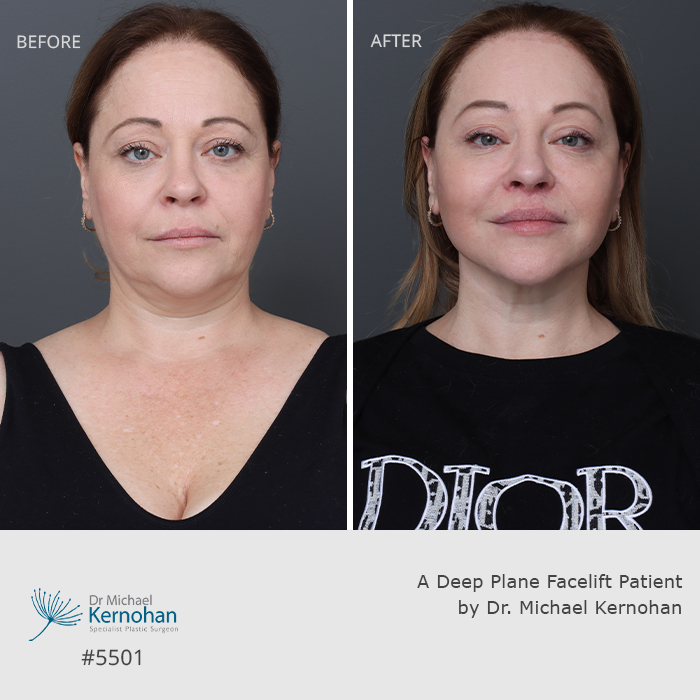
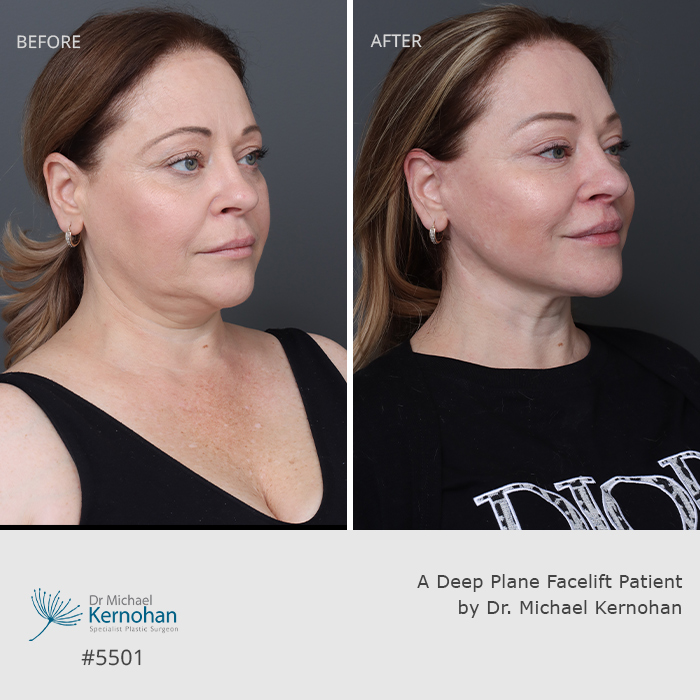
Disclaimer: All surgical or invasive procedures come with inherent risks, and results can vary widely between individuals due to factors like lifestyle, anatomy, overall health, weight, and nutrition. We encourage you to conduct thorough research and consider seeking a second opinion from a qualified healthcare provider.
Do’s and Don’ts to Help Reduce Swelling After a Facelift
(General guidance only – always follow your own surgeon’s instructions.)
- Do keep your head elevated, especially in the first week, and use pillows or a recliner so you can rest comfortably with your face above your chest.
- Do take short, gentle walks at home once Dr Michael Kernohan says it is safe, as this can support circulation and reduce general stiffness without placing strain on your facelift incisions.
- Do drink enough water and choose balanced meals with moderate salt, rather than very salty or processed foods that can make you feel puffier.
- Do attend all follow-up appointments in Sydney so Dr Michael Kernohan can see how your swelling is changing and adjust advice if needed.
- Don’t apply ice or cooling packs directly to the skin, or use very cold packs for long periods without breaks, as this can damage the skin and underlying tissues.
- Don’t resume strenuous exercise, heavy lifting or activities that raise your blood pressure suddenly until Dr Michael Kernohan confirms that your healing can tolerate it, as this can worsen swelling or cause bleeding.
- Don’t ignore sudden or severe changes in swelling, especially if they are painful or one-sided. Contact your surgeon or hospital for advice.

Reducing Swelling After a Facelift FAQs
Take the Quiz
Next Step: Discuss Facelift Swelling With Dr Kernohan
If you are planning facelift surgery – or you have already had one and are unsure about your swelling – a personalised review is often the most reassuring step.
A consultation with Dr Michael Kernohan, Specialist Plastic & Reconstructive Surgeon in Sydney, gives you the chance to:
- Talk through what you are noticing with your swelling and bruising.
- Review your healing, medicines and day-to-day routine.
- Hear which steps are most important for you right now, and what changes are likely over the coming weeks.
- Plan any further follow-up or support if needed.
Getting comfortable with the consultation is paramount. Dr Kernohan’s clinic website has a Contact Page and a Complimentary Photo Assessment Page, which are excellent tools for discreet enquiries and photo submissions. You can also bring photos, a list of medicines and written questions during the consultation to help guide the discussion. The aim is calm, steady care rather than guessing at home.
Download Dr Kernohan’s Facelift Surgery Guide
Further Reading
- Read Dr Kernohan’s Procedure page on Partial Facelift Surgery NSW
- Read Dr Kernohan’s Procedure page on Male facelift South West Sydney
- Read Dr Kernohan’s Procedure page on Deep Plane Facelift NSW
- Read Dr Kernohan’s Blog about Lower Facelift Vs. Full Facelift – Appropriate Candidates For Each
- Read Dr Kernohan’s Blog about What is a Preservation Facelift?
- Read Dr Kernohan’s Blog about How to Sleep after a Facelift

Neck Lift vs Lower Facelift – Which Option Is Right for Different Patients?
Dr Michael Kernohan is a Specialist Plastic & Reconstructive Surgeon in Sydney. A neck lift…

How Long Do Facelift Results Last?
Dr Michael Kernohan, Specialist Plastic & Reconstructive Surgeon in Sydney, speaks with many patients who…

Facelift Scars and Incision Placement: What Patients Should Understand
Dr Michael Kernohan, Specialist Plastic & Reconstructive Surgeon in Sydney, discusses incision placement and scar…