
- Neck Lift As A Standalone Procedure
- Take The Quiz
- What A Neck Lift Addresses
- Download Dr Kernohan’s Facelift Surgery Guide
- How A Neck Lift Differs From A Facelift
- Anatomy Of The Neck And Why It Matters
- Common Signs That Suggest A Neck Lift Alone May Be Suitable
- Who May Not Be An Ideal Candidate For A Neck Lift Alone
- Techniques Used In A Neck Lift Without Facelift
- Incision Placement And Scar Considerations
- Preparing For A Neck Lift Without a Facelift
- Facelift Before and After Photos
- What To Expect On The Day Of Surgery
- Recovery Timeline After A Neck Lift
- Risks And How They Are Managed
- Setting Realistic Expectations For A Neck Lift Alone
- The Role Of A Qualified Plastic Surgeon In Neck Lift Planning
- FAQs About Neck Lift Without Facelift
- Looking Forward: Have a Neck Lift With Or Without Facelift
- Next Step: Discuss Your Neck Lift Options With Dr Kernohan’s Insight
- Further Reading
Neck Lift As A Standalone Procedure
A neck lift is a surgical procedure that targets signs of ageing or descent in the neck region, such as lax skin, muscle banding, and loss of jawline definition. Many people ask whether a neck lift can be done without a facelift, especially if their concerns are largely confined to the neck and under‑chin area. The short answer is YES – in carefully selected cases, a neck lift can be performed without a simultaneous facelift, provided the facial midface shows minimal changes.
Dr Michael Kernohan, Specialist Plastic & Reconstructive Surgeon in Sydney, emphasises that the decision to perform a neck lift alone depends on individual anatomy, ageing patterns, skin quality and aesthetic goals. This article outlines when a neck lift without a facelift is appropriate, how it differs from combined surgery, and what patients can expect before, during and after the procedure.
Take The Quiz
What A Neck Lift Addresses
A neck lift focuses on reshaping the neck and jawline area by:
- Reducing excess neck skin
- Tightening the platysma muscle bands
- Minimising submental fullness (under‑chin fat)
- Addressing the cervicomental angle (the angle between the chin and neck)
The procedure may involve removal of excess skin, targeted liposuction to manage unwanted fat, and tightening of the underlying muscle layer known as the platysma. A neck lift does not significantly alter midface features such as cheeks, nasolabial folds, or jowls – areas typically addressed by a facelift.
Download Dr Kernohan’s Facelift Surgery Guide
How A Neck Lift Differs From A Facelift
A facelift (rhytidectomy) is designed to address descent and laxity in the midface and lower face, including the cheeks, jawline and surrounding tissues. In contrast, a neck lift isolates the neck region, focusing on skin and soft‑tissue support below the jawline.
Because these procedures target different anatomical zones, a patient with concerns confined mainly to the neck may be an appropriate candidate for a neck lift without a facelift. However, if midface descent or jowling is also present, a combined approach may be discussed during consultation for a more uniform result.
Anatomy Of The Neck And Why It Matters
Understanding the neck’s anatomy is key to appreciating why some patients benefit from a neck lift alone. The neck comprises several layers, including:
- Skin and subcutaneous fat
- Platysma muscle
- Deep connective tissue and fascia
- Floor muscles and supporting structures
Age‑related changes can involve skin laxity, loss of elasticity in connective tissues, and separation or banding of the platysma. When these changes are localised to the neck, a neck lift alone can provide targeted improvement without the need to address facial tissues.
Common Signs That Suggest A Neck Lift Alone May Be Suitable
Patients who may be suitable for a neck lift without a simultaneous facelift typically present with:
- Noticeable sagging or loose skin concentrated in the neck region
- Vertical bands in the platysma muscle under the chin
- Submental fullness or a poorly defined jawline
- Minimal descent of midface tissues such as cheeks
These signs are often seen in patients whose primary concern is neck contour rather than facial descent. During consultation, your surgeon assesses skin quality, muscle tone, fat distribution and overall facial harmony to determine whether a neck lift alone may meet your goals.
Who May Not Be An Ideal Candidate For A Neck Lift Alone

There are situations where a neck lift alone may not fully address your aesthetic concerns:
- Significant facial ageing changes beyond the neck
- Noticeable jowling or descent in the cheeks
- Midface soft‑tissue loss or laxity
In such cases, a combined facelift and neck lift may provide a more harmonised outcome. The decision is based on a comprehensive clinical assessment rather than a predetermined rule.
Techniques Used In A Neck Lift Without Facelift
Several neck lift surgical techniques may be used in an isolated neck lift:
✓ Skin Excision And Redraping
Excess skin is removed through carefully placed incisions, and the remaining skin is repositioned to create a smoother neck contour. Strategic incision placement helps conceal scars under the chin and behind the ears.
✓ Platysmaplasty (Muscle Tightening)
When muscle banding is present, targeted tightening of the platysma muscle can reduce vertical bands and enhance neck firmness. This reinforces underlying support without altering midface structures.
✓ Liposuction For Submental Contouring
Targeted liposuction may be used to remove localised fat deposits under the chin or along the neck. This technique can refine the jawline and enhance the cervicomental angle in appropriate candidates.
Incision Placement And Scar Considerations
In a neck lift, incisions are typically placed:
- Under the chin for direct access to submental fat and platysma
- Behind the ears to address lateral neck and jawline tissues
These placements help conceal scars in natural folds or hair‑covered areas. While scarring is an expected outcome of surgery, most neck lift scars tend to become less noticeable over time with proper care, including sun protection and adherence to post‑operative guidance.
Preparing For A Neck Lift Without a Facelift
Preparation for a neck lift involves several steps:
- Comprehensive clinical assessment and photographic analysis
- Review of medical history, medications and risk factors
- Advice on smoking cessation and alcohol moderation
- Planning of post‑operative care and support at home
Your surgeon provides a personalised pre‑operative plan that includes instructions on medications, fasting before surgery, and what to expect on the day of the procedure. Preparing both physically and mentally supports a smoother perioperative experience.
Facelift Before and After Photos
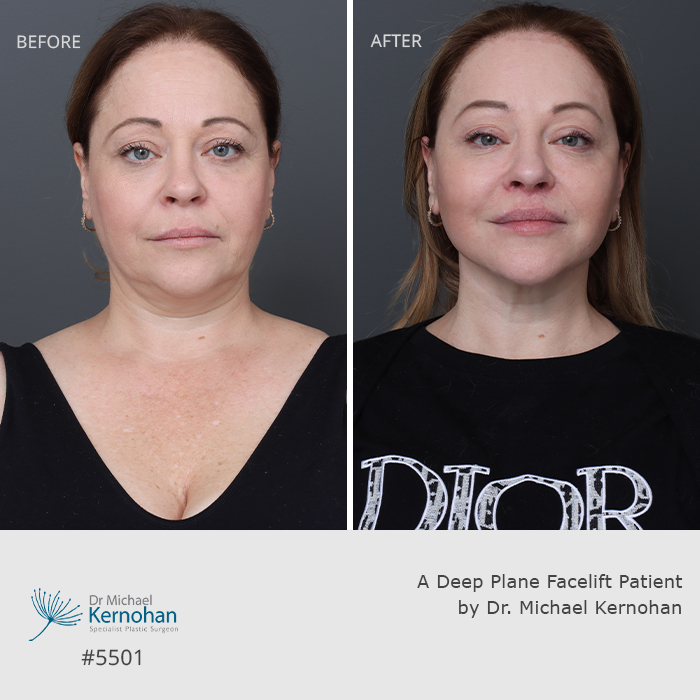
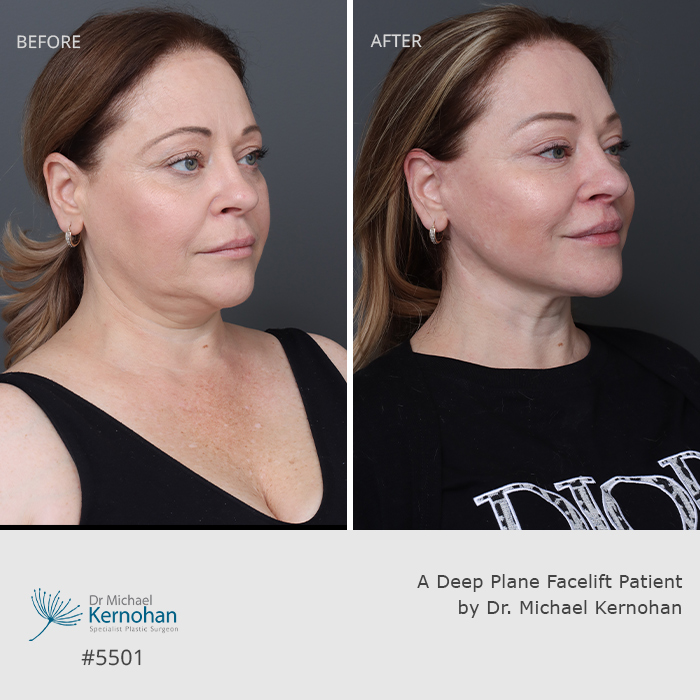
Disclaimer: All surgical or invasive procedures come with inherent risks, and results can vary widely between individuals due to factors like lifestyle, anatomy, overall health, weight, and nutrition. We encourage you to conduct thorough research and consider seeking a second opinion from a qualified healthcare provider.
What To Expect On The Day Of Surgery
On the day of surgery, you will:
- Meet the surgical team and anaesthetist
- Review your surgical plan and confirm marking
- Receive appropriate anaesthesia (commonly sedation or general anaesthesia)
- Proceed to surgery in an accredited facility with monitoring
Safety protocols are followed meticulously to ensure your comfort and minimise risk. Once the procedure is complete, you will be closely monitored as you wake from anaesthesia and transition to recovery.
Recovery Timeline After A Neck Lift
Recovery after a neck lift without a facelift typically progresses as follows:
– Days 1–3:
Swelling and bruising are most pronounced. Discomfort is generally managed with prescribed medication. Gentle walking is encouraged to support circulation.
– Week 1–2:
Swelling and bruising gradually diminish. Stitches may be removed if applicable. Most patients begin gentle activity while avoiding strenuous movements involving the neck.
– Week 3–4:
Mobility improves, and swelling continues to subside. Soft tissue settles into the new contour. Light daily activities resume, but heavy resistance or vigorous activity is deferred until cleared.
– Month 2–3:
Most patients are comfortable with regular activity and may begin low‑impact exercise per the surgeon’s guidance. Residual swelling continues to resolve, and scars begin to mature.
Recovery timelines vary individually, and your surgeon provides guidance tailored to how your tissues respond.
Risks And How They Are Managed
As with all surgical procedures, a neck lift carries some risks. These may include:
- • Temporary numbness or altered sensation
- • Seroma (fluid accumulation)
- • Infection
- • Scarring variations
- • Asymmetry
Mitigating these risks involves careful surgical technique, appropriate facility care, and adherence to post‑operative instructions. Early communication with your surgeon about any concerning symptoms supports prompt assessment and management.
Setting Realistic Expectations For A Neck Lift Alone
A neck lift without a facelift focuses on contours below the jawline. It can achieve meaningful improvement in neck laxity, banding and submental fullness when those are primary concerns. However, it does not directly address midface descent, cheek changes or deeper facial ageing patterns.
During consultation, your surgeon discusses what can realistically be achieved based on your anatomy. This grounded conversation helps set expectations that align with surgical possibilities and individual healing responses.
The Role Of A Qualified Plastic Surgeon In Neck Lift Planning
A qualified Specialist Plastic Surgeon brings extensive training in neck anatomy, surgical planning and risk management. Understanding the layers of the neck – skin, fat, muscle (platysma), connective tissue and deeper neck anatomy – allows precise execution that respects both safety and aesthetic goals.
Dr Michael Kernohan’s approach in Sydney prioritises personalised assessment, where clinical examination guides decisions about whether a neck lift alone is appropriate. This ensures that selected techniques match your anatomy and expectations without unnecessary risk.

FAQs About Neck Lift Without Facelift
Looking Forward: Have a Neck Lift With Or Without Facelift
In many cases, a neck lift can be performed without a facelift when concerns are confined to the neck region and the midface shows minimal descent. This standalone procedure focuses on refining contours, addressing tightness and improving the neck profile. Suitable candidates are carefully assessed, and decisions grounded in anatomy and patient goals support better outcomes.
Combined procedures may be discussed when ageing changes span both the neck and lower face. Ultimately, the choice between a neck lift alone or with a facelift lies in a detailed surgical consultation and personalised planning.
Next Step: Discuss Your Neck Lift Options With Dr Kernohan’s Insight
Understanding whether a neck lift alone suits your anatomy starts with a personalised consultation. Dr Michael Kernohan, Specialist Plastic & Reconstructive Surgeon in Sydney, takes time to assess your features, ageing pattern and individual goals. Book a consultation, send an enquiry online or send photos for a complimentary assessment to get started with your neck lift journey. Having a specialist insight helps you explore whether a neck lift without a facelift aligns with your expectations and to begin planning safely and confidently.
Your surgical planning deserves specialist expertise – contact us get started.
Further Reading
- Read more about Deep Plane Facelift NSW
- Read more about Partial Facelift Surgery NSW
- Read Dr Kernohan’s Blog on Managing and Treating Necklift Scars
- Read Dr Kernohan’s Blog on Neck Lift Recovery Tips for a Better Result

Neck Lift vs Lower Facelift – Which Option Is Right for Different Patients?
Dr Michael Kernohan is a Specialist Plastic & Reconstructive Surgeon in Sydney. A neck lift…

Managing Subplatysmal Fat During Neck Lift Surgery
Dr Michael Kernohan, Specialist Plastic & Reconstructive Surgeon in Sydney, assesses the neck in layers…

Managing the Heavier Neck – Options for Patients with Fullness Under the Chin
Introduction Dr Michael Kernohan, Specialist Plastic & Reconstructive Surgeon in Sydney, assesses a heavier-looking neck…