

- How Do Surgeons Avoid a “Pulled” Look After Facelift Surgery?
- Why Can Some Facelift Results Look “Pulled”?
- How Does Deeper Tissue Support Help Avoid a Tight Appearance?
- Why Does the Direction of Lift Matter?
- How Does Skin Tension Affect Facelift Results?
- How Do Incision Placement and Ear Position Affect The Outcome?
- Why Should the Face and Neck Be Assessed Together?
- How Does Patient Anatomy Influence the Surgical Plan?
- What Role Do Expectations Play in Facelift Planning?
- What Techniques May Help Reduce a “Wind-Swept” Appearance?
- What Risks and Limitations Should Patients Understand?
- Facelift Before and After Photos
- What is Recovery Like After a Facelift Planned to Avoid Excess Tension?
- What Alternatives Should Patients Consider Before Facelift Surgery?
- Who May Be Suitable for Facelift Surgery?
- Who May Not be Suitable for Facelift Surgery?
- Are Costs Relevant When Comparing Facelift Techniques?
- Take the Quiz
- How Does Dr Michael Kernohan Plan Facelift Surgery to Avoid Excess Tension?
- What Should Patients Ask Before Facelift Surgery?
- Summary
- Post-Facelift “Pulled” or “Wind-Tunnel” Look FAQs
- Download Dr Kernohan’s Facelift Surgery Guide
- Next Step: Discuss Facelift Planning With Dr Michael Kernohan
- Further Reading
Dr Michael Kernohan, Specialist Plastic & Reconstructive Surgeon in Sydney, plans facelift surgery by assessing the lower face, jawline, neck, skin quality and deeper tissue support. A “pulled” look is usually avoided by reducing skin-only tension, supporting deeper tissues appropriately and matching the technique to the patient’s anatomy.
Many patients considering facelift surgery worry about looking overly tight, stretched or noticeably operated on. This concern is understandable because older facelift techniques, poor planning or excessive skin tension can affect the way the face, ears, hairline and neck appear after surgery.
Modern facelift planning is not simply about pulling the skin tighter. It involves assessing the deeper facial layers, the direction of tissue movement, incision placement, neck involvement and how the patient’s own tissues are likely to heal.
This article explains how surgeons reduce the risk of a tight or wind-swept appearance after facelift surgery. It also explains why technique choice, anatomy, expectations, recovery and informed consent all matter before deciding whether surgery is appropriate.
How Do Surgeons Avoid a “Pulled” Look After Facelift Surgery?
Surgeons reduce the risk of a “pulled” look by supporting deeper facial tissues, avoiding excessive skin tension, planning incision placement carefully and assessing the face and neck together. The right approach depends on the patient’s anatomy, skin quality, degree of tissue laxity, previous surgery and recovery factors.
- A facelift should not rely on skin tension alone.
- Deeper support layers, such as the SMAS, may need to be addressed.
- The direction of tissue movement matters.
- Incision placement can affect the ears, hairline and scar visibility.
- The neck and jawline should be assessed together.
- Overcorrection and unrealistic goals can increase the risk of an unnatural-looking result.
A natural-looking facelift outcome should not be promised, and no surgical result can be guaranteed. The aim is careful planning, realistic expectations and a technique that matches the patient’s anatomy.
Why Can Some Facelift Results Look “Pulled”?
Some facelift results can look “pulled” when too much tension is placed on the skin or when the direction of tissue movement does not match the patient’s anatomy. A tight appearance can also occur when deeper support layers are not addressed adequately or when the face and neck are planned separately.

- Excessive skin tension can make the face look stretched rather than supported.
- Inadequate deeper tissue support may place too much strain on the skin closure.
- A strong sideways pull can contribute to a wind-swept appearance.
- Poor ear, sideburn or hairline planning can make surgery more noticeable.
- Previous surgery, scar tissue or fillers can make planning more complex.
A pulled appearance is not caused by one factor alone. Dr Michael Kernohan assesses the face, jawline and neck together so the surgical plan can address the right tissue layers and avoid relying only on skin tension.
How Does Deeper Tissue Support Help Avoid a Tight Appearance?
Deeper tissue support can help reduce the need to place excessive tension on the skin. In many facelift techniques, this means addressing deeper support layers such as the SMAS rather than using the skin as the main lifting structure.
- The SMAS is a deeper support layer beneath the skin.
- Supporting deeper tissues may help reduce strain on the skin closure.
- Skin can then be redraped rather than pulled tightly.
- Deeper support planning may help address jowls and lower-face descent.
- The exact technique depends on the patient’s anatomy and surgeon assessment.
A facelift that relies mainly on skin tension may increase the risk of visible tightness, wider scars or distortion around the ears. Dr Michael Kernohan discusses deeper tissue support during consultation when it is relevant to the patient’s surgical plan.
Why Does the Direction of Lift Matter?
The direction of tissue movement matters because the face does not age in one straight line. A surgical plan needs to consider how the lower face, jawline and neck have changed, rather than applying the same pulling direction to every patient.
- A mostly sideways pull can contribute to a stretched or wind-swept look.
- A more vertical or diagonal vector may be considered in selected patients.
- Jowls, jawline support and neck laxity may each need different planning.
- The skin, SMAS and neck tissues may not all move in the same direction.
- Facial asymmetry may mean each side needs careful adjustment.
The right vector depends on the patient’s anatomy and the areas being addressed. Dr Michael Kernohan assesses the face from several angles so the direction of support can be planned around the patient’s own tissue changes.
How Does Skin Tension Affect Facelift Results?
Skin tension affects facelift results because skin is not designed to carry all the support after surgery. When the skin closure is too tight, scars, ear shape, hairline position and overall facial balance may be affected.
- Excessive skin tension can make scars wider or more visible.
- Tight closure may contribute to earlobe distortion.
- Skin tension can affect the sideburn or hairline position.
- Over-tight skin may not match the untreated areas of the face.
- Tightness may feel uncomfortable during the early recovery period.
The skin still needs to be carefully redraped, but it should not be treated as the main support structure. Deeper tissue planning helps reduce the load on the skin and may help lower the risk of an overly tight appearance.
How Do Incision Placement and Ear Position Affect The Outcome?
Incision placement and ear position affect how noticeable a facelift may look after healing. Even when deeper tissues are well planned, poor incision placement can draw attention to the ears, hairline or scars.

- Facelift incisions are often placed around the ear and into the hairline.
- Earlobe position should be considered to reduce downward pulling or distortion.
- Sideburn and hairline planning are important for patients who wear their hair back.
- Scar placement should account for skin quality and tension.
- Previous scars or surgery may affect incision planning.
Careful incision planning is part of avoiding obvious surgical signs. Dr Michael Kernohan considers scar position, ear shape, hairline pattern and tissue tension when discussing facelift planning with patients in South West Sydney.
Why Should the Face and Neck Be Assessed Together?
The face and neck should be assessed together because jowls, jawline changes and neck laxity often overlap. Treating one area without considering the other may leave a mismatch between the lower face and neck.
- Jowls can blur the transition between the lower face and neck.
- Neck bands may need direct neck treatment.
- Loose neck skin may not be addressed fully by facelift surgery alone.
- A neck lift alone may not correct lower-face descent.
- A combined face and neck plan may be discussed when both areas contribute.
A pulled look can sometimes result from treating the face too aggressively while under-treating the neck, or the reverse. Dr Michael Kernohan assesses the lower face, jawline and neck as connected structures before recommending a surgical plan.
How Does Patient Anatomy Influence the Surgical Plan?
Patient anatomy strongly influences facelift planning because no single technique suits every face. Skin thickness, elasticity, facial structure, jowls, neck laxity and previous treatments can all affect which approach may be appropriate.
- Thicker or thinner skin can affect redraping and scar behaviour.
- Skin elasticity influences how tissues settle after surgery.
- Jowls and lower-face heaviness may require deeper support planning.
- Neck bands or under-chin fullness may need separate assessment.
- Previous fillers, threads or surgery can change tissue planes and contour.
A facelift surgical plan should be based on examination rather than procedure trends. Dr Michael Kernohan considers the patient’s anatomy, health history and previous treatments before discussing whether facelift surgery may be suitable.
What Role Do Expectations Play in Facelift Planning?
Expectations play an important role because unrealistic goals can lead to pressure for overcorrection. A facelift can address selected lower-face and neck concerns, but it cannot create a different face or stop ageing.
- Surgery cannot remove every line, fold or skin texture concern.
- Facial asymmetry may remain after surgery.
- Skin pigmentation and sun damage need separate assessment.
- Overcorrection can increase the risk of an unnatural-looking result.
- Patients should not base expectations only on filtered or edited images.
Clear expectations are part of safer surgical planning. Dr Michael Kernohan discusses what facelift surgery may address, what it will not correct and why a restrained plan may be more appropriate than an aggressive one.
What Techniques May Help Reduce a “Wind-Swept” Appearance?
Several facelift planning principles may help reduce the risk of a wind-swept or overly tight appearance. The goal is not to choose a technique because it is popular, but to match tissue support, incision planning and skin redraping to the patient’s anatomy.
- Deeper tissue support may reduce reliance on skin tension.
- SMAS-based techniques may be appropriate for selected lower-face concerns.
- Deep plane techniques may be considered when deeper tissue release is clinically relevant.
- Neck lift planning may be needed when neck laxity or platysma bands contribute.
- Careful skin redraping helps avoid excessive pull across the face.
No single technique prevents a pulled appearance in every patient. Dr Michael Kernohan considers the lower face, jawline, neck, tissue quality and recovery factors before discussing which approach may be suitable.
What Risks and Limitations Should Patients Understand?
Facelift surgery has risks and limitations, even when it is carefully planned to avoid excess tension. Patients should understand these issues before deciding because informed consent includes both the possible benefits and the possible complications.
- Haematoma, or bleeding under the skin, can occur after surgery.
- Infection and delayed wound healing are possible.
- Scars may become wider, thicker, raised or more visible than expected.
- Altered sensation, numbness or tingling may occur around the ears, cheeks, jawline or neck.
- Temporary or longer-lasting nerve-related changes can occur.
Careful planning may reduce some avoidable issues, but it cannot remove all surgical risk. Dr Michael Kernohan discusses risks in relation to the patient’s anatomy, health, medicines and planned technique.
Facelift Before and After Photos
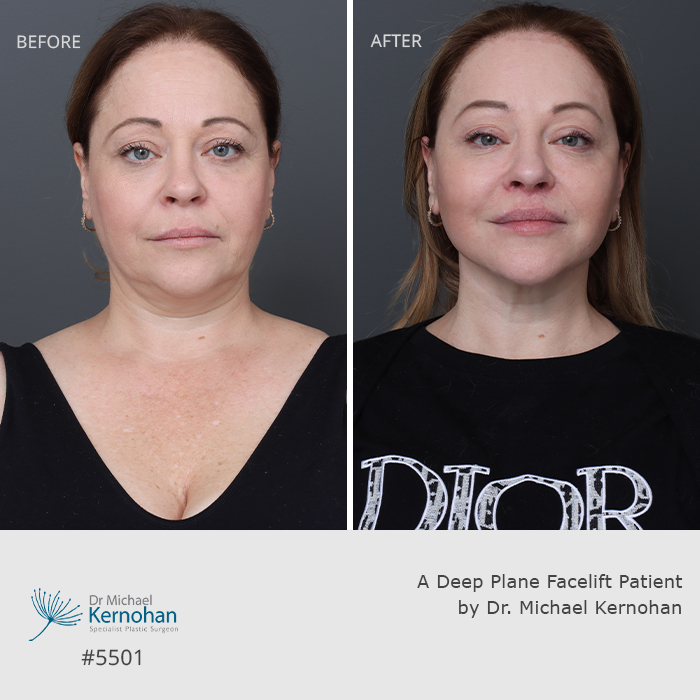
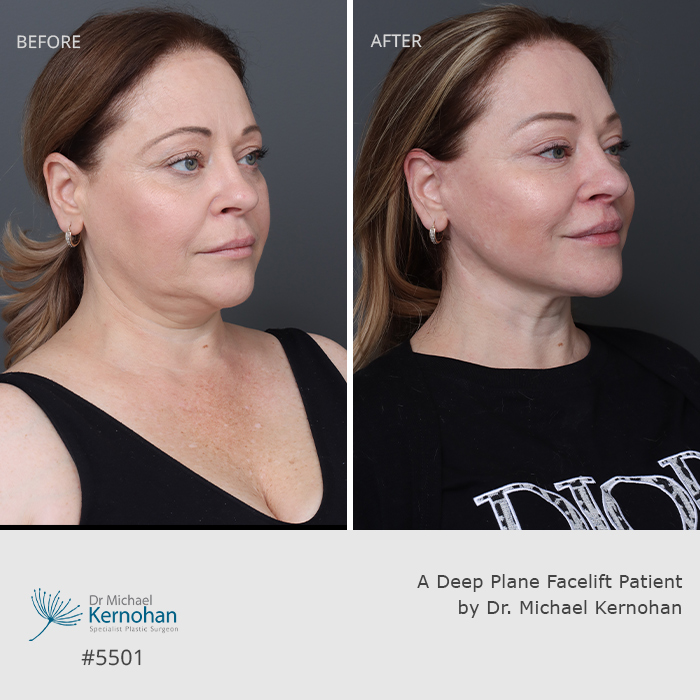
Disclaimer: All surgical or invasive procedures come with inherent risks, and results can vary widely between individuals due to factors like lifestyle, anatomy, overall health, weight, and nutrition. We encourage you to conduct thorough research and consider seeking a second opinion from a qualified healthcare provider.
What is Recovery Like After a Facelift Planned to Avoid Excess Tension?
Recovery after facelift surgery still involves swelling, bruising, tightness and altered sensation, even when the procedure is carefully planned. Avoiding excess skin tension does not mean recovery is minor or predictable for every patient.
- Swelling and bruising are common during the first few weeks.
- Tightness may be felt around the cheeks, jawline, ears or neck.
- Numbness or tingling may occur as nerves recover.
- Activity restrictions are usually required during early healing.
- Follow-up appointments allow scars, swelling and healing to be reviewed.
Patients should avoid judging the result too early because swelling can temporarily affect facial shape and tightness. Dr Michael Kernohan provides recovery instructions based on the operation performed and the patient’s healing progress.
What Alternatives Should Patients Consider Before Facelift Surgery?
Alternatives should be discussed before facelift surgery because not every concern is best treated with a facelift. Depending on the patient’s anatomy and priorities, the most appropriate option may be no surgery, skin-focused care, neck lift surgery, another facial procedure or staged planning.
- No surgery may be appropriate when the concern is mild or risks are not acceptable.
- Skin-focused treatments may be considered for pigmentation, texture or fine surface changes.
- Neck lift surgery may be more relevant when the main concern is in the neck.
- Eyelid or brow assessment may be needed when the concern is in the upper face.
- Revision assessment may be required if the patient has had previous facelift surgery.
A facelift should not be presented as the only pathway. Dr Michael Kernohan discusses alternatives so patients can make a more informed decision about whether surgery is appropriate.
Who May Be Suitable for Facelift Surgery?
A patient may be suitable for facelift surgery if their lower-face, jawline or selected neck concerns match what the operation can reasonably address. Suitability also depends on health, smoking status, medication use, recovery capacity and realistic expectations.
- The patient has jowls, lower-face descent or jawline changes that are suitable for surgical assessment.
- The patient is medically fit enough for surgery and anaesthesia.
- Smoking, vaping or nicotine use has been discussed and managed appropriately.
- The patient understands scars, recovery, limitations and risks.
- The patient can follow post-operative instructions and attend follow-up appointments.
Suitability cannot be determined from photos or online research alone. Dr Michael Kernohan assesses the patient in consultation before advising whether facelift surgery, another option or no surgery may be more appropriate.
Who May Not be Suitable for Facelift Surgery?
Some patients may not be suitable for facelift surgery, or may need to delay surgery until risk factors are addressed. This may include patients with unmanaged medical issues, unstable expectations or concerns that a facelift is not designed to treat.
- Uncontrolled blood pressure, diabetes or other medical concerns may need review first.
- Smoking or nicotine use can increase wound-healing and skin-related risks.
- Blood-thinning medicines or supplements may require careful planning.
- Patients seeking a guaranteed or exact appearance may not be suitable.
- Concerns mainly related to skin texture, pigmentation, eyelids or brow position may need another approach.
Not being suitable at one point does not always mean surgery is never possible. Dr Michael Kernohan may recommend medical review, waiting, another procedure or no surgery depending on the patient’s situation.
Are Costs Relevant When Comparing Facelift Techniques?
Cost may be relevant when patients compare facelift techniques, but they should not be the main factor guiding the surgical plan. Facelift cost can vary because of procedure complexity, anaesthetic requirements, theatre time, neck involvement, revision planning and follow-up needs.
- A combined face and neck lift may involve different planning from facelift surgery alone.
- Revision surgery may be more complex than first-time surgery.
- Anaesthetic and theatre requirements can affect the overall cost.
- The technique used may influence operating time and complexity.
- Individual quotes should be provided only after consultation and assessment.
Choosing the smallest or least involved option for cost reasons may leave the main concern untreated if the anatomy needs broader planning. Dr Michael Kernohan can provide procedure-specific information after assessing suitability and discussing the recommended approach.
Take the Quiz
How Does Dr Michael Kernohan Plan Facelift Surgery to Avoid Excess Tension?
Dr Michael Kernohan plans facelift surgery by assessing the face, jawline, neck and deeper tissue layers before discussing technique options. This assessment helps determine whether the concern is mainly skin-related, deeper-tissue related, neck-related or a combination.
- The lower face is assessed for jowls and tissue descent.
- The jawline and neck are reviewed together.
- Skin thickness, elasticity and sun exposure are considered.
- Previous surgery, fillers, threads or scars are discussed.
- Medical history, medicines and smoking status are reviewed.
This planning process helps reduce reliance on skin tension alone. It also supports a more realistic discussion about what surgery may address, what may remain and what risks apply.
What Should Patients Ask Before Facelift Surgery?
Patients should ask questions that clarify technique, risks, recovery and expectations before deciding on facelift surgery. This helps make the consultation more practical and reduces the chance of choosing surgery based on assumptions or online trends.
- Is my concern mainly in the lower face, neck or both?
- Which tissue layers are contributing to my concern?
- How will skin tension be managed?
- Where will the incisions and scars be placed?
- What risks are most relevant to my anatomy and health?
Patients should also ask about alternatives, recovery time and the option of not proceeding. Dr Michael Kernohan encourages patients to take time to consider their decision before committing to elective surgery.
Summary
A “pulled” look after facelift surgery is often linked to excess skin tension, poor vector planning, inadequate deeper tissue support or mismatch between the face and neck. Careful planning can reduce these risks, but no surgical result can be guaranteed.
Modern facelift planning often involves deeper tissue support, thoughtful direction of lift, careful skin redraping and attention to incision placement around the ears and hairline. The face and neck should be assessed together because jowls, jawline changes and neck laxity often overlap.
Dr Michael Kernohan, Specialist Plastic & Reconstructive Surgeon in South West Sydney, assesses each patient’s anatomy, health, previous treatments, recovery needs and expectations before discussing whether facelift surgery may be appropriate. The aim is to provide clear, balanced information so patients can make an informed decision.

Post-Facelift “Pulled” or “Wind-Tunnel” Look FAQs
Download Dr Kernohan’s Facelift Surgery Guide
Next Step: Discuss Facelift Planning With Dr Michael Kernohan
If you are interested in facelift surgery but worried about looking pulled or “wind-blown,” the next step is a careful, unhurried consultation.
A visit with Dr Michael Kernohan, Specialist Plastic & Reconstructive Surgeon in Sydney, gives you the chance to:
- Explain what you like and dislike about your current appearance
- Talk openly about your fear of an over-tight or wind-tunnel look
- Have your face and neck assessed in detail
- Hear which techniques he would consider for you and why
You are welcome to bring photos, a list of medicines, and written questions. For a private online consultation, the Contact Page and Complimentary Photo Assessment feature on this website can be utilised for enquiries and to set appointments. The aim is to help you decide, in your own time, whether facelift surgery is suitable for you, and how it might be planned to keep your face looking balanced and in keeping with your age and life stage.
Further Reading
- Read more about Deep Plane Facelift NSW
- Read more about Partial Facelift Surgery NSW
- Read more about Facial Nerve Surgery Sydney
- Read Dr Kernohan’s Blog on Lower Facelift Vs. Full Facelift – Appropriate Candidates For Each
- Read Dr Kernohan’s Blog on What is Involved in an Upper Facelift ?
- Read Dr Kernohan’s Blog on Facelift for Men: What You Need to Know

Facelift Vs Non‑Surgical Tightening: What’s Right For Your Facial Goals
Introduction Dr Michael Kernohan is a Specialist Plastic & Reconstructive Surgeon in Sydney. Facelift surgery…
How to Choose a Facelift Surgeon in Sydney
Dr Michael Kernohan, Specialist Plastic & Reconstructive Surgeon in Sydney, understands that choosing a facelift…

Male Neck Lift Considerations – Why Techniques Differ for Men
Introduction Dr Michael Kernohan is a Specialist Plastic & Reconstructive Surgeon in Sydney. Male neck…