
Dr Michael Kernohan, Specialist Plastic & Reconstructive Surgeon in South West Sydney, assesses whether a SMAS facelift or deep plane facelift may be more appropriate based on each patient’s anatomy. Neither technique is automatically better; the right option depends on the face, neck, skin quality, tissue descent, medical history and recovery needs.
Patients often search for “deep plane vs SMAS facelift” because both techniques are widely discussed online. The names can be confusing, especially when marketing language suggests that one method suits everyone.
A SMAS facelift works with the superficial musculoaponeurotic system, while a deep plane facelift works beneath selected deeper tissue layers. Both techniques can be useful in the right setting, but both involve surgery, scars, recovery time and risks.
This article compares SMAS and deep plane facelift surgery in practical terms. It explains who may be suited to each approach, the advantages and disadvantages, recovery considerations, longevity, cost factors and the role of surgical assessment before deciding.
How Do Deep Plane and SMAS Facelifts Compare?
| Feature | SMAS Facelift | Deep Plane Facelift |
|---|---|---|
| Main layer addressed | Superficial musculoaponeurotic system, known as SMAS | Deeper plane beneath the SMAS in selected areas |
| Main focus | Lower face, jowls and jawline support | Midface, lower face, jowls and selected deeper tissue release |
| Tissue movement | Skin and SMAS are often managed as separate layers | Skin and deeper soft tissue may be moved together as a composite unit |
| Technical complexity | Established technique with several variations | More technically demanding and anatomy-dependent |
| Recovery | Varies by extent of surgery and patient factors | Varies by extent of dissection, swelling and combined procedures |
| Longevity | Can be long lasting, but ageing continues | Can be long lasting, but ageing continues |
| Suitability | May suit lower-face and jawline concerns in selected patients | May suit selected patients with deeper tissue descent or midface-lower face concerns |
| Key limitation | May not address all deeper tissue or midface concerns | May not be needed for every patient and has its own risk profile |
Overview: What Is the Main Difference Between Deep Plane and SMAS Facelift Surgery?
SMAS and deep plane facelifts are two established approaches used in facelift surgery. Both aim to address selected lower-face and facial soft tissue changes, but they differ in how the deeper tissue layers are handled.
A SMAS facelift works with the superficial musculoaponeurotic system, a deeper support layer beneath the skin. A deep plane facelift works beneath selected retaining ligaments and deeper soft tissue planes, which may allow composite movement of deeper tissues in suitable patients.
The question is not whether one technique is always better. The more useful question is which approach matches the patient’s anatomy, skin quality, lower-face changes, neck concerns, health and recovery needs.
Who Is Each Best For?
A SMAS facelift may be suitable for patients whose main concerns involve jowls, lower-face laxity and jawline support. It may be appropriate when the surgeon wants to adjust the deeper support layer while managing the skin separately.
A deep plane facelift may be suitable for selected patients where deeper tissue descent, midface-lower face transition and retaining ligament release are important parts of the plan. It may also be discussed when the surgeon believes deeper composite tissue movement is more appropriate for the patient’s anatomy.
Suitability depends on:
- Lower-face and jawline anatomy
- Degree of jowling or tissue descent
- Skin thickness, elasticity and sun exposure
- Neck involvement and whether neck lift surgery is also needed
- Previous procedures, scars or facial treatments
- Medical history, medications and recovery capacity
Dr Michael Kernohan, Specialist Plastic & Reconstructive Surgeon in South West Sydney, assesses the face and neck together before discussing whether SMAS, deep plane or another facelift approach may be suitable.
Advantages
✓ What are the potential advantages of a SMAS facelift?

A SMAS facelift is a widely used approach with a long history in facelift surgery. It can be adapted in different ways depending on the patient’s anatomy and the surgeon’s technique.
Potential advantages may include:
- Direct management of the SMAS support layer
- Suitability for selected lower-face and jawline concerns
- Flexibility in how skin and deeper tissue are managed
- Ability to combine with neck lift surgery when appropriate
- Familiarity within established facelift literature and training
A SMAS facelift may be appropriate when the patient’s main concerns are concentrated in the lower face and jawline. It still requires careful planning, as outcomes depend on anatomy, tissue quality and surgical technique.
✓ What are the potential advantages of a deep plane facelift?
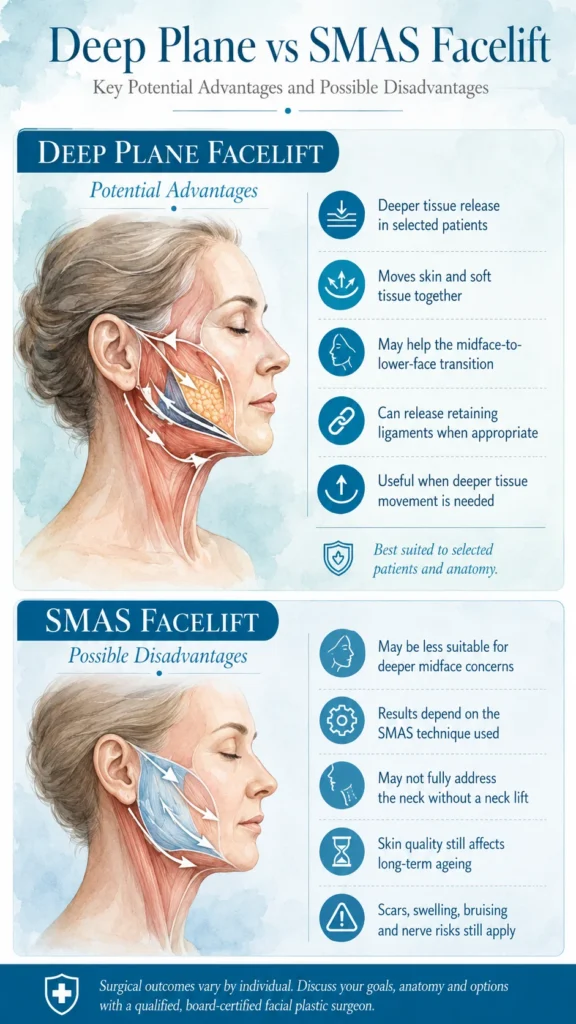
A deep plane facelift may allow deeper soft tissue release and movement in selected patients. This can be useful when the concern involves deeper tissue descent rather than skin laxity alone.
Potential advantages may include:
- Treatment of selected deeper facial support structures
- Composite movement of skin and deeper soft tissue in some areas
- Potential relevance for midface-lower face transition concerns
- Ability to release retaining ligaments where clinically appropriate
- Use in selected patients where deeper tissue movement is needed
Deep plane facelift surgery is more anatomy-dependent and may not be necessary for every patient. Dr Michael Kernohan would assess whether the deeper plane approach is relevant before discussing it as an option.
Disadvantages
✓ What are the possible disadvantages of a SMAS facelift?
A SMAS facelift may not address every deeper tissue concern, depending on the technique used. Some patients with more significant deeper tissue descent may need another approach or a combined surgical plan.
Potential disadvantages may include:
- May be less suitable for selected deeper midface or retaining ligament concerns
- Results depend strongly on the type of SMAS technique used
- May not fully address neck concerns unless combined with neck lift surgery
- Skin quality and ageing still affect long-term changes
- Scars, swelling, bruising and nerve-related risks still apply
A SMAS facelift should not be viewed as a minor procedure. It still involves anaesthesia, incisions, recovery time and surgical risk.
✓ What are the possible disadvantages of a deep plane facelift?
A deep plane facelift is technically demanding and involves surgery in deeper tissue planes. It may not be necessary for patients whose concerns can be addressed with a different facelift approach.
Potential disadvantages may include:
- More complex anatomical dissection
- May involve a different swelling or recovery pattern
- Nerve-related risks must be discussed carefully
- Not required for every lower-face or neck concern
- Surgeon experience and patient selection are especially important
Deep plane facelift should not be chosen only because it is discussed online. It should be considered only when the patient’s anatomy and surgical assessment support that approach.
Facelift Before and After Photos
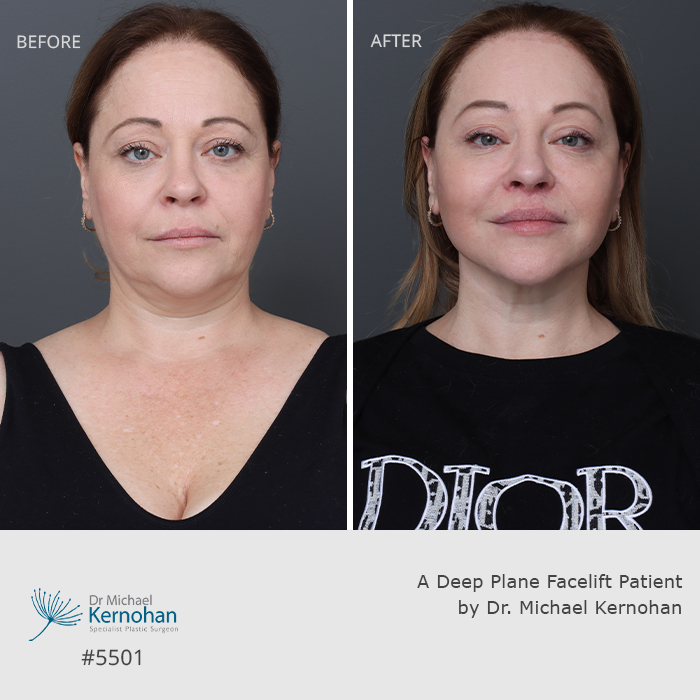
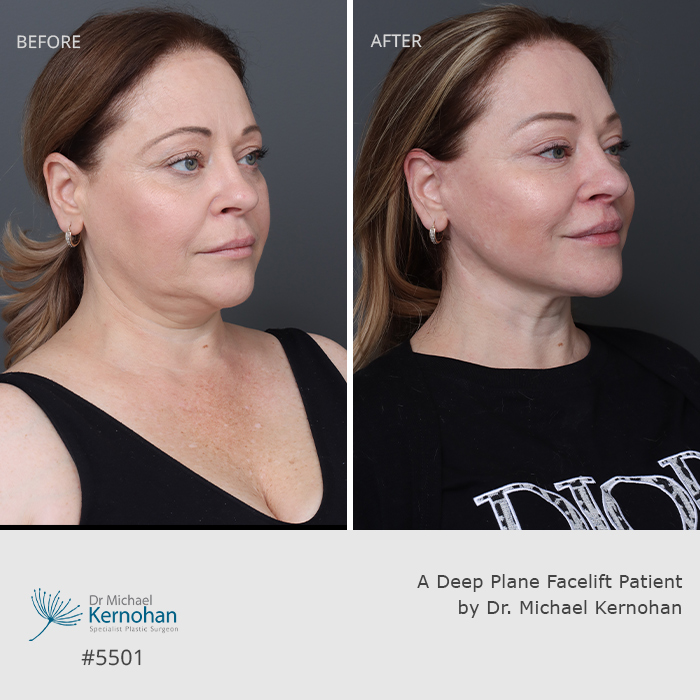
Disclaimer: All surgical or invasive procedures come with inherent risks, and results can vary widely between individuals due to factors like lifestyle, anatomy, overall health, weight, and nutrition. We encourage you to conduct thorough research and consider seeking a second opinion from a qualified healthcare provider.
How Does Recovery Compare Between SMAS and Deep Plane Facelift Surgery?
Recovery after SMAS or deep plane facelift surgery depends on the extent of surgery, whether neck lift surgery is included, the patient’s health and how the tissues respond. The technique matters, but it is only one part of recovery planning.
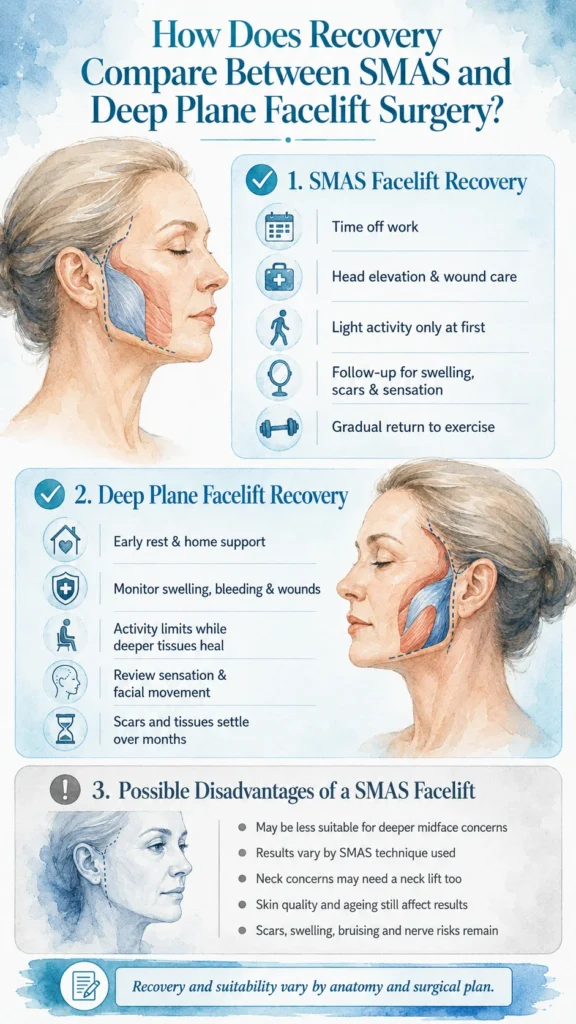
✓ SMAS Facelift Recovery
SMAS facelift recovery may involve swelling, bruising, tightness, numbness and temporary changes in sensation. These are common early recovery features after facelift surgery.
Patients may need to plan for:
- Time away from work and social commitments
- Head elevation and wound care
- Reduced activity in the early recovery period
- Follow-up appointments to review swelling, scars and sensation
- Gradual return to exercise once cleared
✓ Deep Plane Facelift Recovery
Deep plane facelift recovery can also involve swelling, bruising, tightness, altered sensation and fatigue. Because deeper tissue planes may be involved, swelling patterns may vary between patients.
Patients may need to plan for:
- Early rest and practical home support
- Close monitoring for swelling, bleeding or wound concerns
- Activity restrictions while deeper tissues heal
- Ongoing review of sensation and facial movement
- Several months for scars and deeper tissues to settle
The recovery comparison should be personalised rather than reduced to a fixed number of days. Dr Michael Kernohan gives recovery advice based on the procedure performed and the patient’s healing progress.

Longevity: How Long Do SMAS and Deep Plane Facelift Results Last?
Both SMAS and deep plane facelifts can provide long-term structural changes, but neither stops ageing. Longevity depends on anatomy, skin quality, tissue strength, weight stability, sun exposure, smoking status, surgical planning and aftercare.
Factors that may influence longevity include:
- Skin elasticity and thickness
- Degree of tissue laxity before surgery
- Quality of deeper facial support
- Weight changes after surgery
- Sun exposure and skin damage
- Smoking or nicotine use
- Whether neck concerns are addressed when needed
Current medical literature continues to compare SMAS and deep plane approaches, and debate remains about which technique offers superior long-term outcomes for different patients. The most useful decision is not technique popularity, but matching the technique to anatomy and risk profile.
How Do Costs Compare Between SMAS and Deep Plane Facelift Surgery?
Cost can vary between SMAS and deep plane facelift surgery because the operation, anaesthetic time, theatre requirements and complexity may differ. A deep plane facelift may involve more complex dissection in selected patients, but cost should not be the main reason to choose one technique over another.
Factors that may affect cost include:
- Whether surgery is SMAS, deep plane or combined face and neck lift
- Operating theatre and anaesthetic requirements
- Length and complexity of the procedure
- Whether neck lift or other procedures are included
- Post-operative garments, dressings and follow-up structure
- The patient’s health and need for additional planning
Patients should avoid choosing a facelift technique based on price alone. The more important question is which approach is appropriate for the patient’s anatomy, health, recovery needs and risk profile.
For more information about the factors that can affect fees, including surgeon, anaesthetist, hospital and procedure-related costs, read Dr Michael Kernohan’s guide to facelift costs in Sydney.
Take the Quiz
What Does Dr Michael Kernohan Recommend When Comparing Deep Plane and SMAS Facelift?
Dr Michael Kernohan’s recommendation would depend on clinical assessment rather than a fixed preference for one named technique. In many cases, the most appropriate facelift plan is the one that matches the patient’s anatomy and addresses the correct tissue layers.
During consultation, Dr Michael Kernohan may assess:
- Jowls and lower-face descent
- Midface-lower face transition
- Neck laxity and platysma involvement
- Skin thickness, elasticity and sun exposure
- Previous surgery, scars or injectable treatments
- Medical history, medications and smoking status
- Recovery expectations and risk tolerance
A SMAS facelift may be discussed when lower-face and jawline support are the main priorities. A deep plane facelift may be discussed when deeper soft tissue movement is clinically relevant. In some patients, a combined face and neck lift or another approach may be more appropriate.
The recommendation should come after examination and informed consent, not before. Patients should be given time to understand the risks, limitations, alternatives and recovery involved.

FAQs About Deep Plane Vs SMAS Facelifts
Click to Download Dr Michael Kernohan’s Facelift Surgery Guide

Book a Consultation with Dr Michael Kernohan
If you are considering facelift surgery and want to learn more about the differences between deep plane and SMAS techniques, schedule a consultation with Dr Michael Kernohan in Sydney. Through personalised assessment and surgical planning, he will help you understand which approach aligns best with your goals.
Your time is precious, and if you can’t set aside time for an in-person consultation immediately, you can schedule an appointment or send photos to Dr Kernohan’s clinic website for assessment. To request an appointment or a photographic assessment, contact the clinic today. Your journey toward facial rejuvenation begins with honest advice and specialist care tailored to you.
Further Reading
- Read Dr Michael Kernohan’s Procedure Page on Partial Facelift Surgery NSW
- Read Dr Michael Kernohan’s Procedure Page on Deep Neck Lift Sydney
- Read Dr Michael Kernohan’s Procedure Page on Revision Facelift Sydney – Also Known as Secondary Facelift