

Dr Michael Kernohan, Specialist Plastic & Reconstructive Surgeon in Sydney, assesses whether a limited-incision facelift or full facelift may be more appropriate based on each patient’s anatomy. A limited-incision approach may suit selected patients with earlier lower-face changes, while a full facelift may be more suitable when the lower face, jawline and neck require broader correction.
Patients often compare these procedures because they want to understand whether a smaller operation can address their concerns. The answer depends on where the tissue changes are located, how much laxity is present, whether the neck is involved and what level of recovery and risk the patient can accept.
A limited-incision (mini) facelift is sometimes discussed online using shorter marketing terms, but the more accurate description is a procedure with a smaller incision pattern and more limited tissue dissection. A full facelift generally involves more extensive lower-face and sometimes neck planning, depending on the technique used.
This article compares limited-incision and full facelift surgery in practical terms. It explains who may suit each approach, the advantages and disadvantages, facelift recovery considerations, longevity, cost factors and how Dr Michael Kernohan approaches surgical recommendations.
How Do Limited-Incision and Full Facelifts Compare?
| Feature | Limited-Incision Facelift | Full Facelift |
|---|---|---|
| Main focus | Early lower-face or mild jawline changes | More established lower-face, jawline and often neck changes |
| Incision pattern | Usually shorter and more limited | Usually longer and planned around the ear and hairline |
| Tissue dissection | More limited | More extensive, depending on technique |
| Neck treatment | Limited or not included unless planned separately | More likely to include neck assessment or combined neck lift |
| Suitability | Selected patients with mild to moderate lower-face change | Patients with broader lower-face and neck laxity |
| Recovery | May be shorter in selected patients, but still involves surgery | Often more involved due to wider tissue work |
| Longevity | Varies with anatomy, tissue quality, surgical technique and ageing | Varies with anatomy, tissue quality, surgical technique and ageing |
| Key limitation | May under-treat more advanced laxity | More extensive operation with broader recovery and risk discussion |
A limited-incision facelift should not be chosen only because it sounds smaller. A full facelift should not be chosen simply because it sounds more comprehensive.
Are There Differences Between a Limited-Incision Facelift and a Full Facelift?
The main difference is the extent of surgery. A limited-incision facelift uses a smaller surgical approach and is generally considered for selected patients with earlier lower-face changes, while a full facelift usually involves broader tissue release, deeper support and more extensive planning.
- A limited-incision approach may focus on mild jowls or early lower-face laxity.
- A full facelift may address more significant jowls, jawline changes and lower-face descent.
- Neck involvement is a major factor in deciding whether a limited approach is enough.
- Both procedures involve incisions, scars, swelling, bruising and surgical risks.
- The procedure name does not determine suitability.
A smaller procedure can be appropriate for the right patient, but it can also be too limited for some anatomy. Dr Michael Kernohan assesses the face and neck together before discussing which approach may be suitable.
Who Is Best Suited to a Limited-Incision Facelift or Full Facelift?
A limited-incision facelift may suit selected patients with earlier lower-face changes and good skin quality. A full facelift may be more appropriate when tissue laxity is more established or when the neck and jawline both need assessment.
- Limited-incision facelift may suit patients with mild jowling.
- It may suit patients with limited neck involvement.
- It may suit patients with good skin elasticity and realistic expectations.
- Full facelift may suit patients with more visible lower-face descent.
- Full facelift may suit patients with jawline and neck changes that need broader planning.
Suitability is not based on age alone. Dr Michael Kernohan considers anatomy, skin quality, tissue laxity, health, medications, smoking status and recovery capacity.
What Are the Potential Advantages of a Limited-Incision Facelift?
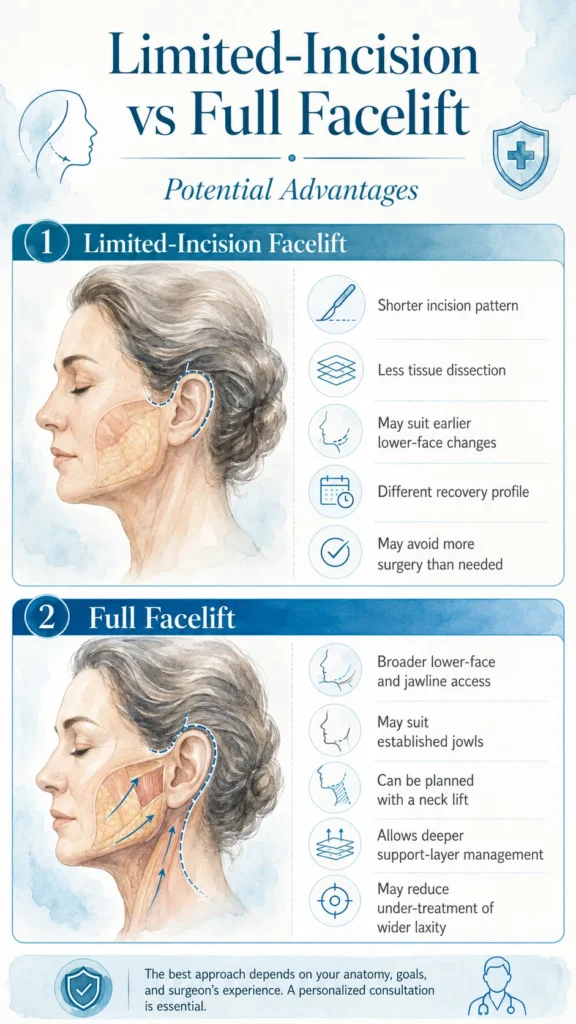
A limited-incision facelift may offer a smaller surgical approach for selected patients. It may be considered when the concerns are mild enough that a broader facelift is not required.
- Shorter incision pattern in selected cases.
- Less tissue dissection than a full facelift.
- May be suitable for earlier lower-face changes.
- May involve a different recovery profile from a full facelift.
- May avoid doing more surgery than the anatomy requires.
The main advantage is selectivity. When the concern is limited, a limited-incision approach may be considered as part of a tailored surgical plan.
What Are the Potential Advantages of a Full Facelift?
A full facelift may allow broader treatment of lower-face and jawline changes. It may be more appropriate when the concern extends beyond mild jowling or when the neck also needs assessment.
- Broader access for lower-face and jawline support.
- More suitable for established jowls in selected patients.
- Can be planned with neck lift surgery when needed.
- Allows more detailed management of deeper support layers.
- Allows broader tissue concerns to be addressed when clinically indicated.
The main advantage is scope. A full facelift may be more suitable when several connected areas are contributing to the concern.
What Are the Possible Disadvantages of a Limited-Incision Facelift?

A limited-incision facelift may not address more established lower-face or neck changes. If the procedure is too limited for the patient’s anatomy, the result may not address the main concern adequately.
- May not treat significant jowls.
- May not address neck laxity or platysma bands.
- May be less suitable for patients with reduced skin elasticity.
- May have shorter longevity if tissue laxity progresses.
- May still involve scars, swelling, bruising and surgical risks.
A limited operation is not always the lower-risk choice if it does not match the anatomy. Dr Michael Kernohan discusses these limits before recommending a smaller surgical approach.
What Are the Possible Disadvantages of a Full Facelift?
A full facelift is a more involved operation than a limited-incision facelift. It may require longer incisions, broader tissue work, more recovery planning and a more detailed risk discussion.
- Longer incision pattern.
- More extensive tissue dissection.
- Longer or more involved recovery in some patients.
- Greater need for planning around work, home support and activity restrictions.
- Surgical risks still include bleeding, infection, scarring, altered sensation and nerve-related changes.
A full facelift is not automatically needed for every patient. Dr Michael Kernohan recommends broader surgery only when the clinical assessment supports that approach.
Recovery From Limited-Incision and Full Facelift Surgery: How Do They Compare?
Recovery after facelift surgery depends on the extent of surgery, the patient’s health, whether neck surgery is included and how the tissues respond. A limited-incision facelift may involve less recovery in selected patients, but it is still surgery and still needs careful aftercare.
- Both procedures can involve swelling, bruising, tightness and altered sensation.
- A limited-incision approach may involve a smaller recovery area.
- A full facelift may involve more swelling if the neck or broader lower face is treated.
- Activity restrictions still apply after both procedures.
- Follow-up appointments are needed to review healing and scars.
Recovery should not be judged only by the procedure name. Dr Michael Kernohan provides recovery advice based on the actual surgical plan and how the patient is healing.
Facelift Before and After Photos
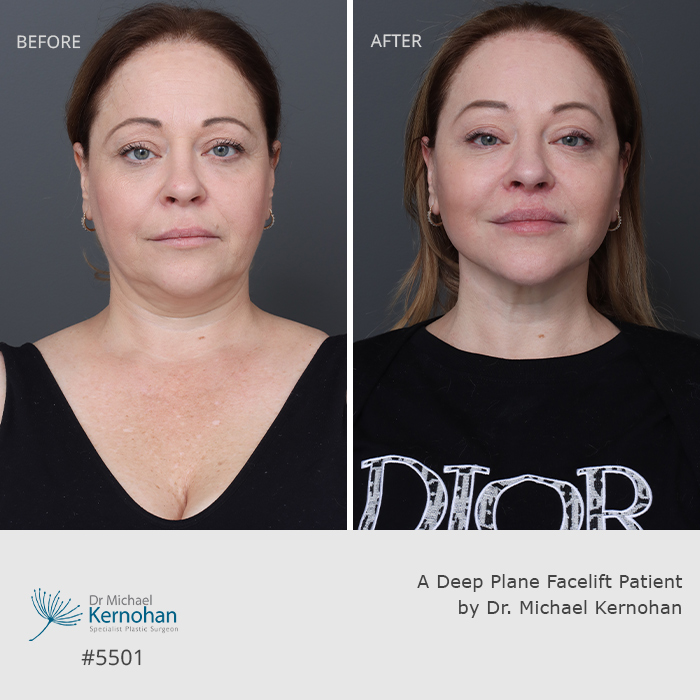
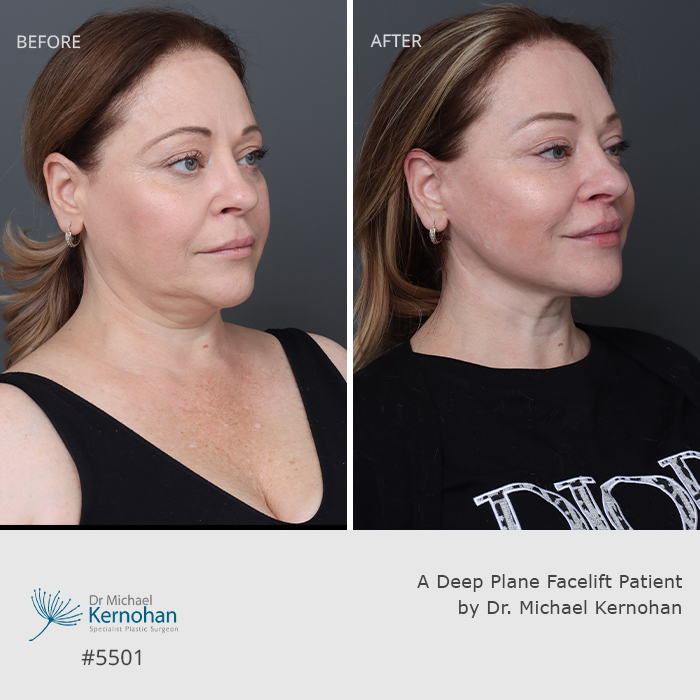
Disclaimer: All surgical or invasive procedures come with inherent risks, and results can vary widely between individuals due to factors like lifestyle, anatomy, overall health, weight, and nutrition. We encourage you to conduct thorough research and consider seeking a second opinion from a qualified healthcare provider.
How Long Do Limited-Incision and Full Facelift Results Last?
Both procedures can create long-term structural change, but neither stops ageing. Longevity depends on skin quality, tissue strength, weight stability, sun exposure, smoking status, surgical technique and whether the correct procedure was chosen for the anatomy.
- Limited-incision facelift results may be less durable if the patient has broader tissue laxity.
- How long results last varies between patients and depends on anatomy, tissue quality, surgical technique, lifestyle factors and ongoing ageing.
- Ageing continues after both procedures.
- Weight change can affect the lower face and neck.
- Skin quality and sun exposure can influence long-term changes.
The best longevity usually comes from matching the procedure to the patient, not from choosing the smallest or largest option by default. Dr Michael Kernohan explains likely longevity in realistic terms during consultation.
Limited-Incision and Full Facelift Surgery Costs: How Do They Compare?
Costs can differ because the procedures may vary in operating time, anaesthesia, theatre requirements, complexity and follow-up needs. A limited-incision facelift may cost less in some settings, but cost should not be the main reason for choosing a procedure.
- Full facelift surgery may involve longer operating time.
- Neck lift surgery may change the overall plan and cost.
- Anaesthetic and theatre requirements can vary.
- Garments, dressings and follow-up care may differ.
- Revision surgery may require additional planning because previous surgery can alter scars, tissue planes and anatomy.
Patients should avoid choosing a facelift technique based on cost alone. The more important question is whether the procedure is suitable for the patient’s anatomy, health and expectations.
For more information about the factors that may affect fees, read Dr Michael Kernohan’s guide to facelift costs in Sydney.
Take the Quiz
What Are Dr Michael Kernohan Recommendations When Comparing Limited-Incision and Full Facelift Surgery?
Dr Michael Kernohan’s recommendation depends on clinical assessment rather than a fixed preference for one procedure name. The aim is to match the extent of surgery to the extent of the anatomical concern.
During consultation, Dr Michael Kernohan may assess:
- Jowls and lower-face descent.
- Jawline support.
- Neck laxity and platysma bands.
- Skin thickness, elasticity and sun exposure.
- Previous surgery, scars or cosmetic treatments.
- Medical history, medications and smoking status.
- Recovery expectations and ability to follow aftercare.
A limited-incision facelift may be discussed when the concern is mild and localised. A full facelift may be discussed when the lower face and neck need broader planning.

Mini Facelift Vs Full Facelift FAQs
Download Dr Kernohan’s Facelift Surgery Guide
Next Step: Book a Consultation With Dr Kernohan to Explore Your Options
If you are considering facial rejuvenation and want to understand whether a mini or full facelift is appropriate for your anatomy and goals, a personalised consultation with Dr Michael Kernohan is an important next step. In Sydney, Dr Kernohan provides tailored assessment, surgical planning and follow‑up care designed to support informed decisions.
To schedule an appointment or request a photographic assessment, contact the clinic team. A consultation can help clarify which surgical approach, if any, may be appropriate based on anatomy, health, risks and recovery considerations.
Further Reading
- Read Dr Michael Kernohan’s Partial Facelift Surgery Procedure Page
- Read Dr Michael Kernohan’s Facelift Surgery Procedure Page
- Read Dr Michael Kernohan’s Facelift Recovery Timeline Blog
- Read Dr Michael Kernohan’s Facelift Risks and Complications Blog
- Read Dr Michael Kernohan’s How Long Do Facelift Results Last Blog
- Read Dr Michael Kernohan’s Facelift Scars and Incisions Blog