

- Understanding “Safe Preparation” for Facelift Surgery
- Your First Step: Consultation and Medical Assessment
- Health and Lifestyle Changes Before a Facelift
- Practical Planning in the Weeks Before Surgery
- The Final Week, Day Before and Day of Surgery
- Facelift Before and After Photos
- Emotional Preparation and Expectations
- Take the Quiz
- Do’s and Don’ts When Preparing for a Facelift
- Preparing for a Facelift FAQs
- Download Dr Kernohan’s Facelift Surgery Guide
- Taking the Next Step – Arrange a Facelift Consultation With Dr Kernohan
- Further Reading
Preparing well for facelift surgery is one of the most important things you can do to support your health and your results.
In Sydney, Dr Michael Kernohan, Specialist Plastic & Reconstructive Surgeon, spends a lot of time helping patients get ready before surgery day – not just talking about technique. Careful preparation can reduce some risks, make recovery more predictable, and help you feel more in control.
This guide explains practical steps you can take in the weeks and months before a facelift, based on Australian cosmetic surgery reforms and international surgical guidance. It is general information only and does not replace a personal consultation with Dr Michael Kernohan in Sydney.
Understanding “Safe Preparation” for Facelift Surgery
✓ Why Preparation Matters
A facelift is major surgery. It involves work on the deeper tissues of the face and neck, time under anaesthesia and a structured recovery. Australian sources such as Healthdirect and the Australian Society of Plastic Surgeons stress that people should be medically assessed, fully informed and given time to think before any cosmetic operation.
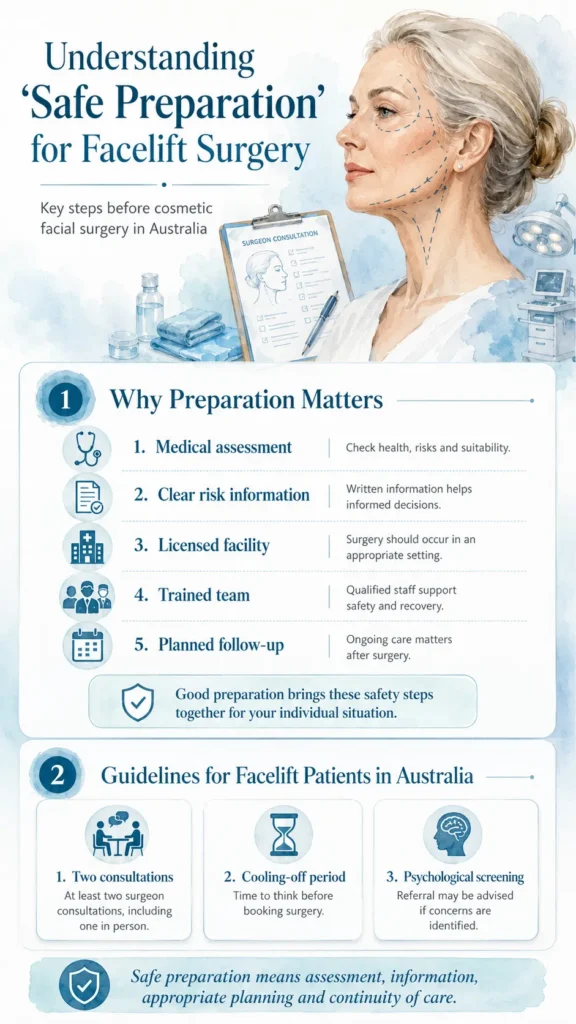
The Australian Government’s cosmetic surgery reforms and the National Safety and Quality Cosmetic Surgery Standards highlight several key points:
- Thorough assessment and screening
- Clear, written information about risks
- Licensed facilities and trained staff
- Planned follow-up and continuity of care
Good preparation ties all of this together for your own situation.
✓ How Guidelines Affect Facelift Patients in Australia
For face cosmetic surgery such as a facelift, current Medical Board of Australia guidelines expect:
- At least two consultations with the surgeon (one in person)
- A cooling-off period before booking surgery
- Screening for psychological conditions, with referral if there are concerns
When you see Dr Michael Kernohan in Sydney, your preparation will sit within this national framework, as well as his own clinical approach.
Your First Step: Consultation and Medical Assessment
✓ Choose a Properly Qualified Surgeon
Before anything else, make sure you are seeing a Specialist Plastic & Reconstructive Surgeon. In Australia, this means:
- Fellowship of the Royal Australasian College of Surgeons (FRACS) in plastic and reconstructive surgery
- Specialist registration with AHPRA in plastic surgery
You can check this on:
- The AHPRA public register
- The Australian Society of Plastic Surgeons website
Dr Michael Kernohan is a Specialist Plastic & Reconstructive Surgeon practising in Sydney, and his credentials can be checked on these same platforms.
✓ Share Your Full Medical History
In your first consultation, expect a detailed medical discussion. You should tell Dr Michael Kernohan about:
- Past operations and anaesthetics
- Medical conditions such as heart or lung disease, diabetes, clotting or bleeding problems
- Medicines (including the pill, HRT, blood thinners and herbal products)
- Allergies and previous reactions
- Any history of anxiety, depression or body image concerns
Australian safety reviews point out that careful patient selection, including medical and psychological screening, is a key part of reducing harm from cosmetic surgery.
✓ Talk Openly About Your Goals
Healthdirect emphasises the need for realistic expectations before a facelift. It notes that surgery can change lines and sagging, but will not stop ageing or fix deeper emotional issues.
With Dr Michael Kernohan in Sydney, you will discuss:
- What bothers you most about your lower face and neck
- What sort of change feels appropriate for your age and life stage
- What surgery cannot do in your case
This helps frame your preparation around a clear plan.
Health and Lifestyle Changes Before a Facelift
✓ Stopping Smoking and Nicotine
Smoking and nicotine (including vaping and patches) affect blood flow and wound healing. The American Society of Plastic Surgeons notes that smoking is linked with higher rates of wound problems, skin loss and other complications in plastic surgery.
A recent review of pre-operative smoking cessation found that structured stop-smoking programs before surgery:
- Increase the chance of quitting
- Probably reduce overall post-operative complications
In practice, Dr Michael Kernohan will usually:
- Ask you to stop smoking well before surgery
- Discuss nicotine replacement or support with your GP if needed
- Delay or decline surgery if ongoing smoking makes risks unacceptably high
✓ Managing Medicines and Supplements

ASPS facelift preparation guidance lists several common steps before surgery:
- Lab tests or medical clearance, where needed
- Adjusting or pausing certain prescription medicines
- Avoiding aspirin, many anti-inflammatories and some herbal supplements that increase bleeding
In Sydney, Dr Michael Kernohan will often:
- Write directly to your GP or specialist if you take blood thinners
- Give you a list of medicines and supplements to avoid in the days or weeks before surgery
- Clarify which regular medicines you should still take on the day
Never stop or change prescription medicines without clear advice from your doctors.
✓ Alcohol, General Fitness and Sleep
Pre-operative guides for cosmetic surgery recommend:
- Moderating alcohol in the weeks before surgery
- Staying active (for example, walking) unless your doctors advise otherwise
- Aiming for regular sleep and stress management
These measures support heart and lung function, circulation and general resilience. For patients seeing Dr Michael Kernohan in Sydney, small improvements over several weeks are often more realistic than big changes overnight.
Practical Planning in the Weeks Before Surgery
✓ Confirming Your Facility and Anaesthetist
Australian Government guidance for cosmetic surgery asks patients to check that:
- The operation will be done in a licensed hospital or an accredited day surgery
- They know who the anaesthetist is
- They understand where to go if something goes wrong
Before your facelift with Dr Michael Kernohan in Sydney, you should:
- Receive written details of the hospital or day surgery
- Be told what level of monitoring and stay is planned (day case or overnight)
- Know which doctor is giving your anaesthetic
Learn more about what may be involved when a facelift is performed under general anaesthesia.
✓ Arranging Time Off and Support at Home
Healthdirect and other Australian surgery resources advise planning time away from work, caring duties and heavy commitments.
For most facelift patients, this often means:
- Having at least the first week focused on rest and basic self-care
- Planning lighter duties for several more weeks, depending on your job
- Asking a trusted adult to stay with you for at least the first day or two after discharge
People in Sydney may also need to plan around school terms, shift work and travel distances to the hospital.
✓ Preparing Your Home
Checklists for cosmetic surgery preparation suggest setting up a simple recovery area before surgery day:
- Extra pillows to keep your head slightly elevated
- Easy-to-reach water, simple meals and any prescribed medicines
- Button-through or zip-front tops, so you do not need to pull clothes over your head
- Phone chargers, reading material and anything else that helps you rest
Dr Michael Kernohan’s team in Sydney can guide you on practical items that match your own plan.
The Final Week, Day Before and Day of Surgery
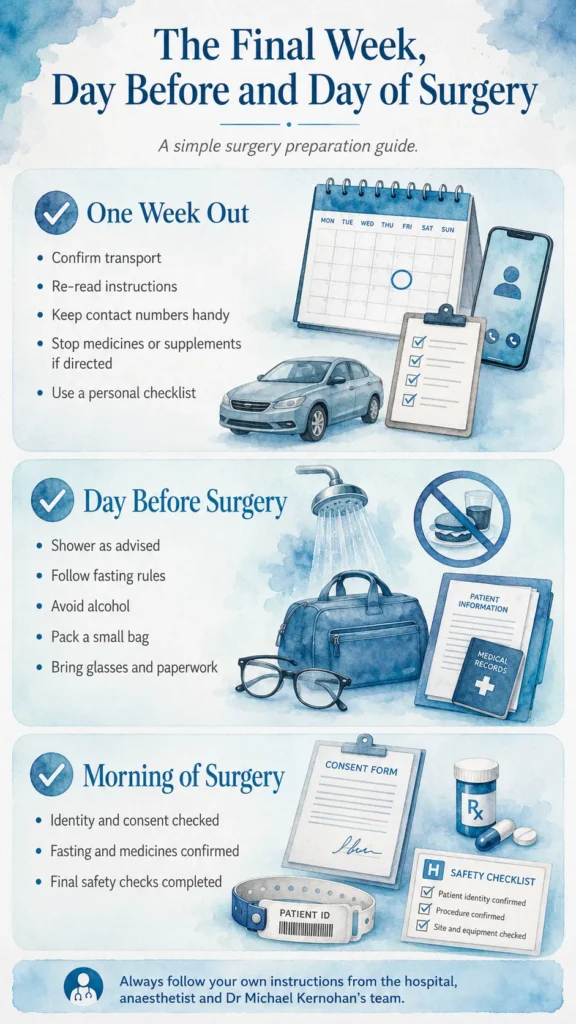
✓ One Week Out: Double-Check Details
In the final week, you will usually:
- Confirm transport to and from the hospital
- Re-read your written instructions
- Make sure you have contact numbers for the hospital and Dr Michael Kernohan’s rooms
- Stop any last medicines or supplements as directed
The Australian Government’s patient safety checklist suggests making your own list and checking it before you book and again before surgery.
✓ The Day Before Surgery
Common instructions (these vary, so always follow your own plan) include:
- Showering as advised
- Not eating or drinking for a set time before surgery (fasting)
- Avoiding alcohol
- Packing a small bag with comfortable clothing, glasses rather than contact lenses, and any paperwork
You will usually be reminded about fasting rules by the hospital and the anaesthetist’s team.
✓ The Morning of Surgery
On the day, staff will:
- Check your identity and consent forms
- Confirm fasting and medicines
- Go through final checks in line with national safety standards
When you have a facelift with Dr Michael Kernohan in Sydney, he and the anaesthetist will see you before theatre to confirm the plan and answer any last questions.
Facelift Before and After Photos
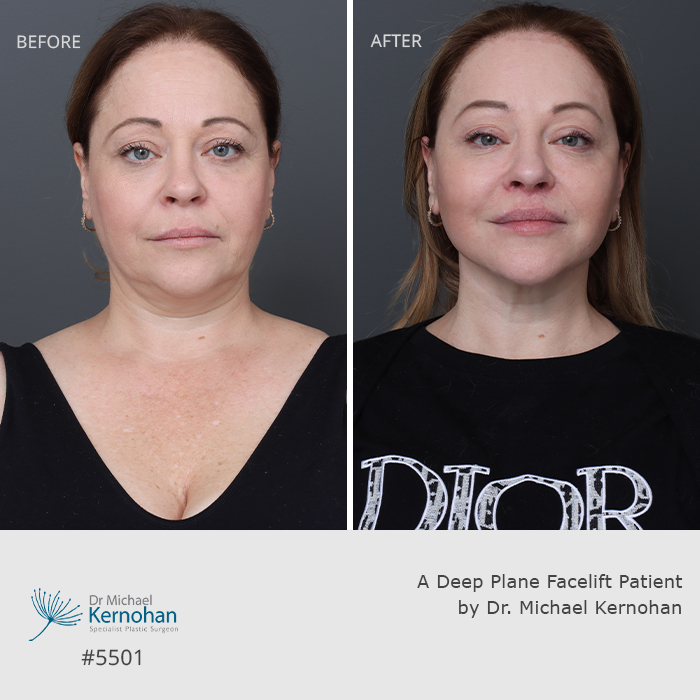
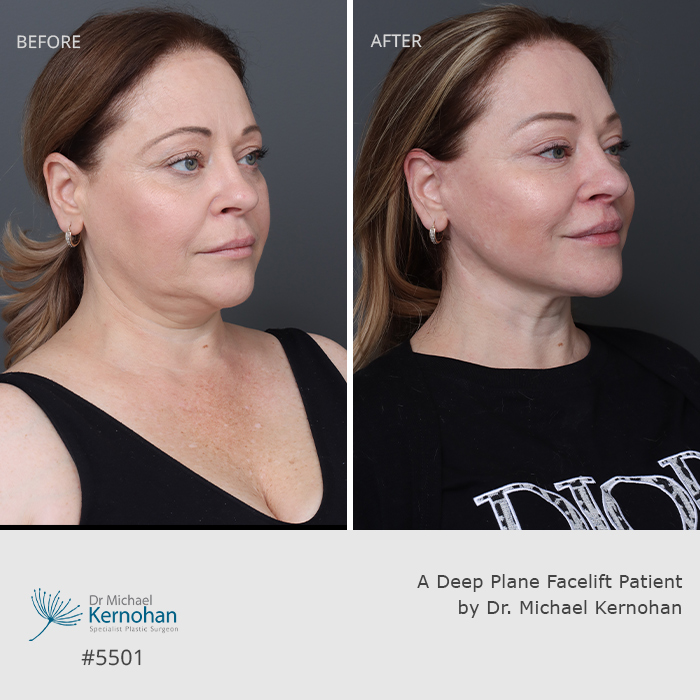
Disclaimer: All surgical or invasive procedures come with inherent risks, and results can vary widely between individuals due to factors like lifestyle, anatomy, overall health, weight, and nutrition. We encourage you to conduct thorough research and consider seeking a second opinion from a qualified healthcare provider.
Emotional Preparation and Expectations
✓ Thinking About Why You Are Doing This
The Australian Government’s “Be informed before having cosmetic surgery” resource asks patients to consider their reasons carefully, including whether outside pressure is playing a role.
Helpful questions include:
- What changes am I hoping to see in my lower face and neck?
- Am I doing this for myself, or to meet someone else’s expectations?
- How will I feel if the change is noticeable, but not dramatic?
Talking through these points with Dr Michael Kernohan in Sydney is part of preparing safely.
✓ Planning For Rormal Emotions
It is common to feel:
- Nervous before surgery
- Low or unsettled in the early days after, when swelling and bruising are present
Some cosmetic surgery resources suggest simple strategies such as:
- Having a support person you can talk to
- Planning restful activities during early facelift recovery
- Avoiding big life decisions in the first weeks after surgery
If you have a history of anxiety, depression or body image concerns, let Dr Michael Kernohan know so support can be planned.
Take the Quiz
Do’s and Don’ts When Preparing for a Facelift
General guidance only – always follow the specific instructions from your own doctors.
✓ Do’s
- Do check your surgeon’s credentials. Use AHPRA and professional society websites to confirm that Dr Michael Kernohan is a Specialist Plastic & Reconstructive Surgeon in Sydney.
- Do make sure surgery is in a licensed facility. Ask which hospital or day surgery is being used and how it meets the National Safety and Quality Cosmetic Surgery Standards.
- Do stop smoking and nicotine as advised. Stopping early reduces some facelift surgery risks and supports wound healing.
Do give a complete list of medicines and supplements Include over-the-counter and herbal products so your team can identify bleeding or interaction risks.Do plan help at home Arrange for someone to drive you, stay nearby early on, and help with meals and daily tasks.
✓ Don’ts
- Don’t rush into a decision. Use the cooling-off period recommended by the Medical Board of Australia and do not sign consent at the first visit.
- Don’t hide information. Do not leave out smoking, medicines, or mental health history; these are important for safe planning.
- Don’t rely only on social media or friends’ experiences. Use government and professional resources, and your own consultation with Dr Michael Kernohan, to guide decisions.
- Don’t ignore doubts. If something feels wrong – rushed booking, unclear facility, pressure to add extra procedures – seek another opinion before proceeding.
Preparing for a Facelift FAQs
Download Dr Kernohan’s Facelift Surgery Guide
Taking the Next Step – Arrange a Facelift Consultation With Dr Kernohan
If you are thinking about facelift surgery and want to prepare as safely as possible, the next step is a structured consultation.
Meeting Dr Michael Kernohan, Specialist Plastic & Reconstructive Surgeon in Sydney, gives you the chance to:
- Talk through what concerns you about your lower face and neck
- Review your medical history, medicines and lifestyle
- Understand which type of facelift he recommends in your situation
- Go through a clear preparation plan, including health changes, tests, practical planning and follow-up
You can bring a list of medicines, any relevant reports from your GP or specialists, and written questions. Dr Kernohan’s clinic contact page and complimentary photo assessment page are excellent tools for sending enquiries and scheduling appointments. The aim is careful, honest planning so you can decide, in your own time, whether facelift surgery is appropriate for you and how to get ready in a way that supports your health.
Further Reading
- Read more about Deep Plane Facelift NSW
- Read more about Partial Facelift Surgery NSW
- Read more about Facial Nerve Surgery Sydney
- Read Dr Kernohan’s Blog on Lower Facelift Vs. Full Facelift – Appropriate Candidates For Each
- Read Dr Kernohan’s Blog on What is Involved in an Upper Facelift ?
- Read Dr Kernohan’s Blog on Facelift for Men: What You Need to Know

Male Neck Lift Considerations – Why Techniques Differ for Men
Introduction Dr Michael Kernohan is a Specialist Plastic & Reconstructive Surgeon in Sydney. Male neck…

Neck Lift vs Lower Facelift – Which Option Is Right for Different Patients?
Dr Michael Kernohan is a Specialist Plastic & Reconstructive Surgeon in Sydney. A neck lift…

How Long Do Facelift Results Last?
Dr Michael Kernohan, Specialist Plastic & Reconstructive Surgeon in Sydney, speaks with many patients who…