
- Understanding Facelift Surgery and Anaesthesia
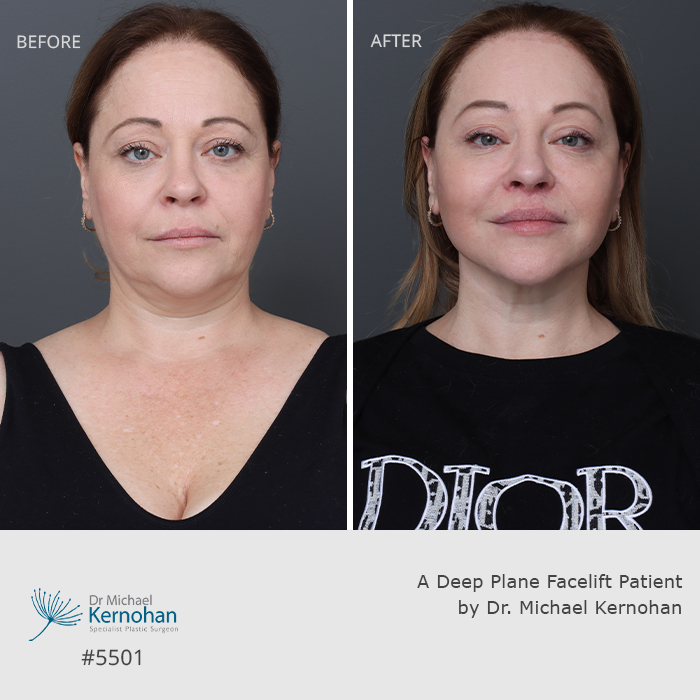
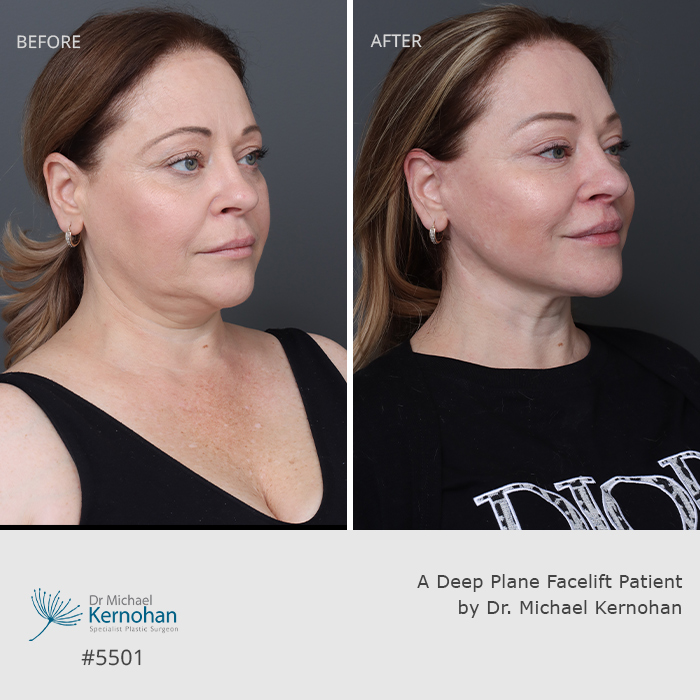
- Facelift Before and After Photos
- The Anaesthetic Team’s Role in a Facelift
- What Happens on the Day of Facelift Surgery Under General Anaesthesia?
- Risks of General Anaesthesia in Facelift Surgery
- Who May Be at Higher Risk from General Anaesthesia for Facelift?
- Questions to Ask About Facelift Under General Anaesthesia
- Steps That May Help Reduce Anaesthetic Risks Before a Facelift
- Recovery After Facelift Under General Anaesthesia
- Warning Signs After Facelift Surgery Under General Anaesthesia
- Cosmetic Surgery, Anaesthesia and Changing Standards in Australia
- Is a Facelift Under General Anaesthesia Right for You?
- Take the Quiz
- Next Step: Request an Appointment With Dr Kernohan
- Download Dr Kernohan’s Facelift Surgery Guide
- Medical References
- Further Reading
- Related Post
Many people feel more nervous about the anaesthetic than the facelift surgery itself. It is very common to ask, “What actually happens when I go to sleep?” and “How risky is it for me?”
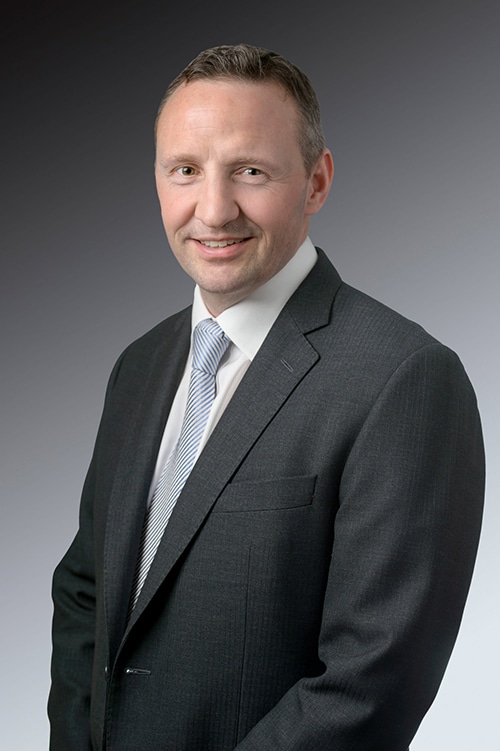
In Sydney, Dr Michael Kernohan, Specialist Plastic & Reconstructive Surgeon, often meets patients who want clear information about what general anaesthesia involves before they make any decisions. This overview focuses on facelift under general anaesthesia, so you can have a more informed discussion with your own surgical and anaesthetic team.
Understanding Facelift Surgery and Anaesthesia
✓ What a facelift involves in practical terms
A facelift (sometimes called meloplasty or rhytidectomy) is an operation on the lower face and neck. It usually involves incisions around the ear and along the hairline, working on deeper tissues under the skin, and adjusting skin and sometimes fat in the lower face and neck.
Dr Michael Kernohan offers facelift surgery in accredited hospitals and day surgery facilities in Sydney as part of his facial surgery practice.
✓ What is general anaesthesia?
A general anaesthetic uses medicines to make you fully unconscious for the duration of the operation. Under general anaesthesia you:
- Do not feel pain
- Do not move in response to the surgery
- Are not aware of what is happening
A specialist anaesthetist gives these medicines, supports your breathing and closely monitors your heart rate, blood pressure, oxygen level and other vital signs during the procedure.
✓ Why are many facelifts done under general anaesthesia?
Some limited procedures can be done with local anaesthetic and sedation. However, a full facelift often takes several hours, works on both sides of the face and neck, and requires complete stillness. For these reasons, many facelifts are planned under general anaesthesia, especially in hospital or day surgery settings in Sydney.
When you see Dr Michael Kernohan in Sydney, he and the anaesthetist will discuss which type of anaesthesia is most suitable for your health and the planned procedure.
Facelift Before and After Photos
The Anaesthetic Team’s Role in a Facelift
✓ Who is an anaesthetist?
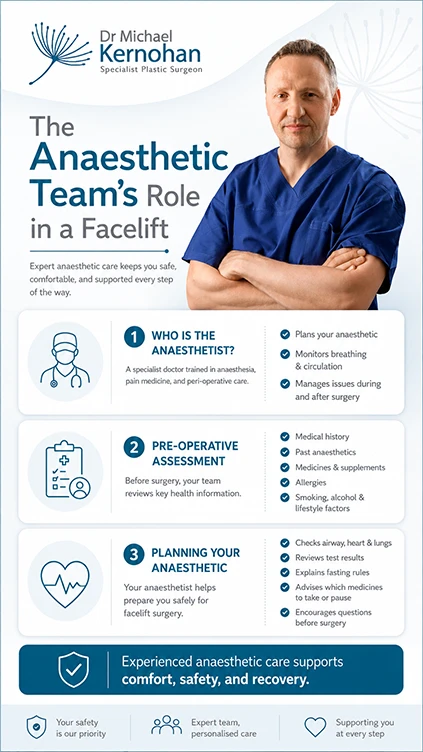
In Australia, specialist anaesthetists are doctors who have completed medical school plus additional years of specialist training and examinations in anaesthesia, pain medicine and related areas.
They are responsible for planning and delivering your anaesthetic, supporting your breathing and circulation, and treating any issues that arise during or after surgery. Dr Michael Kernohan works with experienced anaesthetists in accredited facilities across Sydney.
✓ Pre-operative assessment
Before a facelift under general anaesthesia, you will usually have a pre-operative assessment, either on the same day or earlier. You will be asked about:
- Current and past medical conditions
- Previous operations and anaesthetics
- Medicines, vitamins and supplements
- Allergies and reactions
- Smoking, vaping, alcohol and recreational drug use
Honest answers help your team choose suitable medicines, plan monitoring and consider any extra precautions that may be needed.
✓ Planning your anaesthetic
Your anaesthetist may examine your airway, heart and lungs, and review test results. They will also explain:
- When to stop eating and drinking before surgery
- Which tablets to take on the day
- Which medicines may need to be adjusted or paused
Patients in Sydney and beyond are encouraged to ask questions at this stage so they understand the plan for their facelift under general anaesthesia.
Anaesthetist, hospital and surgeon fees are usually separate components of the overall procedure estimate. Read more about facelift costs in Sydney.
What Happens on the Day of Facelift Surgery Under General Anaesthesia?
✓ Before you go to theatre
On the day of surgery, you can usually expect:
- Admission to the ward or day surgery unit
- Identity and consent checks
- Marking of the surgical area by Dr Michael Kernohan
- A final review by your anaesthetist
A small plastic cannula is placed into a vein in your hand or arm, and monitors are attached to track your heart rate, blood pressure and oxygen level.
✓ Going off to sleep
In the operating theatre, you may be given oxygen through a mask. Anaesthetic medicines are given through the cannula, and you drift off to sleep, usually within a short period. Once you are asleep, the anaesthetist supports your breathing, often with a breathing tube or other airway device, and continues the anaesthetic during the facelift.
You are not aware of the operation itself.
✓ During the facelift
While Dr Michael Kernohan performs the facelift, the anaesthetist:
- Adjusts the depth of anaesthesia
- Gives fluids and other medicines as needed
- Monitors your vital signs
- Plans pain relief and anti-nausea medicines for afterwards
The surgical and anaesthetic teams work together throughout the procedure, whether your surgery takes place in Sydney or elsewhere.
✓ Waking up and time in recovery
When the operation is finished, anaesthetic medicines are reduced and you begin to wake. You are moved to a recovery area, where nurses and your anaesthetist check your blood pressure, pulse, oxygen level, wounds and dressings.
At first, you may feel sleepy, cold, dry-mouthed or a little confused. Pain relief and anti-nausea medicines can be adjusted to help you feel more comfortable.
Risks of General Anaesthesia in Facelift Surgery
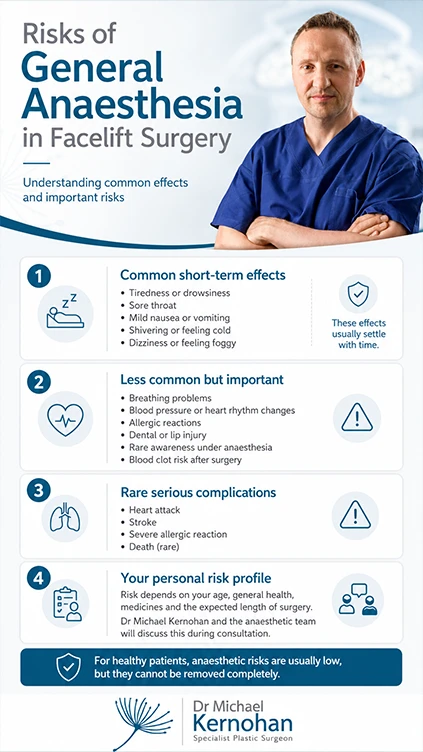
All forms of anaesthesia carry some risk. For healthy people, these risks are usually low, but they cannot be removed completely. Understanding them is an important part of planning facelift under general anaesthesia.
✓ Common and usually short-term effects
In the hours or days after a facelift, it is common to notice:
- Tiredness and drowsiness
- Sore throat from the breathing tube
- Mild nausea or vomiting
- Shivering or feeling cold
- Dizziness or feeling “foggy”, especially in older adults
These effects usually settle with time and can often be eased with medicines and fluids.
✓ Less common but important risks
Less common complications of general anaesthesia include:
- Breathing problems such as bronchospasm or chest infection
- Blood pressure or heart rhythm changes
- Allergic reactions to medicines
- Dental or lip injury related to airway devices
- Awareness under general anaesthesia, which is rare but taken seriously
Surgery and reduced movement also increase the risk of blood clots in the legs or lungs. Your team considers this when planning your operation and recovery plan.
✓ Longer-term or serious complications (rare)
Rare but serious complications include heart attack, stroke, severe allergic reactions and death. These events are uncommon when modern anaesthesia is provided by trained specialists in accredited facilities, but they are still part of informed consent.
Your anaesthetist will explain how your age, health conditions and medicines influence these risks in your specific situation.
✓ How this relates to facelift under general anaesthesia
Many facelift patients are otherwise well adults, which helps to keep anaesthetic risk relatively low. However, facelift surgery is a major operation that often takes several hours. Dr Michael Kernohan and his anaesthetic colleagues in Sydney will discuss how your general health, medicines and the expected length of surgery shape your personal risk profile.
Anaesthetic risks are separate from surgical complications associated with facelift surgery.
Who May Be at Higher Risk from General Anaesthesia for Facelift?
Some people have a higher anaesthetic risk due to their health, lifestyle or age.
✓ Medical conditions and medicines
Risk may be higher if you have heart disease, lung disease, obstructive sleep apnoea, kidney or liver problems, diabetes, a history of blood clots or neurological conditions such as stroke or seizures. Blood-thinning medicines, certain herbal supplements and some weight-loss injections may also affect planning.
Your surgeon and anaesthetist will give specific instructions about tests and medication changes before a facelift under general anaesthesia.
✓ Lifestyle factors
Smoking and vaping can increase the chance of breathing problems, chest infection and issues with wound healing. Heavy alcohol intake and recreational drugs can also affect how your body responds to anaesthetic medicines.
It is important to be open about these factors so your team can plan your care safely.
✓ Age, frailty and overall fitness
Older age does not automatically prevent facelift surgery, but frailty, limited mobility and multiple medical conditions can increase risk. Recovery may also take longer.
Simple actions such as staying active, eating well and following medical advice before surgery can support recovery after a facelift under general anaesthesia, whether you are treated in Sydney or elsewhere.
✓ Emotional health and expectations
Many people feel uneasy about general anaesthesia. A history of panic, previous distressing experiences or worries about not waking up are all common concerns. Letting Dr Michael Kernohan and the anaesthetic team know about these feelings allows them to explain the process in more detail and adjust the plan where appropriate.
Questions to Ask About Facelift Under General Anaesthesia
✓ Questions for your surgeon
When you see Dr Michael Kernohan or another surgeon, you may wish to ask where the surgery will take place, whether the facility is licensed and accredited, how long the facelift is expected to take, and what type of monitoring and backup support are available if something unexpected happens.
✓ Questions for your anaesthetist
You can ask your anaesthetist which type of anaesthetic is planned and why, what your specific risk factors are, how pain relief and nausea will be managed, who will look after you in recovery, and how to seek help after you go home.
✓ Getting ready for a consultation in Sydney
Before seeing Dr Michael Kernohan in Sydney, it can help to bring a current list of medicines and allergies from your GP or pharmacist, write down your questions about facelift under general anaesthesia, and consider bringing a support person to the appointment.
Steps That May Help Reduce Anaesthetic Risks Before a Facelift
✓ Medical optimisation
Your surgeon may suggest that you see your GP or specialist to review blood pressure, heart and lung health, diabetes control or sleep apnoea. Sometimes facelift surgery under general anaesthesia is delayed until medical conditions are better managed.
✓ Fasting and medicine instructions
You will receive clear instructions about when to stop eating and drinking before surgery. Following these directions helps reduce the chance of stomach contents entering the lungs during anaesthesia. You may be advised to take some tablets with sips of water and pause or adjust others.
✓ Lifestyle changes before surgery
In the weeks before a facelift under general anaesthesia, you may be encouraged to avoid smoking and vaping, limit alcohol and maintain a moderate level of activity, unless your doctor advises otherwise. These measures support both anaesthetic care and wound healing.
✓ Planning time off and support at home
Patients in often need to consider work schedules, commuting and family responsibilities. Planning time off, arranging help with daily tasks and organising support at home for the first days after surgery can make recovery smoother after a facelift under general anaesthesia with Dr Michael Kernohan in Sydney.
Recovery After Facelift Under General Anaesthesia
✓ In the hours after surgery
Immediately after your facelift, you will be monitored in a recovery area. Nursing staff and your anaesthetist will check your vital signs, dressings and drains (if used), adjust pain relief and give medicines for nausea if needed. Once you are more awake and stable, you may move to a ward or short-stay unit.
✓ First days at home
In the early days at home, tiredness is common. You may have bandages or garments around your face and neck, and you will usually be advised to keep your head elevated, avoid bending or straining, and take medicines as directed. These instructions support both your facelift healing and your recovery from general anaesthesia.
✓ Follow up with Dr Michael Kernohan in Sydney
Follow-up visits with Dr Michael Kernohan in Sydney typically involve checking wounds and dressings, removing sutures or drains where needed, reviewing how you felt under general anaesthesia and planning a gradual return to usual activities.
Warning Signs After Facelift Surgery Under General Anaesthesia
✓ Urgent symptoms needing immediate care
Seek urgent medical help if you notice chest pain, sudden shortness of breath, coughing up blood, feeling very faint, new pain or swelling in one leg, heavy or ongoing bleeding, or rapidly increasing swelling in the face or neck, particularly if it affects breathing or swallowing.
These symptoms can indicate serious complications and require prompt assessment.
✓ Symptoms to report promptly
Contact Dr Michael Kernohan’s rooms, your hospital or your local GP if you experience fever, chills, increasing redness or warmth around wounds, a new odour from the dressing, pain that is worsening rather than easing, ongoing severe nausea or vomiting, or new confusion or severe headache.
✓ Where to seek help
Your discharge paperwork will outline who to call for advice during office hours and after hours. If you cannot contact your team and are concerned, attend your nearest emergency department or call local emergency services.
Cosmetic Surgery, Anaesthesia and Changing Standards in Australia
Australia has introduced cosmetic surgery reforms and new safety standards for facilities that provide cosmetic procedures under anaesthesia. These changes focus on licensing, clinical governance and informed consent.
For patients in Sydney, this means checking that:
- The surgeon has appropriate specialist registration
- The facility is licensed and accredited
- There is a clear plan for anaesthesia, monitoring and aftercare
Dr Michael Kernohan aligns his Sydney practice with these standards and encourages patients to take time to understand how these issues apply to their own care.
Is a Facelift Under General Anaesthesia Right for You?
A decision about a facelift under general anaesthesia depends on your health, your goals and your circumstances. It can be helpful to think about whether you are medically fit for surgery, able to take time away from work and daily duties, and ready to weigh both the potential benefits and the risks.
A personal consultation with Dr Michael Kernohan, Specialist Plastic & Reconstructive Surgeon in Sydney, provides an opportunity to discuss your medical history, expectations and practical plans, and to decide whether a facelift under general anaesthesia is appropriate for you.
Take the Quiz
Next Step: Request an Appointment With Dr Kernohan
If you are thinking about facelift surgery under general anaesthesia and would like information specific to your health and circumstances, you may wish to arrange a consultation with Dr Michael Kernohan, Specialist Plastic & Reconstructive Surgeon in Sydney.
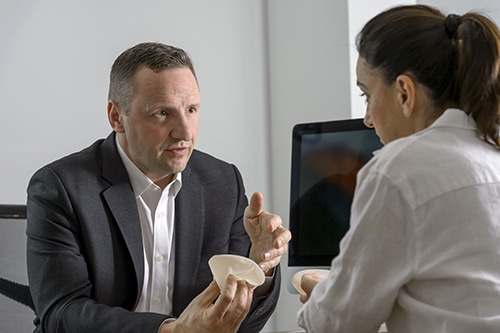
In a consultation, you can discuss your medical history, the planned procedure, anaesthetic options, risks, and the recovery period in more detail. There is also time to talk through any worries you may have about going to sleep for surgery and to ask the questions that matter most to you.
✓ How to arrange a consultation
You can contact Dr Michael Kernohan’s rooms in Sydney to request an appointment and, if needed, coordinate information from your GP or other treating doctors. You can also explore Dr Kernohan’s clinic website, especially the Contact Page and the online Photo Assessment feature, to enquire or book a consultation. Bringing a list of medicines, medical conditions and written questions often helps you get the most from your visit.
Clear information and a careful discussion with a qualified team can support you in deciding whether a facelift under general anaesthesia is appropriate for you, and if so, when the timing is right.
Download Dr Kernohan’s Facelift Surgery Guide
Medical References
- Anesthesia for office‐based facial plastic surgery procedures / World Journal of Otorhinolaryngology – Head and Neck Surgery / https://pmc.ncbi.nlm.nih.gov/articles/PMC10541158/
- Refining the anesthesia management of the face-lift patient: lessons learned from 1089 consecutive face lifts / Plastic and Reconstructive Surgery / https://pubmed.ncbi.nlm.nih.gov/25415274/
- Assessing the outcomes, risks, and costs of local versus general anesthesia: A review with implications for cutaneous surgery / Journal of the American Academy of Dermatology / https://pubmed.ncbi.nlm.nih.gov/29339237/
Further Reading
- Read Dr Kernohan’s Procedure page on Partial Facelift Surgery NSW
- Read Dr Kernohan’s Procedure page on Male facelift South West Sydney
- Read Dr Kernohan’s Procedure page on Deep Plane Facelift NSW
- Read Dr Kernohan’s Blog about Managing Swelling after Facelift Surgery
- Read Dr Kernohan’s Blog about What is a Preservation Facelift?
Related Post

How to Reduce Swelling After Facelift Surgery
Swelling after facelift surgery is very common, but it can still feel worrying when you…
How Much Does a Facelift Cost in Sydney?
When people start looking into facelift surgery, one of the first questions is, “How much…

High-SMAS vs Deep-Plane Approaches in Neck Lift Surgery
Why Technique Matters In Neck Lift Surgery When planning a neck lift – especially in…