

- Introduction
- How Should I Prepare For Abdominoplasty Surgery?
- Why Does Preparation Matter Before Abdominoplasty?
- What Should Happen At The First Consultation?
- What Should You Bring To Consultation?
- What Medical History Should You Share?
- Why Does Previous Abdominal Surgery Matter?
- Why Is Weight Stability Important?
- What If You Are Still Losing Weight?
- Why Is Smoking And Nicotine Cessation Important?
- Does Vaping Count As Nicotine Use?
- What Medicines And Supplements Need Review?
- Why Should You Not Stop Medicines On Your Own?
- What Diet And Nutrition Steps May Help Preparation?
- Should You Start New Supplements Before Surgery?
- How Should You Prepare Your Home For Recovery?
- What Items May Be Useful At Home?
- How Much Time Off Work Should You Plan?
- What Should You Arrange For Surgery Day?
- How Can You Prepare Emotionally For Surgery?
- What If You Feel Unsure Before Surgery?
- How Does Dr Michael Kernohan Plan Abdominoplasty Preparation?
- What Risks And Limitations Should Patients Understand?
- Why Is Informed Consent Important?
- What Is Recovery Like After Abdominoplasty?
- Why Is Early Walking Often Encouraged?
- What Activities Are Usually Restricted After Surgery?
- What Alternatives Should Patients Consider?
- Abdominoplasty Before and After Photos
- When Might Delaying Surgery Be Appropriate?
- Who May Be Suitable For Abdominoplasty?
- Who May Not Be Suitable?
- Are Costs Relevant When Preparing For Abdominoplasty?
- Take the Quiz
- Summary
- Tummy Tuck Surgery Preparation FAQs
- Next Step: Book a Consultation With Dr Kernohan to Discuss Your Preparation Plan
- Download Dr Michael Kernohan’s Abdominoplasty Surgery Guide
- Further Reading
Introduction
How Should I Prepare For Abdominoplasty Surgery?
- Start preparation several weeks before surgery where possible.
- Share your full medical history, medicines and supplements.
- Stop smoking, vaping and nicotine as advised.
- Aim for stable weight before surgery.
- Plan time off work, home support and transport.
- Prepare your recovery space before surgery day.
- Understand scars, activity limits, risks and recovery timing.
- Do not proceed if you feel rushed, unclear or uncertain.
Why Does Preparation Matter Before Abdominoplasty?
Preparation matters because abdominoplasty is a surgical procedure with incisions, tissue handling, anaesthesia and a recovery period. Careful planning helps identify risk factors before surgery and helps patients understand what the early recovery period may involve.
- Medical conditions may affect surgical planning.
- Smoking, vaping or nicotine use can affect wound healing.
- Medicines and supplements may affect bleeding risk or anaesthetic planning.
- Weight changes can affect timing and the surgical plan.
- Home support can affect early recovery.
Preparation can reduce avoidable risks, but it cannot remove all risks. Dr Michael Kernohan uses the preparation process to assess whether surgery, delayed surgery, another pathway or no surgery may be more appropriate.
What Should Happen At The First Consultation?
The first consultation is an assessment and discussion, not just a booking appointment. It gives Dr Michael Kernohan the opportunity to understand the patient’s concerns, medical history, anatomy and expectations.
- The patient’s abdominal concerns are discussed.
- Previous pregnancies, weight changes or abdominal surgery may be reviewed.
- The abdominal skin, soft tissue, scars and abdominal wall are assessed.
- Muscle separation may be discussed if relevant.
- Medical history, medications and allergies are reviewed.
- Risks, scars, recovery and alternatives are explained.
Patients should have time to ask questions and consider the information before deciding. A consultation should help clarify whether abdominoplasty is suitable and what preparation would be needed.
What Should You Bring To Consultation?
Bringing the right information to consultation can help the assessment. Patients should be ready to discuss their health history honestly, including details that may seem unrelated to abdominal surgery.
- A list of prescription medicines.
- A list of vitamins, supplements and herbal products.
- Information about previous surgery or anaesthetic problems.
- Details of allergies or medication reactions.
- Information about smoking, vaping or nicotine use.
- Relevant medical letters or test results if available.
Dr Michael Kernohan may also ask about work demands, home support, exercise habits and future weight or pregnancy plans. These details can affect timing, suitability and recovery planning.
What Medical History Should You Share?

Patients should share their full medical history before abdominoplasty. Even stable or well-managed conditions can be relevant to anaesthetic planning, wound healing and recovery.
- Past operations and anaesthetic history.
- Diabetes, heart disease, lung disease or clotting concerns.
- Previous abdominal surgery, caesarean section or hernia repair.
- Allergies or previous medication reactions.
- Current prescription medicines.
- Over-the-counter medicines, vitamins and herbal products.
- Smoking, vaping or nicotine use.
- Mental health history or concerns about readiness for surgery.
Patients should not hold back information because they are unsure whether it matters. Dr Michael Kernohan, the anaesthetist or another treating doctor can decide what is relevant to surgical planning.
Why Does Previous Abdominal Surgery Matter?
Previous abdominal surgery can affect scars, blood supply, tissue movement and abdominal wall planning. It may also affect whether further assessment is needed before abdominoplasty.
- Caesarean section scars may affect incision planning.
- Previous hernia repair may affect abdominal wall assessment.
- Appendicectomy or other abdominal scars may influence tissue planning.
- Scar tissue can affect dissection.
- Previous complications may change risk planning.
Patients should tell Dr Michael Kernohan about any abdominal surgery, even if it happened years earlier. Old operation notes or medical records may be useful in selected cases.
Why Is Weight Stability Important?
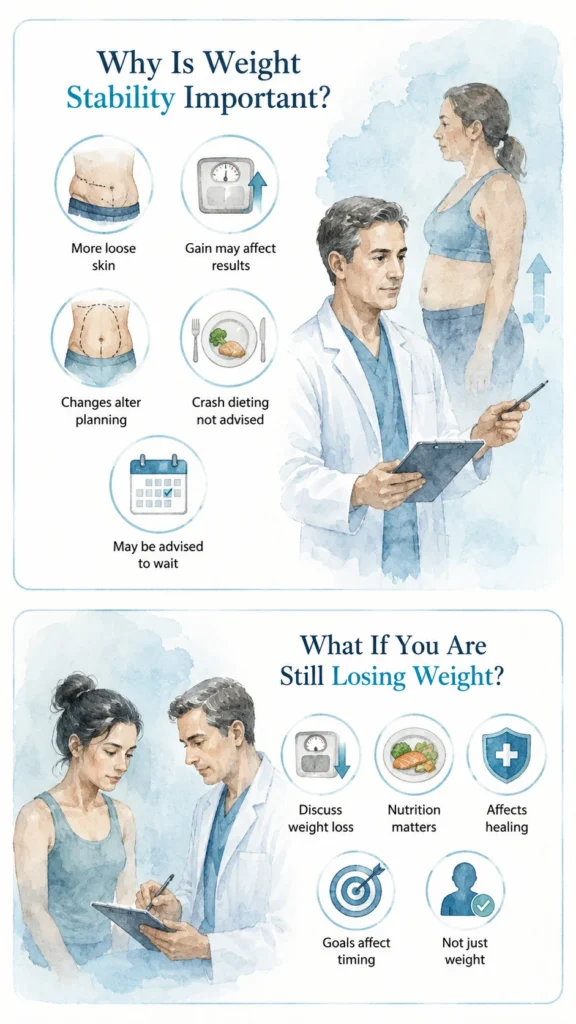
Weight stability is important because significant weight changes can affect the abdominal skin, soft tissue and surgical plan. A stable weight can support clearer planning and may reduce the chance that further weight change alters the result.
- Further weight loss may create additional skin laxity.
- Weight gain after surgery may affect abdominal tissues.
- Major weight changes can alter scar and contour planning.
- Crash dieting close to surgery is not recommended.
- Patients planning major weight loss may be advised to wait.
Weight stability does not mean a patient must meet a specific appearance goal. It means Dr Michael Kernohan can assess whether the timing of surgery is appropriate for the patient’s health, anatomy and plans.
What If You Are Still Losing Weight?
If a patient is still losing weight, surgery may need to be delayed until weight is more stable. This is because further weight loss after surgery can create new laxity and may change the abdomen again.
- Weight loss should be discussed honestly.
- Recent rapid weight change may affect nutrition.
- Nutritional status can affect healing.
- Future weight goals may affect timing.
- Body weight is only one part of suitability.
Delaying surgery can be the more appropriate decision in some cases. Dr Michael Kernohan can discuss whether the patient should wait, continue weight management, seek medical review or proceed with further assessment.
Why Is Smoking And Nicotine Cessation Important?
Smoking and nicotine cessation are important because nicotine can affect blood flow and oxygen delivery to healing tissues. This can increase the risk of wound healing problems after abdominal surgery.
- Smoking can affect blood supply to healing skin.
- Vaping may still involve nicotine exposure.
- Nicotine replacement products should be discussed.
- Wound healing concerns may be more likely with nicotine use.
- Surgery may need to be delayed if nicotine use continues.
Patients should follow the specific cessation instructions given by Dr Michael Kernohan and the anaesthetic team. Stopping nicotine reduces avoidable risks, but it does not remove every surgical risk.
Does Vaping Count As Nicotine Use?
Vaping may count as nicotine use if the product contains nicotine or if the patient is unsure what it contains. Even products described as nicotine-free should be discussed because patients may not always know the contents.
- Tell the surgical team about vaping.
- Bring details of products if needed.
- Do not assume vaping is irrelevant.
- Nicotine exposure can affect healing.
- Stopping instructions should be followed exactly.
Dr Michael Kernohan may recommend delaying surgery if nicotine use has not been stopped as advised. This is part of safety planning rather than a judgement about the patient.
What Medicines And Supplements Need Review?
Medicines and supplements need review because some can affect bleeding, wound healing, anaesthesia or general recovery. Patients should not stop prescribed medicines without medical advice.
- Prescription medicines should be listed.
- Blood thinners and anti-inflammatory medicines need review.
- Diabetes and blood pressure medicines may need planning.
- Hormone therapies or contraceptive medicines should be discussed.
- Herbal products and supplements should be included.
- Protein powders or wellness products should not be assumed harmless.
Dr Michael Kernohan may coordinate medication advice with the patient’s GP, anaesthetist or specialist. The aim is to manage risk while keeping important health conditions appropriately treated.
Why Should You Not Stop Medicines On Your Own?
Patients should not stop medicines on their own because stopping some medicines can be harmful. The decision to stop, continue or adjust a medicine should be made by the treating medical team.
- Blood pressure medicines may need careful planning.
- Diabetes medicines may need surgery-day instructions.
- Blood thinners need individual advice.
- Mental health medicines should not be stopped suddenly.
- Hormone-related medicines may need discussion.
Bring a current medication list to consultation and pre-operative appointments. This helps the team give advice that fits the patient’s health needs and surgical plan.
What Diet And Nutrition Steps May Help Preparation?
Nutrition can support general health before surgery, but patients should avoid extreme diets or unapproved supplements. The aim is steady, balanced preparation rather than last-minute changes.
- Eat regular, balanced meals.
- Include adequate protein.
- Maintain hydration.
- Avoid crash dieting close to surgery.
- Discuss iron deficiency, diabetes or nutritional concerns.
- Avoid unapproved supplements before surgery.
Some patients may need medical review or blood tests before surgery if there are concerns about nutrition, anaemia or general health. Dr Michael Kernohan can advise whether further assessment is needed.
Should You Start New Supplements Before Surgery?
Patients should not start new supplements before surgery without checking with the surgical team. Some vitamins, herbal products or wellness supplements may affect bleeding risk or interact with medicines.
- Herbal products should be disclosed.
- High-dose vitamins should be discussed.
- Weight loss products should be avoided unless medically approved.
- Protein supplements should be listed.
- “Natural” products can still affect surgery.
A full supplement list helps the team provide clear advice. Dr Michael Kernohan may recommend stopping some products for a period before surgery depending on the patient’s situation.

How Should You Prepare Your Home For Recovery?

Home preparation can make the early recovery period more manageable. Patients should plan their living space before surgery because bending, lifting, stretching and household tasks may be limited at first.
- Arrange a comfortable rest area.
- Keep essentials within easy reach.
- Prepare easy meals or organise help.
- Arrange childcare, pet care or household support.
- Place commonly used items at waist height.
- Choose clothing that does not press on incisions.
It can also help to keep commonly used items, medications, phone chargers, water and simple meals within easy reach. This may reduce unnecessary bending, stretching or repeated movement during the early recovery period.
Patients should have post-operative instructions available and know who to contact if concerns arise. Planning ahead can reduce stress during the early recovery period.
What Items May Be Useful At Home?
Useful items at home are usually practical rather than specialised. The goal is to reduce unnecessary movement and make daily tasks easier during early recovery.
- Slip-on or easy-to-wear footwear.
- Clothing that is loose around the abdomen and easy to put on.
- Easy-to-prepare meals.
- Regular medicines as instructed.
- Phone charger near the rest area.
- Pillows for supported rest if advised.
- Frequently used household items positioned at a comfortable height.
- Important contact numbers.
Patients should avoid buying unnecessary products or relying on advice from social media. Dr Michael Kernohan’s post-operative instructions should guide wound care, garments, activity limits and follow-up.
The aim is practical convenience rather than buying specialised recovery products unless these have been specifically recommended by the treating team.
How Much Time Off Work Should You Plan?
Time off work after abdominoplasty depends on the type of work, the extent of surgery and how healing progresses. Desk-based work, public-facing work and manual work may all need different planning.
- Desk-based work may need less time away than physical work.
- Heavy lifting and manual duties usually need longer restrictions.
- Driving and commuting should be planned in advance.
- Public-facing work may depend on comfort, mobility and swelling.
- Medical certificates or workplace planning may be needed.
Patients should avoid overcommitting during the early recovery period. Dr Michael Kernohan provides individual guidance based on the surgical plan, job demands and recovery progress.
What Should You Arrange For Surgery Day?
Surgery day preparation should be practical and organised. Patients should understand where to go, what to bring, who will take them home and who to call if concerns arise after discharge.
- Arrange a responsible adult to drive you home.
- Arrange early support at home if advised.
- Wear loose clothing that is easy to put on.
- Bring your medication list and required paperwork.
- Follow fasting instructions exactly.
- Confirm arrival time, facility details and contact numbers.
Patients should avoid bringing unnecessary valuables and should follow all instructions from the hospital or surgical facility. If illness, fever, skin infection or another health concern develops before surgery, the clinic should be contacted before proceeding.
Patients should also plan who will take them home after surgery and whether a responsible adult should be available during the early recovery period. Transport arrangements, overnight support and access to the clinic’s contact details should be organised before the day of surgery.
How Can You Prepare Emotionally For Surgery?
It is common to feel nervous before abdominoplasty. Emotional preparation means asking questions, understanding the recovery period and making sure the decision is not rushed.
- Write down questions before consultation.
- Discuss concerns before the surgery date.
- Understand that swelling and discomfort are expected during recovery.
- Avoid comparing your recovery with other patients online.
- Consider delaying surgery if you feel uncertain.
Patients should feel informed before proceeding. Dr Michael Kernohan discusses expectations, risks, scars, recovery and alternatives so patients can make a considered decision.
What If You Feel Unsure Before Surgery?
Feeling unsure should be taken seriously. Cosmetic surgery should not proceed if the patient feels pressured, unclear or unable to make an informed decision.
- Ask for more information if something is unclear.
- Review written instructions again.
- Discuss concerns with the clinic.
- Consider a second opinion if needed.
- Delay surgery if the timing is not right.
Changing the timing of surgery can be appropriate in some cases. A careful decision is better than proceeding when important questions remain unanswered.
How Does Dr Michael Kernohan Plan Abdominoplasty Preparation?
Dr Michael Kernohan plans abdominoplasty preparation by assessing the patient’s anatomy, health, timing and recovery needs. The preparation process helps decide whether surgery is suitable and what steps are needed before the operation.
- Abdominal skin, soft tissue, scars and muscle separation are assessed.
- Medical history, medications and allergies are reviewed.
- Weight stability and nicotine use are discussed.
- Risks, scars, recovery and limitations are explained.
- Home support, work duties and activity needs are considered.
This planning may involve coordination with a GP, anaesthetist or other specialists where needed. Dr Michael Kernohan may discuss abdominoplasty, delayed surgery, another pathway or no surgery depending on the patient’s circumstances.
What Risks And Limitations Should Patients Understand?
Abdominoplasty has risks and limitations, and these should be discussed before surgery. Preparation can reduce avoidable risks, but it cannot remove every possible complication.
- Bleeding or haematoma.
- Infection.
- Delayed wound healing.
- Seroma.
- Raised, widened or visible scars.
- Skin loss or wound separation.
- Altered sensation or numbness.
- Asymmetry or residual skin laxity.
- Deep vein thrombosis or pulmonary embolism.
- Anaesthetic risks.
Some patients may need further surgery in selected circumstances. Abdominoplasty cannot guarantee a specific appearance, and future weight changes, pregnancy or ageing can affect the abdomen over time.
Why Is Informed Consent Important?
Informed consent means the patient understands the expected benefits, risks, limitations, recovery and alternatives before deciding. It is not just a signature on a form.
- Patients should understand the proposed procedure.
- Risks and complications should be discussed.
- Scars and recovery should be explained.
- Alternatives, including no surgery, should be reviewed.
- Patients should have time to ask questions.
A clear consent process helps patients make a decision that fits their health, goals and circumstances. Dr Michael Kernohan discusses these points before surgery planning is finalised.
What Is Recovery Like After Abdominoplasty?
Recovery after abdominoplasty varies between patients and depends on the extent of surgery. Patients should expect swelling, bruising, tightness and activity restrictions during the early recovery period.
- Standing fully upright may feel difficult at first.
- Dressings, drains or compression garments may be used.
- Walking is usually encouraged as instructed.
- Heavy lifting and strenuous activity should wait until cleared.
- Follow-up appointments are important.
Scar maturation can take months. Dr Michael Kernohan provides post-operative instructions based on the procedure performed and the patient’s healing progress.
Patients may also find it useful to review appropriately presented Abdominoplasty before-and-after photographs as part of their general research. Results vary between individuals, and photographs do not predict what any one patient will achieve.
Why Is Early Walking Often Encouraged?
Early gentle walking is often encouraged because it can support circulation during recovery. It should be done according to the instructions provided by the treating team.
- Short, gentle walks may be advised early.
- Heavy activity should still be avoided.
- Walking should not cause strain on the abdomen.
- Patients should follow pain and mobility guidance.
- Sudden symptoms should be reported promptly.
Patients should not push beyond their instructions in an effort to recover faster. Recovery should progress in stages and be guided by follow-up review.
What Activities Are Usually Restricted After Surgery?
Activity restrictions help protect healing tissues during the early recovery period. The exact instructions depend on the operation, muscle repair, patient health and healing progress.
- Heavy lifting is usually restricted early.
- Strenuous exercise should wait until cleared.
- Household tasks may need help.
- Driving may need to wait until safe and permitted.
- Childcare and pet care may need planning.
Patients should arrange help before surgery rather than trying to manage everything alone. Returning to activity too early may increase discomfort, swelling or wound concerns.
What Alternatives Should Patients Consider?
Alternatives should be discussed before deciding on abdominoplasty. In some cases, surgery may not be needed, or another pathway may better match the concern.
- No surgery.
- Delaying surgery until weight or health is more stable.
- Physiotherapy for core strength where appropriate.
- Skin care for surface concerns.
- Weight management support.
- Liposuction in selected patients with limited skin laxity.
- Hernia or abdominal wall assessment if clinically indicated.
- Staged surgery in selected patients.
A second opinion may be appropriate if the patient is unsure. Dr Michael Kernohan discusses alternatives as part of informed consent so patients understand the available pathways.
Abdominoplasty Before and After Photos

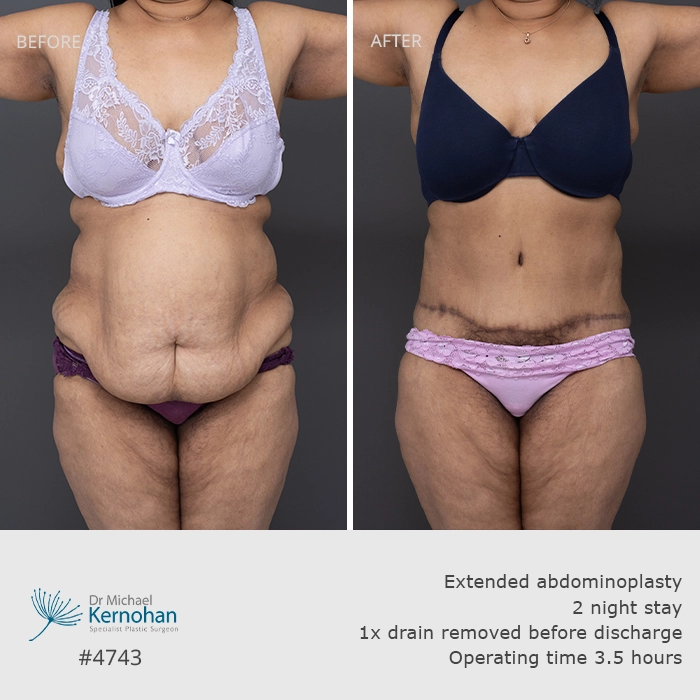
Visit Abdominoplasty Before and After Photos Page
Disclaimer: All surgical or invasive procedures come with inherent risks, and results can vary widely between individuals due to factors like lifestyle, anatomy, overall health, weight, and nutrition. We encourage you to conduct thorough research and consider seeking a second opinion from a qualified healthcare provider.
When Might Delaying Surgery Be Appropriate?
Delaying surgery may be appropriate when timing, health or recovery support is not suitable. It can also be appropriate when major weight loss, pregnancy plans or medical review may affect the surgical plan.
- Weight is still changing.
- Nicotine use has not stopped as advised.
- Medical conditions need review.
- Recovery support is not available.
- Future pregnancy is planned.
- The patient feels uncertain.
Delay does not always mean surgery will never be possible. It may allow safer planning and a clearer decision later.
Who May Be Suitable For Abdominoplasty?
Patients may be suitable for abdominoplasty if their concerns match what the procedure can address and they are medically suitable for surgery and anaesthesia. Suitability also depends on recovery capacity and expectations.
- Excess abdominal skin is present after pregnancy or weight change.
- Abdominal wall laxity or muscle separation may be relevant.
- Weight is reasonably stable.
- General health is suitable for surgery.
- Smoking, vaping or nicotine use can be stopped as advised.
- The patient understands scars, risks and recovery.
- Home support and time off work can be arranged.
Suitability cannot be confirmed from a brief description alone. Dr Michael Kernohan assesses the abdomen, health history, goals and recovery needs before discussing whether abdominoplasty may be appropriate.
Who May Not Be Suitable?
Some patients may not be suitable for abdominoplasty, or may need to delay surgery until risks are better managed. This may be due to health, timing, expectations or recovery support.
- Uncontrolled medical conditions.
- High anaesthetic risk.
- Smoking or nicotine use that cannot be stopped as advised.
- Unstable weight or planned major weight loss.
- Future pregnancy plans that may affect timing.
- Expectations surgery cannot meet.
- Lack of recovery support.
- Main concerns better suited to another pathway.
Further medical or psychological assessment may be recommended in selected cases. Dr Michael Kernohan may discuss delayed surgery, another pathway or no surgery if abdominoplasty is not suitable.
Are Costs Relevant When Preparing For Abdominoplasty?
Costs may be relevant when preparing for abdominoplasty, but they should not be the main reason to choose timing or technique. The surgical plan should be based on anatomy, health, risks and recovery needs.
- Costs vary by procedure complexity.
- Muscle repair, scar revision or combined planning may affect cost.
- Anaesthetic and facility fees may vary.
- Garments, medicines and follow-up needs may vary.
- Time off work and home support may affect practical planning.
- Medicare or private health considerations depend on individual circumstances.
Individual cost information is usually provided after consultation. Patients should avoid choosing surgery based only on price without considering suitability, safety planning, recovery and follow-up.
Take the Quiz
Summary
Preparing for abdominoplasty should begin before surgery day. Medical assessment, medication review, nicotine cessation, weight stability, nutrition, home support and realistic recovery planning all matter.
Preparation may reduce avoidable risks, but it cannot remove every risk. Patients should understand scars, recovery, limitations, alternatives and whether timing is appropriate before deciding.
Dr Michael Kernohan, Specialist Plastic & Reconstructive Surgeon in Sydney, provides individual preparation advice based on anatomy, health, goals and recovery needs. A consultation can help clarify whether abdominoplasty, delayed surgery, another pathway or no surgery may be suitable.

Tummy Tuck Surgery Preparation FAQs
Next Step: Book a Consultation With Dr Kernohan to Discuss Your Preparation Plan
Tummy tuck preparation involves planning your body, mind, and environment. From lifestyle changes to arranging your home, each step contributes to a more predictable recovery. If you are considering tummy tuck surgery, a face‑to‑face or photographic assessment with Dr Michael Kernohan is an important next step. This session helps tailor a preparation and surgical plan suited to your anatomy, health considerations and timeline. Contact the clinic in Sydney to begin your preparation with guidance grounded in clinical experience and patient‑centred care.
Download Dr Michael Kernohan’s Abdominoplasty Surgery Guide

Further Reading
- Read Dr Michael Kernohan’s Procedure Page on Abdominoplasty / Tummy Tuck Sydney
- Read Dr Michael Kernohan’s Blog about Tummy Tuck Recovery Timeline
- Read Dr Michael Kernohan’s Blog about Tummy Tuck Scarring: What Patients Should Understand
- Read Dr Michael Kernohan’s Blog about Abdominoplasty After Weight Loss
- Read Dr Michael Kernohan’s Blog about Risks of Tummy Tuck Surgery
- Read Dr Michael Kernohan’s Blog about How to Reduce Swelling and Bruising After Tummy Tuck
- Read Dr Michael Kernohan’s Procedure Page on Extended Abdominoplasty
- Read Dr Michael Kernohan’s Procedure Page on Fleur De Lis Abdominoplasty
- Read Dr Michael Kernohan’s Blog about Surgery for Muscle Separation Repair After Pregnancy

Abdominoplasty After Weight Loss – What Patients Should Know
Abdominoplasty after weight loss may remove excess abdominal skin and address selected abdominal wall concerns…

How to Reduce Swelling and Bruising After Tummy Tuck/Abdominoplasty
Dr Michael Kernohan, Specialist Plastic & Reconstructive Surgeon in Sydney, provides aftercare guidance for patients…

Tummy Tuck Recovery Timeline: What To Expect After Surgery
A tummy tuck (abdominoplasty) is a surgical procedure that reshapes the abdomen by removing excess…