

- At a Glance
- What Is The Difference Between Abdominoplasty And Liposuction?
- Why Are These Procedures Sometimes Confused?
- What Factors Determine Whether Abdominoplasty and Liposuction Can Be Combined?
- What Does Combined Planning Aim To Address?
- What Does Abdominoplasty Address?
- What Are The Limits Of Abdominoplasty?
- What Does Liposuction Address?
- What Are The Limits Of Liposuction?
- Why Is Skin Quality Important?
- Can Liposuction Make Loose Skin More Noticeable?
- Why Is Abdominal Fat Distribution Important?
- Why Is Internal Abdominal Fat Different?
- Why Does Blood Supply Matter In Combined Surgery?
- How Can Smoking Or Nicotine Affect Combined Surgery?
- When May Abdominoplasty Alone Be More Appropriate?
- When Might Liposuction Add Unnecessary Risk?
- When May Liposuction Alone Be More Appropriate?
- When Might Liposuction Alone Be Too Limited?
- When May Staged Surgery Be Discussed?
- How Does Dr Michael Kernohan Assess Combined Procedure Suitability?
- Watch the Abdominoplasty-Related Videos by Dr Kernohan
- What Risks And Limitations Should Patients Understand?
- Why Can Combined Surgery Increase Complexity?
- What Is Recovery Like After Abdominoplasty With Liposuction?
- How Long Does Recovery Usually Take?
- What Alternatives Should Patients Consider?
- When Might Delaying Surgery Be Appropriate?
- Abdominoplasty Before and After Photos
- Who May Be Suitable For Abdominoplasty With Liposuction?
- Who May Not Be Suitable?
- Are Costs Relevant When Planning Combined Surgery?
- Take the Quiz
- Summary
- FAQs About When To Combine Tummy Tuck + Liposuction
- Next Step: Discuss Abdominoplasty With Liposuction With Dr Kernohan
- Download Dr Michael Kernohan’s Abdominoplasty Surgery Guide
- Further Reading
Dr Michael Kernohan is a Specialist Plastic & Reconstructive Surgeon in Sydney. Abdominoplasty and liposuction may be combined in selected patients when both excess abdominal skin and localised fat are contributing to the concern.
Abdominoplasty and liposuction are different procedures. Abdominoplasty addresses excess abdominal skin, soft tissue and, in some patients, abdominal muscle separation, while liposuction removes selected areas of fat but does not tighten loose skin or repair abdominal wall separation.
This article explains when combined planning may be considered, when one procedure alone may be more appropriate, what Dr Michael Kernohan assesses, and what patients should understand about risks, recovery, alternatives and suitability before deciding.
At a Glance
When May Abdominoplasty Be Combined With Liposuction?
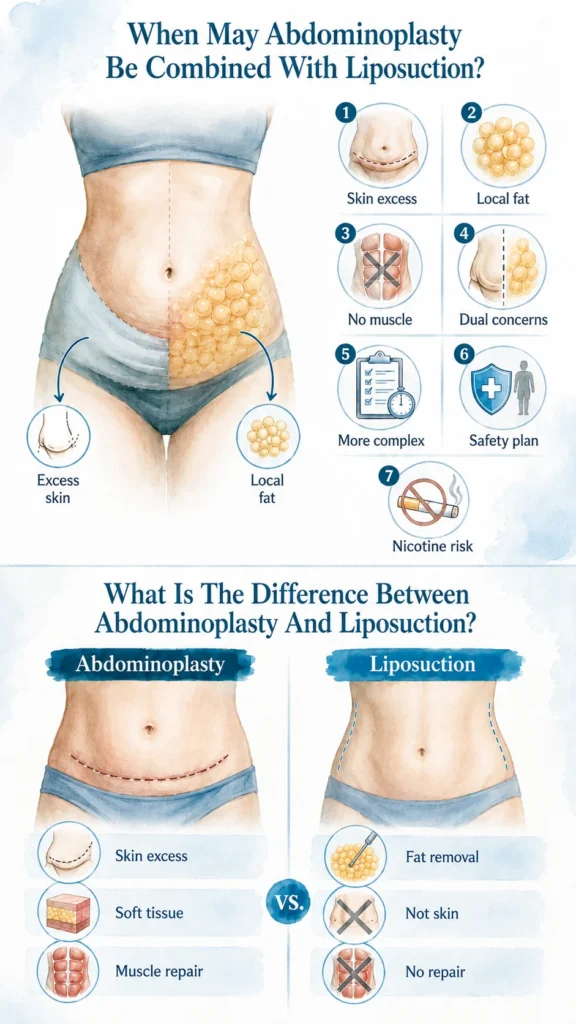
Abdominoplasty may be combined with liposuction in selected patients when there is both excess abdominal skin and localised fat that can be addressed as part of one surgical plan. This decision depends on skin quality, fat distribution, abdominal wall assessment, tissue blood supply, general health, smoking or nicotine use, surgical risk and recovery capacity.
- Abdominoplasty mainly addresses excess abdominal skin and soft tissue.
- Liposuction mainly addresses selected localised fat.
- Liposuction does not repair muscle separation or remove significant loose skin.
- Combined surgery may be considered when both concerns are present.
- Combined surgery can increase procedure complexity and recovery planning.
- Safety planning includes tissue blood supply, surgical extent and patient health.
- Smoking, vaping or nicotine use can affect wound healing risk.
- Dr Michael Kernohan assesses whether abdominoplasty alone, liposuction alone, combined surgery, staged surgery or no surgery may be appropriate.
What Is The Difference Between Abdominoplasty And Liposuction?
Abdominoplasty and liposuction are often discussed together, but they are not interchangeable. Each procedure addresses a different type of concern, so the right plan depends on what is causing the abdominal change.
- Abdominoplasty addresses excess abdominal skin and soft tissue.
- It may include abdominal muscle repair when separation is present and repair is appropriate.
- Liposuction removes selected fat beneath the skin.
- Liposuction does not remove significant loose skin.
- Liposuction does not repair abdominal muscle separation.
Some patients may need abdominoplasty alone, some may need liposuction alone, and some may be assessed for combined surgery. Dr Michael Kernohan examines the abdomen before discussing which pathway may be suitable.
Why Are These Procedures Sometimes Confused?
These procedures are sometimes confused because both may involve the abdominal area. However, the concern seen on the outside may come from skin, fat, muscle separation, internal abdominal fat, previous scars or several factors together.
- Loose skin may fold or hang after pregnancy or weight change.
- Localised fat may sit beneath the skin in selected areas.
- Muscle separation may affect the abdominal wall.
- Internal abdominal fat is not treated by liposuction.
- Previous scars can affect surgical planning.
A personal assessment helps identify which tissue layers are involved. This is important because treating fat alone will not address loose skin, and removing skin alone may not address selected areas of localised fat.
What Factors Determine Whether Abdominoplasty and Liposuction Can Be Combined?
Abdominoplasty and liposuction may be combined when both excess abdominal skin and localised fat are contributing to the concern. The decision depends on whether the combined procedure can be planned in a way that is appropriate for the patient’s anatomy, health and recovery needs.
- Excess abdominal skin is present.
- Localised fat is also present in areas that may be suitable for liposuction.
- Skin quality and tissue blood supply support combined planning.
- Weight is reasonably stable.
- The patient is medically suitable for surgery and anaesthesia.
- Recovery support and time away from work can be arranged.
Combined surgery is not chosen simply because two procedures can be performed together. Dr Michael Kernohan considers whether combining procedures is appropriate, whether one procedure alone is enough, or whether staged surgery would be more suitable.
What Does Combined Planning Aim To Address?
Combined planning aims to address different tissue concerns within one surgical plan. For example, abdominoplasty may address excess skin, while liposuction may address selected areas of fat that are separate from the skin concern.
- Lower abdominal skin laxity may be addressed with abdominoplasty.
- Selected localised fat may be addressed with liposuction.
- Abdominal wall separation may be repaired if appropriate.
- Existing scars may influence incision planning.
- Flank or adjacent fullness may need separate assessment.
The aim is not to treat as many areas as possible. The aim is to create a plan that matches the patient’s anatomy while considering blood supply, recovery and risk.
What Does Abdominoplasty Address?

Abdominoplasty mainly addresses excess abdominal skin and soft tissue. In some patients, it may also involve repair of abdominal muscle separation if this is present and clinically appropriate.
- Excess abdominal skin after pregnancy or weight change.
- Lower abdominal tissue laxity.
- Skin folds that are suitable for surgical assessment.
- Existing lower abdominal scars in selected patients.
- Abdominal muscle separation where repair is appropriate.
- Soft tissue changes that liposuction alone cannot treat.
Abdominoplasty is not a weight-loss operation. It also does not treat all internal abdominal fat or prevent future changes from weight fluctuation, pregnancy or ageing.
What Are The Limits Of Abdominoplasty?
Abdominoplasty has important limits that should be understood before surgery. It may address selected abdominal skin and soft tissue concerns, but it cannot treat every cause of abdominal fullness or guarantee a specific appearance.
- It does not remove internal abdominal fat.
- It does not replace weight management.
- It does not prevent future weight-related changes.
- It does not remove every stretch mark.
- It cannot guarantee complete symmetry.
- It still involves scars and recovery.
Dr Michael Kernohan discusses these limits during consultation. This helps patients understand whether abdominoplasty alone, liposuction, combined planning or another pathway may be more appropriate.
What Does Liposuction Address?
Liposuction addresses selected areas of fat beneath the skin. It may be considered when fat distribution is suitable and skin quality is expected to respond reasonably after fat removal.
- Localised fat beneath the skin.
- Selected abdominal or adjacent areas where appropriate.
- Fat that can be reached and removed safely.
- Areas that are assessed as part of the overall surgical plan.
- Fat that is separate from loose skin or muscle separation.
Liposuction does not remove significant excess skin. If skin laxity is already present, liposuction alone may make looseness more noticeable in some patients.
What Are The Limits Of Liposuction?
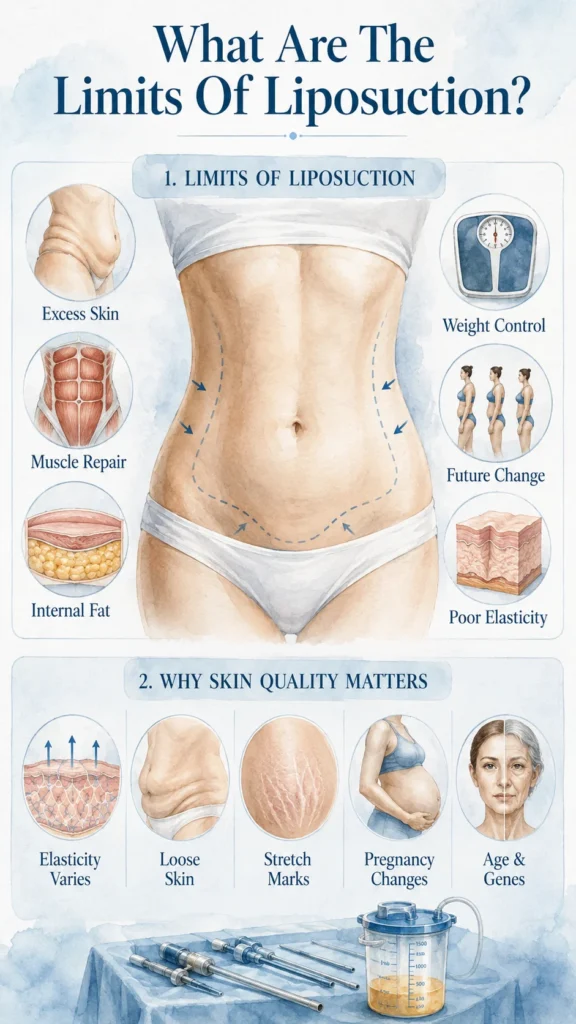
Liposuction has limits because it is a fat-removal procedure, not a skin-removal or muscle-repair operation. It may not suit patients whose main concern is loose skin, abdominal wall separation or internal abdominal fat.
- It does not remove excess skin.
- It does not repair muscle separation.
- It does not treat internal abdominal fat.
- It does not replace weight management.
- It does not prevent future weight change.
- It may not suit poor skin elasticity.
Patients should understand these limits before choosing liposuction alone or combined surgery. Dr Michael Kernohan assesses whether liposuction would add useful value or whether it may increase risk without addressing the main concern.
Why Is Skin Quality Important?
Skin quality is important because it affects how the abdomen may respond after liposuction or abdominoplasty. Loose or reduced-elasticity skin may not retract well after fat removal.
- Skin elasticity varies between patients.
- Loose skin may not tighten after liposuction.
- Stretch marks may suggest reduced skin elasticity.
- Pregnancy and weight change can affect skin behaviour.
- Sun exposure, age and genetics may also play a role.
If skin laxity is the main concern, abdominoplasty may be more relevant than liposuction alone. Dr Michael Kernohan assesses skin quality during consultation before discussing whether combined surgery is suitable.
Can Liposuction Make Loose Skin More Noticeable?
Liposuction can make loose skin more noticeable in some patients if fat is removed from an area where the skin does not contract well. This is why skin quality is assessed before liposuction is recommended.
- Skin with reduced elasticity may not sit well after fat removal.
- Existing folds may remain after liposuction.
- Stretch-marked skin may respond differently.
- Significant skin laxity may need skin-removal planning.
- Liposuction alone may be unsuitable if loose skin is the main concern.
A combined plan may be discussed when both excess skin and localised fat are present. In other cases, abdominoplasty alone, liposuction alone, staged surgery or no surgery may be more appropriate.
Why Is Abdominal Fat Distribution Important?
Abdominal fat distribution matters because not all fullness is treated the same way. Fat beneath the skin may be suitable for liposuction in selected areas, while internal abdominal fat cannot be removed with liposuction.
- Superficial fat can sometimes be addressed with liposuction.
- Internal abdominal fat is not treated with liposuction.
- Fat distribution may differ between the upper abdomen, lower abdomen and flanks.
- Some areas may need cautious planning because of blood supply.
- Weight stability affects surgical planning.
A personal examination is needed to identify what is contributing to abdominal fullness. Dr Michael Kernohan assesses whether the concern is skin, superficial fat, abdominal wall laxity, internal fullness or a combination.
Why Is Internal Abdominal Fat Different?
Internal abdominal fat sits deeper inside the abdomen around the organs. It cannot be removed with liposuction or abdominoplasty.
- It may contribute to abdominal fullness.
- It is affected by general health, weight and metabolism.
- It is not removed through liposuction cannulas.
- It is not removed by trimming abdominal skin.
- It may affect whether surgery can meet the patient’s expectations.
If internal abdominal fat is the main cause of fullness, surgery may not address the concern in the way the patient expects. Dr Michael Kernohan may discuss weight stability, medical review or delaying surgery if this is relevant.
Why Does Blood Supply Matter In Combined Surgery?
Blood supply matters because abdominoplasty changes how abdominal skin and soft tissue are lifted and repositioned. Liposuction can also affect tissue trauma, so combining the procedures requires careful planning.
- Abdominoplasty can alter tissue blood supply.
- Liposuction adds another layer of tissue treatment.
- Healing skin needs good blood flow.
- Smoking, vaping and nicotine can reduce blood flow.
- Treating too many areas may increase risk.
- Some patients may be better suited to staged surgery.
Safety planning is more important than treating more areas at once. Dr Michael Kernohan considers surgical extent, tissue quality and patient risk factors before recommending combined surgery.
How Can Smoking Or Nicotine Affect Combined Surgery?
Smoking, vaping and nicotine use can affect wound healing by reducing blood flow and oxygen delivery to tissues. This is especially important in surgery where skin and soft tissue healing are central to recovery.
- Nicotine can reduce blood flow to healing tissues.
- Wound healing problems may be more likely.
- Skin loss or wound separation risk may increase.
- Vaping should be discussed, especially if nicotine is involved.
- Surgery may need to be delayed if nicotine use continues.
Patients should follow the specific instructions given by Dr Michael Kernohan and the anaesthetic team. Stopping nicotine as advised is part of risk reduction, but it cannot remove all surgical risks.
When May Abdominoplasty Alone Be More Appropriate?
Abdominoplasty alone may be more appropriate when the main concern is excess abdominal skin, lower abdominal tissue laxity or abdominal wall separation. In these cases, adding liposuction may not add meaningful benefit and may increase surgical complexity.
- The main concern is loose abdominal skin.
- Localised fat is not a major concern.
- Muscle separation is part of the surgical plan.
- Blood supply concerns make added liposuction less suitable.
- Patient health or recovery capacity does not support combined surgery.
Dr Michael Kernohan may recommend abdominoplasty alone when it is the more appropriate plan for the patient’s anatomy and risk profile. A focused operation may be safer and more suitable than adding extra treatment areas without a clear reason.
When Might Liposuction Add Unnecessary Risk?
Liposuction may add unnecessary risk when it does not address the main concern or when tissue blood supply may be affected. This is especially important in abdominoplasty, where abdominal skin and soft tissue need to heal after being lifted and repositioned.
- Skin laxity is the main concern.
- Fat distribution is not suitable for liposuction.
- There are concerns about tissue blood supply.
- Smoking or nicotine use has not stopped as advised.
- The patient has medical risk factors that increase surgical concern.
Adding liposuction should not be seen as automatically better. Dr Michael Kernohan assesses whether it would add useful value or whether abdominoplasty alone, staged surgery or another pathway would be more appropriate.
When May Liposuction Alone Be More Appropriate?
Liposuction alone may be more appropriate when the main concern is localised superficial fat and the skin has enough elasticity to settle after fat removal. It may be discussed when there is limited loose skin and no abdominal wall issue requiring repair.
- Localised fat is the main concern.
- Skin laxity is limited.
- Skin quality is suitable.
- Weight is reasonably stable.
- Muscle separation is not the main issue.
- The patient understands that liposuction does not remove excess skin.
Liposuction alone may not be suitable if the patient already has significant skin laxity. In that situation, fat removal without skin management may leave loose skin more noticeable.
When Might Liposuction Alone Be Too Limited?
Liposuction alone may be too limited when the concern involves loose skin, tissue laxity, abdominal wall separation or internal abdominal fat. It is not designed to correct these issues.
- Loose abdominal skin is present.
- Skin folds are the main concern.
- Abdominal muscle separation contributes.
- Internal abdominal fat is the main cause of fullness.
- Skin elasticity is reduced.
- The patient expects a skin-removal result from fat removal.
Dr Michael Kernohan explains these limits during consultation. This helps patients understand why liposuction alone, abdominoplasty alone, combined surgery, staged surgery or no surgery may be discussed.
When May Staged Surgery Be Discussed?
Staged surgery may be discussed when it may be safer or more practical to separate procedures rather than combine them. This can allow healing to be assessed before a second operation is considered.
- Surgical risk is higher.
- Treatment areas are larger.
- Blood supply concerns are present.
- Smoking or nicotine history increases wound-healing concern.
- Weight is not stable.
- The patient prefers separate recovery periods.
Staged surgery is not a lesser option. For some patients, it may provide a more cautious pathway and allow Dr Michael Kernohan to reassess healing, recovery and remaining concerns before further surgery is considered.
How Does Dr Michael Kernohan Assess Combined Procedure Suitability?
Dr Michael Kernohan assesses combined procedure suitability by examining the abdomen, reviewing health history and identifying the tissue layers that contribute to the concern. The decision is based on anatomy, safety planning and realistic expectations.
- Abdominal skin quality and laxity are assessed.
- Fat distribution and areas of fullness are reviewed.
- Abdominal wall separation is checked where relevant.
- Previous scars or abdominal surgery are considered.
- Weight stability and future weight plans are discussed.
- Smoking, vaping or nicotine use is reviewed.
- Medical history, medications and allergies are considered.
- Recovery support and time off work are discussed.
This assessment may lead to a recommendation for abdominoplasty alone, liposuction alone, combined surgery, staged surgery, another pathway or no surgery. The aim is to choose a plan that matches the patient’s anatomy and risk profile.
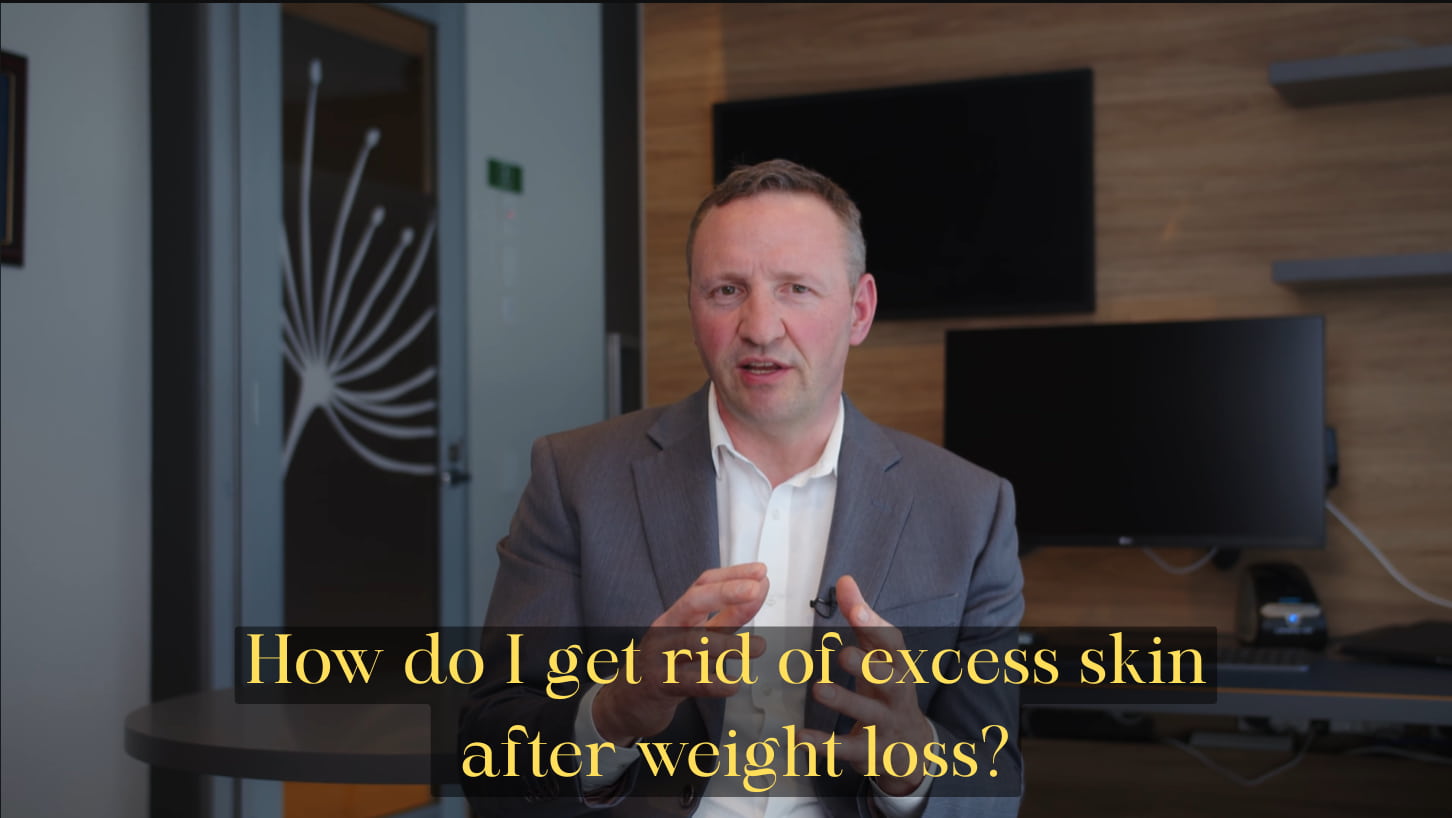
Watch the Abdominoplasty-Related Videos by Dr Kernohan
What Risks And Limitations Should Patients Understand?
Abdominoplasty with liposuction has risks and limitations, as with any surgical procedure. Combining procedures may increase complexity, so patients need to understand what can happen and what surgery cannot guarantee.
- Bleeding or haematoma.
- Infection.
- Seroma.
- Delayed wound healing.
- Skin loss or wound separation.
- Raised, widened or visible scars.
- Altered sensation or numbness.
- Asymmetry or contour irregularity.
- Residual skin laxity or fullness.
- Deep vein thrombosis or pulmonary embolism.
- Fat embolism, which is rare but serious.
- Anaesthetic risks.
Some patients may need further surgery in selected circumstances. Surgery cannot guarantee a specific appearance, and future weight changes, pregnancy or ageing can affect the abdomen over time.
Why Can Combined Surgery Increase Complexity?
Combined surgery can increase complexity because more than one tissue concern is being addressed in the same operation. Abdominoplasty and liposuction each affect tissue healing in different ways.
- Abdominoplasty involves incisions and tissue repositioning.
- Liposuction adds tissue trauma in treated areas.
- Blood supply must be protected.
- Swelling and bruising may be broader.
- Recovery planning may be more involved.
- Surgical time may be longer.
Combining procedures may still be appropriate for selected patients. Dr Michael Kernohan weighs the potential benefit against the added risk before recommending a combined approach.
What Is Recovery Like After Abdominoplasty With Liposuction?
Recovery after abdominoplasty with liposuction can be more involved than recovery after one procedure alone. Patients may notice abdominal tightness from abdominoplasty and broader swelling or bruising from liposuction.
- Swelling and bruising are expected.
- Bruising may extend beyond the lower abdomen if liposuction is included.
- Standing fully upright may feel difficult early after abdominoplasty.
- Dressings, drains or compression garments may be used.
- Walking is usually encouraged as instructed.
- Heavy lifting and strenuous activity should wait until cleared.
- Follow-up appointments are important.
Recovery varies between patients. Dr Michael Kernohan provides post-operative instructions based on the procedure performed, whether muscle repair was included, and how healing progresses.
How Long Does Recovery Usually Take?
Recovery time varies depending on the extent of surgery, the patient’s health, job demands and healing progress. Patients should plan for activity restrictions and should avoid comparing their recovery with another person’s timeline.
- Desk-based work and manual work need different planning.
- Driving should wait until it is safe and permitted.
- Exercise should resume only when cleared.
- Household tasks may need help early.
- Swelling can take time to settle.
- Scars continue to mature over months.
Patients should arrange support before surgery rather than trying to manage alone. Returning to activity too early may increase discomfort, swelling or wound concerns.
What Alternatives Should Patients Consider?
Alternatives should be discussed before deciding on combined abdominoplasty and liposuction. In some cases, one procedure alone, delayed surgery or no surgery may be more suitable.
- No surgery.
- Delaying surgery until weight or health is more stable.
- Abdominoplasty alone.
- Liposuction alone.
- Staged abdominoplasty and liposuction.
- Weight management support.
- Physiotherapy for core strength where appropriate.
- Skin care for surface concerns.
- Hernia or abdominal wall assessment if clinically indicated.
A second opinion may be useful if the patient is unsure. Dr Michael Kernohan discusses alternatives as part of informed consent so patients understand the available options before deciding.
When Might Delaying Surgery Be Appropriate?
Delaying surgery may be appropriate when timing, health, weight stability or recovery support is not suitable. It may also be recommended when combined surgery would add more risk than benefit at that time.
- Weight is still changing.
- Smoking or nicotine use has not stopped as advised.
- Medical conditions need review.
- Recovery support is not available.
- Future pregnancy is planned.
- The patient feels uncertain.
Delaying surgery can be a responsible decision. Dr Michael Kernohan may recommend reassessment later, medical review, another pathway or no surgery depending on the patient’s circumstances.
Abdominoplasty Before and After Photos

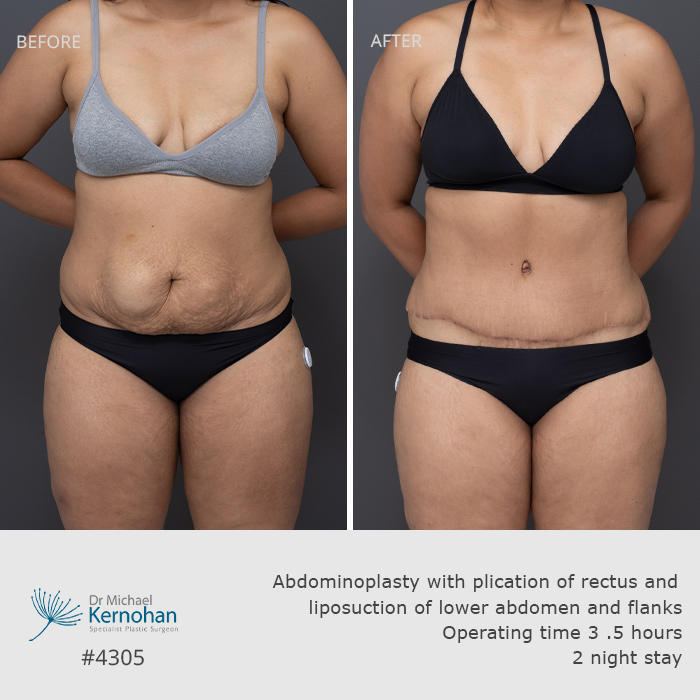
Visit Abdominoplasty Before and After Photos Page
Disclaimer: All surgical or invasive procedures come with inherent risks, and results can vary widely between individuals due to factors like lifestyle, anatomy, overall health, weight, and nutrition. We encourage you to conduct thorough research and consider seeking a second opinion from a qualified healthcare provider.
Who May Be Suitable For Abdominoplasty With Liposuction?
Patients may be suitable for abdominoplasty with liposuction when both excess abdominal skin and selected localised fat are contributing to the concern. Suitability also depends on general health, tissue quality and recovery capacity.
- Excess abdominal skin is present.
- Localised superficial fat is also present.
- Skin quality and tissue blood supply support combined planning.
- Weight is reasonably stable.
- General health is suitable for surgery and anaesthesia.
- Smoking, vaping or nicotine use can be stopped as advised.
- The patient understands scars, risks and recovery.
- Time off work and home support can be arranged.
Suitability cannot be confirmed from photos alone. Dr Michael Kernohan assesses the abdomen, fat distribution, abdominal wall, medical history and expectations before discussing whether combined surgery may be appropriate.
Who May Not Be Suitable?
Some patients may not be suitable for combined surgery, or may need to delay surgery until risk factors are better managed. This may relate to health, weight, smoking or nicotine use, tissue blood supply or expectations.
- Uncontrolled medical conditions.
- High anaesthetic risk.
- Smoking or nicotine use that cannot be stopped as advised.
- Unstable weight or planned major weight loss.
- Future pregnancy plans that may affect timing.
- Significant internal abdominal fat as the main concern.
- Blood supply concerns.
- Expectations surgery cannot meet.
- Lack of recovery support.
- Need for further medical or psychological assessment.
In some cases, abdominoplasty alone, liposuction alone, staged surgery, delayed surgery or no surgery may be more appropriate. Dr Michael Kernohan will explain the reasoning behind the recommendation.
Are Costs Relevant When Planning Combined Surgery?
Costs may be relevant when planning combined surgery, but they should not be the main reason to choose a procedure. The surgical plan should be based on anatomy, health, risk, recovery and realistic expectations.
- Costs vary by procedure complexity.
- Adding liposuction may affect surgical time and planning.
- Muscle repair, scar revision or previous surgery may affect complexity.
- Anaesthetic and facility fees may vary.
- Garments, medicines and follow-up needs may vary.
- Time off work and home support may affect practical planning.
- Medicare or private health considerations depend on individual circumstances.
Individual cost information is usually provided after consultation. Patients should avoid choosing combined surgery only because it seems convenient or because they want more areas treated at once.
Take the Quiz
Summary
Abdominoplasty and liposuction are different procedures. Abdominoplasty addresses excess abdominal skin, soft tissue and, in selected patients, abdominal muscle separation, while liposuction addresses selected localised fat beneath the skin.
Combined surgery may be considered when both excess skin and localised fat are present, and when anatomy, skin quality, blood supply, health and recovery capacity support that plan. Some patients are better suited to abdominoplasty alone, liposuction alone, staged surgery, delayed surgery or no surgery.
Dr Michael Kernohan, Specialist Plastic & Reconstructive Surgeon in Sydney, assesses each patient individually before recommending a pathway. The consultation includes discussion of risks, scars, recovery, alternatives and whether combined surgery is suitable for the patient’s circumstances.

FAQs About When To Combine Tummy Tuck + Liposuction
Next Step: Discuss Abdominoplasty With Liposuction With Dr Kernohan
If you’re considering abdominal surgery, understanding whether liposuction should be part of your procedure is a key part of planning. The right combination of techniques depends on your anatomy, your goals, and what will support the most balanced result.
Dr Michael Kernohan, Specialist Plastic & Reconstructive Surgeon in Sydney, offers personalised assessments that take every factor into account. His clinic website’s contact page and photo assessment page are accessible
for convenient inquiries and consultation bookings. Through clear advice and structured planning, his team helps patients feel confident in the path they choose.
Every result starts with the right conversation – get in touch to begin yours.
Download Dr Michael Kernohan’s Abdominoplasty Surgery Guide
Further Reading
- Read Dr Michael Kernohan’s Procedure Page on Abdominoplasty / Tummy Tuck Sydney
- Read Dr Michael Kernohan’s Procedure Page on Liposuction Sydney
- Read Dr Michael Kernohan’s Blog about How to Prepare for Your Tummy Tuck Surgery
- Read Dr Michael Kernohan’s Blog about Tummy Tuck Recovery Timeline
- Read Dr Michael Kernohan’s Blog about Risks of Tummy Tuck Surgery
- Read Dr Michael Kernohan’s Blog about Abdominoplasty After Weight Loss
- Read Dr Michael Kernohan’s Blog about Abdominoplasty Scars

Abdominoplasty After Weight Loss – What Patients Should Know
Abdominoplasty after weight loss may remove excess abdominal skin and address selected abdominal wall concerns…
Abdominoplasty Scar Treatment, Healing and Fading
Understanding Tummy Tuck (Abdominoplasty) Scars Are you planning to get an abdominoplasty? Do you want…

How to Choose a Surgeon for Your Tummy Tuck
Undergoing a tummy tuck (abdominoplasty) is a significant decision that can change your body contours…