
- Take the Quiz
- What Constitutes Surgical Risk?
- Common and Expected Post-Operative Responses
- Download Dr Kernohan’s Abdominoplasty Surgery Guide
- Risk of Hematoma And Seroma Formation
- Risk Of Infection And Wound Complications
- Nerve Changes And Sensation Alterations
- Blood Clots And Deep Vein Thrombosis (DVT)
- Anaesthesia-Related Risks
- Scarring And Aesthetic Concerns
- Delayed Healing In Patients With Certain Health Profiles
- Changes In Abdominal Sensation And Function
- Asymmetry And Contour Irregularities
- Less Common But Significant Risks
- Abdominoplasty Before and After Photos
- Strategies to Reduce Risk Before Surgery
- Post-Operative Monitoring And Support
- When to Seek Urgent Medical Review
- Counselling and Informed Decision-Making
- FAQs About Risks of Tummy Tuck Surgery
- Next Steps: Achieving Risk Awareness and Planning a Safe Surgery
- Further Reading
A tummy tuck (abdominoplasty) is a surgical procedure designed to remove excess abdominal skin and fat, and in many cases, to tighten the abdominal muscles. While it can produce meaningful shape changes, it is important to understand that it involves real surgical risk and a recovery process that requires careful planning and monitoring. Risk discussion is a core part of informed consent and supports safer outcomes.
Dr Michael Kernohan, Specialist Plastic & Reconstructive Surgeon in Sydney, emphasises that a realistic understanding of possible complications helps patients prepare practically and psychologically for surgery. This article outlines the types of risks associated with tummy tuck surgery, how frequently they occur, and the measures taken to manage their impact.
Take the Quiz
What Constitutes Surgical Risk?
Any time the body’s tissues are altered surgically, physiological responses occur. Some are expected and manageable, while others are less common but more serious. In tummy tuck surgery, risk arises because of:
- Incisions made in the abdominal wall
- Dissection of fat and skin layers
- Muscle tightening and alteration of soft tissue support
- Anaesthesia administration
These elements are necessary for surgical correction, but each carries potential for unintended outcomes. Understanding the range of risk allows patients and surgeons to create a tailored plan that accounts for health status, anatomy, and practical risk mitigation.
Common and Expected Post-Operative Responses
Certain responses are common following a tummy tuck and part of normal healing rather than true complications. These typically resolve without intervention as healing progresses. They include:
Swelling, which usually peaks in the first few days and gradually reduces over weeks.
Bruising, which follows expected patterns and fades as the body reabsorbs blood pigments.
Minor discomfort and tightness, particularly in the first one to two weeks, as tissues adjust to their new position.
These responses can feel pronounced early on but decrease steadily with time. Pain management, elevation during rest, gentle movement and adherence to aftercare instructions support expected recovery.
Download Dr Kernohan’s Abdominoplasty Surgery Guide

Risk of Hematoma And Seroma Formation
Hematoma and seroma refer to collections of blood or fluid, respectively, beneath the skin after surgery. These are among the more common complications in abdominal surgery.
A hematoma occurs when blood accumulates due to vessel leakage. It may present as firm swelling, increased pain or unusual contour changes. Seroma involves clear fluid collecting in spaces created by tissue dissection, and can form even without obvious trauma.
Both conditions are typically identified early through physical examination and may require drainage, either with a needle and syringe or through a minor procedure. Monitoring during recovery helps ensure early identification and management if either occurs.
Risk Of Infection And Wound Complications
Infection is a known risk whenever the skin is incised. Abdominoplasty involves substantial incisions, and bacteria from the skin surface can enter wounds despite sterile technique.
Signs of infection include:
- Increasing redness or warmth around incision lines
- Persistent or worsening pain
- Pus‑like discharge
- Fever or flu‑like symptoms
Prompt medical review allows early institution of antibiotic therapy and wound care. In some situations, local wound opening and drainage may be required to resolve infection.
Delayed wound healing or wound separation can also occur, especially where the blood supply is tenuous or tissue tension is high. These issues require careful management, often with dressings, local care, and, where necessary, surgical revision.
Nerve Changes And Sensation Alterations
Tummy tuck surgery involves tissue dissection near sensory nerves supplying the skin and underlying layers. As a result:
- Temporary numbness or altered sensation near incisions and the lower abdomen is common
- Mild tingling or hypersensitivity may be noticed
- These changes are typically temporary as nerves regenerate
In rare cases, sensory changes can be prolonged or permanent. Most patients find that sensation improves over several months, but the pace of nerve recovery varies between individuals.

Blood Clots And Deep Vein Thrombosis (DVT)
A paramount concern in any lower-limb or trunk surgery is the risk of blood clots forming in veins, particularly in the legs, known as deep vein thrombosis (DVT). If a clot dislodges and travels to the lungs, it can cause a pulmonary embolism – a serious and potentially life-threatening event.
Risk factors for clot formation include:
- Prolonged immobility
- Personal or family history of clotting disorders
- Smoking, obesity or hormonal therapy
Measures to reduce this risk include early mobilisation after surgery, compression devices during the peri-operative period, and sometimes medication to support circulation. Dr Kernohan discusses these risk factors individually to tailor safety protocols.
Anaesthesia-Related Risks
General anaesthesia is typically used during tummy tuck surgery. While modern anaesthesia is generally safe, it carries specific risks, such as:
- Reactions to anaesthetic agents
- Breathing difficulties
- Post‑operative nausea or confusion
These risks are minimised by pre-operative assessment, senior anaesthetist involvement and monitoring throughout the procedure. Patients with certain medical conditions may require adjustments to anaesthesia plans to support safety.
Scarring And Aesthetic Concerns
Scars are an inevitable outcome of any surgical procedure. In a tummy tuck, incisions are typically low on the abdomen to be discreet and to align with underwear or swimwear lines. However, scarring varies between individuals based on:
- Skin type and healing tendencies
- Tension on wound edges
- Post‑operative care and sun exposure
While many scars fade over time with appropriate care, some may remain raised or more noticeable. Rarely, surgical revision of scar lines may be considered once healing is complete, often after 12 months.
Delayed Healing In Patients With Certain Health Profiles
Certain health conditions affect tissue healing. Patients with poorly controlled diabetes, compromised circulation, or significant nutritional deficiencies may experience delayed wound closure or abnormal scar behaviour.
Smokers, in particular, have an elevated risk of delayed healing due to impaired blood flow. This is a key reason why smoking cessation is strongly recommended in the pre-operative period.
Careful optimisation of medical conditions prior to surgery helps support steadier and more predictable healing.
Changes In Abdominal Sensation And Function
Abdominoplasty involves manipulation and tightening of the abdominal wall, including fascia and connective tissues. While this often improves contour, it may affect how patients feel muscle engagement or abdominal tightness.
Temporary changes in sensation or abdominal awareness are normal; however, significant discomfort during movement should be discussed with your surgeon.
Rehabilitation exercises and gradual return to physical activity under guidance contribute to functional comfort.
Asymmetry And Contour Irregularities
Every body is unique, and surgical outcomes may reflect that individual variation. While the goal of a tummy tuck is improved abdominal contour, slight asymmetry may occur due to:
- Pre‑existing asymmetry
- Variations in tissue behaviour
- Differences in healing response
These are not necessarily complications, but they do require attention if more pronounced. Secondary procedures may be considered only after healing is complete and under careful assessment.
Less Common But Significant Risks
Some risks are less common but carry greater consequences. These include the following:
- Major bleeding requiring surgical intervention
- Severe infection necessitating hospitalisation
- Nerve damage affecting motor or sensory function
Because these are serious, identifying risk factors during pre-operative assessment and discussing them candidly is essential. Dr Kernohan ensures patients understand both common and less common risk possibilities.
Abdominoplasty Before and After Photos
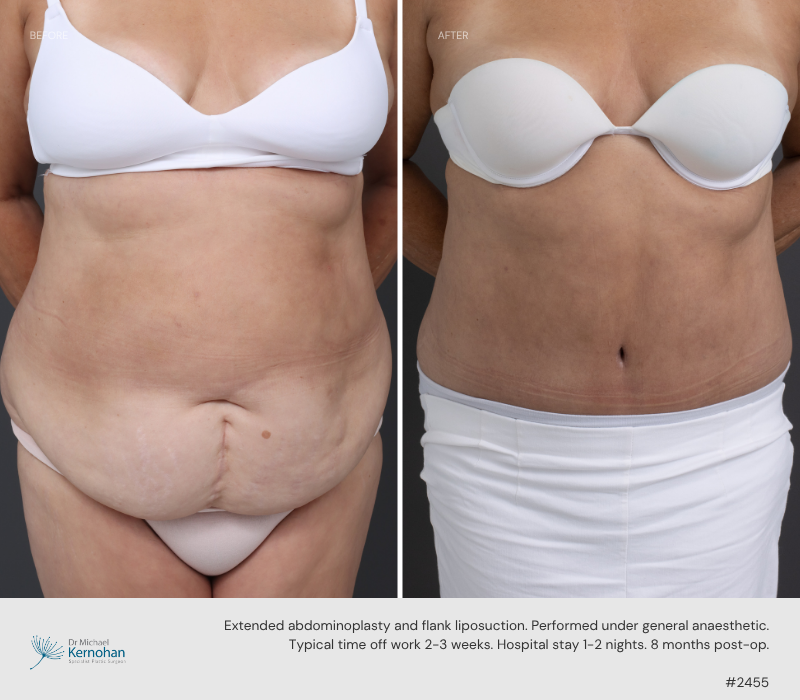
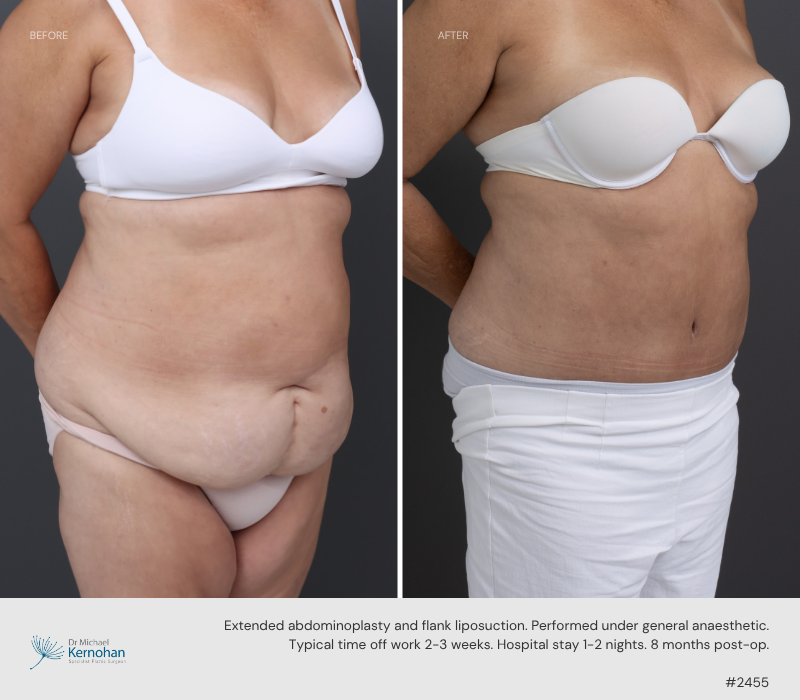
Disclaimer: All surgical or invasive procedures come with inherent risks, and results can vary widely between individuals due to factors like lifestyle, anatomy, overall health, weight, and nutrition. We encourage you to conduct thorough research and consider seeking a second opinion from a qualified healthcare provider.
Strategies to Reduce Risk Before Surgery
Effective risk reduction involves multiple components. These include:
- Optimising medical health and controlling chronic conditions
- Ceasing smoking and minimising alcohol intake
- Maintaining a stable weight
- Following instructions about medication and supplements
Your surgeon and anaesthetist work together to tailor these strategies to your individual health profile.
Post-Operative Monitoring And Support
After surgery, vigilant monitoring helps identify early signs of complications. Follow-up appointments are planned to assess:
- Wound healing
- Changes in sensation
- Fluid collections
- Signs of infection or unusual swelling
Communication with your surgical team during recovery supports timely intervention when needed.
When to Seek Urgent Medical Review
Patients should contact their surgical team promptly if they experience:
- Severe pain not controlled by medication
- Rapidly increasing swelling or firmness
- Fever or chills suggesting infection
- Trouble breathing or chest pain
These symptoms are not typical of normal recovery and warrant early assessment.
Counselling and Informed Decision-Making
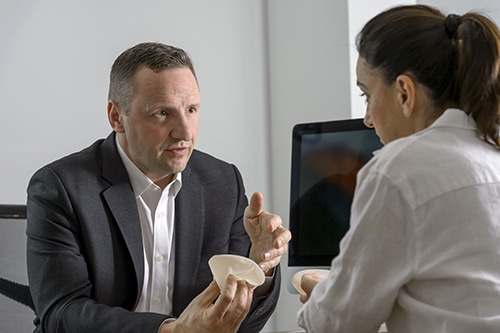
Understanding risk is a fundamental part of informed consent. Dr Michael Kernohan discusses risk in the context of your medical history, anatomy and patient goals. This personalised approach helps patients weigh both benefits and limitations.
Clear discussion about risk supports confident and informed surgical decisions.

FAQs About Risks of Tummy Tuck Surgery
Next Steps: Achieving Risk Awareness and Planning a Safe Surgery
Every surgical procedure carries risk, and a tummy tuck is no exception. Carefully evaluating these risks, preparing appropriately and maintaining open communication with your surgeon helps support safer outcomes. With comprehensive planning and structured aftercare, many patients experience predictable healing while understanding that complications, although uncommon, can occur.
As you’ve reached this conclusion, you come to realise that every surgical decision comes with questions – and understanding the risks involved is part of responsible planning. Dr Michael Kernohan, Specialist Plastic & Reconstructive Surgeon in Sydney, offers clear, practical advice grounded in clinical experience.
Whether you’re still considering your options or ready to take the next step, a personalised consultation can help clarify what tummy tuck surgery may involve for you. Reach out to Dr Kernohan’s team to book your appointment or submit photos for a confidential surgical assessment. Your safety and understanding come first.
Further Reading
- Read more about Belt Lipectomy Sydney
- Read more about Extended Abdominoplasty
- Read more about Upper Body Lift NSW
- Read more about Lower Body Lift Surgery NSW
- Read more about Liposuction Sydney NSW
- Read Dr Kernohan’s Blog on Recovery after Tummy Tuck or Abdominoplasty
- Read Dr Kernohan’s Blog on Will Medicare Cover my Abdominoplasty/ Tummy Tuck?
- Read Dr Kernohan’s Blog on How To Manage And Treat Scars After Corset Abdominoplasty
- Read Dr Kernohan’s Blog on Abdominoplasty Scar Treatment, Healing and Fading
What is Diastasis Recti? – Split Tummy Muscles
Solutions for Split Tummy Muscles after Pregnancy Diastasis recti also referred to as diastasis rectus…

What is a Good Weight for Tummy Tuck/ Abdominoplasty?
Why you need to be the right weight for Tummy Tuck – Abdominoplasty Surgery –…

How to Get a Flat Tummy
Options to Get a Flat Stomach with the Help of Diet, Exercise and Plastic Surgery…