
- Take the Quiz
- What Corset Abdominoplasty Scars Typically Look Like
- The Stages Of Scar Healing After Surgery
- Effective Strategies To Support Scar Healing
- Sun Protection And Scar Appearance
- Tummy Tuck – Abdominoplasty Before and After Photos
- Individual Factors That Affect Scarring
- Long-Term Management And When To Seek Advice
- Scar Management In Sydney’s Climate
- FAQs About Corset Abdo Scars
- Planning For Scar Care? We Can Help
- Final Thoughts
Undergoing a corset abdominoplasty is a significant step, particularly for patients who have experienced major weight loss or significant abdominal laxity. This specialised form of abdominoplasty results in a more extensive incision pattern, designed to address both vertical and horizontal tissue excess. Naturally, this leads to longer and more noticeable scarring in the initial stages. However, these scars do not have to define the outcome. With expert planning and consistent care, scar healing can be effectively supported.
Dr Michael Kernohan, a Specialist Plastic & Reconstructive Surgeon located in South West Sydney, provides each patient with an individualised scar care protocol designed to assist skin healing and manage visibility over time. This blog explores the healing journey after corset abdominoplasty and outlines clear strategies to care for and treat corset abdo scars.
Take the Quiz
What Corset Abdominoplasty Scars Typically Look Like
Scars from a corset abdominoplasty tend to be more prominent early in the healing process due to the procedure’s design. Unlike standard abdominoplasty which typically involves a horizontal lower abdominal scar, corset abdominoplasty also introduces a vertical midline scar extending upward toward the breastbone. This anchor-like configuration allows the surgeon to tighten tissue both vertically and horizontally, delivering better contouring results in certain patient groups.

Initially, these scars appear red, raised, and firm. Patients may also notice slight puckering or rippling in the skin along the incision lines during the early weeks of healing. This is all part of the natural wound response. Over time, with proper care and healing, the scar becomes flatter, paler, and softer. While the total length may remain unchanged, its appearance and texture usually improve with time and treatment.
Patients often ask how long scars will take to settle. On average, most scars fade significantly within 12 to 18 months, although subtle changes can continue beyond that timeframe. Dr Kernohan discusses the appearance and evolution of these scars during pre-operative consultations to ensure each patient is prepared and informed.
The Stages Of Scar Healing After Surgery
Scar healing occurs in distinct phases, each with its own biological function. Understanding this progression can help patients set realistic expectations and appreciate the importance of ongoing care.
The initial inflammation phase begins immediately after surgery and lasts approximately one to two weeks. During this period, the body works rapidly to close the incision and initiate repair. The area may be red, swollen, and warm to the touch. While this may seem concerning, it reflects the body’s immune response and the mobilisation of healing cells to the site.
The next stage is the proliferation phase, which usually takes place between weeks two to six. This is when collagen production increases, new tissue forms, and the scar begins to take on its early structure. The scar may still be raised and firm, but the swelling will begin to subside. This is a critical time for introducing early scar care treatments under guidance.
The final stage is maturation or remodelling, which spans from six weeks up to a year or longer. Collagen fibres reorganise and strengthen, and the scar gradually becomes softer and more flexible. Its colour begins to fade, and the skin regains a more natural texture. It is important to note that each person’s healing pace is different, so ongoing review with Dr Kernohan ensures adjustments can be made to the care plan where necessary.
Effective Strategies To Support Scar Healing
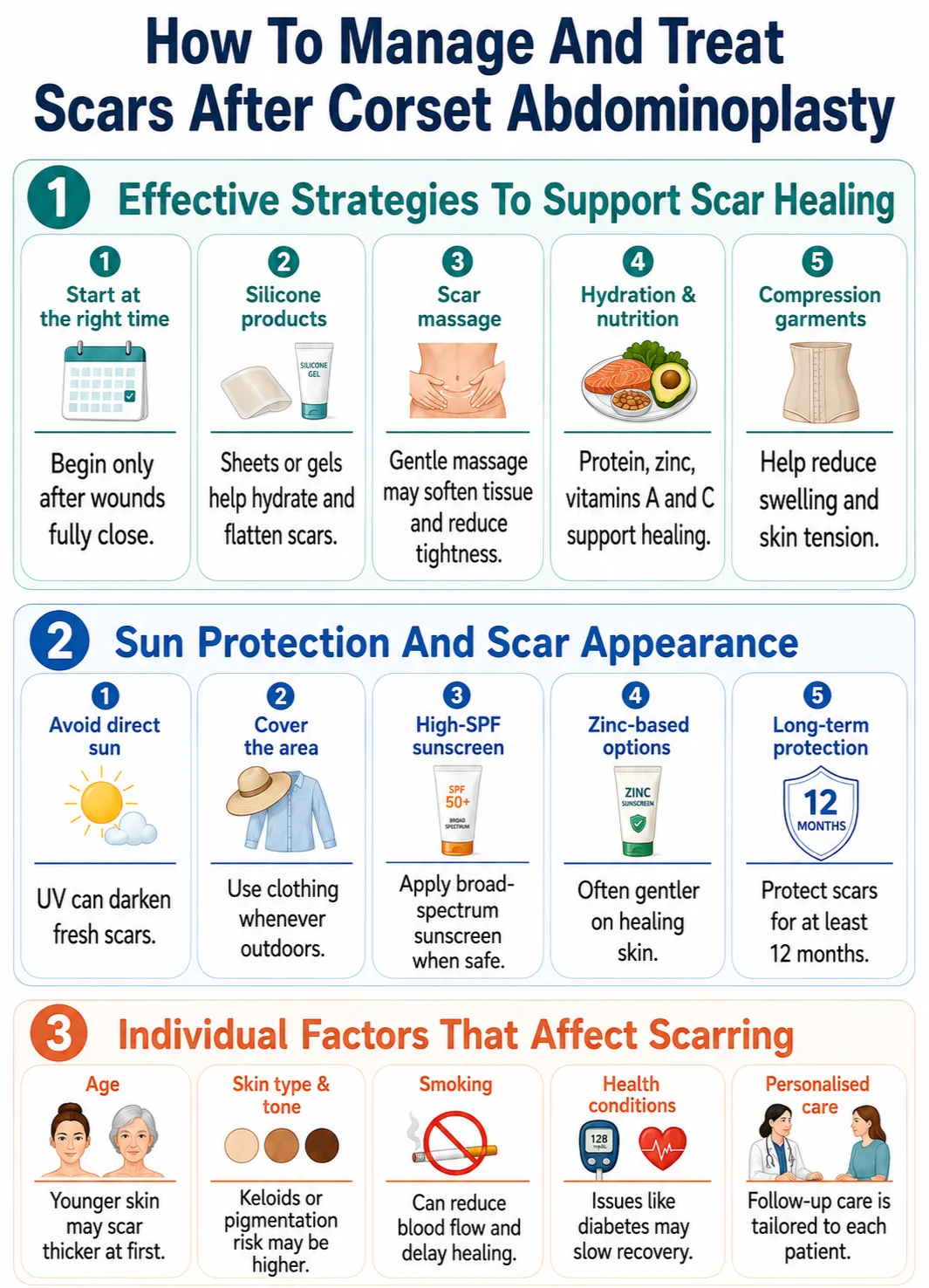
Supporting optimal scar healing involves a combination of at-home care, recommended products, and clinical reviews. Timing is essential. Scar treatments should begin only after the incisions are fully closed and stable, typically from two to three weeks post-surgery. Dr Kernohan provides specific guidance based on each patient’s wound healing and skin condition.
Silicone-based products, such as medical-grade sheets or gels, are commonly used and supported by strong evidence. These create a protective barrier over the scar that maintains hydration and reduces mechanical tension, which in turn minimises scar thickening. These products are generally worn for several hours daily and may be continued for several months, depending on the scar’s behaviour.
Scar massage is another valuable tool in managing corset abdominoplasty scars. Gentle circular movements with clean fingertips or a soft pad can help soften the tissue, break down scar adhesions, and increase circulation to the area. This should only be introduced under the surgeon’s advice and performed with clean hands or approved products.
Hydration also plays a vital role. Keeping the body well hydrated supports cellular repair and skin elasticity. A nutrient-rich diet that includes sufficient protein, zinc, and vitamins A and C can also promote more efficient tissue regeneration. Dr Kernohan often works with patients to address these dietary needs, particularly if they are recovering from significant weight loss.
Garment support remains a key part of scar care. Compression helps reduce swelling and minimises skin tension, both of which impact scar visibility. Patients are guided on the appropriate garments to wear, for how long, and how to maintain them for hygiene and comfort.
Sun Protection And Scar Appearance
Sun protection is one of the most underestimated yet crucial elements in managing corset abdo scars. Ultraviolet radiation can darken scars and make them more noticeable, particularly in the early stages of healing when the tissue is more sensitive and vascular. In a sunny climate like Sydney, this becomes even more important.
Dr Kernohan advises all patients to shield healing scars from direct sun exposure for a minimum of 12 months. This means covering the area with clothing whenever outdoors, even during short walks or casual activities. If exposure cannot be avoided, a broad-spectrum physical sunscreen with a high SPF should be applied to the area, once it is safe to do so. The use of zinc-based sunscreens is often preferred, as they are less irritating on healing skin.
Sun exposure can cause long-term pigmentation issues, especially in individuals with darker skin tones or those prone to hyperpigmentation. For this reason, post-operative reviews often include advice on scar protection strategies and checks for early signs of colour changes or irritation.
Tummy Tuck – Abdominoplasty Before and After Photos
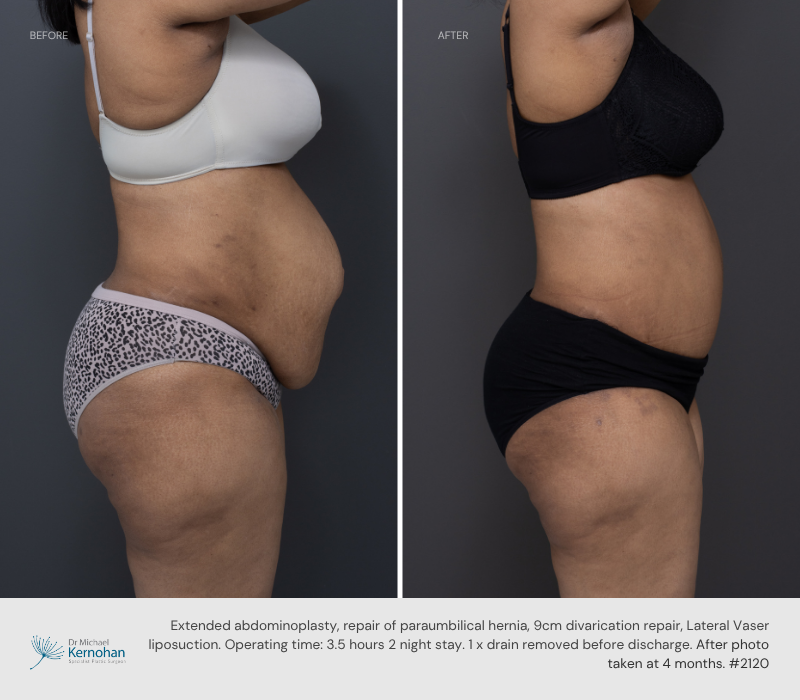
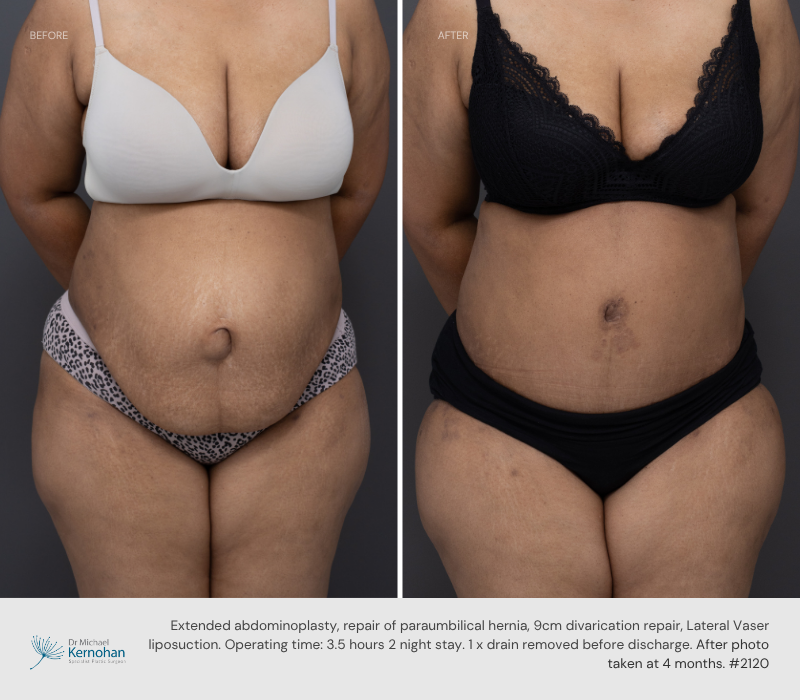
Disclaimer: All surgical or invasive procedures come with inherent risks, and results can vary widely between individuals due to factors like lifestyle, anatomy, overall health, weight, and nutrition. We encourage you to conduct thorough research and consider seeking a second opinion from a qualified healthcare provider.
Individual Factors That Affect Scarring
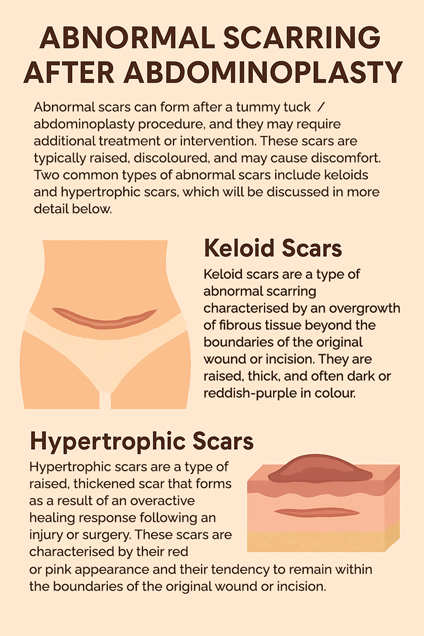
Every patient heals differently, and several individual factors influence how a scar will look and feel. Age is one of the most significant variables. Younger individuals tend to produce more collagen, which may lead to thicker, more prominent scars initially. Conversely, older adults may heal more slowly but develop softer scars.
Skin type and tone also play a role. People with a history of keloids or hypertrophic scars require closer monitoring and often benefit from early intervention. In patients with darker skin tones, there is an increased risk of pigmentation changes. These considerations are carefully reviewed during the pre-operative planning process with Dr Kernohan.
Lifestyle habits, such as smoking, can impair blood flow and slow healing, leading to more noticeable scars. Chronic conditions like diabetes may also affect recovery. That is why Dr Kernohan’s approach includes a comprehensive health review and risk discussion before surgery. By tailoring the surgical technique and follow-up care to each patient’s risk profile, he aims to support better long-term outcomes.
Long-Term Management And When To Seek Advice
Scar management does not end after the first few months. Long-term strategies are essential for patients who wish to improve their scar’s appearance or address concerns like itchiness, thickness, or discomfort. As scar maturation continues for up to two years, periodic assessments help track progress and guide additional treatments if required. Understanding the full timeline of recovery can help you anticipate when to introduce new care strategies. Learn more in our Tips And Timeline For Recovery After Corset Abdominoplasty
Patients should not hesitate to contact the clinic if they notice symptoms such as redness that worsens, raised lumps along the scar, persistent itching, or spreading of the scar beyond the original incision. These may be signs of a hypertrophic or keloid response. In such cases, options including topical treatments, corticosteroid injections, or laser therapy may be considered. Dr Kernohan reviews each situation carefully and offers advice or referrals when necessary.
While many scars will improve with time and consistency, some patients seek further refinement for personal or professional reasons. Secondary revision procedures may be considered after full maturation, but only if warranted. The goal is always to support the patient’s wellbeing and ensure they feel comfortable with their recovery.
Scar Management In Sydney’s Climate
Living in Sydney adds unique dimensions to scar management. With high UV levels for much of the year and frequent shifts in humidity, patients must adapt their routines accordingly. During warmer months, breathable garments that offer sun protection without causing friction are essential. Garments should be changed regularly to keep the skin dry and prevent irritation.
Activity levels can also influence healing. Sydney’s active culture often encourages early movement, but care must be taken to avoid overexertion, particularly outdoors. Patients are advised to gradually reintroduce walking and exercise routines with sun-smart planning in mind.
In the cooler months, recovery is often more comfortable, as compression garments are easier to wear, and sun exposure is less intense. Nevertheless, ongoing protection and hydration remain important throughout all seasons. Dr Kernohan and his team remain accessible to advise patients year-round, ensuring local climate considerations are integrated into the care plan.
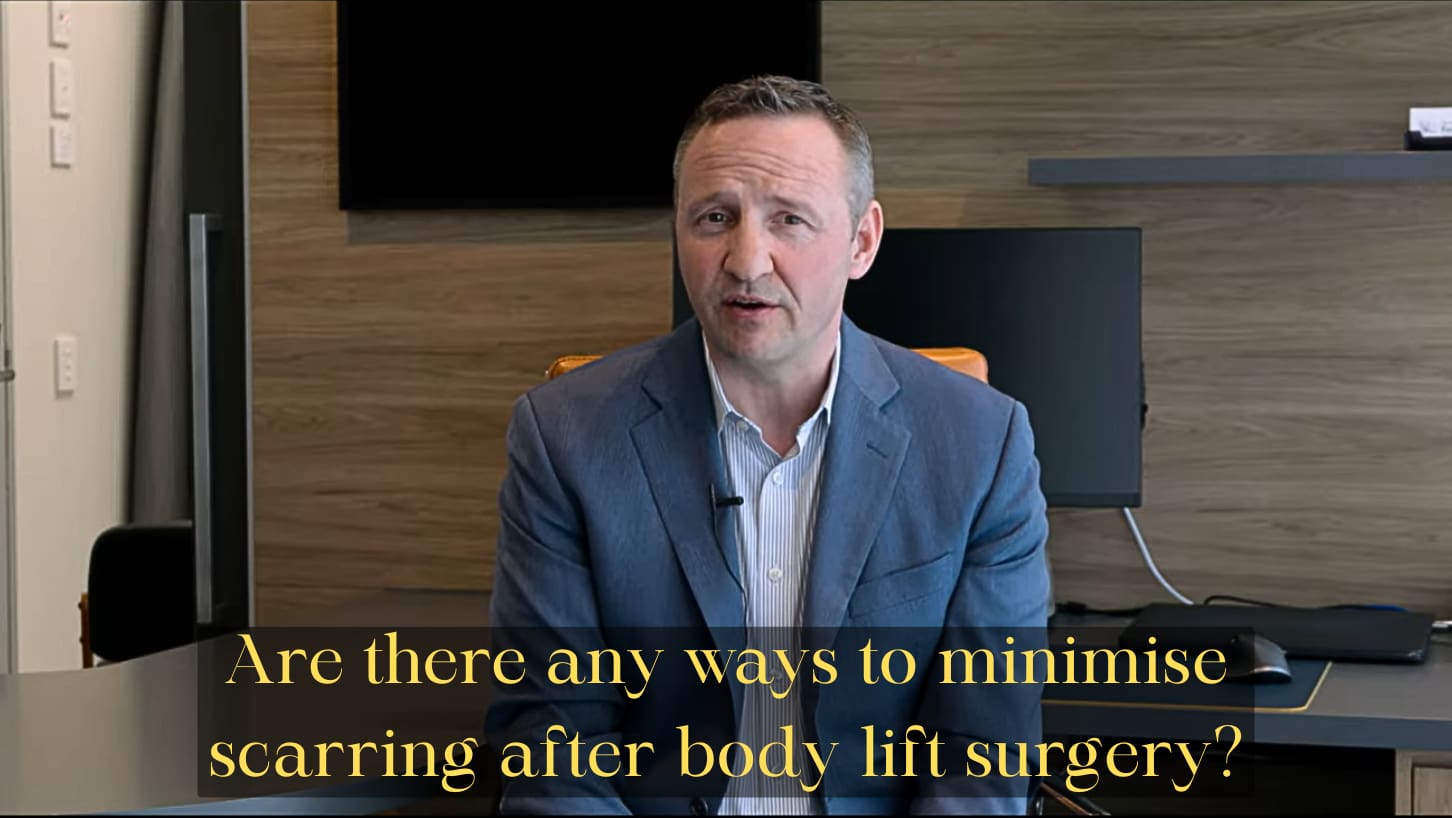

FAQs About Corset Abdo Scars
Planning For Scar Care? We Can Help
Taking care of your scars is not an afterthought – it is an essential step in your recovery. Dr Michael Kernohan offers personalised scar care guidance from the very first consultation. His clinic in South West Sydney is equipped to support all stages of the healing process, whether you need help choosing the right products or addressing unexpected scar concerns.
Patients can send secure photos for a complimentary pre-assessment or schedule a tailored recovery consultation. Every recovery journey is unique, and the right plan makes a meaningful difference.
→ Contact our clinic today to book your appointment or request your scar review 1300 393 899.
→ Secure photo submissions available via our online patient portal.
Final Thoughts
Healing after corset abdominoplasty does not stop once the sutures come out. Managing your scars thoughtfully, with consistent support and expert input, allows your results to shine through. With guidance from Dr Michael Kernohan, patients in South West Sydney are empowered to take control of their recovery and feel supported every step of the way.
Long-term scar care is a partnership between surgeon and patient. Through this collaboration, the physical signs of surgery can be minimised, and confidence in your outcome fully supported.
How to Prepare for Your Tummy Tuck Surgery
Introduction Dr Michael Kernohan is a Specialist Plastic & Reconstructive Surgeon in Sydney. Preparing for…

Abdominoplasty After Weight Loss – What Patients Should Know
Abdominoplasty after weight loss may remove excess abdominal skin and address selected abdominal wall concerns…
Tummy Tuck Scarring: What Patients Should Understand
A tummy tuck (abdominoplasty) reshapes the abdomen by removing excess skin and, in many cases,…