
- Take the Quiz
- What Is Muscle Separation (Diastasis Recti)?
- How Muscle Repair Fits Into Tummy Tuck Surgery
- Who May Be Suited to Muscle Separation Repair?
- Download Dr Kernohan’s Abdominoplasty Surgery Guide
- Assessing Functional Impact and Suitability
- Preparation for Muscle Separation Surgery
- What Happens During Surgery
- Recovery After Muscle Separation Repair
- Expected Outcomes and Longevity
- Risks and Safety Considerations
- Abdominoplasty Before and After Photos
- Lifestyle Factors That Influence Healing
- Managing Pain and Discomfort
- When to Contact Your Surgical Team
- Realistic Expectations and Shared Decision-Making
- Consultation Preparation and Goal Clarification
- Muscle Separation Repair After Pregnancy FAQs
- Takeaway: Make Informed Choices for Abdominal Muscle Repair
- Next Step: Get Dr Kernohan’s Expert Advice On Muscle Separation Repair After Pregnancy
- Further Reading
Pregnancy causes dramatic changes in the abdominal wall as the uterus expands, stretching the muscles of the abdomen to accommodate a growing baby. For many people, these muscles, particularly the rectus abdominis, separate along the midline. This condition is medically referred to as diastasis recti and is a common contributor to changes in core support and abdominal contour after childbirth.
Muscle separation can persist long after delivery, even with diligent exercise, because it involves connective tissue stretching rather than simple weakening. When the separation remains significant, conservative approaches such as specific physiotherapy work but often cannot fully close the gap. In these cases, surgical repair, usually combined with abdominoplasty (tummy tuck), may be considered.
Dr Michael Kernohan, Specialist Plastic & Reconstructive Surgeon based in Sydney, explains that while muscle repair surgery can improve structural support and shape, it also carries risks and requires thoughtful preparation. Understanding what the procedure involves, anatomical considerations, and realistic outcomes helps guide informed decision-making.
Take the Quiz
What Is Muscle Separation (Diastasis Recti)?
Diastasis recti is the separation of the left and right halves of the rectus abdominis muscle along the linea alba, which is a fibrous structure that normally holds them together. During pregnancy, this separation allows the abdomen to expand. After delivery, the gap may reduce naturally for many people, but for others, the connective tissue remains stretched and does not fully return to its pre-pregnancy position.
While diastasis recti is not generally harmful in itself, it can contribute to:
- Weakness in core support
- Back discomfort due to altered mechanics
- Persistent lower abdominal bulge
- Functional difficulties with posture and movement
Surgical repair aims to re-approximate the separated muscles, reinforcing the midline and providing better structural support. This is usually performed at the same time as a tummy tuck because skin tightening and muscle repair naturally complement each other.
How Muscle Repair Fits Into Tummy Tuck Surgery
A tummy tuck (abdominoplasty) involves removing excess abdominal skin and fat, and where indicated, repairing the underlying muscle fascia. When diastasis recurs after pregnancy, it is usually addressed surgically through a plication or suturing technique that brings the separated muscle edges closer together.
In a typical muscle repair:
- An incision is made low on the abdomen
- Excess skin and fat are mobilised
- The rectus muscles are sutured together to tighten the midline
- Any associated excess tissue is removed
This approach can restore tension in the abdominal wall, improve core integrity, and reduce a persistent bulge that does not respond to exercise alone. Combining muscle repair with skin removal enables a smoother overall contour and addresses both functional and aesthetic concerns.
Who May Be Suited to Muscle Separation Repair?
Individuals considering muscle separation repair often have:
- A persistent lower abdominal bulge after pregnancy
- A measurable gap between rectus muscles on examination
- Difficulty with core strength or functional movements
- Stable weight and no plans for additional pregnancies
Dr Kernohan emphasises that muscle repair is not simply cosmetic; for many, it contributes to core function and back support. However, it is not a requisite for every person with past pregnancy changes. A detailed assessment determines whether surgical repair is appropriate based on both anatomy and functional implications.
Candidates should also have realistic expectations about recovery, scarring, and the process of regaining strength. This is central to making an informed decision.
Download Dr Kernohan’s Abdominoplasty Surgery Guide
Assessing Functional Impact and Suitability
Functional assessment goes beyond appearance. Separation of the abdominal muscles can affect posture, stability, and support for everyday activities. In some cases, it may exacerbate back discomfort or limit participation in exercise due to decreased core efficiency.
Healthcare professionals sometimes use physical tests and imaging to quantify the separation. A clinical assessment with a trained specialist like Dr Kernohan includes:
- Palpation of the midline to assess the muscle gap
- Functional tests for core engagement
- Discussion of activity limitations or discomfort
- Visual analysis of abdominal contour
This assessment helps differentiate between cosmetic concerns and functional limitations that justify surgical repair.
Preparation for Muscle Separation Surgery
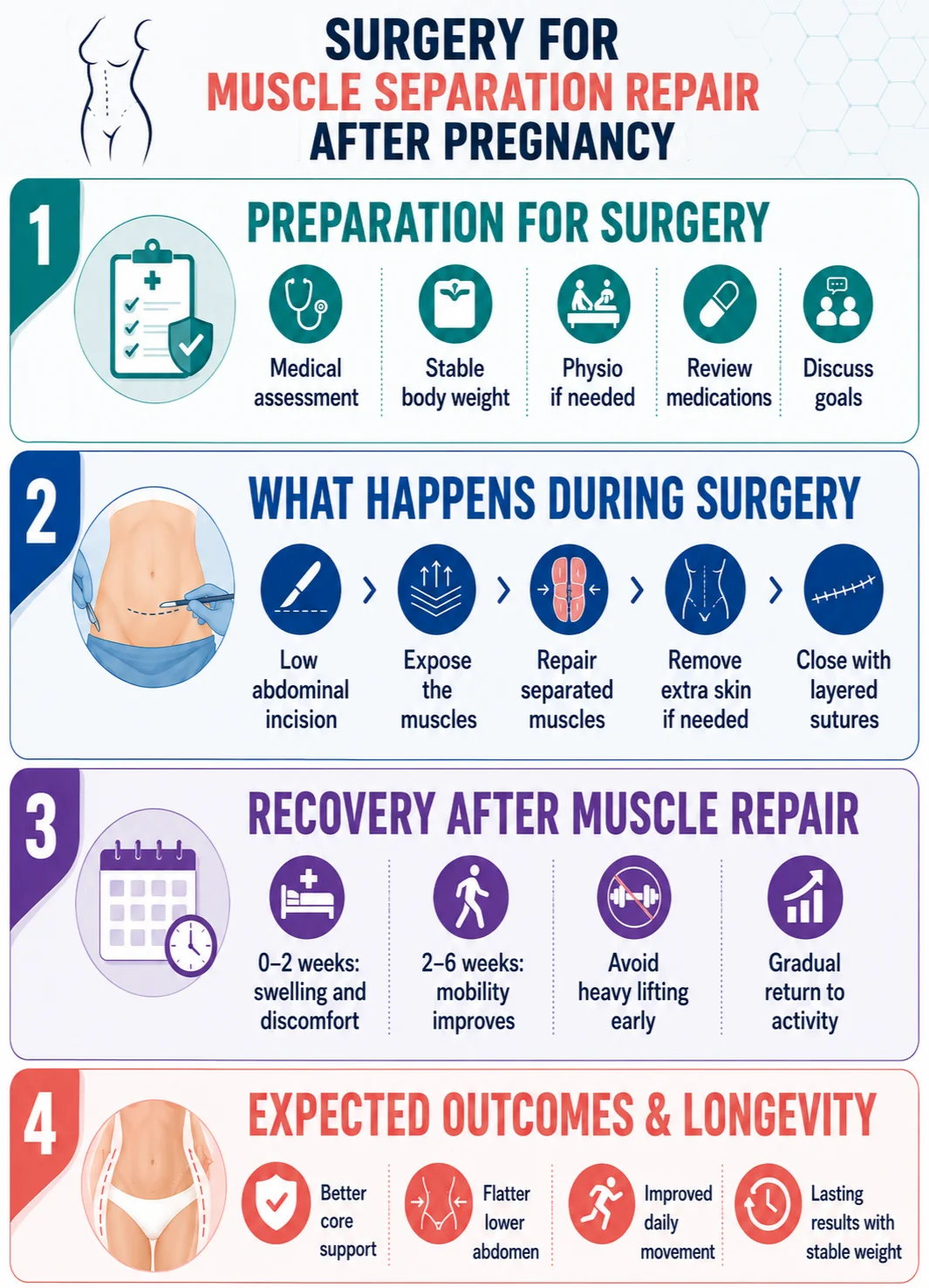
Comprehensive preparation supports safer outcomes and smoother recovery. Before surgery, patients typically undertake:
- Medical assessment and screening
- Stabilisation of body weight
- Pre‑operative physiotherapy if indicated
- Discussion of medications and supplements
Dr Kernohan places emphasis on understanding overall health before surgery. Conditions such as diabetes, hypertension, or smoking status can influence healing and risk. Optimising these factors before the procedure is part of a responsible pre-operative plan.
Preparation also includes discussing realistic outcomes, recovery expectations, and how lifestyle and anatomy influence results. Informed consent is an essential element of surgical planning.
What Happens During Surgery
Muscle separation repair is usually performed under general anaesthesia in an accredited surgical facility. The steps generally include:
- Making a horizontal incision low on the abdomen
- Elevating skin and fat to expose underlying muscles
- Suturing the separated rectus muscles to bring them closer
- Removing redundant skin and fat as needed
- Closing with layered sutures to support fascia and skin
The goal is to restore a firmer abdominal wall while maintaining anatomical harmony. When combined with abdominoplasty, the tightening effect of muscle repair complements the removal of excess skin, resulting in a smoother contour and improved function.
Dr Kernohan’s surgical approach focuses on achieving secure midline repair while preserving function and minimising tension on closures, which supports better healing.
Recovery After Muscle Separation Repair
Recovery from combined muscle repair and tummy tuck involves several phases:
- Immediate Post‑Operative Phase: swelling, bruising and discomfort are expected, and pain is managed with prescribed medication.
- First Two Weeks: mobility improves gradually, but heavy lifting and strenuous activity are restricted.
- Weeks Three to Six: swelling continues to reduce, and gentle engagement with light activity is encouraged under guidance.
- After Six Weeks: patients may progressively return to higher activity levels once cleared clinically.
Wearing compression garments, following wound care instructions, and avoiding activities that place undue strain on the abdominal wall support safe healing. Dr Kernohan provides structured aftercare guidance and scheduled reviews to monitor progress.
Expected Outcomes and Longevity
Muscle repair combined with abdominoplasty aims to enhance both function and contour. Many patients experience:
- Improved core support
- Diminished lower abdominal protrusion
- Enhanced ability to engage in physical activities
Outcomes are durable when weight is stable, and lifestyle factors such as smoking and sun exposure are addressed. Muscle integrity is supported by the sutured repair, but ongoing core strengthening after healing further reinforces support.
It is important to maintain realistic expectations: surgery improves structural support and contour, but ageing and lifestyle continue to influence abdominal tissues over time.
Risks and Safety Considerations
Like all surgeries, muscle separation repair carries risks. These include:
- Infection: potential at incision sites needing early review and management.
- Delayed Wound Healing: especially in patients with compromised healing factors.
- Fluid Collections (Seroma): may require drainage.
Changes in Sensation: temporary numbness around the abdominal area.
Major complications such as deep venous thrombosis, anaesthesia reactions, or significant bleeding are uncommon but acknowledged. Dr Kernohan discusses these risks in the context of your specific health profile and risk factors.
Accredited surgical facilities, careful patient selection and thorough pre-operative assessment help reduce the chance of complications.
Abdominoplasty Before and After Photos
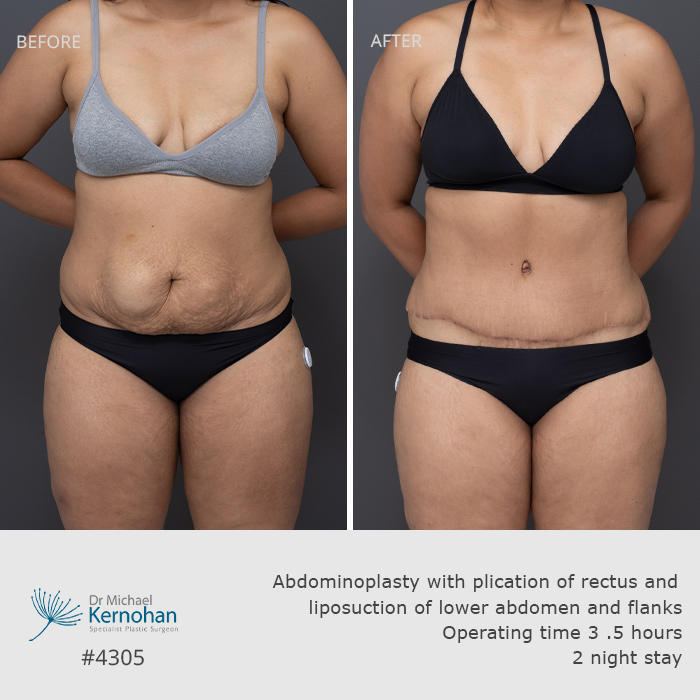

Disclaimer: All surgical or invasive procedures come with inherent risks, and results can vary widely between individuals due to factors like lifestyle, anatomy, overall health, weight, and nutrition. We encourage you to conduct thorough research and consider seeking a second opinion from a qualified healthcare provider.
Lifestyle Factors That Influence Healing
Certain lifestyle choices can influence healing after muscle separation repair. Smoking, for example, affects blood flow and tissue repair, increasing the likelihood of delayed healing. Maintaining a stable weight and balanced nutrition optimises the body’s ability to recover and supports surgical outcomes.
Hydration, quality sleep and avoidance of excessive sun exposure to scar areas further contribute to smoother post-operative healing. Patients are guided about these aspects as part of the preparation and recovery plan.
Managing Pain and Discomfort
Pain after muscle separation repair is typically managed with prescribed medication and strategies such as:
- Rest with an elevated position to reduce swelling
- Gradual mobility to support circulation
- Avoidance of strenuous activity in the early phases
Most discomfort lessens significantly after the first few days with consistent aftercare. Clear guidance from your surgeon about medication use, activity levels and warning signs supports a healthier experience.
When to Contact Your Surgical Team
Patients should seek early review if they experience:
- Increasing pain not controlled by medication
- Redness, warmth or discharge at incision sites
- Fever or chills suggestive of infection
- Significantly increased swelling or asymmetry
Prompt assessment helps address concerns before they progress.
Realistic Expectations and Shared Decision-Making
Setting realistic expectations is central to patient satisfaction. Muscle separation repair improves structure and contour, but it does not guarantee perfect symmetry or eliminate all signs of ageing. Honest discussions about benefits and limitations help patients align surgical goals with anatomical possibilities.
Dr Kernohan uses clinical examination and visual assessment to guide patients in shared decision-making, ensuring choices are grounded in both anatomy and functional intent.
Consultation Preparation and Goal Clarification
Before your consultation, consider:
- Your key concerns related to abdominal appearance and function
- Any history of back discomfort or functional limitations
- Previous pregnancy and weight changes
- Your activity and lifestyle goals
A prepared discussion supports more efficient use of consultation time and helps focus on tailored recommendations.

Muscle Separation Repair After Pregnancy FAQs
Takeaway: Make Informed Choices for Abdominal Muscle Repair
Muscle separation after pregnancy can affect core support and abdominal contour, and in selected cases, surgical repair offers meaningful improvement. This option is most effective when integrated into a thoughtful plan that considers anatomy, functional needs, and recovery expectations.
Dr Michael Kernohan combines clinical expertise with patient-centred discussions in Sydney to help individuals understand when muscle separation repair may be appropriate and what to expect from surgery and recovery. Informed decisions anchored in anatomical evaluation and risk understanding support safer and more predictable outcomes.
Next Step: Get Dr Kernohan’s Expert Advice On Muscle Separation Repair After Pregnancy
If you’re living with persistent abdominal changes after childbirth – including core weakness or a visible bulge – it may be time to explore your options. Surgical repair of muscle separation, when appropriately indicated, can restore support and improve abdominal function.
Dr Michael Kernohan, Specialist Plastic & Reconstructive Surgeon based in Sydney, offers comprehensive assessments tailored to your anatomy and lifestyle. Book a consultation or submit images for a photo review to discuss whether muscle repair surgery is right for your post-pregnancy recovery journey. Every well-planned outcome begins with a thoughtful consultation.
Further Reading
- Read more about Belt Lipectomy Sydney
- Read more about Extended Abdominoplasty
- Read more about Liposuction Sydney NSW
- Read more about Upper Body Lift NSW
- Read Dr Kernohan’s Blog on Will Medicare Cover My Split Muscle Surgery After Pregnancy?
- Read Dr Kernohan’s Blog on What is Diastasis Recti? – Split Tummy Muscles
- Read Dr Kernohan’s Blog on How To Manage And Treat Scars After Corset Abdominoplasty
- Read Dr Kernohan’s Blog on Abdominoplasty Scar Treatment, Healing and Fading
Tummy Tuck Scarring: What Patients Should Understand
A tummy tuck (abdominoplasty) reshapes the abdomen by removing excess skin and, in many cases,…

Tummy Tuck Recovery Timeline: What To Expect After Surgery
A tummy tuck (abdominoplasty) is a surgical procedure that reshapes the abdomen by removing excess…
Surgery for Muscle Separation Repair After Pregnancy
Pregnancy causes dramatic changes in the abdominal wall as the uterus expands, stretching the muscles…