
- How Can You Reduce Swelling and Bruising After Abdominoplasty?
- Why Do Swelling and Bruising Happen After Abdominoplasty?
- How Long Do Swelling and Bruising Usually Last After Abdominoplasty?
- How Can Compression Garments Help After Abdominoplasty?
- How Should You Rest and Sleep After Abdominoplasty?
- Why is Gentle Walking Important After Surgery?
- What Activities Should You Avoid While Swelling Settles?
- What Foods And Fluids May Support Recovery?
- Which Medicines And Supplements Should Be Checked?
- When Should Swelling or Bruising Be Reviewed by the Clinic?
- Tummy Tuck/Abdominoplasty Before and After Photos
- What Risks Are Linked With Swelling and Bruising?
- What is the Recovery Timeline for Swelling and Bruising?
- What Alternatives or Extra Supports May be Considered?
- Take the Quiz
- Who Is Suitable For This Recovery Advice?
- Are There Costs Involved In Managing Swelling And Bruising?
- FAQs About Reducing Swelling and Bruising After a Tummy Tuck
- Download Dr Kernohan’s Abdominoplasty Surgery Guide
- Book A Post-Surgical Support Consultation With Dr Kernohan
- Ask about abdominoplasty recovery
- Further Reading
Dr Michael Kernohan, Specialist Plastic & Reconstructive Surgeon in Sydney, provides aftercare guidance for patients recovering from abdominoplasty. Swelling and bruising are common after abdominoplasty, and careful recovery habits may help reduce avoidable discomfort while healing progresses.
Most patients can expect swelling, bruising, tightness and reduced mobility in the early stages after tummy tuck surgery. These changes are part of the body’s normal response to incisions, tissue movement and healing under the skin.
The aim is not to remove swelling and bruising immediately. The aim is to support steady healing, follow your post-operative instructions and recognise when symptoms need medical review.
This guide explains practical ways to manage swelling and bruising after abdominoplasty. It is general information only and does not replace the instructions given by Dr Michael Kernohan or your treating medical team.
How Can You Reduce Swelling and Bruising After Abdominoplasty?
You may help manage swelling and bruising after abdominoplasty by following your surgeon’s instructions, wearing compression garments if prescribed, walking gently, staying hydrated and avoiding strenuous activity. Sudden, painful, one-sided or worsening swelling should be reviewed promptly by your surgical team.
- Wear compression garments only as directed by Dr Michael Kernohan’s team.
- Walk gently and regularly once you have been advised it is appropriate.
- Avoid heavy lifting, bending, straining and strenuous exercise until cleared.
- Take medicines only as prescribed and check supplements before restarting them.
- Attend follow-up appointments so swelling, bruising and wounds can be reviewed.
- Contact the clinic if symptoms worsen or feel outside your expected recovery pattern.
Swelling and bruising cannot be avoided completely after abdominoplasty. Careful aftercare may help reduce avoidable strain and support a more organised recovery.
Why Do Swelling and Bruising Happen After Abdominoplasty?
Swelling and bruising happen because abdominoplasty involves incisions, tissue movement and healing beneath the skin. The body sends fluid and inflammatory cells to the area as part of repair, while bruising occurs when small blood vessels leak blood into surrounding tissues.
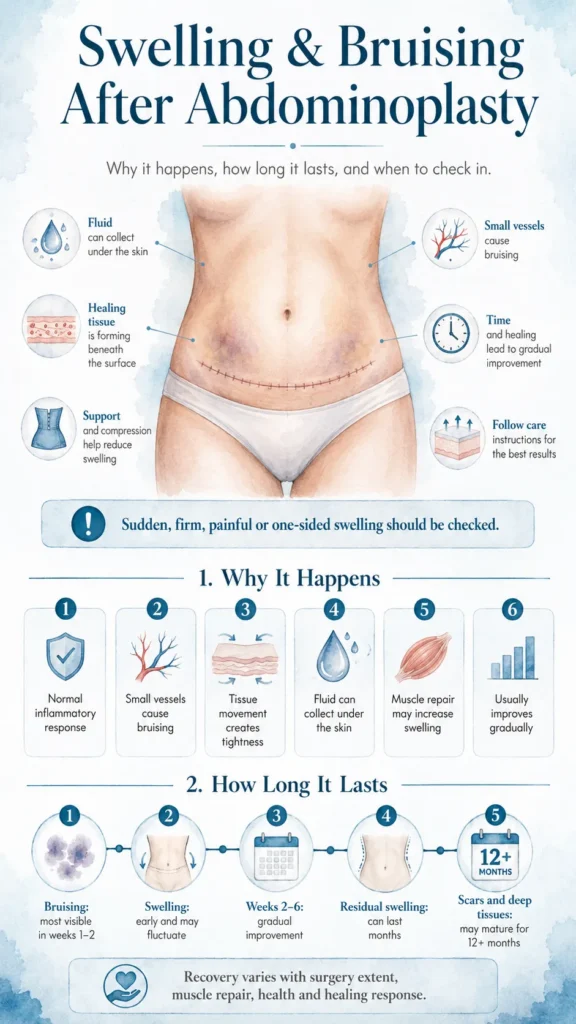
- Swelling is part of the normal inflammatory response after surgery.
- Bruising can appear around the abdomen and may change colour as it fades.
- Tissue movement during surgery can create temporary firmness or tightness.
- Fluid may collect in the healing space beneath the skin.
- Muscle repair, extended abdominoplasty or combined procedures may affect the amount of swelling.
These changes usually improve gradually rather than disappearing all at once. If swelling becomes sudden, firm, painful or one-sided, it should be checked because it may not be part of the usual healing pattern.
How Long Do Swelling and Bruising Usually Last After Abdominoplasty?
Bruising often improves earlier than swelling, while swelling can take weeks to months to settle. The exact timeline depends on the extent of surgery, whether muscle repair was performed, your health, activity level and how your tissues heal.
- Bruising is often most noticeable in the first one to two weeks.
- Swelling is usually more obvious early and may fluctuate during the day.
- Weeks two to six often involve gradual improvement, but tightness may remain.
- Residual swelling can continue for several months.
- Scar and deeper tissue maturation can continue for up to 12 months or longer.
It is common for swelling to improve unevenly and feel worse after activity or toward the end of the day. Dr Michael Kernohan will review your healing during follow-up and advise whether your swelling pattern is expected.
How Can Compression Garments Help After Abdominoplasty?
Compression garments may help support healing tissues and assist with swelling management when they are prescribed as part of your recovery plan. They should be worn only as directed because incorrect fit or excessive pressure can cause skin irritation or discomfort.
- Compression garments may provide support while tissues are healing.
- They may help reduce fluid movement and swelling in selected patients.
- The garment should sit smoothly without rolling, folding or digging into the skin.
- It should not cause numbness, severe pain, skin colour change or pressure wounds.
- Any garment concerns should be discussed with Dr Michael Kernohan’s clinic.
The American Society of Plastic Surgeons notes that patients should follow their own surgeon’s instructions about compression garments after plastic surgery. Compression may be part of recovery, but it should not be adjusted without advice from the treating team.
How Should You Rest and Sleep After Abdominoplasty?
Rest and sleeping position matter because the abdomen can feel tight after abdominoplasty. Many patients are advised to rest with the upper body slightly elevated and the hips or knees supported, but your own instructions should come from your surgical team.

- Use pillows or a recliner if advised to help avoid lying completely flat early on.
- Keep commonly used items close so you do not need to twist or stretch.
- Avoid sudden movements when getting in and out of bed.
- Ask for help with household tasks during the early recovery period.
- Follow your instructions about drains, garments and wound care while resting.
A supported position can make early recovery more manageable and reduce strain across the incision. If you cannot find a comfortable position or pain increases when resting, contact the clinic for advice.
Why is Gentle Walking Important After Surgery?
Gentle walking is important because it supports circulation and helps reduce stiffness after surgery. It is different from exercise and should be done according to the activity limits provided by Dr Michael Kernohan’s team.
- Short, gentle walks around the home may be encouraged early.
- Walking can help reduce stiffness from prolonged resting.
- Movement supports circulation and may help lower the risk of blood clots.
- Walking should not cause worsening pain, dizziness or shortness of breath.
- Strenuous exercise should wait until you have been cleared.
Walking should feel controlled and gradual, not like a workout. Stop and seek advice if movement causes sudden swelling, bleeding, chest pain, calf pain or breathing difficulty.
What Activities Should You Avoid While Swelling Settles?
Activities that increase pressure across the abdomen can worsen discomfort, strain healing tissues or increase the risk of bleeding and wound problems. Your restrictions will depend on your procedure, especially if muscle repair was performed.
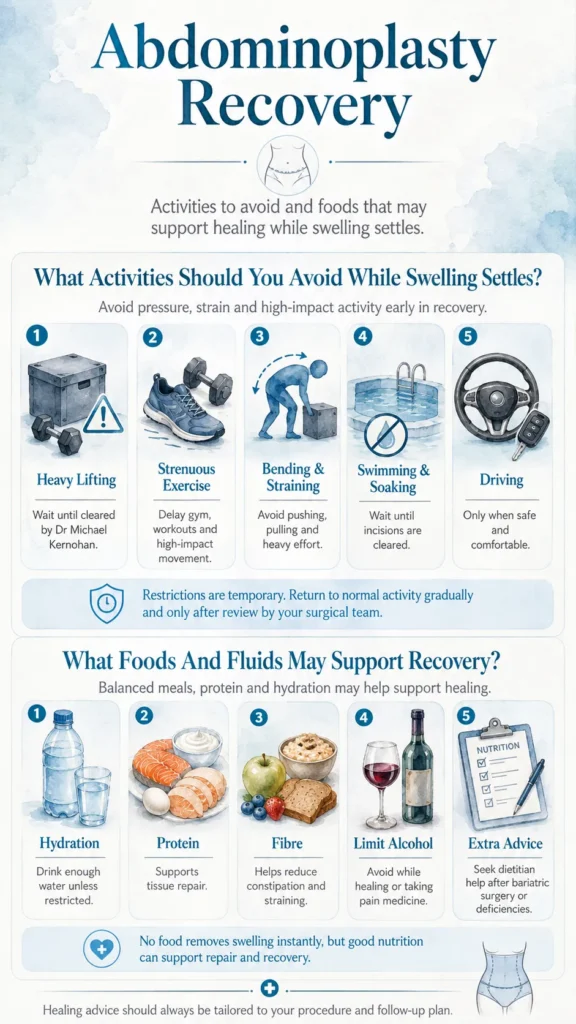
- Avoid heavy lifting until Dr Michael Kernohan clears you.
- Avoid strenuous exercise, gym workouts and high-impact movement early in recovery.
- Avoid bending, straining, pushing or pulling heavy objects.
- Avoid swimming or soaking wounds until your incisions are cleared.
- Avoid driving until you meet the safety and comfort requirements given by your team.
Activity restrictions are temporary, but they are important during the early healing period. Returning to normal activity should happen gradually and only after review by your surgical team.
What Foods And Fluids May Support Recovery?
Nutrition and hydration can support general healing after abdominoplasty, although no food can remove swelling or bruising immediately. Balanced meals, enough protein and adequate fluids may help the body manage repair and recovery.
- Drink enough water unless another doctor has advised fluid restriction.
- Include protein sources to support tissue repair.
- Eat fibre-rich foods to reduce constipation and straining.
- Limit alcohol while healing and while taking prescribed pain medicine.
- Seek dietitian advice if you have had bariatric surgery or have nutritional deficiencies.
Food choices should support healing rather than promise a fixed result. If you have diabetes, bariatric surgery history, gut issues or food restrictions, ask your GP, dietitian or surgical team for personalised advice.
Smoking and nicotine can affect circulation and wound healing, so patients should follow their surgeon’s instructions about stopping smoking before surgery.
Which Medicines And Supplements Should Be Checked?
Medicines and supplements should be checked because some can affect bleeding, bruising, swelling, blood pressure or anaesthesia. You should not stop prescribed medicines on your own, but you should tell Dr Michael Kernohan’s team everything you take.
- Bring a list of prescription medicines, over-the-counter tablets, vitamins and supplements.
- Ask before taking aspirin, anti-inflammatory medicines or blood-thinning medicines.
- Mention herbal products such as garlic, ginkgo, ginseng, turmeric, fish oil and high-dose vitamin E.
- Check cold and flu products, as some contain ingredients that may affect bleeding or blood pressure.
- Ask when it is appropriate to restart supplements after surgery.
Medication planning is an important part of reducing avoidable recovery risks. Dr Michael Kernohan may liaise with your GP, specialist or anaesthetist if a medicine needs careful management before or after abdominoplasty.
When Should Swelling or Bruising Be Reviewed by the Clinic?
Swelling and bruising are expected after abdominoplasty, but some patterns need prompt review. Sudden, severe, one-sided, painful or worsening swelling may indicate a problem that needs medical assessment.
- Contact the clinic if swelling suddenly increases or becomes firm and painful.
- Seek advice if bruising expands quickly or is associated with increasing pain.
- Report increasing redness, warmth, discharge or wound opening.
- Seek urgent care for calf pain, chest pain, shortness of breath or fainting.
- Contact Dr Michael Kernohan’s team if symptoms feel outside your expected recovery pattern.
It is better to ask early than to wait at home with a concerning symptom. If you cannot reach the clinic and symptoms are serious, attend your nearest emergency department.
Tummy Tuck/Abdominoplasty Before and After Photos
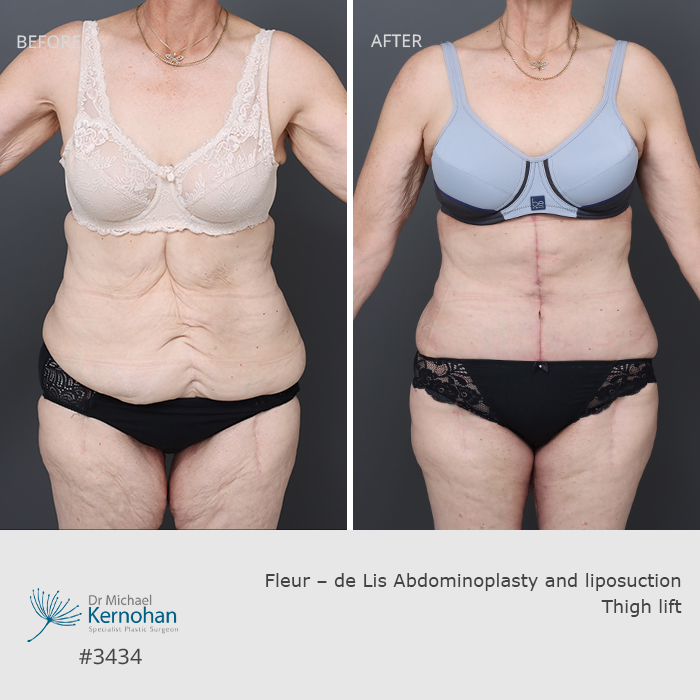

Disclaimer: All surgical or invasive procedures come with inherent risks, and results can vary widely between individuals due to factors like lifestyle, anatomy, overall health, weight, and nutrition. We encourage you to conduct thorough research and consider seeking a second opinion from a qualified healthcare provider.
What Risks Are Linked With Swelling and Bruising?
Swelling and bruising are common recovery effects, but they can sometimes be linked with complications. The main concerns are bleeding, fluid collection, infection, delayed healing and blood clots.
- A haematoma is a collection of blood under the skin and may cause sudden swelling or pain.
- A seroma is a collection of fluid that can develop in the healing space.
- Infection may cause redness, warmth, swelling, pain, fever or discharge.
- Wound separation can occur if healing tissue is placed under strain.
- Blood clots can cause calf pain, swelling, chest pain or breathing difficulty.
Most swelling and bruising improve gradually, but worsening symptoms should be reviewed. Dr Michael Kernohan provides follow-up care so healing can be monitored and concerns can be addressed early.
What is the Recovery Timeline for Swelling and Bruising?
The abdominoplasty recovery timeline for swelling and bruising varies between patients. Bruising often improves earlier, while swelling, firmness and scar maturation may continue for months.
- Days 1–7: Swelling, bruising, tightness and reduced mobility are common.
- Weeks 2–3: Bruising may fade, but swelling often remains.
- Weeks 4–6: Swelling may continue to reduce, and activity may increase only if cleared.
- Months 2–3: Deeper swelling and firmness may still be present.
- Months 3–12: Scars and deeper tissues continue to mature.
This timeline is a guide rather than a guarantee. Your recovery may differ depending on the extent of surgery, muscle repair, health factors and how closely aftercare instructions are followed.
What Alternatives or Extra Supports May be Considered?
For this topic, alternatives means extra ways to manage swelling or bruising under clinical guidance. It does not mean replacing medical review when symptoms are concerning.
- A clinic review may be needed if swelling, bruising or pain changes suddenly.
- Compression garment fit may need to be checked or adjusted.
- Medicines and supplements may need review if bruising is excessive.
- A GP may be involved if there are skin rashes, infection concerns or other health issues.
- Physiotherapy or lymphatic support should only be considered if approved by the surgical team.
Extra support should be matched to the cause of the concern. Dr Michael Kernohan’s team can advise whether reassurance, garment adjustment, medication review or further assessment is needed.
Take the Quiz
Who Is Suitable For This Recovery Advice?
This recovery advice is suitable for patients seeking general information about swelling and bruising after abdominoplasty. It may be useful before surgery or during recovery, but it does not replace personalised instructions from Dr Michael Kernohan.
- Patients preparing for standard, extended or fleur-de-lis abdominoplasty may find this guide useful.
- Patients recovering after muscle repair may need more specific activity instructions.
- Patients after weight loss may need additional nutrition and wound-healing planning.
- Patients with diabetes, blood-pressure concerns or clotting risks need tailored medical advice.
- Patients with sudden or worsening symptoms should seek direct medical review.
General recovery advice should always sit below your own post-operative plan. If your written instructions differ from general online information, follow the instructions from Dr Michael Kernohan and your treating medical team.
Are There Costs Involved In Managing Swelling And Bruising?
Most swelling and bruising care involves following post-operative instructions, attending reviews and using prescribed garments or medicines where required. Any additional costs depend on the patient’s recovery needs and should be discussed directly with the clinic.
- Compression garments may be included or arranged separately depending on the surgical plan.
- Prescription medicines may be required after surgery.
- Extra dressings or wound care supplies may be needed in some cases.
- Additional clinic reviews may be recommended if symptoms need assessment.
- Allied health support should only be arranged if clinically appropriate.
For a recovery support page, detailed cost discussion should remain limited because the main search intent is aftercare. Patients should contact the clinic for information specific to their procedure, follow-up plan and recovery needs.

FAQs About Reducing Swelling and Bruising After a Tummy Tuck
Download Dr Kernohan’s Abdominoplasty Surgery Guide
Book A Post-Surgical Support Consultation With Dr Kernohan
If you are preparing for or recovering from a tummy tuck, guidance from an experienced surgeon makes a real difference. Whether you’re seeking reassurance or planning ahead, you are encouraged to connect with the clinic and explore the care options available to support your journey. Dr Michael Kernohan provides comprehensive post-operative support tailored to your surgical plan and lifestyle.
Patients in Sydney can book a consultation at the clinic to receive personalised recommendations. For those unable to attend in person, photo assessments are available to help guide early recovery decisions.
Ask about abdominoplasty recovery
- Enquiries 1300 393 899
- Fax (02) 8007 0459
- Email [email protected]
Further Reading
- Read more about Belt Lipectomy Sydney
- Read more about Extended Abdominoplasty
- Read more about Fleur De Lis Abdominoplasty Surgery Sydney
- Read Dr Kernohan’s Blog on Tips And Timeline For Recovery After Corset Abdominoplasty
- Read Dr Kernohan’s Blog on Tummy Tuck Scarring: What Patients Should Understand
- Read Dr Kernohan’s Blog on Tips for Sleeping after Abdominoplasty Surgery
- Read Dr Kernohan’s Blog on Tips for Recovery after Fleur De Lis Surgery
How to Prepare for Your Tummy Tuck Surgery
Introduction Dr Michael Kernohan is a Specialist Plastic & Reconstructive Surgeon in Sydney. Preparing for…
Abdominoplasty After Weight Loss – What Patients Should Know
Abdominoplasty after weight loss may remove excess abdominal skin and address selected abdominal wall concerns…
How to Reduce Swelling and Bruising After Tummy Tuck/Abdominoplasty
Dr Michael Kernohan, Specialist Plastic & Reconstructive Surgeon in Sydney, provides aftercare guidance for patients…