
- Insights from Dr. Michael Kernohan, Specialist Plastic & Reconstructive Surgeon – South West Sydney
- Are You Ready for Surgery? Find Out
- Why Scars Happen After a Bodylift
- Download Dr Michael Kernohan's Excess Skin Reduction Guide
- What Bodylift Scars Look Like Over Time
- What Affects How Your Scars Heal
- Tips to Treat and Address Bodylift Scars
- Advanced Options for Scar Management
- Staying on Track With Your Recovery
- Local Insights for Sydney Patients
- FAQs About Bodylift Scar Management
- Final Thoughts from Dr. Michael Kernohan
- Further Reading
Insights from Dr. Michael Kernohan, Specialist Plastic & Reconstructive Surgeon – South West Sydney
Bodylift surgery is often performed to remove stretched or redundant skin following significant weight loss. While it can address comfort and hygiene, it’s important to know that healing takes time – and surgical scars are part of that process.
Scarring is a normal part of recovery. With practical steps and proper care, most scars settle well. Dr. Michael Kernohan, a Specialist Plastic & Reconstructive Surgeon based in South West Sydney, helps guide patients through recovery with sensible advice that focuses on healing.
Are You Ready for Surgery? Find Out
Why Scars Happen After a Bodylift
Surgical incisions are necessary to remove excess skin during a bodylift. These incisions usually run across the lower torso, around the hips, and sometimes the lower back. The scar locations are chosen carefully to be low enough to sit under clothing.
When the skin is cut, the body starts a repair process that leads to scar formation. The goal is not to remove scars entirely, but to help them settle in a way that is flat, soft, and not overly noticeable. Understanding that scarring is expected can help patients focus on what they can do to support recovery.
Download Dr Michael Kernohan’s Excess Skin Reduction Guide

What Bodylift Scars Look Like Over Time
After surgery, it’s common for scars to appear red, raised, or firm. This changes gradually. In the first three months, most scars begin to flatten and fade. Over time, they become lighter in colour and less obvious, although this varies from person to person.
For many, scars continue to change for up to 12 to 18 months. Factors such as location on the body, skin type, and movement across the area can influence how long this takes. Dr. Michael Kernohan helps patients understand what to expect and reviews healing at each post-operative appointment.
What Affects How Your Scars Heal
Healing is influenced by several factors, including age, general health, and genetics. Some people are more likely to develop raised or darker scars. Skin tone also plays a role – darker skin may show pigmentation changes more than lighter skin.
Smoking can slow healing and increase the risk of poor scarring. A balanced diet with enough protein and hydration can help support tissue repair. Following instructions about dressing care, avoiding tension on incisions, and wearing compression garments all help reduce strain on healing skin.
In South West Sydney, Dr. Michael Kernohan works with patients to build a tailored plan that considers lifestyle and medical history. This allows for a more individualised recovery approach.
Tips to Treat and Address Bodylift Scars
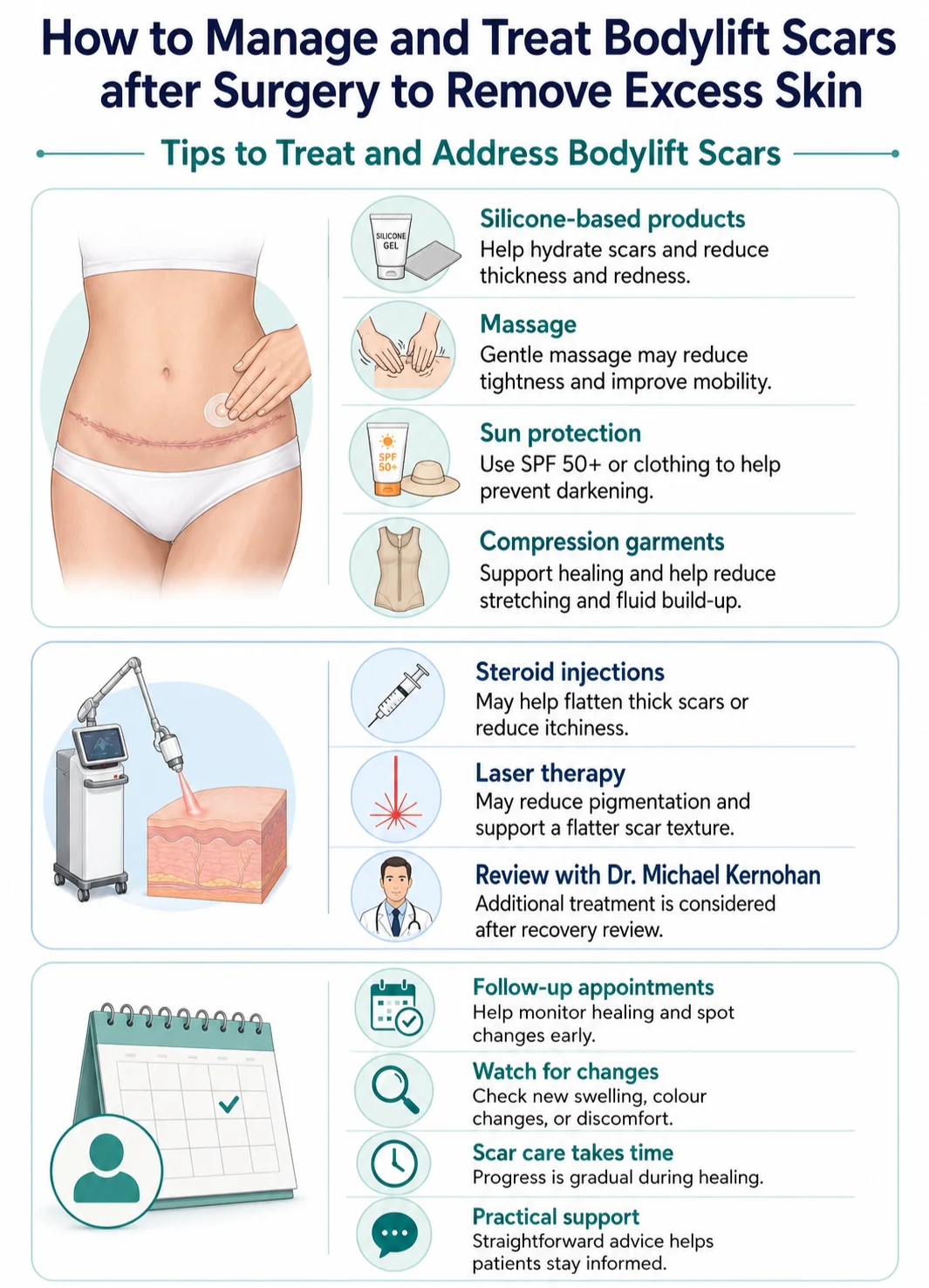
Effective scar care doesn’t require complicated treatments. It starts with consistency and good habits. Silicone-based products – such as gels or adhesive sheets – are widely used. They help keep the area hydrated and may reduce scar thickness and redness over time.
Massage can also help. Once the incisions are closed and the skin is healthy, gentle massage with a plain moisturiser can help with mobility and reduce tightness in the tissue. This is usually introduced a few weeks after surgery, depending on your healing progress.
Sun protection is one of the most important steps. Fresh scars are more prone to darkening with sun exposure, particularly in high-UV areas like Sydney. Use SPF 50+ sunscreen or cover the area with clothing when outdoors.
Wearing compression garments supports the surgical site and reduces fluid build-up. It also helps maintain scar position and reduces the chance of stretching. Dr. Michael Kernohan advises on how long these should be worn based on your procedure.
Advanced Options for Scar Management
Sometimes, scars need a bit more support. If they remain raised or thick months after surgery, further treatment might be discussed. This could include steroid injections or laser therapy, depending on your skin type and scar condition.
Laser treatments can reduce scar pigmentation and promote a flatter texture. These are performed in stages and are usually planned well after the initial healing period.
Steroid injections are used to flatten thick scars or reduce itchiness. These are offered after discussion and only when suitable.
At his South West Sydney clinic, Dr. Michael Kernohan reviews each patient’s recovery before recommending any additional treatment.
Staying on Track With Your Recovery
Good scar care depends on steady follow-up. Post-operative appointments aren’t just for checking stitches – they’re an opportunity to spot small changes early and keep healing on track.
If anything looks or feels different – such as new swelling, unusual colour changes, or discomfort – it’s important to check in with your surgical team. Most issues are minor and can be addressed quickly.
Scar management takes time. It’s normal for patients to feel unsure or self-conscious at first. Dr. Michael Kernohan provides straightforward advice and practical support to help patients feel informed and involved throughout recovery.
Local Insights for Sydney Patients
Living in Sydney brings unique considerations when caring for scars. The weather changes from hot summers to cold, dry winters, and each season affects the skin differently.
Sun protection is important all year round – not just in summer. Even cloudy days can cause pigmentation changes if scars are exposed. Meanwhile, the colder months can dry out healing skin, making moisturising essential.
Many Sydney patients return to work or social activities within a few weeks of surgery. While it’s natural to want to resume a normal routine, it’s essential to take time off from intense physical activity and follow medical advice to avoid pressure on healing scars.

FAQs About Bodylift Scar Management

Final Thoughts from Dr. Michael Kernohan
“Scar care is part of every surgery, not an afterthought,” says Dr. Michael Kernohan, Specialist Plastic & Reconstructive Surgeon in South West Sydney. “By paying attention to simple habits early, we can support the skin to heal more comfortably.”
There’s no perfect scar, but there are proven ways to help scars fade and feel better over time. With thoughtful care and steady support, healing becomes more manageable and less of a worry.
Further Reading
- Read more about Lower Body Lift Surgery NSW
- Read more about Tips for Sleeping after Body Lift Surgery
- Read more about Abdominoplasty Scar Treatment, Healing and Fading
- Read more about Recovery After Bodylift Surgery for Skin Removal

Best Garments For Upper Body Lift Surgery
As a Specialist Plastic & Reconstructive Surgeon in South West Sydney, Dr Michael Kernohan guides patients through all stages…

How to Prepare for Body lift Surgery to Remove Excess Skin
Preparing for bodylift surgery is a step that requires clear planning and practical insight. Dr. Michael Kernohan, a Specialist…
Recovery After Bodylift Surgery for Skin Removal
Bodylift surgery can help remove excess skin following significant weight loss or changes in body shape. For many people…