
- Take the Quiz
- Why Swelling And Bruising Happen After Facelift Surgery
- Recovery Timeline: What To Expect With Swelling And Bruising
- Download Dr Kernohan's Face and Neck Surgery Guide
- Early Care Strategies To Reduce Swelling And Bruising
- Sleep And Movement: How Position Affects Recovery
- Nutrition And Hydration To Minimise Inflammation
- Activities And Habits To Avoid During Recovery
- When To Use Creams, Ointments Or Compression Garments
- Individualised Support From Dr Michael Kernohan In South West Sydney
- Facelift Before and After Photos
- Planning Ahead For A Supported Recovery
- Long-Term Healing: What’s Normal Over Weeks And Months
- Start Your Facelift Recovery With Specialist Support
- FAQs About Reducing Swelling And Bruising After a Facelift
- Further Reading
Undergoing a facelift is a personal decision that often follows years of consideration. Whether it is for aesthetic reasons or addressing the effects of natural ageing, patients typically look forward to seeing subtle changes in facial appearance. While the results may be rewarding, the recovery period is an important phase that requires time, patience and supportive care.
One of the most common concerns following a facelift is swelling and bruising. These are expected outcomes and are part of the body’s natural healing response. Dr Michael Kernohan, a Specialist Plastic & Reconstructive Surgeon based in Sydney, has extensive experience in managing postoperative care for facelift patients. His approach focuses on proactive strategies to reduce swelling and bruising while supporting a well-paced recovery.
Take the Quiz
Why Swelling And Bruising Happen After Facelift Surgery
Swelling and bruising occur after a facelift due to the nature of the procedure. A facelift involves lifting and repositioning underlying facial tissues, tightening muscles, and removing or redistributing skin. This process disrupts small blood vessels and causes temporary inflammation in the tissues. As a result, blood and fluid can accumulate in the surrounding areas, leading to visible bruising and puffiness.
Swelling is the body’s way of initiating the healing process, helping to deliver nutrients and immune cells to the surgical site. Bruising occurs when small capillaries break during surgery, allowing blood to pool beneath the skin. These effects are most noticeable in the early days after surgery and will gradually resolve with time and appropriate care. While the appearance of swelling or bruising may initially be concerning, it is rarely an indicator of complications and is generally managed through rest, gentle care, and adherence to post-operative instructions.

Recovery Timeline: What To Expect With Swelling And Bruising
The progression of swelling and bruising follows a general pattern, although individual experiences may vary depending on factors such as age, skin type, and the extent of surgery. In the first 48 to 72 hours after the procedure, swelling typically reaches its peak. The face may feel tight or full, and bruising is most visible during this phase. Some patients notice that one side of the face may appear more swollen than the other, which is normal and usually temporary.
Between days four and ten, swelling begins to subside gradually. Bruising often changes colour during this time, shifting from dark blue or purple to green or yellow as the body breaks down and reabsorbs the blood. Patients may feel more comfortable resuming light activities, but should continue to follow movement restrictions as advised.
During weeks two to four, most of the prominent swelling and bruising will have subsided. The face begins to look more natural, and any remaining puffiness tends to be subtle. It is still common to experience some firmness or areas of mild asymmetry during this stage.
Between one and three months post-surgery, residual swelling can continue to resolve, particularly in the lower face and neck. The final facial contour gradually becomes more defined, and the incisions continue to mature. It is important to understand that while much of the visible swelling improves early, complete healing takes time. Dr Kernohan guides patients throughout this journey with regular follow-up appointments to monitor progress and provide reassurance.
Download Dr Kernohan’s Face and Neck Surgery Guide
Early Care Strategies To Reduce Swelling And Bruising
The first few days after a facelift are crucial for managing swelling and bruising. Applying cold compresses to the cheeks or neck can help reduce inflammation by constricting blood vessels and minimising fluid accumulation. It is important not to place ice directly on the skin or over the incisions. Instead, wrap the compress in a soft cloth and apply gently and intermittently.
Maintaining an elevated head position at all times, including during sleep, is another key strategy. Elevation encourages proper fluid drainage and reduces the chance of prolonged puffiness. Patients are advised to rest in a reclined position or use multiple pillows to prop up their head and shoulders. This position should be maintained for at least the first week.
Avoiding physical contact with the face is essential. Do not rub, massage, or press on the treated areas unless specifically directed by Dr Kernohan. Gentle care, combined with minimal movement of the face and neck, helps prevent unnecessary irritation or disruption of healing tissues. Some patients may be advised to wear a supportive facial garment to manage swelling. If prescribed, it should be worn as directed for optimal results.
Sleep And Movement: How Position Affects Recovery
The way patients sleep and move during the early recovery period can significantly influence swelling and bruising. Keeping the head elevated while sleeping is one of the simplest yet most effective methods for managing swelling. Avoid lying flat or turning onto your side, as this can place pressure on healing tissues and lead to asymmetry or prolonged puffiness.
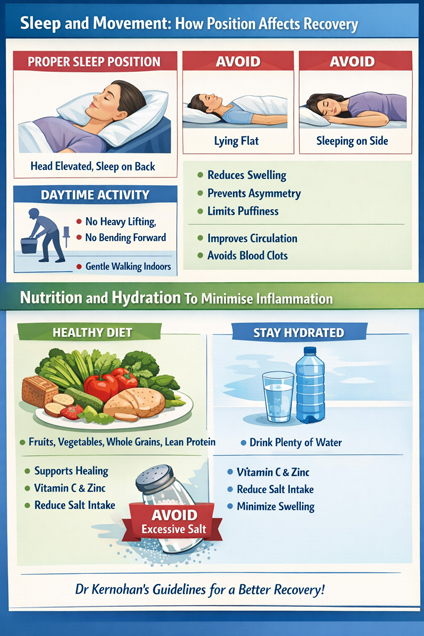
During the day, it is important to limit bending forward, lifting heavy items, or engaging in strenuous activity that increases blood flow to the face. Such actions can worsen swelling or increase the risk of post-operative bleeding. However, gentle walking indoors is encouraged as it promotes circulation and reduces the likelihood of blood clots.
By following movement recommendations provided by Dr Kernohan, patients in South West Sydney can expect a more stable and predictable recovery. These guidelines are personalised and take into account the type of facelift performed and the patient’s general health.
Nutrition And Hydration To Minimise Inflammation
Internal healing is supported by a balanced diet and adequate hydration. Drinking water throughout the day helps maintain proper fluid balance, supports the lymphatic system, and assists the body in eliminating excess fluids. This natural process can help manage swelling and aid tissue repair.
A diet rich in fresh vegetables, fruits, whole grains, and lean protein provides essential nutrients that support healing. Vitamin C, zinc, and other antioxidants are particularly valuable for repairing tissue and reducing inflammation. In contrast, excessive salt intake should be avoided, as it can lead to water retention and contribute to facial puffiness.
For patients in Sydney’s warm climate, staying hydrated is especially important. Dr Kernohan offers dietary and hydration advice tailored to individual needs and post-operative requirements. These small but important changes can make a meaningful difference in the healing experience.
Activities And Habits To Avoid During Recovery
There are specific actions and lifestyle factors that can negatively impact recovery from a facelift. Patients should avoid any activity that causes strain or increased blood pressure in the face. This includes bending forward, lifting heavy objects, or vigorous exercise. These movements can worsen bruising or lead to complications such as hematomas.
Sun exposure should also be minimised, especially while the skin is healing. Direct sunlight can affect scar maturation and prolong the resolution of bruising. Wearing a broad-brimmed hat and staying in shaded areas when outdoors is recommended.
Alcohol and smoking should be avoided before and after surgery. Both can impair circulation and slow down the body’s natural healing processes. Nicotine, in particular, constricts blood vessels and reduces oxygen delivery to tissues, which can compromise wound healing. By eliminating these habits, patients give their bodies the best chance to recover smoothly.
When To Use Creams, Ointments Or Compression Garments
The use of skincare products or garments during recovery should always be directed by the treating surgeon. In the first week after surgery, the skin should be left mostly undisturbed, and only products prescribed or approved by Dr Kernohan should be used. Applying unapproved creams or ointments can introduce irritants or bacteria to the healing skin.
Scar treatments or hydration serums may be introduced gradually once the incisions have closed and the healing process is underway. Timing varies between patients, and Dr Kernohan provides tailored recommendations based on how the skin is responding.
Facial compression garments, when prescribed, play an important role in managing swelling. They apply gentle, even pressure to the treated areas, encouraging fluid drainage and supporting skin reattachment. It is important to wear the garment for the duration advised to experience its full benefit.
Individualised Support From Dr Michael Kernohan In South West Sydney
Recovery is not one-size-fits-all. Dr Michael Kernohan offers personalised support to each patient, ensuring that care instructions align with the specific surgical approach and individual circumstances. As a Specialist Plastic & Reconstructive Surgeon, he works closely with patients in South West Sydney, providing detailed guidance before, during, and after surgery.
Follow-up appointments are scheduled to assess progress, answer questions, and provide additional advice as needed. Having access to local care means patients are never far from support. Whether it is reassurance about healing or a minor adjustment to aftercare, the ability to reach your surgeon and team is a key benefit of working with a local specialist.
Facelift Before and After Photos
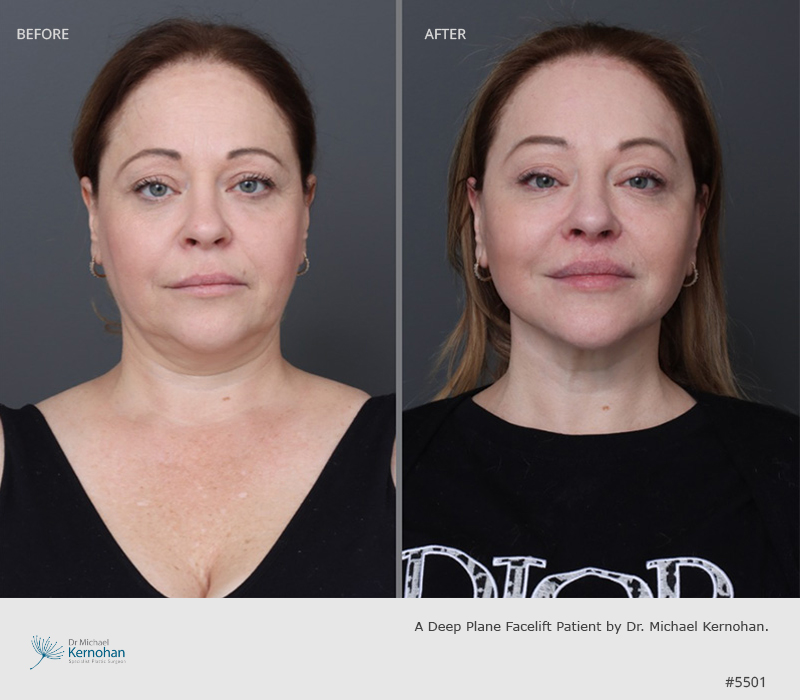
Disclaimer: The before and after photographs displayed on this page are published with the consent of the patients and are intended for informational purposes only. They provide a visual representation of the outcomes achieved by the practitioner but do not guarantee or imply that any individual will achieve similar results. Individual results may vary due to various factors, including a patient’s unique anatomy, medical history, and healing process.
View Face Lift Before and After Gallery
Planning Ahead For A Supported Recovery
Planning for the recovery period begins before surgery day. Dr Kernohan encourages patients to prepare their home environment so that the early days of recovery are as comfortable as possible. This might include stocking up on water, healthy meals, and soft pillows for head elevation. Having access to gentle entertainment, such as books or digital content, helps pass the time without engaging in strenuous activity.
Arranging help at home, particularly for the first few days, allows patients to rest without worrying about household tasks. Taking time off work, especially from jobs involving public interaction or physical exertion, also helps reduce stress. With the right preparation, patients can focus fully on healing and experience a more comfortable recovery process.
Long-Term Healing: What’s Normal Over Weeks And Months
While most of the swelling and bruising from a facelift resolves within the first month, it is normal for subtle changes to continue for several months. Some patients may notice mild puffiness or tightness that improves gradually over time. Facial contours refine, and the final results become more visible as the swelling fully resolves.
By the three-month mark, the majority of patients feel confident in their appearance and have resumed normal activities. Scar maturation and subtle refinements may continue for up to twelve months. Dr Kernohan monitors this long-term healing and remains available for follow-up consultations to support patient outcomes at every stage.
Start Your Facelift Recovery With Specialist Support
Healing from facelift surgery is a process that benefits greatly from expert guidance, careful preparation, and ongoing care. Dr Michael Kernohan, a Specialist Plastic & Reconstructive Surgeon based in South West Sydney, is committed to helping each patient achieve their goals while navigating the recovery process with comfort and confidence.
If you are considering facelift surgery or are in the early stages of recovery, you are invited to contact Dr Kernohan’s clinic for a detailed consultation. You can also send photos for a complimentary preliminary review. With personalised care and a focus on patient wellbeing, your recovery journey will be supported every step of the way.

FAQs About Reducing Swelling And Bruising After a Facelift
Further Reading
- Read more about Trifecta Lift
- Read more about Deep Plane Facelift NSW
- Read more about Partial Facelift Surgery NSW
- Read more about Facial Nerve Surgery Sydney
- Read more about Face Surgery Sydney
- Read Dr Kernohan’s Blog on Managing Swelling after Facelift Surgery
- Read Dr Kernohan’s Blog on How A Hemostatic Net Can Help Your Facelift Recovery
- Read Dr Kernohan’s Blog on Post-Op Recovery: The Role of Facelift Garments
- The History of Facelift Surgery: From Early Techniques to Modern Advances
Note: If you ever feel uncertain about your recovery progress, Dr Michael Kernohan, Specialist Plastic & Reconstructive Surgeon in South West Sydney, encourages patients to seek review so healing can be assessed and supported appropriately.

What is Involved in an Upper Facelift ?
Upper Facelift Surgery Sydney with Dr Kernohan An upper facelift is a surgical procedure designed…

What is Involved in a Mid facelift ?
Mid Facelift Surgery Sydney with Dr Kernohan A mid facelift is a surgical procedure designed…

What is Involved in a Lower Facelift (Jowl Lift)?
Lower Facelift Surgery Sydney with Dr Kernohan A Lower Facelift or Jowl Lift is a…