
- Take The Quiz
- Early Attempts: The Skin-Only Era (1900s-1960s)
- Download Dr Kernohan's Facelift Surgery Guide
- The 1970s: A New Layer Of Understanding – The SMAS Revolution
- Facelift Surgery Before and After
- The 1980s-1990s: Deeper Plane Surgery And Midface Focus
- Late 1990s-2000s: Short-Scar And Suspension Methods
- Modern Refinements: High-SMAS And Custom Planning (2000s-Present)
- What This History Means For Patients In Melbourne
- Risks, Recovery, And Realistic Expectations
- Patient Journey: What To Expect When Consulting A Specialist Plastic & Reconstructive Surgeon
- Key Takeaways – The Ongoing Story Of Facelift Surgery
- FAQs About The History Of Facelift Surgery
- Call To Action
- Further Reading
The face is one of the most expressive and visible parts of the human body. Over time, changes in skin, muscle, and deeper tissues are a natural part of ageing. Some people notice that their jawline shows more laxity, others see the development of folds and creases around the mouth, and many become aware of changes in the neck. These signs are shaped by a mix of genetics, lifestyle choices, and environmental exposure, particularly sun exposure which is significant in Australia.
By looking back at the history of facelift surgery, we can see how techniques have developed from very simple approaches to more advanced and anatomical procedures. This history is not just a story of surgical innovation – it also helps us understand why no single approach is suitable for everyone. Modern facelift planning involves matching the right method to the individual, taking into account their unique anatomy, medical history, and goals.
For people in Melbourne and across Australia, this history is more than an academic timeline. It provides context for decisions made today. It explains why a consultation with a qualified surgeon such as Dr Michael Kernohan, Specialist Plastic & Reconstructive Surgeon in South West Sydney, includes detailed discussion about anatomy, risks, and realistic expectations, rather than focusing on promises of a single outcome.
Take The Quiz
Early Attempts: The Skin-Only Era (1900s-1960s)
The very first facelifts were performed in Europe at the beginning of the twentieth century. These early operations were simple and targeted only the skin. A surgeon would make small incisions around the hairline or ears, pull the skin upwards, and remove the excess before closing the wounds. For a short time, this created a tighter appearance, but it became clear that the results faded quickly.
By the middle of the century, similar skin-only procedures were still being performed. Patients would see an initial improvement, but within a relatively short period the natural pull of gravity and movement of the underlying tissues would cause the skin to loosen again. Because the deeper layers of the face had not been addressed, the improvement was often temporary. Some individuals also felt that the changes looked artificial, because the skin had been tightened without repositioning the structures underneath.
This early era demonstrated the limits of working on the surface alone. Surgeons began to appreciate that the skin was only one part of a complex system. Without a deeper understanding of facial anatomy, it was difficult to produce changes that were both balanced and longer lasting.
Download Dr Kernohan’s Facelift Surgery Guide
The 1970s: A New Layer Of Understanding – The SMAS Revolution
A major turning point came in the 1970s when the superficial musculo-aponeurotic system, often referred to as the SMAS, was described in detail. This layer sits beneath the skin and connects with the facial muscles, playing an important role in both facial movement and support. Before this discovery, surgeons were operating largely without knowledge of the structural foundation of the face.
Once the SMAS was identified, surgeons began to design procedures that went beyond the skin. By repositioning the SMAS and securing it in place, they could relieve tension on the skin and instead rely on a deeper support layer. This meant that results generally lasted longer, and the appearance was often more balanced because the changes were based on structure rather than surface tightening.
The SMAS era marked a shift from quick fixes to more considered planning. It showed that a facelift could do more than simply remove skin – it could reshape the underlying support system of the face. For patients, this was significant because it meant that surgeons could address the visible effects of ageing in a more durable way.
Facelift Surgery Before and After
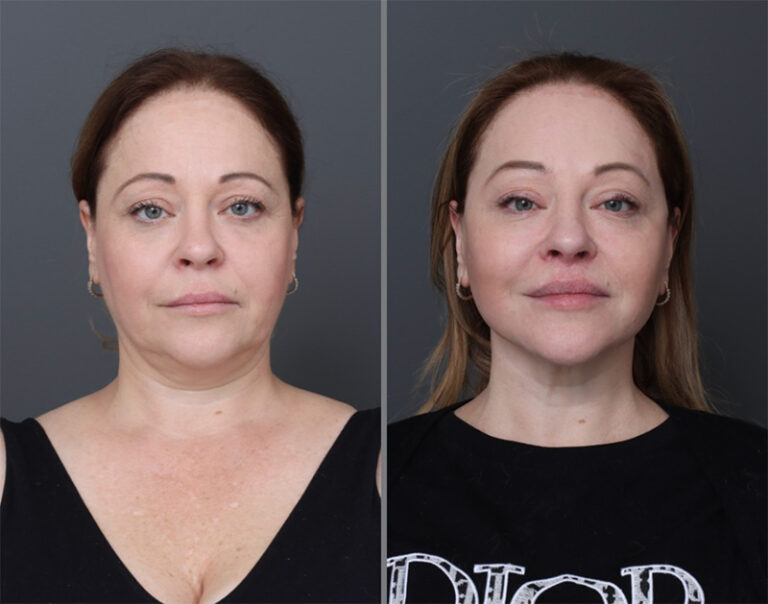
Disclaimer: All surgical or invasive procedures come with inherent risks, and results can vary widely between individuals due to factors like lifestyle, anatomy, overall health, weight, and nutrition. We encourage you to conduct thorough research and consider seeking a second opinion from a qualified healthcare provider.
The 1980s-1990s: Deeper Plane Surgery And Midface Focus
During the 1980s and 1990s, surgeons continued to refine their methods. While SMAS-based facelifts had improved the lower face and neck, some patients still experienced flattening of the cheeks and folds near the nose and mouth that were not fully corrected. This led to the development of deeper techniques such as the deep-plane facelift and the composite facelift.
These operations involved releasing the retaining ligaments of the face and moving the skin, fat, and muscle layers together as a unit. By working in deeper planes, surgeons could reposition the midface more effectively and reduce folds that had proven resistant to earlier techniques. For certain individuals, this meant that the cheeks were lifted, folds around the mouth were softened, and the results felt more harmonious.
However, these deeper approaches also involved more extensive dissection and required careful assessment. Not all patients were suited to them, and they came with their own set of risks. The lesson of this period was that facelifts were not a single procedure, but rather a range of methods that could be chosen and adapted depending on the person.
Late 1990s-2000s: Short-Scar And Suspension Methods
By the late 1990s, attention began to turn to incision design and access. Surgeons recognised that while traditional facelifts could be effective, they often required long incisions around the ears and hairline. For patients with early or moderate signs of ageing, these approaches sometimes felt more extensive than necessary.
This period saw the introduction of the S-lift, which used a smaller S-shaped incision placed in front of the ear. The technique relied on stitches to tighten and support the SMAS through limited access. Shortly after, the MACS lift, or minimal access cranial suspension, was described. This approach used vertical suspension sutures to reposition tissues in the lower face and midface with limited dissection.
For selected individuals, these methods provided another option. They reduced the length of incisions and the amount of tissue undermining, which appealed to people with less advanced ageing. However, they were not appropriate for everyone, especially those with significant neck changes. The introduction of these short-scar methods highlighted once again that surgery must be tailored to the individual.
Modern Refinements: High-SMAS And Custom Planning (2000s-Present)
From the early 2000s, refinements continued with the introduction of the high-SMAS facelift. This technique extended dissection into the upper cheek, or malar region, which allowed surgeons to reposition the midface as well as the lower face. The high-SMAS approach was particularly valuable for patients whose primary concern was flattening of the cheeks or folds beside the nose.
Modern surgery also involves combining different approaches when appropriate. For example, facelift procedures may be paired with neck surgery if changes in both areas need to be addressed at the same time. The focus today is less about following a single named technique and more about selecting the right combination based on the patient’s anatomy and goals.
Contemporary facelifts are also guided by detailed anatomical studies of facial ligaments and spaces. These studies help surgeons perform more precise dissections and reduce risks. Planning is now highly individualised, and the conversation with a specialist surgeon includes not only which method might be considered, but also the limitations and risks involved.

What This History Means For Patients In Melbourne
For people living in Melbourne, the history of facelift surgery is more than a timeline of surgical innovation. It explains why modern surgery must be individualised and why realistic planning is essential. No two faces age in the same way, and no single method is appropriate for everyone.
Melbourne’s lifestyle and climate also play an important role. Ultraviolet radiation levels are high across Victoria for much of the year, which means that sun exposure can significantly affect how the skin ages. Many patients in Melbourne spend time outdoors, whether for work, sport, or recreation, and this can accelerate skin changes. Incorporating sun protection into everyday life is one of the most important steps for maintaining long-term skin health.
Another consideration for patients in Melbourne is timing. Recovery from surgery requires planning around work, family responsibilities, and social events. Some people travel to South West Sydney to see Dr Michael Kernohan, which means they also consider travel arrangements and the practicalities of post-surgery follow-up.
By looking at the history of facelift surgery, patients in Melbourne can understand why methods continue to evolve and why discussions with a qualified surgeon are focused on risks, anatomy, and suitability, rather than on a single “best” procedure.
Risks, Recovery, And Realistic Expectations
All surgical procedures carry risks, and facelift surgery is no exception. Common issues in the early period after surgery include swelling, bruising, and temporary numbness. These effects usually improve over weeks, but every person heals at a different pace. More serious complications, such as bleeding, infection, or injury to deeper structures, are less common but always possible.
Recovery is gradual rather than immediate. In the first few weeks, swelling and bruising are most noticeable. Over time, tissues settle and scars begin to mature. Final results take months to fully develop, and outcomes are influenced by many factors including the patient’s health, skin quality, and commitment to aftercare instructions. Lifestyle choices, such as avoiding smoking and protecting skin from the sun, also play an important role.
It is essential to remember that facelift surgery does not stop ageing. Instead, it repositions tissues to create a more balanced structure. The way each person responds to surgery is unique, and results vary.
Patient Journey: What To Expect When Consulting A Specialist Plastic & Reconstructive Surgeon
The journey of considering facelift surgery begins with a referral from your general practitioner or another specialist. This referral ensures that the consultation is part of a broader medical process and provides important background for your surgeon.
At the first consultation, Dr Michael Kernohan, Specialist Plastic & Reconstructive Surgeon in South West Sydney, will review your medical history, medications, and any previous procedures. He will assess your facial anatomy and discuss the changes you have noticed. The conversation will cover different surgical options, the likely outcomes, and the possible risks.
If you decide to proceed, you will be given written information and time to consider your choice. Informed consent is central to the process, and you are encouraged to seek a second opinion if you wish. On the day of surgery, you will be supported by a surgical and anaesthetic team, and after surgery, follow-up visits will monitor your healing and guide your recovery.
This structured process ensures that decisions are considered, risks are addressed, and planning remains individualised.
Key Takeaways – The Ongoing Story Of Facelift Surgery
The history of facelift surgery spans more than a century, moving from early skin-only lifts to techniques that focus on deeper structures such as the SMAS, the deep plane, and suspension sutures. Each development improved the understanding of facial anatomy and gave surgeons new ways to address the signs of ageing.
What this history shows most clearly is that there is no single universal approach. Every method has strengths and limitations, and the right choice depends on the individual’s anatomy, health, and goals. For patients in Melbourne, factors such as sun exposure, lifestyle, and practical recovery planning all play a role in how surgery is considered.
Today, consultation with a qualified specialist such as Dr Michael Kernohan in South West Sydney ensures that surgery is discussed in clear terms, with a focus on risks, variability, and realistic expectations. The history of facelift surgery is ongoing, but its lessons remain consistent: anatomy guides technique, and patient safety is always the priority.
FAQs About The History Of Facelift Surgery

Call To Action
If you are considering facial surgery, the first step is to obtain a referral from your GP. A consultation with Dr Michael Kernohan, Specialist Plastic & Reconstructive Surgeon in South West Sydney, can help you explore the available options, understand the risks, and consider what may be appropriate for your needs.
All surgery carries risks, and results vary between individuals. A second opinion is strongly recommended before making any decision.
Further Reading
- Read Dr Micheal Kernohan Facelift Surgery Procedure
- Read more about SMAS vs Deep Plane Facelift
- Read more about What is a Ponytail Facelift?
- Read more about Complications in Facelift Surgery and How to Address Them

Lower Facelift Vs. Full Facelift – Appropriate Candidates For Each
When patients begin exploring facial surgery options, one of the most common questions is whether a Lower Facelift or…

How To Reduce Swelling And Bruising After a Facelift
Undergoing a facelift is a personal decision that often follows years of consideration. Whether it is for aesthetic reasons…

Recovery After Forehead Reduction Surgery
Recovery is one of the most important stages of any surgical procedure, and forehead reduction is no exception. The…