
- Take The Quiz
- Understanding Forehead Reduction Surgery
- The Recovery Journey – What To Expect
- The First Days After Surgery
- Week-By-Week Recovery Timeline
- Caring For Yourself During Recovery
- Facelift Before and After Photos
- Returning To Daily Life
- Local Considerations For Melbourne Patients
- Dr Michael Kernohan’s Insights
- Final Thoughts
- FAQs About Forehead Reduction Recovery
- Next Steps
- Further Reading
Recovery is one of the most important stages of any surgical procedure, and forehead reduction is no exception. The operation itself is only one step in the overall process. Healing, follow-up, and consistent care all contribute to how your body responds and how comfortable you feel in the months afterwards. Understanding what to expect, how long the process takes, and the best ways to support your recovery can make the experience less daunting.
I am Dr Michael Kernohan, Specialist Plastic & Reconstructive Surgeon in South West Sydney, and I frequently consult with people from both Sydney and Melbourne who are considering forehead reduction surgery. Over the years, one of the most common concerns patients raise is not only what the surgery involves but how they will manage their lives during recovery. This detailed guide provides clear information about the recovery process, with practical advice and realistic expectations.
Take The Quiz
Understanding Forehead Reduction Surgery
Forehead reduction surgery, also referred to as hairline lowering or scalp advancement, is performed by carefully moving the hair-bearing scalp forward to reduce the vertical height of the forehead. The purpose is not about chasing a trend, but about addressing genetic, reconstructive, or personal reasons.
Some people naturally have a high forehead due to hereditary factors, while others develop changes over time with ageing or hairline recession. In certain cases, the procedure may also be considered after trauma or other reconstructive surgery. Regardless of the reason, forehead reduction requires careful planning to confirm that the outcome aligns with the patient’s anatomy.
Not everyone is a candidate. Scalp laxity, hair density, and hair type are important factors that influence suitability. This is why consulting with a Specialist Plastic & Reconstructive Surgeon in South West Sydney ensures that the approach is safe and tailored to each individual.
The Recovery Journey – What To Expect

The recovery process after forehead reduction is gradual. Some patients notice changes earlier than others, but healing is always unique to the individual. Swelling, bruising, tightness, and temporary changes in sensation are all expected and should not be a cause for concern.
The first weeks are the most visible in terms of swelling and bruising. These symptoms usually improve with time, although the rate of improvement varies. Some patients notice tingling or numbness across the forehead and scalp, which may last for weeks or months before resolving. The incision itself changes as well, starting firm and red before softening and becoming less visible as the months go on.
Follow-up visits are an important part of this stage. These appointments allow the surgeon to monitor progress, provide guidance, and answer questions. Many patients find these visits reassuring, knowing they have support throughout recovery.
The First Days After Surgery
The first days are focused on protection and rest. Patients leave surgery with a bandage or dressing in place, which supports the scalp and protects the incision. This may feel snug, but this is normal and helps control swelling.
Keeping the head elevated is important, even during sleep. Many patients use two or three pillows or a wedge pillow to keep their head above heart level. This helps to reduce swelling and bruising. Cold compresses may be used for comfort, provided they are applied carefully and as directed.
Discomfort is usually managed with prescribed medication. Patients often describe tightness or heaviness across the forehead and scalp. Numbness is also common in this early stage. These symptoms improve as tissues settle.
It is wise to arrange support at home during this period. Daily tasks such as shopping, childcare, and meal preparation can feel overwhelming while you are resting. Having someone available to help allows you to focus fully on your recovery.
Week-By-Week Recovery Timeline
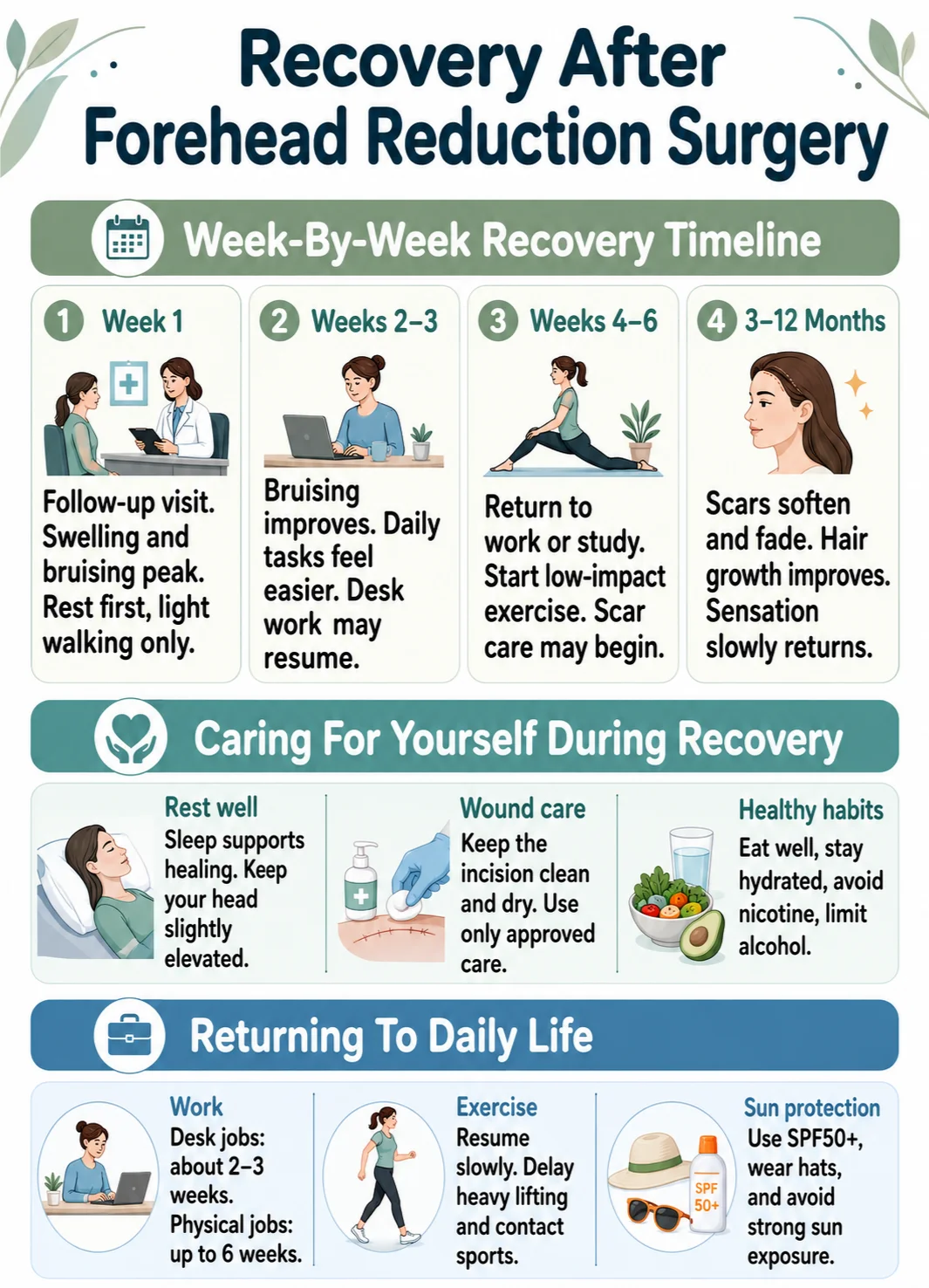
Week 1
Most patients attend their first follow-up appointment in the first week. The incision is checked, and sutures may be removed around day 7 to 10 if healing is on track. Swelling and bruising are usually at their most visible, particularly around the upper face. Light walking is encouraged, but rest remains the main priority.
Weeks 2 – 3
Swelling and bruising begin to improve noticeably. Some tingling or numbness may remain, but daily activities feel more manageable. Many patients feel ready to return to desk-based work, though more physical tasks are still avoided. Hair washing with mild shampoo is usually permitted, as long as it is done gently.
Weeks 4 – 6
By this stage, most patients return to work or study if they have not already done so. Exercise can be reintroduced gradually, starting with low-impact options such as walking or cycling. Scar care, including silicone treatments if appropriate, may begin. Some patients experience temporary hair shedding, which usually resolves as regrowth begins.
Longer Term (3 – 12 Months)
Healing continues for many months. Scars fade, soften, and blend with the surrounding skin and hair. Hair growth along the incision improves, particularly if the trichophytic incision technique has been used. Sensation in the scalp and forehead gradually returns. Regular follow-ups with Dr Michael Kernohan in South West Sydney ensure that progress is steady and concerns are addressed.
Caring For Yourself During Recovery
Recovery is supported by good self-care. Adequate rest is vital, and sleep is particularly important for tissue repair. Keeping your head slightly elevated during rest helps reduce swelling.
Wound care is also essential. The incision should be kept clean and dry, with dressing changes done only as instructed. Patients should avoid scratching, rubbing, or applying unapproved products to the incision line.
Diet and hydration matter too. A balanced diet rich in protein, vitamins, and minerals supports healing, while water keeps tissues hydrated. Smoking and nicotine use significantly reduce circulation and can delay healing. For this reason, avoiding nicotine products is strongly recommended. Alcohol is also best limited during the first few weeks.
Facelift Before and After Photos
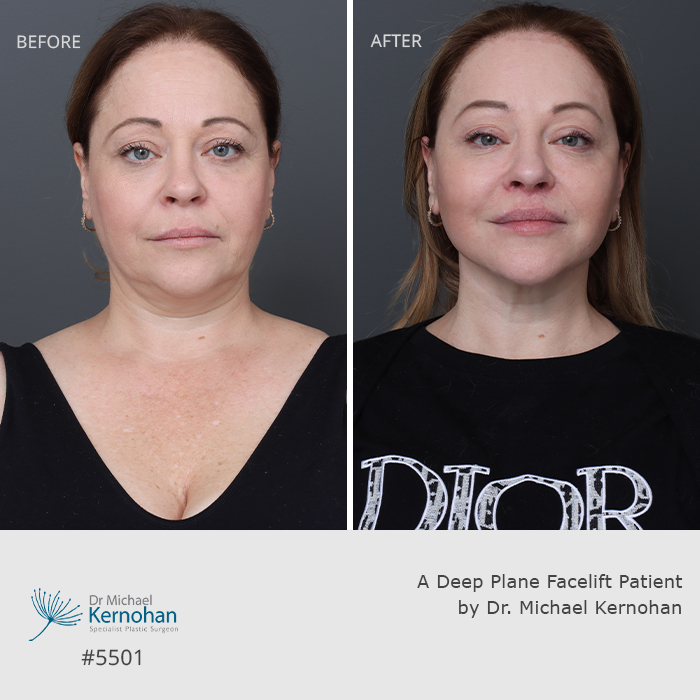
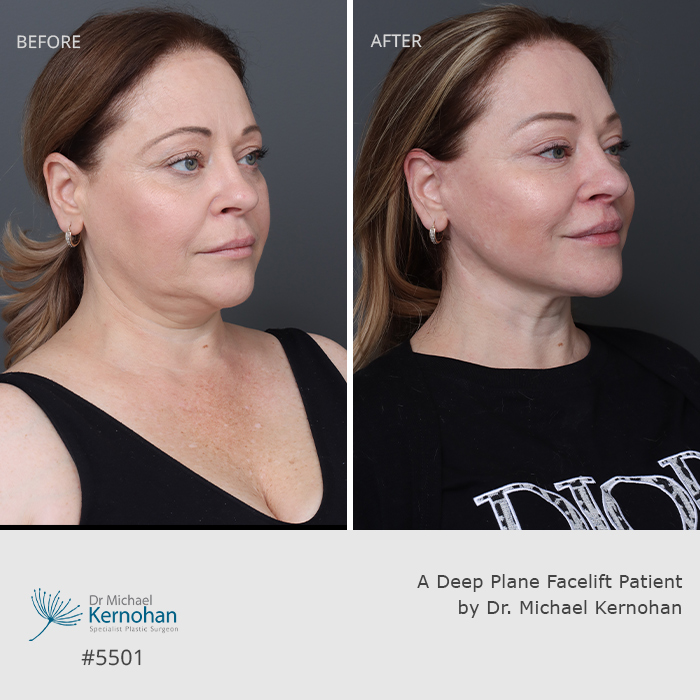
Disclaimer: All surgical or invasive procedures come with inherent risks, and results can vary widely between individuals due to factors like lifestyle, anatomy, overall health, weight, and nutrition. We encourage you to conduct thorough research and consider seeking a second opinion from a qualified healthcare provider.
Returning To Daily Life
Each patient’s timeline for returning to daily life is different. Those with office-based jobs often return within two to three weeks, while more physically demanding roles may require up to six weeks.
Exercise should be resumed slowly, starting with gentle walking and progressing to higher intensity activities only when approved by the surgeon. Contact sports and heavy lifting should be delayed until healing is more advanced.
Sun protection is crucial throughout recovery. Melbourne’s high UV levels, especially in spring and summer, can darken scars if they are exposed. Daily use of SPF50+ sunscreen, protective hats, and limiting outdoor exposure at peak times are strongly recommended.
Local Considerations For Melbourne Patients
For patients in Melbourne, recovery comes with additional factors to consider. Melbourne is known for its high ultraviolet exposure. Protecting healing scars from the sun is not optional but essential. Many patients choose to schedule surgery in autumn or winter, when UV levels are lower and outdoor recovery is easier to manage.
Balancing recovery with work and family life is another important consideration. Many Melbourne residents juggle professional responsibilities with busy home lives, and planning time away in advance helps recovery proceed more smoothly.
Those travelling from Melbourne to Sydney for surgery should prepare for the need to return for follow-up appointments. Travel arrangements and accommodation should be planned in advance to allow continuity of care in South West Sydney.
Dr Michael Kernohan’s Insights
As a Specialist Plastic & Reconstructive Surgeon, I encourage patients to view recovery as a vital part of treatment. Surgery itself takes only hours, but healing takes weeks to months. Each stage of recovery contributes to the final outcome.
There is no single recovery timeline that applies to everyone. Some people feel ready to resume their activities earlier, while others progress more slowly. The most important thing is to remain patient, follow your recovery plan, and communicate with your surgeon.
Final Thoughts
Recovery after forehead reduction surgery is a gradual process that requires patience and care. The first weeks are focused on rest, wound protection, and adjustment. Over the following months, scars soften, hair regrowth improves, and sensation gradually returns. Most patients resume their usual activities within weeks, but full healing continues for many months.
For those in Melbourne or Sydney considering forehead reduction, working with a qualified specialist provides not only surgical expertise but also guidance throughout recovery. Dr Michael Kernohan – Specialist Plastic & Reconstructive Surgeon in South West Sydney – offers tailored care before, during, and after surgery to ensure patients are supported every step of the way.

FAQs About Forehead Reduction Recovery
Next Steps
If you are considering forehead reduction surgery and want to learn more about recovery, I invite you to arrange a consultation with me, Dr Michael Kernohan – Specialist Plastic & Reconstructive Surgeon in South West Sydney. Together, we can create a recovery plan that fits your health, lifestyle, and long-term goals.
Further Reading
- Read more about Trifecta Lift
- Read Dr Kernohan’s blog on Blepharoplasty vs Forehead Lift
- Read Dr Kernohan’s blog on What is Involved in an Upper Facelift?
- Read Dr Kernohan’s blog on What is a GBL – Gliding Brow Lift?
- Read Dr Kernohan’s blog on Tips And Timeline For Recovery After Brow Lift Surgery

What is Involved in an Upper Facelift ?
Upper Facelift Surgery Sydney with Dr Kernohan An upper facelift is a surgical procedure designed…

What is Involved in a Mid facelift ?
Mid Facelift Surgery Sydney with Dr Kernohan A mid facelift is a surgical procedure designed…

What is Involved in a Lower Facelift (Jowl Lift)?
Lower Facelift Surgery Sydney with Dr Kernohan A Lower Facelift or Jowl Lift is a…