
- Take The Quiz
- Understanding Blepharoplasty
- Understanding Periocular Laser
- Download Dr Kernohan’s Blepharoplasty Surgery Guide
- Why Combine Blepharoplasty & Laser?
- Planning A Combined Approach With Dr Michael Kernohan
- Safety Considerations
- What To Expect Before, During, And After
- Risks And Limitations
- Lifestyle And Melbourne Considerations
- Do’s And Don’ts For Patients
- When To See Dr Michael Kernohan – Specialist Plastic & Reconstructive Surgeon
- FAQs About Blepharoplasty & Laser
- Call To Action
- Further Reading
As people grow older, many begin to notice changes in the delicate area around the eyes. Some experience excess skin that folds over the upper eyelids, while others may develop puffiness beneath the lower eyelids. Fine lines, creasing, and skin texture changes can also become more obvious with time. For some individuals, these changes cause practical concerns such as blocked vision or discomfort when reading or driving. For others, they may be more concerned about how these changes affect the overall appearance of their face. It is important to understand that everyone’s needs are different, and decisions about treatment must be carefully tailored.
This blog, written by Dr Michael Kernohan – Specialist Plastic & Reconstructive Surgeon, South West Sydney, explores the option of combining eyelid surgery, known as blepharoplasty, with laser resurfacing to address both excess tissue and skin surface concerns. The purpose of this information is to help patients from Sydney, Melbourne, and beyond understand what each procedure involves, why a combined approach may sometimes be considered, and what safety measures are in place. By setting out the details clearly, it allows people to have meaningful discussions with their GP and their surgeon before making any decisions.
Take The Quiz
Understanding Blepharoplasty
Blepharoplasty is surgery of the eyelids. It can involve the upper eyelids, the lower eyelids, or both. In the upper eyelids, excess skin can sometimes hang down over the eyelashes and interfere with vision. In these cases, the removal of redundant skin can improve both appearance and function. In the lower eyelids, bulging caused by fat pads can create a tired or heavy look. Blepharoplasty may reposition or reduce these fat pads and also tighten the surrounding skin. There are several approaches to lower eyelid surgery, including incisions just beneath the lashes or through the inside of the eyelid. The choice depends on your anatomy and the goals of treatment.
It is important to remember that blepharoplasty does not stop ageing, nor does it address all aspects of eyelid appearance. Each patient’s eyelid structure, skin quality, and overall health must be taken into account. A consultation with Dr Michael Kernohan in South West Sydney provides the opportunity for a detailed examination and discussion of what may be achieved and what limitations may exist.
Understanding Periocular Laser
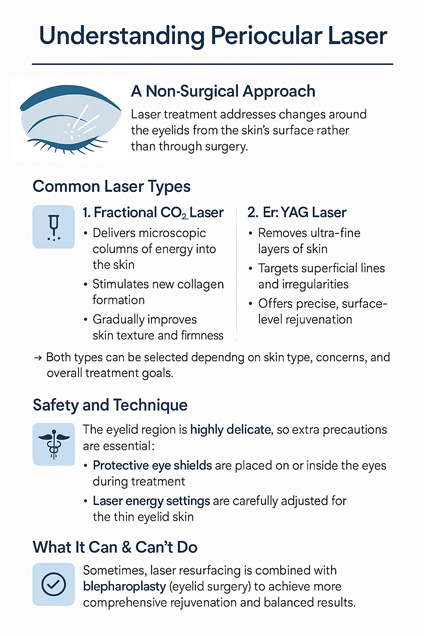
Laser treatment is another approach to addressing changes around the eyelids, but it does so from the surface of the skin rather than through surgery. Fractional CO₂ laser is commonly used in the eyelid region. It delivers tiny columns of energy into the skin that can stimulate the formation of new collagen and gradually improve skin quality. Er:YAG laser is another option, which can remove very fine layers of skin to address superficial lines and irregularities. Both types of laser have a role, and the choice depends on the individual’s skin type, concerns, and overall treatment plan.
The eyelid region is especially delicate, so extra precautions are needed. Special protective shields are placed on or within the eyes to prevent injury during treatment. Laser energy settings must be carefully adjusted because eyelid skin is extremely thin. While laser can improve texture, fine wrinkles, and pigmentation, it cannot remove large amounts of excess skin or fat. This is where blepharoplasty is considered, and sometimes both procedures are planned together for a more complete approach.
Download Dr Kernohan’s Blepharoplasty Surgery Guide

Why Combine Blepharoplasty & Laser?
Some patients may benefit from combining blepharoplasty with periocular laser treatment. The two procedures address different aspects of the eyelids and skin, and in selected patients, a combined approach may offer a more balanced outcome. Surgery deals with the excess skin and deeper fat pads, while laser works on the surface to improve texture and tone. For some people, performing both at the same time means that recovery can be combined, reducing the need for two separate recovery periods. Others may be better suited to staging the procedures at different times, depending on their health, skin type, or eye condition.
The decision to combine treatments is never automatic. It requires careful planning, assessment of risks, and consideration of the individual’s priorities. For some, laser may be performed months after eyelid surgery to allow the tissues to heal. For others, the procedures may be performed in a single session under one anaesthetic. Dr Michael Kernohan – Specialist Plastic & Reconstructive Surgeon, South West Sydney, explains the advantages and limitations of each approach so that patients can make well-informed choices.
Planning A Combined Approach With Dr Michael Kernohan
Planning is a key step in surgery and laser. When you see Dr Michael Kernohan in South West Sydney, he will take a detailed medical history, including past operations, medications, allergies, and any eye conditions such as dry eye or prior surgery. He will examine the eyelids carefully, looking at the position of the lashes, the tone of the eyelid muscles, and the health of the ocular surface. Clinical photographs may be taken to guide planning and allow for before-and-after comparisons.
Patients travelling from Melbourne may need to plan consultations around their schedules and organise follow-up visits. Sometimes, the first consultation can be combined with preoperative planning if enough information is available. A GP referral is essential for booking, as it ensures that all health information is properly coordinated.
Safety Considerations
Safety is a central part of every treatment plan. During combined surgery and laser, several protective measures are in place. Special corneal shields or protective eyewear are used to prevent laser injury to the eye. These are lubricated and carefully positioned before the laser begins. The settings used for periocular laser are conservative, as eyelid skin is thin and sensitive. The number of passes and the energy delivered are strictly limited to reduce the risk of complications.
Anaesthesia may be local with sedation or general, depending on the extent of surgery. Patients are monitored closely throughout. Preparation also plays an important role in safety. Smoking and vaping reduce healing and should be stopped before surgery. Blood-thinning medications may need to be adjusted under medical supervision. Sun exposure before and after laser increases risks of pigment change, so protection is required at all stages.
What To Expect Before, During, And After
Before surgery, you will attend a consultation with Dr Kernohan where you will discuss your goals, your health, and the options available. You will need to arrange time off work, organise support at home, and plan for the early recovery period. Photographs and consent forms will be completed, and your questions will be answered.
On the day of surgery, markings are placed on the eyelids. Anaesthesia is given to keep you comfortable. The eyelid surgery is performed first, removing or repositioning tissue as required. Once this is complete, protective measures are put in place for laser treatment. The laser is then applied to the agreed areas, using conservative settings tailored to your skin.
After surgery, swelling and bruising are expected, especially in the first week. The lasered skin will look pink, tight, and sometimes flaky. Specific ointments and drops are provided to protect the eyes and skin. You will need to avoid rubbing your eyes and keep the area clean. Sun protection is vital, with sunglasses and SPF50+ recommended. Recovery times vary, but most people rest at home for at least a week, with redness from the laser sometimes lasting longer. Follow-up visits with Dr Michael Kernohan in South West Sydney are essential to monitor healing and make adjustments if needed.
Blepharoplasty Before and After Photos

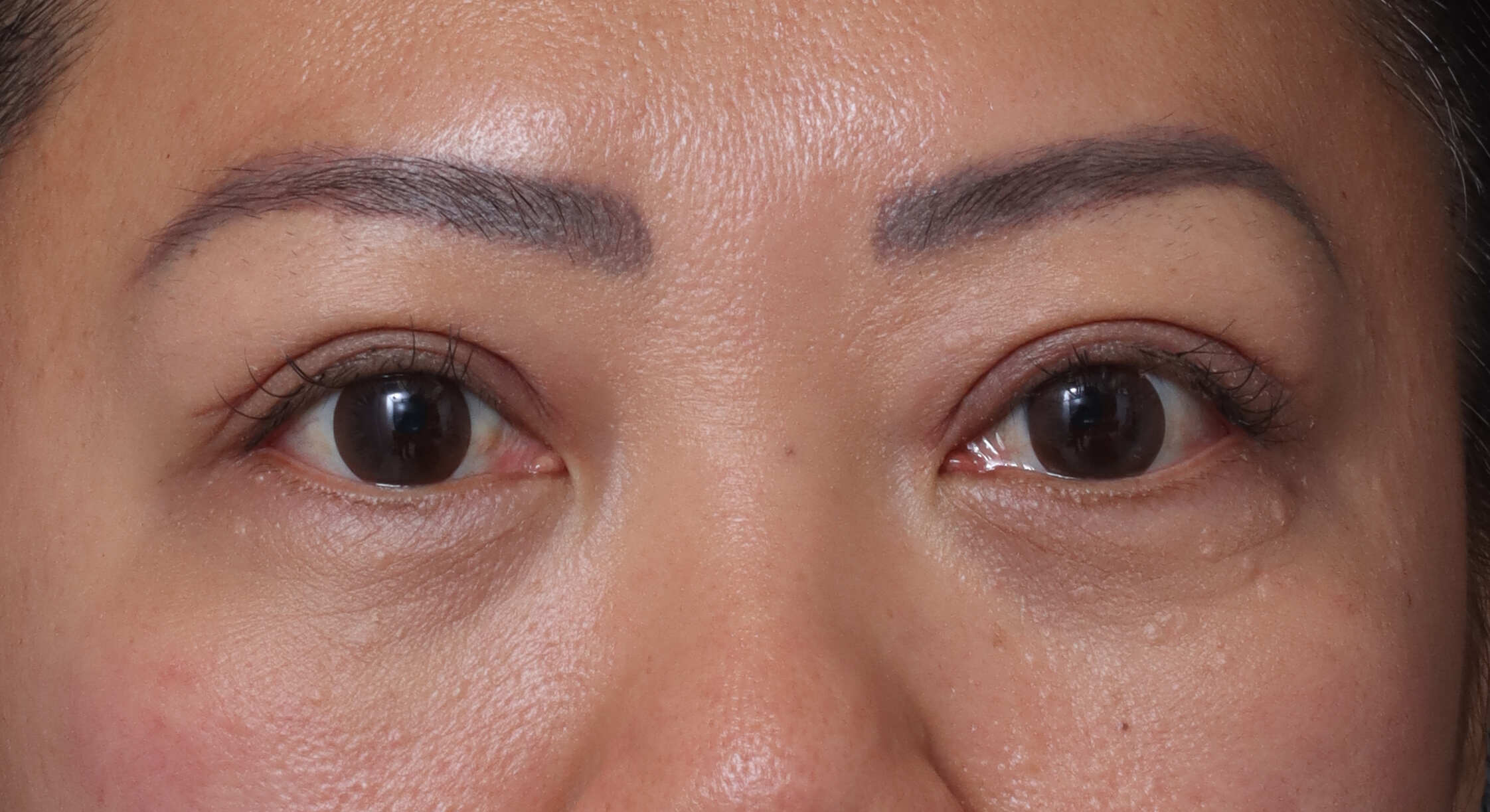
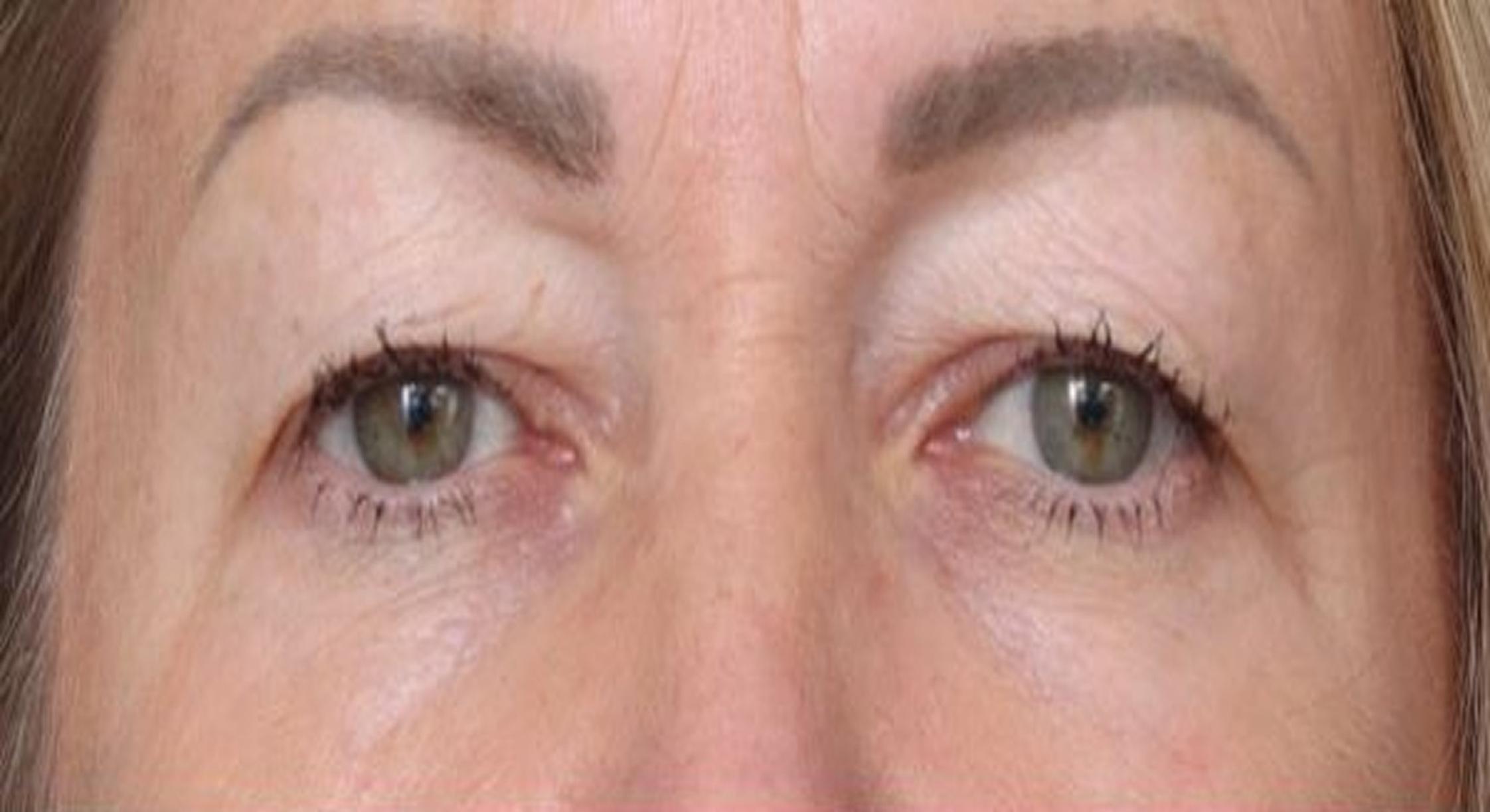

Visit Blepharoplasty Before and After Photo Page
Disclaimer: All surgical or invasive procedures come with inherent risks, and results can vary widely between individuals due to factors like lifestyle, anatomy, overall health, weight, and nutrition. We encourage you to conduct thorough research and consider seeking a second opinion from a qualified healthcare provider.
Risks And Limitations
All procedures have risks, and these need to be clearly understood. General surgical risks include bleeding, infection, delayed wound healing, and scarring. Specific to the eyelids, there can be dryness, irritation, lid malposition, or incomplete eyelid closure. Some people may experience asymmetry or require revision surgery.
Laser treatment carries its own set of risks. Redness may last for weeks, pigmentation changes may occur, and some patients develop small white bumps known as milia. There is also the risk of infection or scarring. Very rarely, if eye protection is not properly maintained, corneal injury can occur. These risks are reduced by careful planning and adherence to aftercare instructions. Warning signs that require immediate attention include severe pain, sudden swelling, reduced vision, fever, or spreading redness.
Lifestyle And Melbourne Considerations
For patients in Melbourne, additional factors should be considered. UV exposure is high for much of the year, and after periocular laser, strict sun protection is essential whenever UV levels are 3 or higher. This usually means using high SPF sunscreen, wearing sunglasses, and avoiding prolonged outdoor activities during the healing phase. Some people prefer to schedule surgery in autumn or winter, when UV levels and outdoor activities are lower.
Travelling from Melbourne to South West Sydney also requires planning. You may need to stay overnight or for several days depending on the procedure. Follow-up visits are important, especially in the early weeks, so travel arrangements should allow for this. In some cases, later reviews can be coordinated with your GP or optometrist locally, but the initial post-operative checks are best done in person. Lifestyle planning also extends to time off work, care of children or dependents, and rescheduling social events until after healing is more advanced.
Do’s And Don’ts For Patients
Before and after combined surgery and laser, patients are given clear instructions. It is important to bring a full list of medications and supplements to your consultation and arrange for someone to help you in the first few days after surgery. Using cold compresses, sleeping with your head elevated, and following the wound care instructions exactly will support your recovery. Wearing sunglasses outdoors and applying SPF50+ when cleared are essential steps.
There are also behaviours to avoid. Smoking and vaping slow healing and increase risks. Rubbing or scratching your eyelids, especially when the skin is flaking after laser, can cause infection or scarring. Contact lenses and make-up should not be used until you have been reviewed and cleared. Strenuous exercise and swimming should be postponed until Dr Kernohan advises that it is safe. Skincare products containing active ingredients such as retinoids or acids should also be avoided near the eyelids until healing is complete.
When To See Dr Michael Kernohan – Specialist Plastic & Reconstructive Surgeon
Dr Michael Kernohan consults in South West Sydney and has extensive experience in both reconstructive and aesthetic eyelid surgery. He provides care in both public and private hospital settings and works closely with other specialists when required. This may include ophthalmologists for complex eyelid or eye surface conditions.
Patients from Sydney can arrange an initial consultation with a GP referral and are encouraged to send clinical photos ahead of time. This allows Dr Kernohan to assess suitability and plan appointments more effectively. Careful, tailored planning is at the centre of his approach, ensuring that treatments are only recommended when appropriate and safe.
FAQs About Blepharoplasty & Laser

Call To Action
If you are considering blepharoplasty & laser, the next step is to arrange a GP referral and book a consultation with Dr Michael Kernohan – Specialist Plastic & Reconstructive Surgeon, South West Sydney. This is an opportunity to discuss your goals, review your health, and explore whether combined or staged treatment may be right for you. It is also the time to ask questions and involve your local healthcare team in your decision-making.
Remember, any surgical or invasive procedure carries risks. It is always wise to seek a second opinion from another appropriately qualified health practitioner before proceeding. With careful assessment and a personalised plan, you can approach treatment with clear expectations and a strong focus on safety.
Further Reading
- Read more about Upper Eyelid Surgery NSW
- Read more about New Advanced CO2 Laser for Smoother Skin
- Read Dr Kernohan’s Blog on Eyelid Ptosis – How Eyelid Surgery Can Help Heavy Eyes
- Read Dr Kernohan’s Blog on What Are Hooded Eyes?
- Read Dr Kernohan’s Blog on CoolPeel Laser – New Advancements Delivering Results

Neck Lift vs Lower Facelift – Which Option Is Right for Different Patients?
Dr Michael Kernohan is a Specialist Plastic & Reconstructive Surgeon in Sydney. A neck lift and lower facelift treat…

How Long Do Facelift Results Last?
Dr Michael Kernohan, Specialist Plastic & Reconstructive Surgeon in Sydney, speaks with many patients who want to know how…

Facelift Scars and Incision Placement: What Patients Should Understand
Dr Michael Kernohan, Specialist Plastic & Reconstructive Surgeon in Sydney, discusses incision placement and scar planning with patients before…