
- Take The Quiz
- Week 1 To 2: Early Recovery Phase
- Week 3 To 6: Adjusting To Mobility
- Week 6 To 12: Strength Returns Gradually
- Beyond Three Months: Refinement And Follow-Up
- Sydney-Specific Recovery Considerations
- Abdominoplasty Before and After Photos
- Do’s And Don’ts After Corset Abdominoplasty
- FAQs About Recovery After Corset Abdo
- Final Thoughts
- Ready To Plan Your Recovery?
Corset abdominoplasty is a more extensive form of traditional abdominoplasty, offering both horizontal and vertical tightening of the abdominal wall. It is often recommended for patients following significant weight loss, where muscle laxity and excess skin affect more than one dimension of the torso. While the results can be significant, the recovery after corset abdo requires commitment, support, and clear planning.
Dr Michael Kernohan, a Specialist Plastic & Reconstructive Surgeon based in South West Sydney, supports his patients through every stage of the surgical process, including the weeks and months of healing that follow. Recovery is not just about rest. It is about carefully paced mobility, wound care, garment use, and follow-up. This guide outlines what patients can expect during each recovery phase and how to work with Dr Kernohan to achieve the best possible outcome.
Take The Quiz
Week 1 To 2: Early Recovery Phase
In the first two weeks following corset abdominoplasty, patients will experience the most noticeable effects of surgery. This includes swelling, abdominal tightness, reduced mobility, and in most cases, surgical drains to help manage fluid accumulation. Most patients are advised to remain slightly bent at the waist to avoid putting pressure on the abdominal sutures. This posture helps protect the internal plication and avoids unnecessary strain.
Compression garments are worn continuously during this phase and are essential for managing swelling and supporting the abdominal area. Dr Kernohan provides guidance on how to wear and adjust these garments. Movement is encouraged but must be slow and purposeful. Short walks around the home can reduce the risk of blood clots and help promote circulation, even during this early stage. Pain is typically managed with prescription medications, and patients are regularly reviewed to monitor their comfort and healing.
Patients may also feel tired, and sleeping positions may need to be adjusted. Many people find it helpful to rest in a reclined position with the knees slightly bent, using pillows to reduce tension across the abdomen. While meals may need to be smaller or lighter initially, a high-protein and nutrient-dense diet can support healing and maintain energy levels.
Week 3 To 6: Adjusting To Mobility

As the body continues to heal, patients will start regaining a greater range of motion. This period is often marked by increasing independence with daily activities, though certain movements, especially those that involve the core, remain restricted. Many people begin to feel more confident about returning to light household tasks, and with approval from Dr Kernohan, some may return to desk-based work or study by week four.
This stage is also when emotional adjustment becomes important. As the body begins to change shape and swelling decreases, it’s natural to pay closer attention to the healing areas and scar lines. Dr Kernohan supports patients through this emotional recovery by offering detailed reviews and reassurance about what is expected versus what may need intervention.
While compression garments remain a part of daily wear, the type or tightness may be adjusted at this point. Dr Kernohan assesses each patient’s progress and modifies garment use as necessary. It is also important to remain alert for signs of fluid retention or wound concerns. Swelling may still come and go, and areas of firmness under the skin are not uncommon. These will usually settle with time and ongoing follow-up care.
During this period, patients can also begin walking longer distances and engaging in very light stretching, though any twisting or straining must be avoided. Proper hydration, nutrition, and gentle mobility continue to support the recovery process.
Week 6 To 12: Strength Returns Gradually
During this stage of recovery, the tight sensation in the abdomen begins to ease. Scar tissue continues to mature, and energy levels start to improve. Many patients are cleared to begin gentle exercise such as walking on inclines, light resistance movements, or supervised stretching. Dr Kernohan provides personalised guidance on when to reintroduce activity, ensuring that any movements are safe for the healing tissue.
Patients often become more aware of their scar location and appearance at this stage. Scar care becomes an important focus, with options such as silicone sheets, pressure garments, or topical treatments forming part of a comprehensive plan for how to manage and treat scars after corset abdominoplasty. In Sydney’s climate, sun protection is vital, as exposure to ultraviolet light can darken new scars. Dr Kernohan often discusses these strategies during follow-up appointments to ensure long-term care of surgical results.
By week twelve, many people are feeling more like themselves and may resume driving longer distances, working full days, and performing low-impact fitness activities. However, heavy lifting and high-intensity workouts should still be avoided unless explicitly cleared. Listening to the body is essential. Any pain, swelling, or unusual changes should be reported to the clinic.
Beyond Three Months: Refinement And Follow-Up
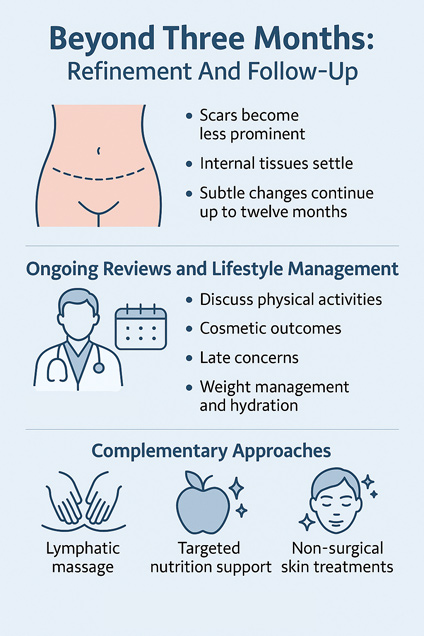
While the most intensive part of recovery may be over by the three-month mark, healing continues for many months. Scars become less prominent, internal tissues settle, and the abdomen starts to reflect the full benefit of the procedure. It is normal for subtle changes to continue up to twelve months post-operatively.
Dr Kernohan schedules ongoing reviews with patients in his South West Sydney clinic to ensure that long-term healing is progressing as expected. These appointments provide an opportunity to discuss physical activities, cosmetic outcomes, and any late concerns such as changes in sensation or firmness. Patients are reminded that consistent weight management and hydration remain important well beyond the early stages of healing. Even small lifestyle choices can influence surgical outcomes over time.
Some patients may explore complementary approaches at this stage, such as lymphatic massage, targeted nutrition support, or even non-surgical skin treatments to enhance texture. All such additions should be discussed with Dr Kernohan to ensure safety and appropriateness for each case.
Sydney-Specific Recovery Considerations
Recovering in Sydney presents both practical and environmental considerations. Patients must take into account the city’s warm and humid conditions, especially in the summer months, when planning their wardrobe and physical activity. Breathable, loose-fitting garments are recommended, and cooling strategies such as fans, air-conditioning, and hydration become part of the recovery toolkit.
Returning to work, commuting, or engaging in social activities should be paced according to Dr Kernohan’s recommendations. Depending on the nature of your role, sitting or standing for extended periods may need to be limited initially. If public transport is part of your routine, plan for reduced travel or flexible hours in the early weeks. Sydney’s active lifestyle is an asset in recovery, especially once walking and gentle exercise are reintroduced. However, outdoor sun exposure must be carefully managed, particularly when surgical scars are still healing.
Planning ahead for the seasons is also beneficial. In the colder months, comfort may be easier to maintain with layered clothing. In warmer periods, priority should be given to staying cool, protected from sun exposure, and adjusting your physical activity to suit the climate.
Abdominoplasty Before and After Photos
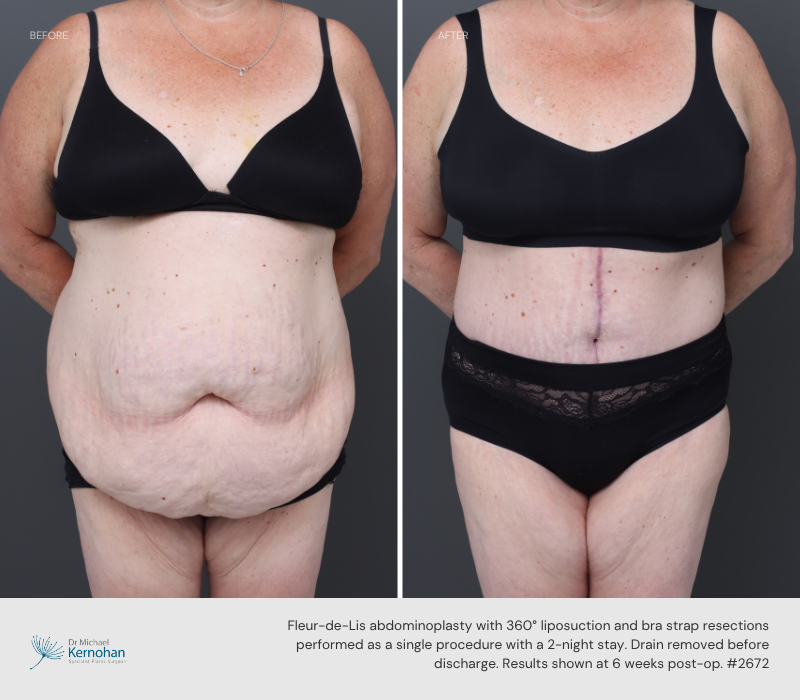
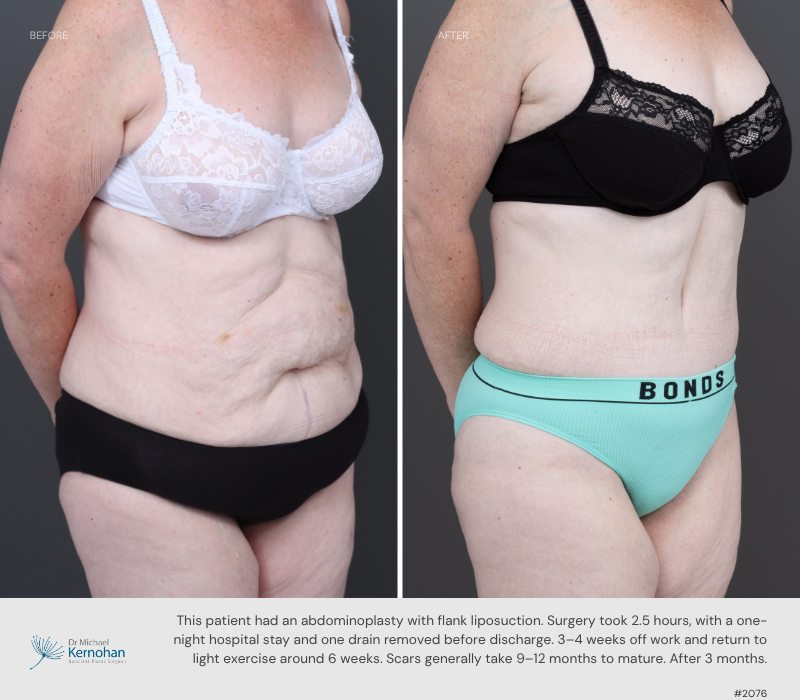
Do’s And Don’ts After Corset Abdominoplasty
Understanding what to do and what to avoid after your procedure is essential. These tips help support safe healing and optimal results.
Do’s – These actions contribute to a more stable and expected recovery:
- Wear your compression garment consistently as advised by Dr Kernohan
- Take prescribed medications as instructed and attend all follow-up appointments
- Maintain hydration and consume a nutrient-dense diet to support tissue repair
- Move gently and regularly to promote circulation and reduce risk of complications
- Use sun protection on healing skin to prevent pigmentation changes
Don’ts – Avoiding these behaviours can help minimise setbacks and complications:
- Do not lift heavy objects or engage in strenuous activity without clearance
- Avoid smoking or alcohol as they can impair healing
- Do not expose healing incisions to direct sunlight or apply unapproved creams
- Do not skip check-ups or dismiss any unusual symptoms without review
Every action during recovery matters. Following these do’s and don’ts under the care of Dr Kernohan gives your body the best chance to heal steadily and successfully.

FAQs About Recovery After Corset Abdo
Final Thoughts
Recovery after corset abdo is a process that unfolds in stages. While the first few weeks require patience and support, the long-term results are shaped by how well patients follow their care plan. Dr Michael Kernohan helps patients through every phase, providing the expertise and reassurance needed to heal well and return to daily life with confidence.
Taking a proactive role in your recovery can support your results and your experience. With the right plan, preparation, and ongoing review, healing becomes a step-by-step journey guided by trusted surgical care.
Ready To Plan Your Recovery?
Planning your recovery is just as important as planning the procedure itself. Dr Michael Kernohan offers personalised consultations and complimentary pre-assessment via photo upload to help patients understand what to expect after a corset abdominoplasty. His clinic in South West Sydney supports patients throughout their journey with detailed guidance, structured reviews, and a focus on safe, realistic outcomes.
If you’re preparing for surgery or considering a corset abdo, take the first step by scheduling a recovery planning session.
→ Contact our team
Phone: 1300 393 899
Email: [email protected]
GP Fax: (02) 8007 0459
1. GREGORY HILLS CLINIC
Gregory Hills Health & Business Centre
Suite 17, 13 Digitaria Drive
GLEDSWOOD HILLS
NSW 2557
2. SYDNEY CITY ROOMS
Surry Hills Clinic 423
423 Bourke Street,
SURRY HILLS
NSW 2010