
- Take The Quiz
- Why Sleep Position Is So Important After Surgery
- Best Position: Sleeping Slightly Upright with Bent Knees
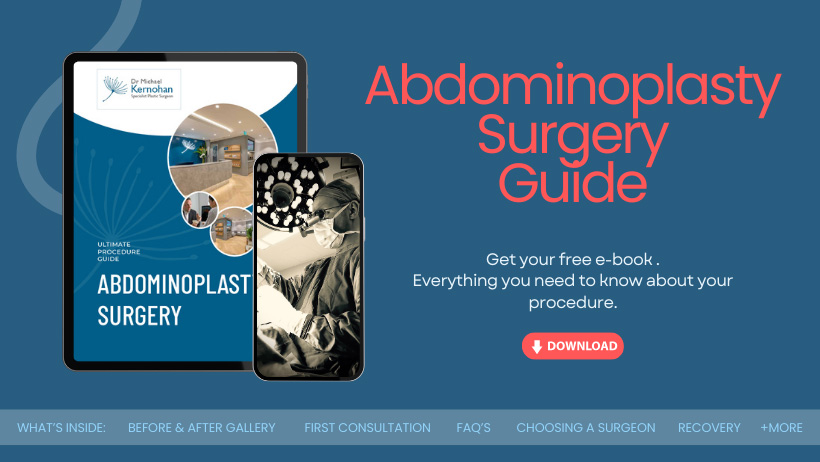
- Download Dr Kernohan's Abdominoplasty Surgery Guide
- Setting Up Your Sleep Space
- Can You Sleep on Your Side?
- Why Stomach Sleeping Needs to Wait
- Abdominoplasty Before and After Photos
- What Can Help You Sleep Better?
- FAQs About Sleeping After Abdominoplasty
- When to Check in With Your Surgeon
- Final Words
- Further Reading
Sleeping properly after abdominoplasty (commonly known as a tummy tuck) is one of the most important aspects of recovery. It’s not always easy – especially in the first few weeks – but there are ways to make it more manageable and protect your healing body.
Dr. Michael Kernohan, a Specialist Plastic & Reconstructive Surgeon based in South West Sydney, regularly supports patients through this phase. He offers practical, clear guidance that helps people rest with fewer disruptions, including patients who travel from Melbourne for their care.
Take The Quiz
Why Sleep Position Is So Important After Surgery
Abdominoplasty involves changes to the abdominal muscles and skin, which can create tightness or pressure across the lower torso. In the first stage of healing, the body needs time to settle without being pulled or stretched in the wrong way.
The way you sleep has a direct effect on:
- How comfortable you feel
- How well the tissues settle
- The level of tension on your incision
According to Dr. Kernohan, one of the best things you can do for your recovery is to avoid positions that place extra pressure on the abdominal area. Wearing proper post-op compression garments also plays a key role in supporting the tissues after surgery and can help reduce swelling, which makes maintaining a comfortable sleep position easier. Sleep is when your body does a lot of quiet repair work – so making sure it happens in a way that supports your surgery is worth the effort.
Best Position: Sleeping Slightly Upright with Bent Knees
The recommended sleep position after abdominoplasty is known as the Semi-Fowler’s position. This means lying on your back with your upper body raised slightly (usually about 30–45 degrees), and your knees gently bent.
This posture helps to:
- Reduce tightness in the abdomen
- Minimise pressure on the incision
- Support a more comfortable rest
A recliner is a good option for many people. Others use firm pillows behind the back and under the knees to mimic that position in bed. Some patients in Melbourne use adjustable beds, which can make the setup more flexible.
Dr. Michael Kernohan often walks through this positioning with his South West Sydney patients during pre-op consultations, and it’s a recommendation that also suits those recovering at home in other parts of Australia.
Download Dr Kernohan’s Abdominoplasty Surgery Guide
Setting Up Your Sleep Space
You don’t need to invest in anything expensive, but a few small changes can help a lot:
- Supportive pillows – Firm cushions help to keep you in the right shape during sleep and can reduce the need to shift around.
- Bedside items – Keep water, pain relief, tissues, and your phone nearby so you don’t need to twist or reach during the night.
- Mattress firmness – A mattress that’s too soft may let your body sink in awkward ways. A firm, supportive surface is better early in recovery.
For Melbourne patients dealing with cooler nights or sudden weather changes, preparing for comfort includes controlling room temperature – warm layers and blackout curtains can go a long way toward promoting restful sleep.
Can You Sleep on Your Side?

Not right away. Side sleeping can put uneven pressure on your healing tissues, and may pull on your incision in a way that feels uncomfortable or risky.
Generally, you’ll need to avoid sleeping on your side for the first few weeks. Some people can start easing into it after week three or four, depending on how they feel and whether their surgeon agrees it’s okay.
Dr. Kernohan regularly checks in with his patients to guide them through this decision. Everyone’s recovery is slightly different, so getting personalised advice is always worthwhile.
Why Stomach Sleeping Needs to Wait
Stomach sleeping is not advised in the early stages of healing. It presses directly on the area that’s been operated on, which can interfere with healing and cause avoidable discomfort.
Even if this is your usual sleep position, it’s best to put it on hold. You may need to wait at least six weeks – or longer – before returning to it. Dr. Michael Kernohan will let you know when it’s safe, based on your individual recovery.
Abdominoplasty Before and After Photos
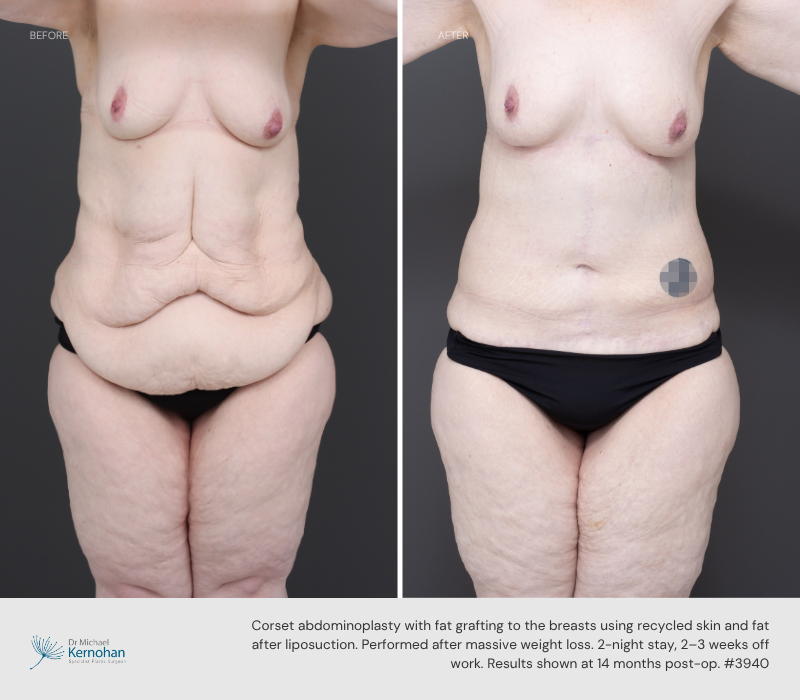
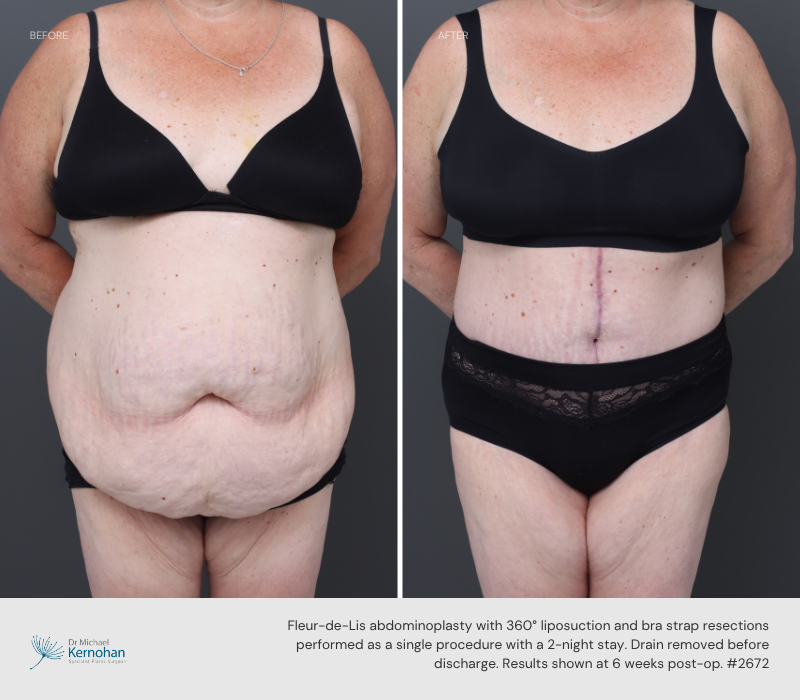

Disclaimer: All surgical or invasive procedures come with inherent risks, and results can vary widely between individuals due to factors like lifestyle, anatomy, overall health, weight, and nutrition. We encourage you to conduct thorough research and consider seeking a second opinion from a qualified healthcare provider.
Visit Abdominoplasty Before and After Photos Page
What Can Help You Sleep Better?
Sleeping through the night can be difficult after surgery. While the right position is key, your routine matters too.
- Stick to a rhythm – Try to go to bed and get up at the same time each day.
- Keep the lights low – A calm, cool, dark room signals to your body – it’s time to sleep.
- Avoid screens at night – Try not to use your phone or TV too close to bedtime. Quiet music or reading can help instead.
- Watch what you eat and drink – Avoid caffeine in the afternoon and heavy meals before bed.
For many patients in Melbourne, setting up a peaceful bedroom environment also includes managing noise and temperature, especially in homes without climate control.
FAQs About Sleeping After Abdominoplasty

When to Check in With Your Surgeon
If you’re finding sleep especially hard or something doesn’t feel right, don’t wait. It’s a good idea to get in touch with your surgeon.
Reach out if you notice:
- Trouble staying comfortable even with recommended positions
- Swelling that increases overnight
- Pain that interrupts your sleep regularly
- Numbness, sharp sensations, or changes near the incision
Dr. Michael Kernohan encourages open communication and provides ongoing support – whether you live near his South West Sydney practice or are recovering in Melbourne.
Final Words
Sleeping properly after abdominoplasty takes some planning, but it’s a critical part of giving your body time to heal.
Dr. Michael Kernohan, Specialist Plastic & Reconstructive Surgeon in South West Sydney, has helped many patients across New South Wales and Victoria understand what to expect and how to rest safely. His advice reflects not just the surgical process but what patients actually go through in the days and weeks after their operation.
The more you understand what’s needed, the more likely you’ll get the sleep your body needs to recover well.
Further Reading
- Read Dr Kernohan’s Blog about Recovery after Tummy Tuck or Abdominoplasty
- Read Dr Kernohan’s Blog about Preparing for Abdominoplasty Surgery
- Read Dr Kernohan’s Blog about Abdominoplasty Scar Treatment, Healing and Fading
- Read Dr Kernohan’s Blog about Wearing Compression Garments after Tummy Tuck- Abdominoplasty
How To Manage And Treat Scars After Corset Abdominoplasty
Undergoing a corset abdominoplasty is a significant step, particularly for patients who have experienced major weight loss or significant…
Tips And Timeline For Recovery After Corset Abdominoplasty
Corset abdominoplasty is a more extensive form of traditional abdominoplasty, offering both horizontal and vertical tightening of the abdominal…

Post-Op Compression Garments After A Corset Abdominoplasty
Dr Michael Kernohan, Specialist Plastic & Reconstructive Surgeon based in South West Sydney, works closely with patients to guide…