

- Take The Quiz
- Understanding Corset Abdominoplasty And Why Compression Matters
- Types Of Compression Garments For Corset Abdominoplasty
- How Long And How Often To Wear Garments For Corset Abdo
- Tips For Choosing, Using And Maintaining Your Compression Garment
- Abdominoplasty Before and After Photos
- When Garment Use Is Critical And What Happens If Mismanaged
- Sydney-Specific Trends And Logistics
- FAQs About Compression Garments For Corset Abdominoplasty
- Final Thoughts
- Let Your Recovery Be Fully Supported
Dr Michael Kernohan, Specialist Plastic & Reconstructive Surgeon based in South West Sydney, works closely with patients to guide them through each step of their recovery journey. This article is written for individuals preparing for or recovering from a corset abdominoplasty, especially those curious about the role of post-operative compression garments.
The focus here is on garments for corset abdo – what they are, why they’re essential, how to wear them properly, and how long to continue their use. Compression is not just about comfort or aesthetics. In procedures like corset abdominoplasty, where the abdominal muscles are repaired and brought together in a corset-like pattern, proper garment support can influence outcomes significantly.
Dr Kernohan tailors every recovery plan to each patient’s individual surgical technique, anatomy, and comfort. Compression garments are part of that support plan and are recommended based on individual healing response, procedure complexity, and daily activities.
Take The Quiz
Understanding Corset Abdominoplasty And Why Compression Matters
What Is A Corset Abdominoplasty?
A corset abdominoplasty is a specialised form of abdominal surgery that not only removes excess skin but also tightens the muscle wall more extensively. This internal reinforcement creates a firm and supportive abdominal core that acts much like a built-in corset.
Why Are Compression Garments So Important?
The muscle repair in this procedure is more significant than a standard abdominoplasty. As a result, external support is vital in the early healing phase. Compression garments help stabilise this internal repair, reduce swelling, support tissue adherence, and provide gentle pressure to promote fluid drainage. Patients who wear compression garments consistently often find the early days more manageable and may have a smoother overall recovery experience.
Types Of Compression Garments For Corset Abdominoplasty
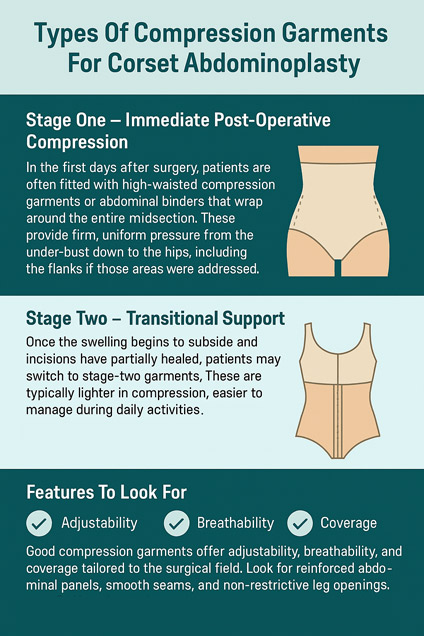
Stage One – Immediate Post-Operative Compression
In the first days after surgery, patients are often fitted with high-waisted compression garments or abdominal binders that wrap around the entire midsection. These provide firm, uniform pressure from the under-bust down to the hips, including the flanks if those areas were also addressed.
Stage Two – Transitional Support
Once the swelling begins to subside and the incisions have partially healed, patients may switch to stage-two garments. These are typically lighter in compression, easier to manage during daily activities, and more comfortable to wear for longer periods. Some include hook or zip closures for easier dressing.
Features To Look For
Good compression garments offer adjustability, breathability, and coverage tailored to the surgical field. Look for reinforced abdominal panels, smooth seams, and non-restrictive leg openings. Dr Kernohan helps patients in South West Sydney select garments that are aligned with their specific procedure and comfort needs.
How Long And How Often To Wear Garments For Corset Abdo
Early Weeks Of Recovery
In most cases, compression garments should be worn continuously – day and night – for at least the first two to three weeks. The pressure helps manage swelling and supports healing tissues as they adjust to their new position. Patients should only remove garments for short periods, such as showering.
Longer-Term Use
After the initial period, many patients continue to wear compression garments during the day or when active. Dr Kernohan may recommend longer use depending on the extent of your corset abdominoplasty or if additional areas (like flanks or hips) were treated. By weeks four to six, some patients begin transitioning into supportive activewear or shapewear alternatives.
Guidance From Dr Kernohan
Patients are given personalised guidance about wearing garments while walking, sleeping, sitting, or during light exercise. Because corset abdominoplasty creates internal tension, using garments during movement is crucial in reducing strain on the surgical site and helping prevent fluid accumulation or wound stress.
Tips For Choosing, Using And Maintaining Your Compression Garment
Preparing Before Surgery
It’s helpful to purchase two compression garments – one to wear and one to wash. Ensure you have your correct pre-operative measurements, and if possible, arrange a fitting session with guidance from the clinic. Having garments ready before surgery means you’re prepared immediately after.
Wearing And Adjusting The Garment
Garments should fit snugly but should not cause pain, shortness of breath, or visible skin indentations. Most patients remove the garment briefly for showers but wear it at all other times. Learn how to inspect your skin daily for signs of irritation or pressure.
Daily Function And Hygiene
Compression garments can make sitting, walking, or using the toilet a bit awkward in the first week. Choose a design with bathroom-friendly openings or panels if possible. Sleeping with your torso slightly elevated and legs bent at the hip can help reduce pressure on the abdominal region.
Garment Maintenance
Follow washing instructions carefully. Use gentle detergent, avoid high heat, and allow garments to fully dry before reuse. Once the garment loses its elasticity or shows signs of wear, it should be replaced. Continued use of stretched-out garments may lead to uneven compression.
Abdominoplasty Before and After Photos
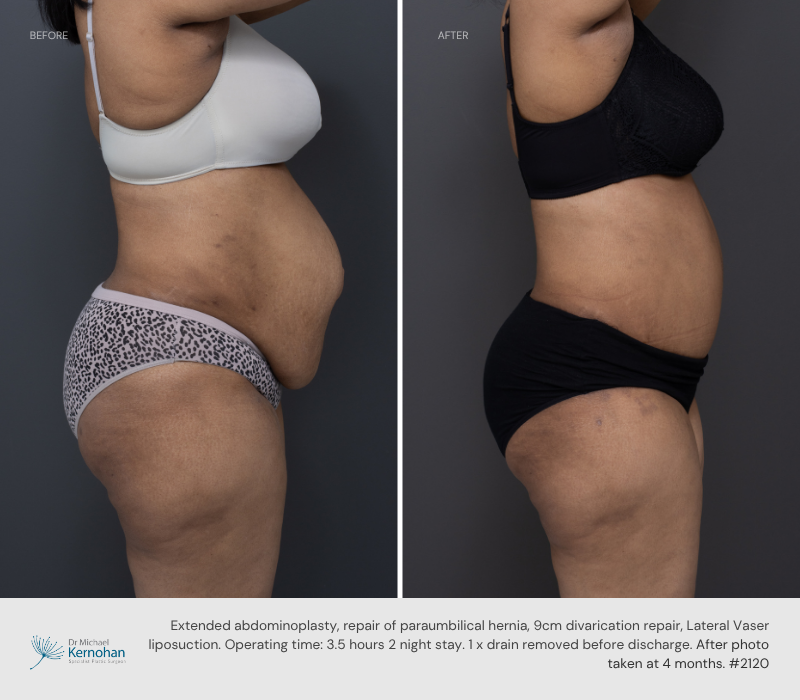
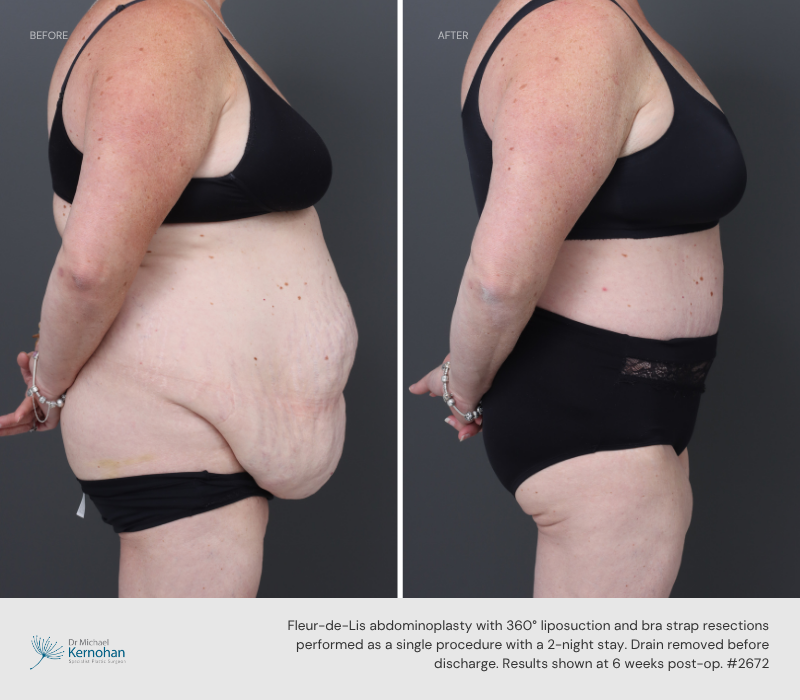
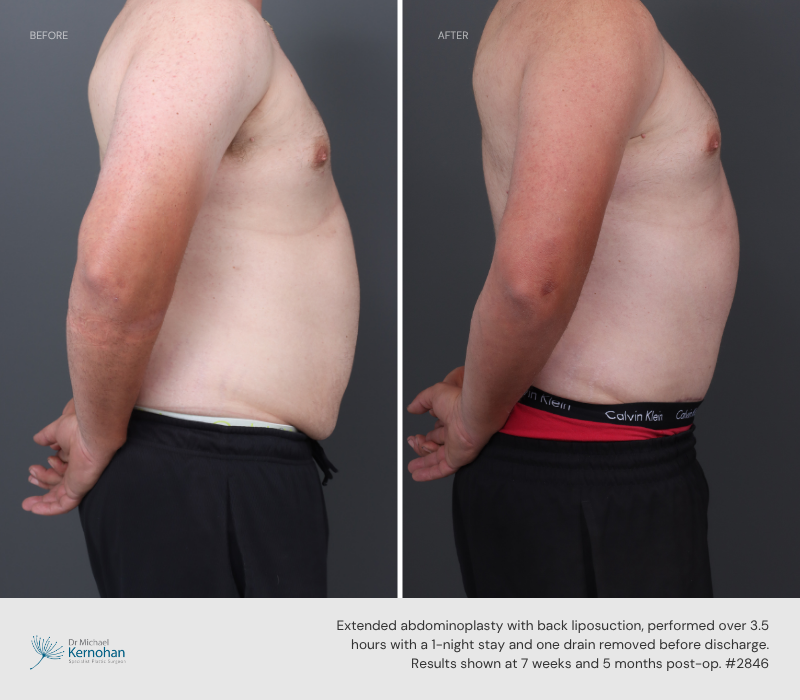
When Garment Use Is Critical And What Happens If Mismanaged
When Extra Support Matters
Patients with liposuction in combination with corset abdominoplasty, extended flank removal, or high BMI may require longer garment use. In these cases, compression is essential for skin retraction and reducing the risk of fluid collection or contour irregularities.
Consequences Of Inadequate Garment Use
Wearing a garment inconsistently or incorrectly may lead to avoidable swelling, delayed recovery, discomfort, or undesired skin folds. In rare cases, neglecting garment use could affect wound healing or the way the muscle repair holds over time.
How Dr Kernohan Supports You
Garment support is part of a bigger picture. Dr Kernohan encourages patients to view compression as just one piece of the recovery puzzle, which includes activity guidance, follow-up appointments, rest, and nutrition. If you experience pain, excess pressure, new swelling, or garment fit issues, his team in South West Sydney will help adjust your care plan accordingly.
Sydney-Specific Trends And Logistics
Access To Medical Garment Fitters
In South West Sydney, many patients have access to post-surgical garment providers who offer fittings either in-clinic or at home. Dr Kernohan’s team can refer you to reliable local providers who understand compression needs after corset abdominoplasty.
Climate Considerations
With Sydney’s humid summers and mild winters, garment breathability and moisture-wicking fabric are essential. Patients may prefer seamless or mesh-backed garments in warmer months. Choosing natural fibre blends can improve comfort during prolonged wear.
Patient Lifestyle In Sydney
Many patients return to office-based work or social outings within 3 to 4 weeks of surgery. Light compression garments under daily clothing can offer continued support without being noticeable. For patients in active professions or frequent commuters, Dr Kernohan’s team tailors recovery timelines based on lifestyle.


FAQs About Compression Garments For Corset Abdominoplasty
Final Thoughts
Post-operative garments for corset abdo play an essential role in recovery. The right garment provides not only physical support but also psychological reassurance during the most sensitive healing phase. Dr Michael Kernohan, Specialist Plastic & Reconstructive Surgeon in South West Sydney, ensures each garment recommendation fits the surgical plan and your lifestyle.
Understanding the importance of proper fit, duration of use, and garment care will help you feel more confident and prepared after surgery. If you’re unsure which garment suits your procedure or need post-op advice, reach out to Dr Kernohan’s clinic for personalised guidance.
Let Your Recovery Be Fully Supported
Your body has undergone a major structural change during corset abdominoplasty – it deserves the right support. Compression garments are more than just accessories; they are a core part of your healing process. Dr Michael Kernohan and his team are here to ensure your post-surgical recovery is guided with expertise and care.
If you’d like to discuss garment options, or need assistance choosing what’s best for your post-op needs, feel free to get in touch.
Contact Dr Michael Kernohan’s Clinic:
South West Sydney – Gregory Hills & Liverpool
Phone: 1300 393 899
Website: www.drmichaelkernohan.com.au
Online Enquiries & Photo Assessment: Available via website contact form