

- Take The Quiz
- Understanding The Thigh Lift Procedure And Its Implications For Scarring
- Thigh Lift Before and After Photos
- Where Are Thigh Lift Scars Located And How Do They Vary?
- What A Thigh Lift Scar Typically Looks Like Over Time?
- Factors That Influence The Appearance Of A Thigh Lift Scar
- How To Support Healing And Minimise The Visibility Of Thigh Lift Scars
- When To Review A Scar Or Seek Specialist Advice
- FAQs About Thigh Lift Scars
- Final Thoughts
- Start Planning Your Recovery Journey With A Clearer View
Dr Michael Kernohan is a Specialist Plastic & Reconstructive Surgeon located in South West Sydney. He provides tailored procedures to suit each patient’s needs and anatomy. This article is intended for individuals exploring whether a thigh lift is right for them, especially those curious about scarring after the procedure.
One of the most common concerns raised during consultations is the appearance and location of a thigh lift scar. Scars are a natural part of healing following surgery. This guide explains how thigh lift scars typically look, how they change over time, and what steps can help support the most refined result possible. As with all procedures, Dr Kernohan provides detailed advice and individualised care to support your recovery.
Take The Quiz
Understanding The Thigh Lift Procedure And Its Implications For Scarring
A thigh lift, or thighplasty, is a surgical procedure that reshapes the thigh by removing excess skin and in some cases underlying tissue. It is commonly sought after significant weight changes, ageing, or where the inner or outer thigh skin lacks firmness. Depending on the extent of skin laxity and your body type, Dr Kernohan may recommend one of several techniques.
Each technique creates incisions in specific areas of the thigh. The type of lift selected will influence where scars are placed and how visible they may be. A smaller lift may involve incisions hidden within natural body folds, while more extensive lifts may require incisions that follow the thigh’s inner or outer line.
The presence of scars is expected following a thigh lift. However, their placement is carefully planned to align with natural contours, clothing lines, and healing patterns. Understanding where and how scars form helps patients set expectations and plan for the recovery process.
Thigh Lift Before and After Photos
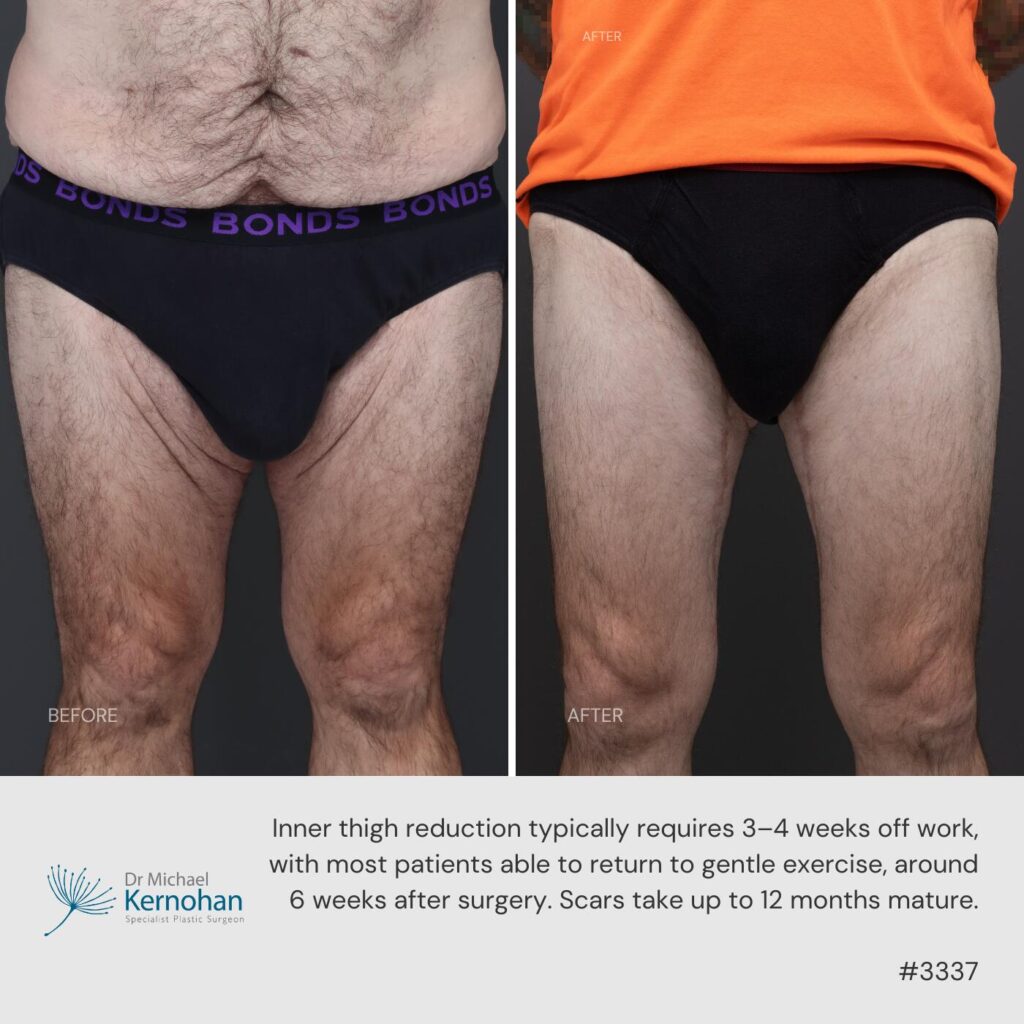

Where Are Thigh Lift Scars Located And How Do They Vary?
Scar placement varies based on the surgical approach used. In a mini or crescent thigh lift, the incision is made along the groin crease and may be limited in length. This method often leaves a scar that is short and well concealed within the natural folds of the body. It is generally suitable for patients with mild to moderate skin looseness restricted to the upper inner thigh.
The medial or inner thigh lift, a more common technique, creates an incision along the groin that extends down the inner thigh. The length depends on the amount of skin to be removed and the location of laxity. This results in a longer scar that may be visible when the thighs are exposed.
A lateral or outer thigh lift involves incisions that begin at the outer hip or upper buttock and curve around the outer thigh. This scar may be longer and positioned in areas that experience more movement, so the healing process can require additional care.
For patients with significant excess skin around the entire thigh and hip, a spiral or full thigh lift may be indicated. This technique includes incisions that extend around the thigh and posterior region, creating the most comprehensive lift but also the most extensive scar.
Each of these scars differs in size, location, and visibility. However, with thoughtful planning and proper care, they can be supported to mature and fade over time.
What A Thigh Lift Scar Typically Looks Like Over Time?
Immediately following surgery, the scar is often red or pink, slightly raised, and may feel firm to the touch. This is a normal part of the inflammatory healing stage. Some mild bruising or swelling around the area can also occur during the first two weeks.
Over the following months, the scar typically begins to flatten and change colour. As healing progresses, it usually fades from a bright pink to a lighter tone that blends more naturally with surrounding skin. The tissue around the scar also becomes softer and more pliable.
By the one-year mark and beyond, most scars settle into a fine line. While it is unlikely that the scar will completely disappear, it can become far less noticeable. The final appearance depends on individual healing factors, skin tone, technique used, and the consistency of scar care during recovery.
It is important to note that even well-healed scars can look different depending on lighting, skin tension, and body movement. Some patients may find their scars nearly imperceptible, while others may have lines that remain slightly visible. Dr Kernohan helps guide each patient through the long-term process of scar management.
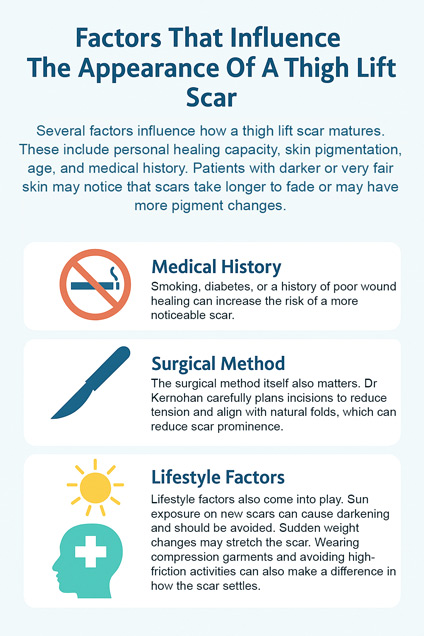
Factors That Influence The Appearance Of A Thigh Lift Scar
Several factors influence how a thigh lift scar matures. These include personal healing capacity, skin pigmentation, age, and medical history. Patients with darker or very fair skin may notice that scars take longer to fade or may have more pigment changes.
Smoking, diabetes, or a history of poor wound healing can increase the risk of a more noticeable scar. Following Dr Kernohan’s pre-operative and post-operative instructions is a critical part of ensuring the best outcome. This includes avoiding nicotine, staying hydrated, and adhering to wound care directions.
The surgical method itself also matters. Dr Kernohan carefully plans incisions to reduce tension and align with natural folds, which can reduce scar prominence. He uses meticulous closure techniques to support the formation of a fine-line scar where possible.
Lifestyle factors also come into play. Sun exposure on new scars can cause darkening and should be avoided. Sudden weight changes may stretch the scar. Wearing compression garments and avoiding high-friction activities can also make a difference in how the scar settles.
Setting realistic expectations and keeping open communication with Dr Kernohan helps ensure patients are informed and supported throughout their recovery in South West Sydney.
How To Support Healing And Minimise The Visibility Of Thigh Lift Scars
The steps you take before and after surgery play a major role in how your scar develops. Preparing for surgery by quitting smoking, eating a balanced diet, and maintaining a stable weight sets the stage for better healing.
After surgery, wound care becomes the focus. Keeping the incision clean and protected is essential. You may be advised to use specific dressings, avoid friction in the area, and wear supportive garments. These actions help reduce inflammation and support tissue regeneration.
As healing progresses, Dr Kernohan may recommend using silicone gel or sheets. These can help flatten and lighten scars when applied consistently. Scar massage may also be introduced, using gentle pressure to promote flexibility and reduce tightness.
Sun protection cannot be overstated. UV exposure can darken scars permanently, especially in the early healing stages. Wearing clothing that covers the area or applying broad-spectrum sunscreen is an essential long-term habit.
In some cases, patients may explore advanced treatments for visible scarring after full healing. Options such as fractional laser, microneedling, or topical therapies may be discussed during follow-up visits. These treatments are offered only after the scar has fully matured and been assessed by your surgeon.
When To Review A Scar Or Seek Specialist Advice
Some changes in the scar’s appearance are normal and part of the body’s repair process. However, certain signs may indicate a need for medical review. These include increasing redness, thickened or raised scar tissue that continues to grow, or areas that feel excessively hard or tender.
In particular, if your scar becomes very firm, itchy, or starts to extend beyond the original incision line, this could suggest hypertrophic or keloid scarring. While not dangerous, these types of scars may benefit from early intervention and monitoring.
Any signs of infection, such as persistent warmth, fluid leakage, or separation of the wound edges, should be addressed without delay. Contact Dr Kernohan’s South West Sydney clinic if you notice anything that seems unusual.
Even months after surgery, a scar can be reviewed and monitored. Dr Kernohan schedules regular check-ups as part of your post-operative plan to support recovery and address any cosmetic or functional concerns.

FAQs About Thigh Lift Scars
Final Thoughts
A thigh lift scar is a predictable outcome of the surgery, and one that can often be well managed with care and planning. The location and size of the scar depend on the surgical technique, the amount of skin removed, and your individual anatomy. With the right support and follow-up, most patients see their scars fade and soften over time.
Dr Michael Kernohan, Specialist Plastic & Reconstructive Surgeon in South West Sydney, works closely with patients to develop realistic expectations and practical recovery strategies. By understanding the full picture of what to expect from a thigh lift scar, you’ll be better equipped to make informed decisions and feel prepared for your journey.
If you have specific concerns about how your scar may appear or are considering a thigh lift in the future, Dr Kernohan and his team are available to discuss your goals and provide guidance tailored to your body and lifestyle.
Start Planning Your Recovery Journey With A Clearer View
Thigh lift surgery can be a step toward greater comfort and movement, but understanding your scar journey is just as important. Dr Michael Kernohan offers individualised care and support to help you prepare, heal, and monitor your scar over time. If you’re exploring your options or already planning surgery, consider booking a consultation or sending photos to Dr Kernohan’s South West Sydney clinic for a complimentary photo assessment. We’re here to guide you through every step with honest advice and clinical care.

Medicare for Thigh Lift Surgery
Medicare Coverage for Thigh Lift Surgery Thigh lift surgery, a procedure designed to reshape the…

What Does A Thigh Lift Scar Look Like?
Dr Michael Kernohan is a Specialist Plastic & Reconstructive Surgeon located in South West Sydney….