
- Take The Quiz
- Understanding Fat Transfer To Breasts
- The First Few Days After Surgery
- Caring For Donor Sites
- Caring For The Breasts After Fat Transfer
- Activity And Exercise During Recovery
- Lifestyle Factors That Support Healing
- Long-Term Breast Fat Recovery Insights
- Common Patient Concerns
- The Role Of Follow-Up Care
- Lifestyle In Melbourne And Recovery Considerations
- Dr. Michael Kernohan’s Perspective
- Final Notes And Next Steps
- FAQs About Breast Fat Recovery
- Next Steps
- Further Reading
Breast fat transfer is a surgical procedure that uses a patient’s own fat to adjust breast shape. Recovery plays a central role in the outcome and can influence how the final results appear and feel over time. As Dr. Michael Kernohan – Specialist Plastic & Reconstructive Surgeon in South West Sydney explains, healing is just as important as the surgery itself. When patients understand what to expect, they can better prepare themselves for each stage of recovery.
This page explores practical tips for breast fat recovery, based on clinical experience and evidence-based care. Patients in Sydney often lead active lives, making a structured approach to recovery especially important. Recovery requires planning, patience, and partnership with the treating surgeon, as no two patients will have exactly the same experience.
Take The Quiz
Understanding Fat Transfer To Breasts
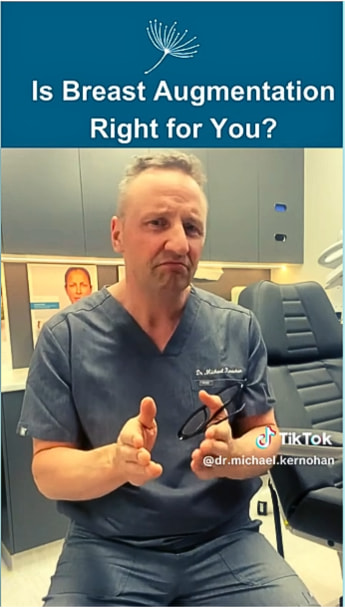
Fat transfer to breasts, also known as autologous fat grafting, is a procedure where fat is removed from one part of the body, processed, and then injected into the breasts. This approach uses the patient’s own tissues, reducing the need for implants and creating a natural feel. The process involves both donor sites, where fat is taken from, and recipient sites, which in this case are the breasts. Both areas must heal in different ways. While some of the transferred fat is naturally reabsorbed, the remaining cells that survive and revascularise generally stay long-term. This makes careful post-operative care vital. Understanding that results are gradual and not immediate can help set realistic expectations. In Sydney, many patients are drawn to fat transfer for its use of natural tissue and the potential to reshape more than one part of the body at the same time, but the recovery process is key to achieving meaningful long-term outcomes.
The First Few Days After Surgery
The first week after surgery is often the most noticeable in terms of symptoms and physical limitations. Patients can expect swelling, bruising, and tenderness in both the donor sites and breasts. Some fluid leakage from incision sites may occur, which usually settles quickly. It is normal to feel a sense of heaviness in the breasts as tissues adjust. Rest during this period is essential, though light walking is encouraged to promote circulation and reduce the risk of blood clots. Keeping surgical sites clean and dry supports early healing, while prescribed dressings or tapes help protect incisions. Pain relief and antibiotics may be prescribed depending on the procedure and the patient’s overall health. Initial follow-up visits with Dr. Michael Kernohan in South West Sydney helps confirm everything is progressing as expected, and provides reassurance during the first days when questions are most common.
Caring For Donor Sites
Fat is often harvested from the abdomen, thighs, or flanks. Recovery for these areas typically involves a period of swelling and bruising, which peaks in the first week and gradually subsides over several weeks. Compression garments are usually worn to reduce swelling, limit fluid build-up, and support tissues as they settle. Gentle mobility helps reduce stiffness and improves circulation, but heavy lifting or twisting should be avoided in the early phase of recovery. Some patients may notice temporary numbness or altered skin sensitivity in the donor areas, which usually improves with time as nerves adjust. In Melbourne, where walking and cycling are common activities, it is important to gradually reintroduce these movements only when cleared by the surgeon. The donor sites, though often less visible than the breasts, play a critical role in overall recovery and should not be overlooked.
Caring For The Breasts After Fat Transfer
The breasts require different care compared to donor sites because they are the recipients of transplanted fat cells. These cells need to establish a new blood supply to survive. This is why avoiding pressure on the breasts in the early stages is so important. Patients should avoid lying on their stomachs or wearing tight clothing that compresses the breasts. Swelling and firmness are common, and some patients notice temporary lumps or nodules as fat stabilises. These usually soften over time as the body adapts. Non-underwire bras are recommended for the first few weeks, as they provide gentle support without compressing the breasts. Applying ice packs directly to the breasts is discouraged because extreme cold can compromise blood supply to the grafted fat. Any unexpected changes, such as increased redness, discharge, or persistent pain, should be reported promptly to Dr. Michael Kernohan, Specialist Plastic & Reconstructive Surgeon. By protecting the breasts in this early stage, patients are giving the transferred fat cells the best chance to thrive.
Activity And Exercise During Recovery
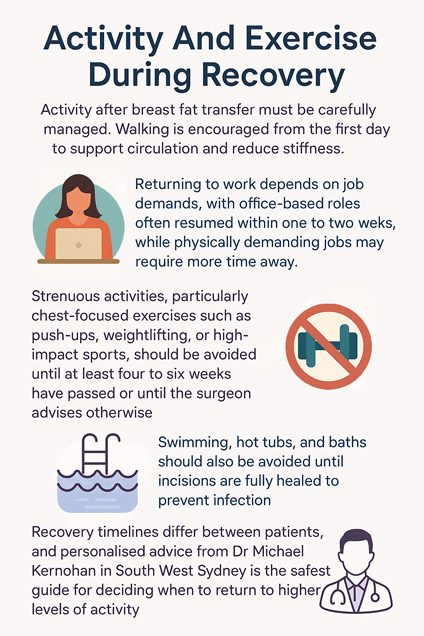
Activity after breast fat transfer must be carefully managed. Walking is encouraged from the first day to support circulation and reduce stiffness. Returning to work depends on job demands, with office-based roles often resumed within one to two weeks, while physically demanding jobs may require more time away. Strenuous activities, particularly chest-focused exercises such as push-ups, weightlifting, or high-impact sports, should be avoided until at least four to six weeks have passed or until the surgeon advises otherwise. Swimming, hot tubs, and baths should also be avoided until incisions are fully healed to prevent infection. For those in Melbourne who lead active lifestyles, it can be challenging to slow down, but pacing recovery is essential. Recovery timelines differ between patients, and personalised advice from Dr. Michael Kernohan in South West Sydney is the safest guide for deciding when to return to higher levels of activity.
Lifestyle Factors That Support Healing
Certain lifestyle choices can strongly influence the quality of breast fat recovery. Nutrition plays a significant role, with a balanced diet rich in protein, vitamins such as A, C, and D, and minerals such as zinc and iron supporting wound healing. Adequate hydration maintains circulation and tissue repair. Weight stability is also important, as significant fluctuations can affect the long-term survival of fat cells and overall results. Avoiding smoking and alcohol is essential, as both can impair blood supply to fat cells and slow healing. Nicotine in particular has been shown to reduce graft survival. Sleep positioning also matters, and back or side sleeping is recommended to protect the breasts during early healing. In addition, avoiding direct sun exposure to scars or donor sites during the first months reduces the risk of pigmentation changes. Patients who follow these measures often find recovery more manageable and outcomes more predictable.
Long-Term Breast Fat Recovery Insights
The long-term recovery from breast fat transfer requires patience. Transferred fat cells that establish blood supply generally remain in the breasts permanently. However, not all transferred fat survives, and results vary between patients. Some reabsorption of fat is expected, which means volume changes can occur. In certain cases, additional procedures may be considered in the future. Final outcomes may take several months to become clear as swelling settles and tissues stabilise. During this time, breasts may feel different in texture before gradually softening. Ongoing breast health screening should continue, including participation in BreastScreen Victoria for eligible women in Melbourne. This ensures that any changes in the breast are appropriately monitored while also accounting for the presence of transferred fat, which can occasionally create benign lumps. With realistic expectations and careful follow-up, patients can enjoy stable long-term results.
Common Patient Concerns
It is natural to have concerns during the recovery journey. Swelling that lasts longer than expected can cause anxiety, but it usually improves steadily with time. Asymmetry is also common in the early stages because swelling may settle at different rates between the two breasts. Firmness or small lumps may occur due to fat necrosis or cysts, which often resolve naturally or with time. Some temporary numbness or tingling in the breasts or donor areas may also be noticed, but sensation generally improves as nerves recover. Emotional adjustment is another part of the process. Patients may feel impatient or uncertain about their results while waiting for final outcomes. Open communication with the treating surgeon helps address these feelings and provides reassurance. Dr. Michael Kernohan in South West Sydney encourages his patients to reach out whenever they have questions during recovery, as reassurance is a vital part of care.
The Role Of Follow-Up Care
Follow-up care is not simply about checking wounds. It is an essential part of the breast fat recovery process. Appointments with Dr. Michael Kernohan in South West Sydney allow close monitoring of healing and provide the opportunity to answer questions. They also enable the early detection of any concerns, which can then be managed before they develop further. Adjustments to recovery plans are often made during follow-up visits depending on how an individual is progressing. Regular follow-up also ensures that ongoing breast health assessment continues in line with standard guidelines, reinforcing the importance of routine care alongside recovery from surgery. These visits are not only clinical but also provide reassurance, reminding patients that recovery is a shared journey between patient and surgeon.
Lifestyle In Melbourne And Recovery Considerations
Patients in Melbourne often lead busy and active lives, which can influence recovery needs. The city’s strong fitness culture means many patients are eager to return to group exercise and gym training as soon as possible. Careful pacing is essential to prevent complications. Work schedules also play a role, and flexible arrangements such as working from home or reduced hours can ease the transition back to daily tasks. Melbourne’s climate, which can be warm in summer and cool in winter, requires practical adjustments, as compression garments may feel hot during warmer months. Wearing light, breathable clothing can make them more comfortable. Social life is another consideration. Many Melbourne patients have active social calendars, and planning time for recovery before resuming regular activities helps reduce stress and supports healing. Considering these lifestyle factors alongside medical advice ensures a smoother recovery.
Dr. Michael Kernohan’s Perspective
“Recovery is not just about waiting for time to pass – it’s about active care, attention to detail, and open communication between patient and surgeon. Each person’s journey is different, and recovery plans should reflect that.” – Dr. Michael Kernohan, Specialist Plastic & Reconstructive Surgeon in South West Sydney. These words reflect a philosophy of personalised care, where recovery is viewed not as a single stage but as an ongoing partnership. Dr. Kernohan’s approach ensures that patients receive support not only during surgery but throughout the entire recovery process, with advice tailored to their health, lifestyle, and goals.
Final Notes And Next Steps
Breast fat recovery is a gradual, stepwise process that requires patience and attention to detail. Caring for both donor sites and breasts is equally important, as both areas play a role in overall healing. Following professional advice ensures safer and more predictable healing. For patients in Melbourne and Sydney, a GP referral is the first step to booking a consultation with Dr. Michael Kernohan in South West Sydney, where individual recovery plans are created with safety and long-term results in mind. Recovery is a journey that requires commitment, and patients who understand and follow guidance tend to navigate this stage more smoothly.

FAQs About Breast Fat Recovery
Next Steps
If you are considering fat transfer to breasts, speak with your GP about a referral to Dr. Michael Kernohan – Specialist Plastic & Reconstructive Surgeon in South West Sydney. Personalised recovery guidance is an essential part of your care plan, and each recovery journey is supported step by step with professional follow-up. Whether you are in Sydney or Melbourne, planning ahead and working closely with your surgeon ensures a safer and more informed recovery experience.
Further Reading
- Read more about Breast Surgery NSW
- Read Dr Kernohan’s blog on Treating Breast Asymmetry – Can Fat Transfer Help?
- Read Dr Kernohan’s blog on What is Natural Breast Augmentation?
- Read Dr Kernohan’s blog on How Can I Enlarge My Breasts?