
- Take Quiz
- What Are Fleur De Lis Scars?
- Healing and Scar Maturation
- Role of Specialist Care in Managing Scars
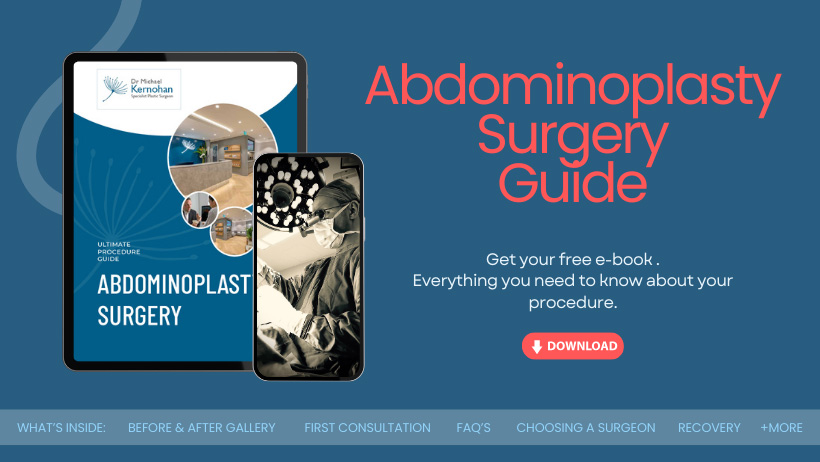
- Download Dr Kernohan's Abdominoplasty Surgery Guide
- Practical Ways to Manage FDL Scars
- Long-Term Care and Realistic Expectations
- Abdominoplasty Before and After Photos
- What Patients in Melbourne Should Know
- When to Ask for Help
- FAQs About Managing and Treating Fleur De Lis Scars
- Final Note
- Further Reading
Choosing a Fleur De Lis (FDL) abdominoplasty is often part of a broader journey, particularly for people who have lost a large amount of weight. The surgery removes excess skin from both vertical and horizontal vectors of the abdomen. The trade-off for this removal is a visible scar shaped like an inverted “T”.
Dr. Michael Kernohan, a Specialist Plastic & Reconstructive Surgeon in South West Sydney, often sees patients who have questions about these scars – how long they’ll last, how they change, and what can be done to help them heal well. For many people in Sydney considering this type of surgery, understanding scar care is an important step before going ahead.
Being well-informed about what happens after surgery – not just during it – helps you prepare better and feel more in control of your recovery. This article covers the basics of FDL scars and what you can do to support your healing over time.
Take Quiz
What Are Fleur De Lis Scars?
FDL abdominoplasty creates two main scars: one that runs horizontally across the lower stomach and another that goes vertically down the middle of the abdomen from just below the rib cage. These scars meet in the centre of the horizontal scar, which is why they’re described as “inverted T-shaped”.
This technique is often used for people who have loose skin not only across the lower belly but also in the middle and upper sections. A horizontal cut alone wouldn’t remove enough, so the vertical one is added to get an optimal outcome.
The scars are longer than you’d see with other abdominal procedures, but they’re placed carefully and may fade over time. Dr. Kernohan talks through scar placement and what to expect in every consultation, helping patients make choices with all the facts on the table.
Healing and Scar Maturation
Scars change a lot in the months after surgery. At first, they’re usually firm and red, which is part of the normal healing process. The body is laying down collagen to seal the wound and protect the area.
Scars are often at their worst at around the three month mark, then over the next several months, most scars start to settle. They soften, lose some colour, and become less noticeable. This phase can last a year or more. It’s not always a straight line – some days they’ll look better than others. That’s completely normal.
Dr. Kernohan sees patients regularly after surgery to check how scars are progressing. These check-ins are a good time to ask questions and, if needed, adjust your care routine.
Role of Specialist Care in Managing Scars
Scar care isn’t just about applying creams or wearing sun protection. It starts with a well-planned surgery and continues through follow-up care. That’s why choosing a surgeon who stays involved after the operation matters.
In South West Sydney, Dr. Michael Kernohan supports patients through each stage of recovery. Whether you’re local or travelling from Melbourne, you’re given the tools and support to take care of your skin properly.
If something doesn’t feel right – like if a scar becomes raised or uncomfortable – it can usually be managed more easily when it’s picked up early. Regular follow-up allows Dr Kernohan to monitor healing and offer advice based on how your body is responding.
Download Dr Kernohan’s Abdominoplasty Surgery Guide
Practical Ways to Manage FDL Scars
There are several well-established methods to care for surgical scars. These aren’t one-size-fits-all, and Dr Kernohan will guide you on what’s most appropriate for your situation.
1. Looking After the Area Early On
The first few weeks are about healing, not treating. Keeping the wound clean and following your post-op instructions helps prevent infection and allows the skin to close properly. You’ll be asked to avoid stretching or straining the area so that the scar line doesn’t pull apart or widen.

Even simple things like how you get out of bed or bend over can make a difference.
2. Using Silicone Products
Silicone gels or sheets are one of the most commonly recommended treatments. They’re easy to apply and don’t interfere with daily activities. These products keep the skin hydrated and help reduce scar thickness. They’re usually started a few weeks after surgery, once the skin has healed.
Dr. Kernohan can suggest a product based on your skin type and how your scar is developing.
3. Massaging the Scar
Scar massage may sound unusual, but it can help break down tight or raised tissue. Once you’re cleared to do so, gently massaging the area with clean hands or a recommended cream can improve blood flow and flexibility. It also helps some people feel more comfortable with the area, especially if it feels tight when they move. Massage can also help normalise skin sensitivity.
4. Avoiding Sun Damage
New scars don’t handle sun exposure well. Even brief exposure can cause them to darken in a way that might not fade later. That’s why covering the area or using a high-SPF sunscreen is strongly recommended – especially in places like Melbourne and Sydney where the UV index can be high even in cooler months.
Scar pigmentation is mostly cosmetic, but it can be a concern for many people, particularly when the scar is already in a visible spot.
5. Considering Other Treatments if Needed
In some cases, scars don’t flatten or fade as expected. If this happens, additional options like laser treatments or small injections may be discussed. These are only used when necessary and are chosen based on the type and behaviour of the scar.
Dr. Kernohan takes a careful, case-by-case approach and always explains the benefits and risks of any extra treatment.
Long-Term Care and Realistic Expectations
Healing is gradual. Even if your scar looks intense in the beginning, that doesn’t mean it will stay that way. Most people notice significant softening and fading in the first year, especially if they’ve looked after the area carefully.
What’s also important is how you feel. Many patients say they focus less on their scar as they get used to their new shape and physical comfort improves. That said, it’s perfectly okay to want to minimise the scar’s appearance – your goals are valid either way.
Abdominoplasty Before and After Photos
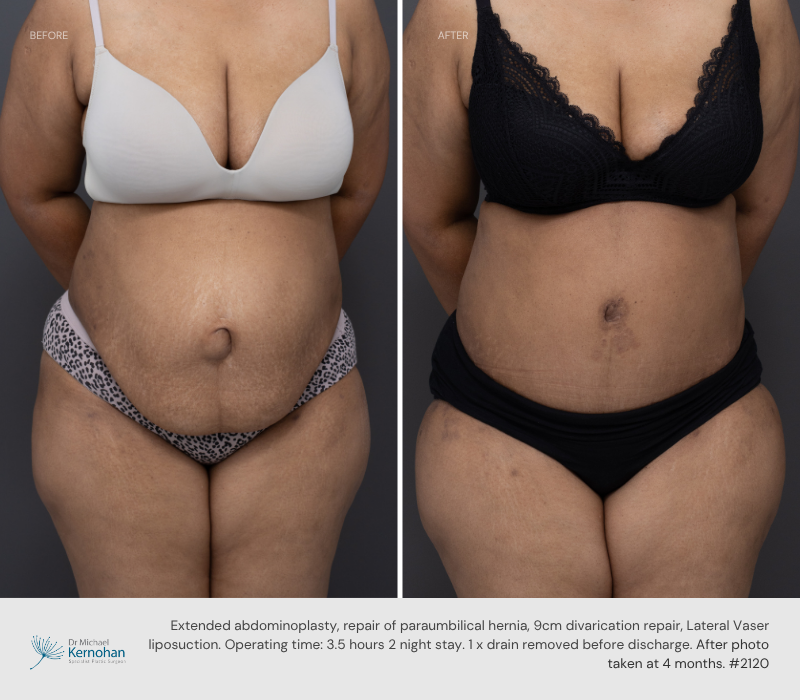

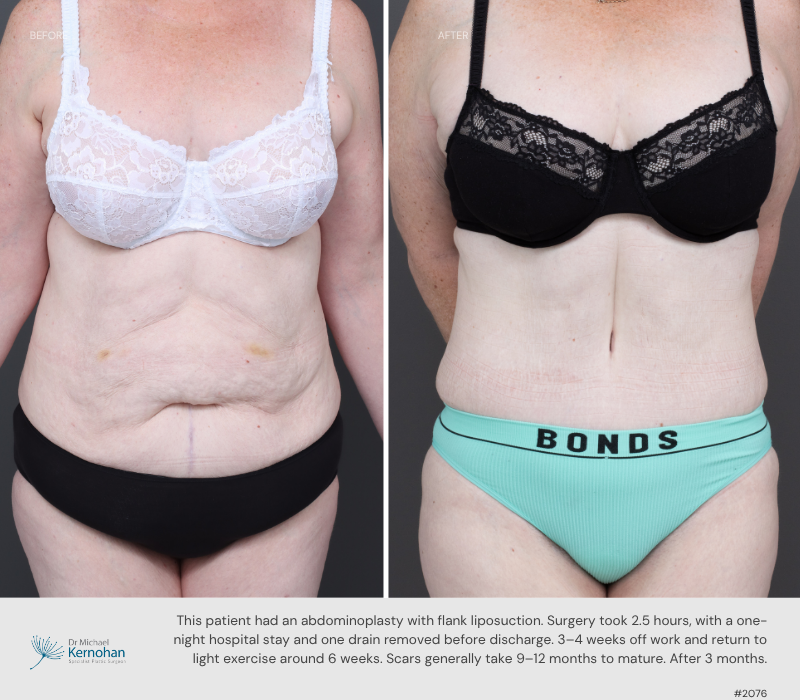
Disclaimer: All surgical or invasive procedures come with inherent risks, and results can vary widely between individuals due to factors like lifestyle, anatomy, overall health, weight, and nutrition. We encourage you to conduct thorough research and consider seeking a second opinion from a qualified healthcare provider.
Visit Abdominoplasty Before and After Photos Page
What Patients in Melbourne Should Know
There’s growing interest in FDL procedures across Melbourne, particularly among people who’ve gone through dramatic body changes. While local access is improving, some patients still travel to South West Sydney to see Dr. Michael Kernohan for his experience with these cases.
Travelling for surgery might feel like a big step, but with proper planning and support, it can be managed well. What matters most is being clear on your goals and making sure your care team can support you before, during, and after your procedure.
When to Ask for Help
Scars don’t always follow a straight path. If your scar becomes raised, itchy, unusually firm, or doesn’t seem to be healing right, it’s worth checking in. Most of the time, reassurance is all that’s needed, but early advice can also prevent small issues from becoming bigger ones.
Dr. Kernohan welcomes follow-up questions, whether it’s weeks or months after surgery. There’s no such thing as a “silly” concern when it comes to your recovery.
FAQs About Managing and Treating Fleur De Lis Scars

Final Note
An FDL scar is part of the result – but it’s only one part. It tells the story of a decision to change something about your body in a lasting, meaningful way. While scars are permanent, they can be cared for, improved, and accepted in ways that make a real difference.
Dr. Michael Kernohan, Specialist Plastic & Reconstructive Surgeon in South West Sydney, provides ongoing care and clear guidance for managing FDL scars. Whether you live nearby or are travelling from Melbourne, you’ll be looked after every step of the way.
Further Reading
- Read Dr Kernohan’s Blog about Preparing for FDL – Fleur De Lis Surgery
- Read Dr Kernohan’s Blog about Tips for Recovery after Fleur De Lis Surgery
- Read Dr Kernohan’s Blog about Will Medicare Cover My Fleur De Lis Surgery?
Preparing for FDL – Fleur De Lis Surgery
Considering Fleur-de-Lis (FDL) surgery often follows significant weight loss or life changes that affect your abdominal area. If you’re…

Tips for Recovery after Fleur De Lis Surgery
Essential Recommendations for Fleur De Lis Abdominoplasty Success The fleur de lis abdominoplasty is a surgical procedure designed to…

Will Medicare Cover My Fleur De Lis Surgery?
Medicare Cover for Fleur De Lis Surgery Navigating the complexities of healthcare coverage can often be confusing, particularly when…