
Many men experience changes in chest shape during their lifetime, particularly during puberty, middle age, or in connection with certain health conditions. When this change is caused by the growth of glandular breast tissue rather than fat, the condition is known as gynaecomastia. For some, the tissue resolves naturally and does not require intervention. For others, however, the concern is persistent, and they seek medical advice to understand their options.
In this article, Dr Michael Kernohan – Specialist Plastic & Reconstructive Surgeon in South West Sydney – addresses the most frequently asked gynaecomastia surgery questions. These are questions that men in both Sydney and Melbourne often raise when they are considering whether surgery might be appropriate for their circumstances. The discussion aims to provide clear, balanced information that explains what gynaecomastia is, when treatment may be considered, what surgery involves, and what men can expect afterwards.
It is important to note that this information is general in nature. It does not replace medical advice and is not a substitute for consultation with your GP or a specialist. Any surgical or invasive procedure carries risks, and you should seek a referral from your GP and consider a second opinion before proceeding.
Take the Quiz
Understanding Gynaecomastia
What Is Gynaecomastia?
Gynaecomastia refers specifically to the enlargement of glandular breast tissue in men. It is distinct from weight-related fat accumulation in the chest, which is sometimes called pseudogynaecomastia. Glandular tissue has a firm, disc-like quality and usually develops beneath the nipple or areola, whereas fat is softer and more evenly spread. In some cases, men may have a mixture of both glandular and fatty tissue, which can make diagnosis and management more complex.
This condition is relatively common. During puberty, many teenage boys experience temporary gynaecomastia due to hormonal changes. In most cases it resolves on its own, but in some it persists into adulthood. In older men, hormonal changes associated with ageing can also trigger breast tissue growth. The condition can occur on one side of the chest or both, and the size of the enlargement can vary from a small, firm disc to more pronounced swelling.
Why Do Men Seek Treatment?
Although gynaecomastia is not usually dangerous, many men seek treatment because it causes them discomfort or uncertainty. Some men notice tenderness in the chest or sensitivity around the nipple, which can be bothersome during daily activities. Others find that clothing fits differently, and fitted shirts or sportswear may highlight the change in chest contour. In Melbourne and Sydney, where outdoor activity and fitness culture are a strong part of daily life, men often report that they become more aware of chest changes when exercising or swimming.
For many, the greatest concern is not pain but the uncertainty of whether the tissue represents something more serious. Seeking advice from a GP or specialist provides reassurance and helps patients understand their options.

Common Gynaecomastia Surgery Questions
Who Is A Candidate For Gynaecomastia Surgery?
Men may be considered for gynaecomastia surgery if glandular breast tissue remains present after other possible causes have been addressed. This is often the case when the tissue has been present for more than a year and shows no signs of improvement. Good candidates are generally in stable health, have maintained a steady weight, and are not affected by conditions that would complicate recovery. Surgery is not usually recommended during puberty, as the condition often resolves naturally during those years.
What Causes Gynaecomastia And When Should It Be Investigated?
Gynaecomastia can arise from a wide range of causes. Hormonal shifts are a common factor, particularly an imbalance between oestrogen and testosterone levels. Certain medications can also contribute, including some used for heart conditions, mental health, or hormonal therapy. Recreational drugs such as anabolic steroids and cannabis are also well-recognised contributors. In other cases, underlying conditions affecting the liver, kidneys, or endocrine system can be responsible.
Medical investigation is important if the change occurs suddenly, is significantly painful, or affects only one side of the chest. These scenarios may require additional tests to rule out other health concerns. A GP is usually the first point of contact, and they can arrange any necessary blood tests or imaging before referral to a specialist.
What Surgical Techniques Are Used?
Surgery for gynaecomastia is tailored to the type of tissue present. If the enlargement is mainly fatty, liposuction can be used to reduce the excess tissue. If firm glandular tissue is involved, excision through a small incision around the areola is often necessary. In many cases, a combination of liposuction and excision is used to achieve a balanced chest contour.
The approach chosen depends on the size of the tissue, the elasticity of the skin, and the patient’s individual anatomy. Dr Michael Kernohan – Specialist Plastic & Reconstructive Surgeon, South West Sydney – uses a tailored approach for each patient, carefully planning the surgery to minimise scarring while addressing the glandular tissue effectively.
What Happens Before Surgery?
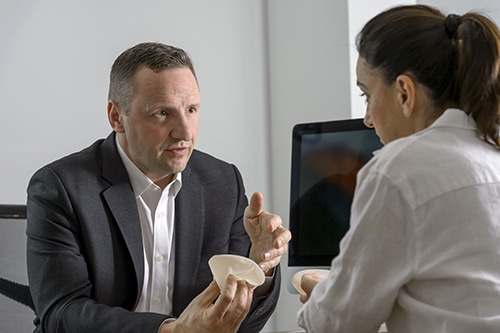
Before surgery is considered, patients need a referral from their GP. At the consultation, Dr Kernohan will review the patient’s full medical history, discuss current medications, and perform a detailed physical assessment. In some cases, blood tests or imaging are required to ensure there is no underlying medical condition contributing to the breast tissue growth.
Pre-operative preparation is important. Patients are given written instructions about fasting, medication adjustments, and lifestyle changes such as stopping smoking. Arrangements for time off work and support at home are discussed. The aim of this process is to ensure patients are well informed and understand both the risks and the expected recovery process.
What Is The Procedure Like?
Gynaecomastia surgery is performed under anaesthesia in an accredited hospital or day surgery facility. The operation usually lasts between one and two hours, depending on the complexity of the case. For liposuction, small incisions are made to insert a fine cannula that removes fat. For excision, a discreet incision is usually made around the areola to allow removal of glandular tissue. If both techniques are required, they are performed together.
After surgery, the incisions are closed with sutures and dressings are applied. Most patients return home the same day once they have recovered from anaesthesia. The chest is supported with a compression garment to reduce swelling and aid healing.
Male Breast Reduction Surgery Guide
What Is Recovery Like?
Recovery is different for every patient, but most men describe the first week as the period when swelling and bruising are most noticeable. A compression garment is worn day and night for several weeks to support the chest and limit fluid build-up. Discomfort is generally managed with prescribed medication, and light walking is encouraged soon after surgery to maintain circulation.
Return to work depends on the nature of the job. Men with office-based roles may resume work after a week, while those with physically demanding jobs may require more time. Strenuous exercise, especially weightlifting and chest training, is usually delayed for four to six weeks. Regular follow-up appointments with Dr Kernohan in South West Sydney are essential to monitor progress and answer questions during the recovery period.
What Are The Risks And Possible Complications?
Like all operations, gynaecomastia surgery carries risks. These include bleeding, infection, and fluid collection under the skin. Some men may notice changes in nipple sensation, which can be temporary or permanent. Scarring is inevitable, although incisions are placed carefully to minimise visibility. Asymmetry or contour irregularities can occur, and in some cases revision surgery may be required.
Dr Kernohan discusses these risks in detail with every patient to ensure they understand what is involved before making a decision about surgery.
Will There Be Scars?
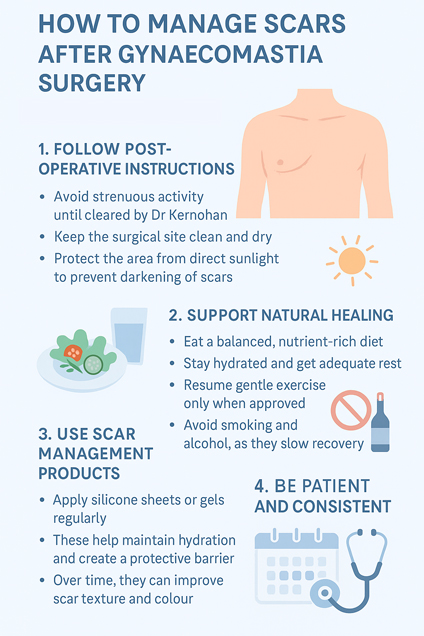
All surgery results in scars, and gynaecomastia surgery is no exception. The scars are usually placed in discreet areas, most often around the edge of the areola or in the natural creases of the chest. Initially they are more visible, appearing red or raised, but over time they fade and flatten. Scar maturation can take 12 to 18 months, and the final appearance depends on factors such as skin type, genetics, and aftercare. Patients prone to keloid or hypertrophic scarring are counselled carefully about this risk.
Will The Breast Tissue Come Back?
Once glandular tissue is surgically removed, it does not usually return. However, recurrence is possible if the underlying causes remain. Men who take anabolic steroids or medications known to cause gynaecomastia are at greater risk of recurrence. Weight gain may also affect chest appearance by increasing fatty tissue. Maintaining a healthy lifestyle and managing medical conditions with a GP or specialist helps reduce this risk.
When Can I Get Back To Exercise And Work?
The timeline for returning to normal activities varies between individuals. Light activity, such as walking, is encouraged soon after surgery. Most men return to work within a week if their role is sedentary, while those with physically demanding jobs may need a few weeks longer. Driving is safe once patients no longer require strong pain medication. Exercise at the gym, particularly chest and upper body workouts, is generally delayed for four to six weeks. Final clearance for heavier activity is always provided during follow-up consultations.
Pre- And Post-Operative Considerations
Preparing For Surgery
Preparation plays an important role in outcomes. Patients are advised to maintain a stable, healthy weight, avoid smoking, and limit alcohol consumption before surgery. Certain medications or supplements may need to be stopped to reduce the risk of bleeding. Pre-operative planning also includes arranging time off work, preparing the home environment for comfort, and ensuring support from family or friends during the early recovery period.
After Surgery
After surgery, following instructions closely is essential. Compression garments are worn as advised, wounds must be kept clean and dry, and patients should attend all follow-up appointments with Dr Kernohan in South West Sydney. Patients are encouraged to monitor their recovery and promptly report any unexpected pain, swelling, or discharge. Long-term aftercare includes maintaining a stable weight and monitoring any hormonal or medication-related issues with a GP.
Gynaecomastia Before and After Photos

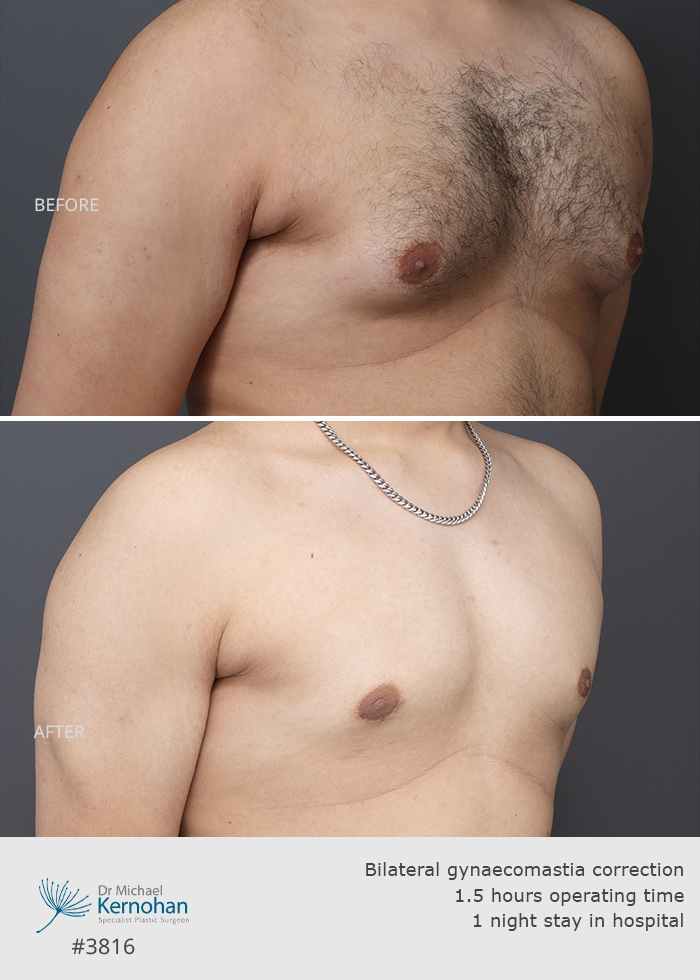
Disclaimer: All surgical or invasive procedures come with inherent risks, and results can vary widely between individuals due to factors like lifestyle, anatomy, overall health, weight, and nutrition. We encourage you to conduct thorough research and consider seeking a second opinion from a qualified healthcare provider.
Patient Concerns And Local Insights
How Do Men In Melbourne Approach Gynaecomastia Surgery?
In Melbourne, men often first consult their GP to discuss changes in chest appearance. GPs play an important role in ruling out medical causes and determining whether referral to a Specialist Plastic & Reconstructive Surgeon is appropriate. As Melbourne has a strong culture of sport and physical activity, many men become more aware of chest changes when exercising, swimming, or wearing fitted clothing. There is increasing openness in discussing these concerns, which helps men seek medical support earlier rather than ignoring symptoms.
Why Choose A Specialist Plastic & Reconstructive Surgeon In South West Sydney?
A Specialist Plastic & Reconstructive Surgeon has undergone years of additional training beyond medical school, including accredited surgical training and rigorous examination. This background ensures a thorough understanding of anatomy, surgical technique, and patient safety. In South West Sydney, Dr Michael Kernohan – Specialist Plastic & Reconstructive Surgeon – offers comprehensive assessment and care for men considering gynaecomastia surgery. Surgery is performed only in accredited hospitals or day surgery centres, ensuring appropriate standards of care and monitoring.

Final Thoughts From Dr Michael Kernohan
“When men come to see me about gynaecomastia, their first question is usually whether they are the only ones experiencing it. The reality is that gynaecomastia is common and affects men of all ages. My role is to help patients understand why it occurs, what their options are, and what surgery involves. Surgery is only one part of the discussion. A clear understanding of risks, realistic expectations, and a careful decision-making process are essential for every patient.”

FAQs About Gynaecomastia Surgery Questions
Call To Action
If you are considering surgery for gynaecomastia, the first step is to speak with your GP. A referral allows you to book a consultation with Dr Michael Kernohan – Specialist Plastic & Reconstructive Surgeon in South West Sydney, where you can receive an individual assessment and discuss your options.
Any surgical or invasive procedure carries risks. You should seek a second opinion from a qualified health practitioner before proceeding.
Further Reading
- Read Dr Kernohan’s Blog on What Causes Enlarged Breasts in Men?
- Read Dr Kernohan’s Blog on What causes Gynaecomastia?
- Read Dr Kernohan’s Blog on When Can I Exercise after Gynaecomastia Surgery?
- Read Dr Kernohan’s Blog on Will Medicare Cover My Gynaecomastia Surgery?
- Read Dr Kernohan’s Blog on Tips for Recovery after Gynaecomastia Surgery

FAQs about Gynaecomastia Surgery – Questions patients ask
Many men experience changes in chest shape during their lifetime, particularly during puberty, middle age, or in connection with…

Gynaecomastia Scars – Treatment, Healing and Fading
Healing Stages and Effective Treatments for Gynaecomastia Scars Gynaecomastia, a term that might seem daunting to understand, refers to…

How to Prepare for Gynaecomastia Surgery
Essential Steps to Prepare for Gynaecomastia Surgery You’ve taken a significant step by deciding to undergo gynaecomastia surgery and…