
Blepharoplasty is a specialised surgical procedure that addresses anatomical changes in the upper and lower eyelids by modifying skin, fat, and muscle in that area. It is not about drastic alteration, but rather a carefully planned adjustment tailored to each person’s facial features.
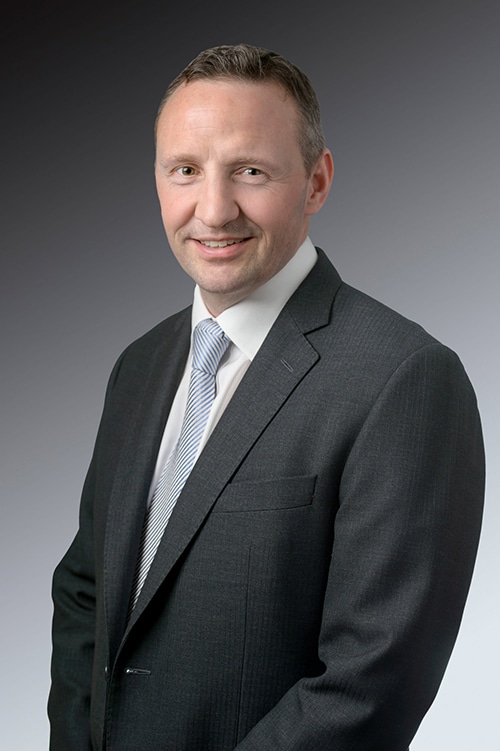
Dr Michael Kernohan is a Specialist Plastic and Reconstructive Surgeon (FRACS) with a main practice in Gregory Hills, located just beyond Camden. He also consults from Surry Hills in Sydney. While not based in Campbelltown, his practice is easily accessible for Camden residents, with private hospital affiliations and well-established patient care pathways.
This article outlines what blepharoplasty involves, who may be considered for it, the surgical methods used, the recovery process, and what to expect when planning surgery with Dr Kernohan.
Understanding What Blepharoplasty May Address
People often explore blepharoplasty when they experience fullness or changes in the upper eyelids, or puffiness beneath the eyes. In the upper eyelids, it can help address excess skin that folds over the natural crease. In the lower eyelids, it may be used to adjust the position or volume of fat that contributes to puffiness.
While the changes are typically subtle, some individuals have noted a shift in how they view certain aspects of their appearance after surgery. However, outcomes vary between individuals. The goal is to reduce excess tissue while maintaining natural proportions. Final results depend on factors such as skin condition, healing response, and adherence to postoperative care instructions.
Who May Be Considered for Eyelid Surgery
Not everyone is suitable for blepharoplasty. During your consultation, Dr Kernohan will assess your facial structure, overall health, and reasons for considering surgery. Suitable candidates may include those who have upper eyelid skin that folds over the natural crease or lashes. Others may experience under-eye puffiness from fat deposits that influence the appearance of the lower eyelid. Having adequate skin tone and stable eyelid support are also important considerations. Candidates should be in good general health and free of medical conditions that could increase surgical risk.
Surgery is not recommended for individuals with unrealistic expectations or health conditions that could impact healing. As always, the decision is based on personalised assessment and clear communication about potential outcomes and limitations.
Take the Quiz
Surgical Techniques for the Upper and Lower Eyelids
Blepharoplasty is tailored to the eyelid area being addressed. The approach varies depending on whether the upper or lower lids are involved, and how much tissue change is required.
Upper eyelid blepharoplasty generally involves an incision made in the natural upper eyelid crease. Through this incision, excess skin is removed. In some cases, fat or muscle may also be adjusted. The incision is then closed using fine sutures, typically placed within the natural crease for a concealed finish.
Lower eyelid blepharoplasty may be performed using a transconjunctival approach. This method involves making an incision inside the eyelid, allowing for adjustment of fat without a visible scar. If the skin also needs to be adjusted, a separate incision just below the lash line may be used. This allows for conservative modification while aiming to maintain natural eyelid shape.
In some situations, both upper and lower eyelids are addressed in the same operation. This depends on the individual’s facial features and preferences. The overall aim is to maintain eyelid function while supporting balanced facial features.
Download Dr Kernohan’s Blepharoplasty Surgery Guide

What to Expect on the Day of Surgery
Surgery is typically performed at one of the accredited private hospitals where Dr Kernohan operates. Once your surgical plan is confirmed and consent is provided, your procedure will be scheduled.
On the day of surgery, you will arrive at the hospital and complete preoperative checks. Dr Kernohan will review your surgical plan and confirm markings. The procedure may be done under local anaesthesia with sedation or general anaesthesia, depending on your individual case.
During the procedure, incisions are placed in natural folds or inside the eyelid to keep them as inconspicuous as possible. Adjustments are made based on the agreed plan. After the changes are complete, the area is reviewed and closed with sutures.
Following surgery, you will be taken to the recovery area where your condition is monitored. Some patients return home the same day, while others stay overnight. You will receive written care instructions and follow-up arrangements before discharge.
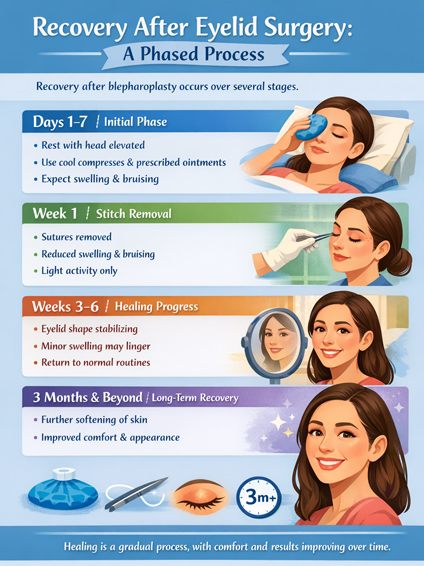
Recovery After Eyelid Surgery: A Phased Process
Recovery after blepharoplasty occurs over several stages.
In the initial few days, it is important to rest with your head elevated to support swelling control. Cool compresses can provide comfort, and any prescribed ointments or eye drops should be used as directed. Some swelling, bruising and tightness are expected during this phase.
By the end of the first week, sutures (if used) are generally removed. Swelling often begins to reduce, and bruising may start to fade. Light activity can resume, but you should still avoid bending, lifting, or placing pressure near the eyes.
Between the third and sixth weeks, healing progresses further. The shape of the eyelid becomes more stable and the skin begins to settle. Minor swelling may persist. Many patients are able to resume normal routines during this period.
From around three months onwards, healing continues. Any firmness in the skin generally softens and blends more easily with surrounding tissue. Although this period varies between individuals, many people report improved comfort and appearance during this time.
For Camden patients, overnight accommodation near the hospital may be beneficial, especially if general anaesthesia is used. It is important to organise transport home and avoid driving until you are cleared to do so.
Blepharoplasty Before and After Photos
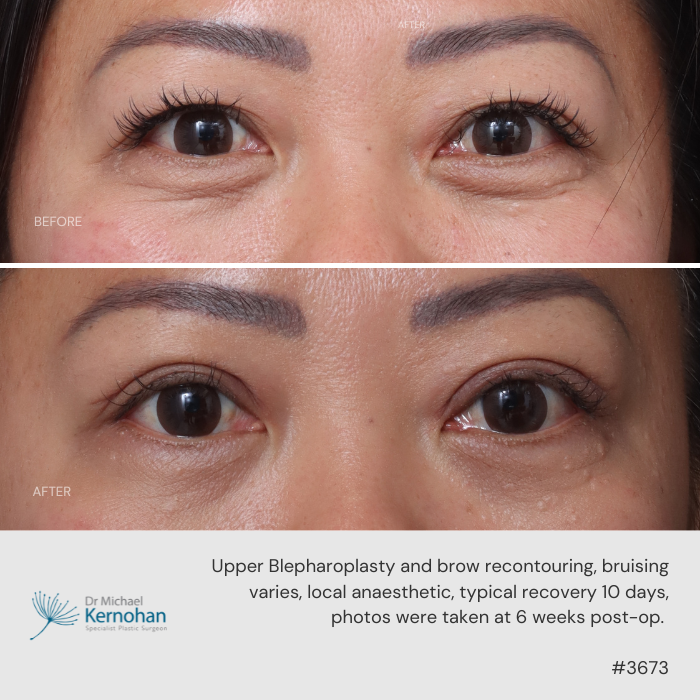
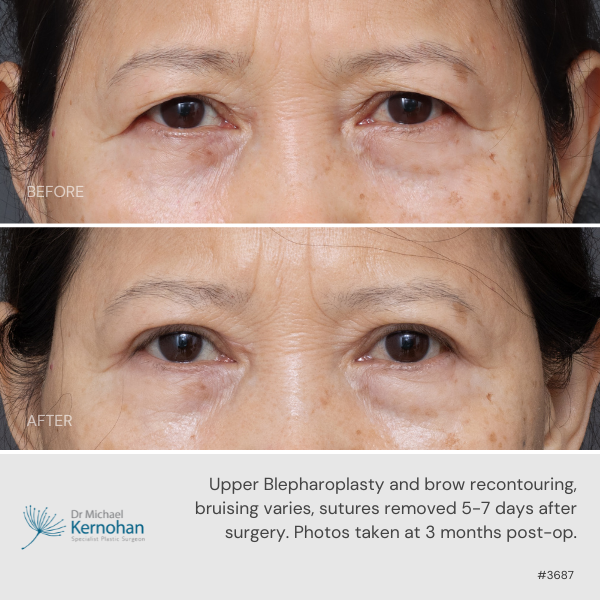

Disclaimer: All surgical or invasive procedures come with inherent risks, and results can vary widely between individuals due to factors like lifestyle, anatomy, overall health, weight, and nutrition. We encourage you to conduct thorough research and consider seeking a second opinion from a qualified healthcare provider.
Looking After the Eyelid Area Long Term
To support long-term outcomes, some basic care principles should be followed. Protect the area from sun exposure by wearing sunglasses and applying appropriate sunscreen around the eyes. Avoid vigorous skincare or rubbing the eyelids, and use mild products that do not irritate the skin.
Attend all scheduled reviews with Dr Kernohan to track your healing. If you notice any concerns such as persistent irritation, swelling, or unexpected changes in the eyelid area, follow up with the clinic promptly.
Over time, natural changes in facial structure can occur. If further assessment is needed in the future, this can be discussed in a clinical setting.
Preparing for Blepharoplasty with Dr Kernohan
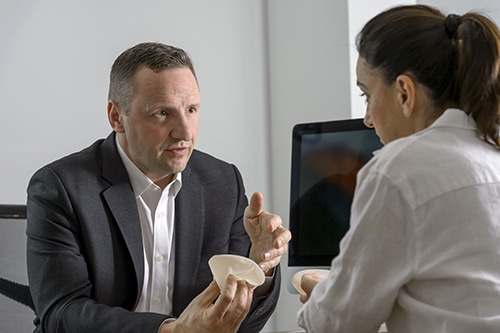
Before surgery, you will meet with Dr Kernohan at either the Gregory Hills or Surry Hills clinic. At this consultation, your health history will be reviewed and your goals will be discussed. A physical examination will guide decisions about the procedure, and photographs may be taken to assist with planning.
You will be given preoperative instructions, including advice on medications and how to prepare for the days surrounding your procedure. Any required investigations may be organised at this time.
A cooling-off period is included before any procedure is booked. This time is provided to help you consider the options and ensure all questions are answered.
Understanding Costs and Surgical Planning
Costs vary based on the surgical approach and what is required for your situation. The Cost and Pricing page provides an overview of consultation structure and what is included in planning.
A personalised written quote will be provided after your consultation. This includes the surgical fee, anaesthesia, use of hospital facilities, and postoperative care. In most instances, blepharoplasty is considered a cosmetic procedure and does not receive Medicare or private health rebates unless functional issues are documented.
All patients are offered a cooling-off period to review their information and discuss their decision with the clinic team.

FAQs About Blepharoplasty Camden
Further Reading
- Read more about Trifecta Lift
- Read more about Facelift Surgery NSW
Why Camden Patients Consider Dr Michael Kernohan
Dr Michael Kernohan has training and qualifications in both medicine and dentistry and is a Fellow of the Royal Australasian College of Surgeons (FRACS). With years of clinical experience across aesthetic and reconstructive procedures, he works with patients to provide informed care tailored to individual needs.
His Gregory Hills clinic is accessible to Camden residents and the broader South West Sydney region. He operates in recognised private hospitals and follows established surgical standards. The clinic team assists patients from the initial consultation through each stage of planning and follow-up.
Planning Your Journey from Camden to Gregory Hills or Surry Hills
Travel from Camden to the Gregory Hills clinic typically takes around 30 to 45 minutes by car. If you plan to visit the Surry Hills location, allow for additional time, particularly during peak periods.
Some patients choose to stay near the hospital following their procedure. Parking is available at both practice locations.
Gregory Hills Clinic: Suite 17, Level 2, 13 Digitaria Drive, Gledswood Hills NSW 2557
Surry Hills Clinic: Level 1, 38–46 Albany Street, Surry Hills NSW 2010
Getting Started with Dr Michael Kernohan
To begin the process, ask your GP for a referral to Dr Michael Kernohan, Specialist Plastic and Reconstructive Surgeon.
Contact Details:
Phone: 1300 393 899
Email: [email protected]
Website: www.drmichaelkernohan.com.au/contact
After receiving your referral, you can arrange a consultation at one of the clinic locations. Dr Kernohan will assess your eyelids and discuss whether surgery is suitable for your circumstances.
Disclaimer: This information is general in nature and does not replace personalised medical advice. It is not intended to encourage or entice patients to have surgery. Surgical suitability, outcomes and risks vary between individuals and will be discussed in detail during your consultation.

Call 1300 39 38 99
Or visit the contact page to send an enquiry: www.drmichaelkernohan.com.au/contact