
Fleur De Lis abdominoplasty surgery, often called FDL abdominoplasty, is a specialised abdominal procedure available with Dr Michael Kernohan, Specialist Plastic & Reconstructive Surgeon, in Gregory Hills, South West Sydney.
This operation is usually considered for people who have lost a significant amount of weight and are left with extra skin in both the vertical and horizontal directions of the abdomen. The aim is mainly reconstructive and functional. It can help reduce heavy folds of skin that interfere with clothing, hygiene and daily comfort.
Dr Michael Kernohan sees patients from Gregory Hills, Campbelltown, Liverpool and the wider South West Sydney region. An in person consultation is essential to assess your health, examine the abdomen and talk through whether Fleur De Lis abdominoplasty is an appropriate option for you. This is major surgery and requires careful planning and realistic expectations about outcomes, scars and recovery.
CLICK to Download Dr Michael Kernohan’s Abdominoplasty Surgery Guide
What is Fleur De Lis Abdominoplasty
Fleur De Lis abdominoplasty is a form of abdominoplasty that uses an incision pattern shaped like an inverted letter T. There is a horizontal incision low on the abdomen and a vertical incision in the midline. Together, these allow removal of extra skin and tissue in both directions, which is often needed after major weight loss when the abdomen has folds in the upper and central regions as well as the lower area.
During the operation, excess skin and fat are removed. In many cases the abdominal muscles, which may have separated during weight changes or pregnancy, can be brought back together with sutures. The remaining skin is then re-draped over the abdominal wall and secured.
The procedure may help reduce overhanging folds of tissue and improve skin contact in the central and upper abdomen. It can also support a firmer abdominal wall when muscle repair is carried out. However, the operation creates permanent scars that are both horizontal and vertical, and this trade off forms a key part of the decision making process.
What Does The procedure Address
Fleur De Lis abdominoplasty is usually considered when standard abdominoplasty is unlikely to remove enough excess skin from the central and upper abdomen.
People who are assessed for this procedure often describe heavy folds of skin that sit over the lower abdomen and sometimes over the upper abdomen as well. These folds can trap moisture and cause friction. This may lead to recurrent rashes, irritation, fungal infections or breakdown of the skin, even when the person maintains good hygiene and uses creams or powders as advised.
Clothing can be difficult to fit comfortably, particularly around the waist and upper abdomen. In warm weather, moisture and heat can make symptoms more noticeable. For many people considering FDL abdominoplasty, the main concerns are practical and medical rather than appearance alone. Any change in contour is discussed as a possible additional effect rather than the only goal.
Who may consider Fleur De Lis Abdominoplasty
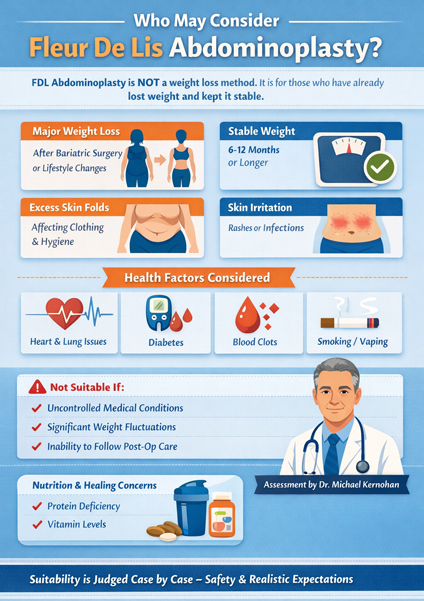
FDL abdominoplasty is not a weight loss method. It is considered only after weight has already been lost and kept stable for some time.
People who may be candidates for this operation often have:
- A history of major weight loss after bariatric surgery, prescribed medicines or lifestyle changes
- Stable weight for several months, often six to twelve months or longer
- Persistent excess abdominal skin that affects clothing, activity or everyday hygiene
- Ongoing skin irritation or infection in the abdominal folds despite non surgical treatments
General health plays an important role in decision making. During consultation, Dr Michael Kernohan will ask about heart and lung conditions, diabetes, past blood clots, smoking or vaping, and other medical issues. Nutritional status may need review, especially if you have had bariatric surgery or long term restrictive diets, as low protein or vitamin levels can affect wound healing.
You may not be a suitable candidate if major medical conditions are poorly controlled, if your weight is still changing significantly, or if your circumstances make it hard to follow post operative instructions and attend follow up visits. Suitability is always judged case by case, with a focus on safety and realistic expectations.
Potential Benefits of Fleur De Lis Abdominoplasty
Like any operation, FDL abdominoplasty cannot guarantee a specific outcome, but there are potential benefits for selected patients.
From a functional and medical point of view, possible benefits include a reduction in moisture and friction between skin folds, fewer episodes of rash or infection in the fold under the abdomen, improved comfort in everyday clothing and easier cleaning and drying of the area. For some people, these changes can make certain daily activities more manageable.
If abdominal muscle repair is performed, some patients report a feeling of better support through the central abdomen for specific movements. This depends on many factors, including pre operative core strength, physiotherapy and any other health conditions that affect posture or mobility.
From an appearance perspective, the abdomen may look flatter with fewer large folds once healing has progressed. However, this is always balanced against the reality of permanent scarring. The horizontal scar sits low on the abdomen and the vertical scar sits in the midline. In some people, scars settle to a fine line. In others, scars can become thick, wide or raised even with careful technique and diligent scar care. This variability is important to understand before deciding on surgery.
Before and After Photos
Many patients find it helpful to see examples of scar placement and the general pattern of changes after surgery. Before and after photographs can assist with understanding what an inverted T scar looks like on the abdomen and how clothing may sit afterwards.
In line with current Australian guidance, any detailed images are best viewed in person with Dr Michael Kernohan or through a practice controlled gallery. This allows proper explanation of the clinical context and the individual nature of each case. All photographs shown will be from patients who have given specific consent for educational use.
These images are used as teaching tools. They are not a promise that your abdomen will look the same as another person’s, because body shape, skin quality, scars and healing patterns vary between individuals.
Consultation for Fleur De Lis Abdominoplasty
Your consultation with Dr Michael Kernohan, Specialist Plastic & Reconstructive Surgeon, is a structured medical appointment. It usually takes place at Suite 17, Level 2, 13 Digitaria Drive, Gledwood Hills NSW 2557.
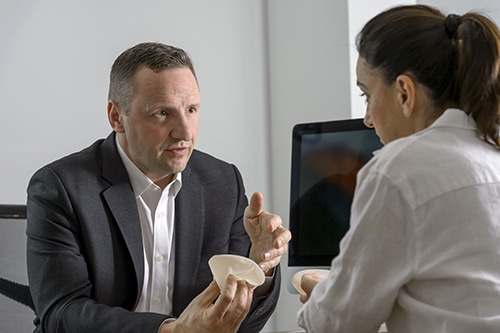
During this visit, Dr Kernohan takes a detailed medical history. He will ask about your weight journey, whether you have had bariatric surgery, past operations, medical conditions, allergies and all current medicines or supplements. Bringing a referral from your general practitioner, along with any letters from other specialists, is helpful.
A physical examination of the abdomen follows. Dr Kernohan assesses the distribution of excess skin and fat, the quality of the underlying muscles and the presence of any hernias or previous scars. He looks at how the abdominal tissue behaves when you stand, sit and bend, as this helps determine whether a standard abdominoplasty, an extended pattern or a Fleur De Lis pattern might be more suitable.
Sometimes additional tests are required. These might include blood tests to check nutritional and metabolic markers, or imaging such as ultrasound or CT scans if there is concern about hernias or other abdominal conditions.
After this assessment, Dr Kernohan explains the possible options. These may range from continued non surgical management, to a more limited abdominal operation, to a full FDL abdominoplasty. He will explain what each approach may help with, what it cannot address, and what kind of hospital stay, scars and recovery are involved.
You are encouraged to ask as many questions as you need, to take notes, and to consider the information carefully before deciding whether to proceed.
How Fleur De Lis Abdominoplasty is Performed
Fleur De Lis abdominoplasty is performed in an accredited hospital under general anaesthesia. Before surgery, you will receive instructions about fasting and medicines, and you will meet the anaesthetist to review your health and anaesthetic plan.
In the anaesthetic bay or operating theatre, the abdomen is marked while you are upright to guide the removal of tissue and the placement of scars. Once you are asleep, the abdomen is cleaned with an antiseptic solution and draped.
The surgeon makes a horizontal incision low on the abdomen, usually within an area that can be covered by underwear. A vertical incision is then made in the midline of the abdomen. The length of these incisions depends on how much excess skin needs to be removed for both function and shape.
The skin and underlying fat are lifted from the abdominal wall, excess tissue is removed, and the remaining tissues are repositioned. If abdominal muscles are separated, they can be brought together with sutures, which may help provide better structural support. In many cases the navel is moved to a new opening in the overlying skin so it sits in a natural location on the reshaped abdomen.
Drains may be placed to remove fluid. The wounds are closed in several layers with sutures. Dressings are applied and a compression garment is usually fitted at the end of surgery. The length of the operation varies with the complexity of your case and whether other procedures are performed at the same time.
Recovery After Fleur De Lis Abdominoplasty
Recovery after FDL abdominoplasty is gradual and requires planning. You should organise time away from work, help with household tasks and, if needed, support with caring responsibilities.
Most people stay in hospital for at least one or two nights. During this time, nurses and doctors assist with pain relief, drain care, early walking and breathing exercises. Physiotherapy or nursing staff may guide you on how to move safely, such as getting out of bed by rolling to your side first.
In the first week or two at home, it is normal to feel tightness and discomfort, especially when standing more upright or using your abdominal muscles. You may walk with a slight bend at the hips to reduce tension on the incision line. Pain relief is usually managed with tablets taken regularly as directed. You should avoid smoking and vaping, as these can affect wound healing.
You will be advised to wear a compression garment for a period of time. This helps support the abdominal tissues and may help reduce swelling. Short, frequent walks are generally recommended, rather than long periods of lying or sitting still, to reduce the risk of blood clots.
Follow up appointments allow Dr Kernohan and his team to check your wounds, remove drains if used, assess for fluid collections and monitor general progress. You will receive tailored advice on wound care, including when showering is allowed, how to dry the area, and when to start scar care measures such as silicone products if they are appropriate for you.
The timing of return to work varies. People with desk based roles may be able to return after a few weeks, while those in physical jobs or roles that involve lifting may need a longer period away. Strenuous exercise, heavy lifting and contact sports should only be resumed after clearance from Dr Kernohan.
Scars continue to evolve for many months. They may be red and firm at first, then gradually soften and lighten. Some patients develop thicker or stretched scars that need ongoing care, which might include silicone, massage or other scar management techniques.
Risks and Possible Complications
All operations carry risks. FDL abdominoplasty involves both general surgical and anaesthetic risks, as well as risks specific to abdominoplasty and the vertical horizontal incision pattern.
General surgical and anaesthetic risks include bleeding, haematoma, infection, delayed healing, and blood clots in the legs or lungs. Anaesthetic complications, though uncommon, can also occur. In some cases, additional procedures or an unplanned return to theatre may be needed.
Specific risks related to Fleur De Lis abdominoplasty include wound healing problems, particularly at the junction where the vertical and horizontal scars meet. This area can be under particular tension. Fluid collections under the skin, known as seromas, may develop and sometimes require drainage. Wound separation or tissue loss at the wound edges can occur, particularly in people with higher body mass index, diabetes, smoking history or nutritional concerns.
Changes in skin sensation around the abdomen, including numbness or altered feeling, are common. While some sensation often returns over time, there may be areas of permanent change. Asymmetry, contour irregularities, dog ear folds at the ends of scars and visible step offs can occur and may need further treatment or revision procedures.
Scars can be wider, thicker or more raised than expected. Even with careful technique and good scar care, some individuals form prominent scars due to genetic and biological factors.
Serious medical complications such as significant blood clots, cardiac events or severe infection are rare but important to understand. You are encouraged to read the Surgical Risks information on the practice website and to discuss any concerns with Dr Kernohan before deciding whether to proceed.

Cost of Fleur De Lis Abdominoplasty
The total cost of Fleur De Lis abdominoplasty varies from person to person. It is influenced by the time in the operating theatre, the complexity of the procedure, the length of hospital stay, anaesthetist costs, assistant surgeon involvement, garments, follow up care and any additional tests or treatments that are required.
Because these factors are individual, exact figures are not stated here. After your consultation and development of a surgical plan, the practice team can provide a detailed written quote so that you understand the likely costs involved. General information is also available on the Fees and Costs page of Dr Kernohan’s website.
Medicare and Private Health Cover

In some situations, abdominoplasty after major weight loss may be regarded as medically necessary rather than purely cosmetic. The Medicare Benefits Schedule includes specific item numbers that may apply where strict clinical criteria are met, such as significant and stable weight loss, documented functional problems related to excess skin, and failure of conservative measures to control skin conditions.
If a relevant Medicare item number applies and you hold appropriate hospital cover, some components of the hospital and medical fees may receive a rebate. When the procedure is undertaken for cosmetic reasons alone, Medicare and private health funds generally do not provide benefits.
Eligibility depends on your individual medical history and examination findings. During consultation, Dr Michael Kernohan can advise whether a Medicare item may be applicable in your case. It is still important to confirm details directly with Medicare and your health fund, as rules and policies can change. This information is general and is not financial advice.
Why Choose Dr Michael Kernohan
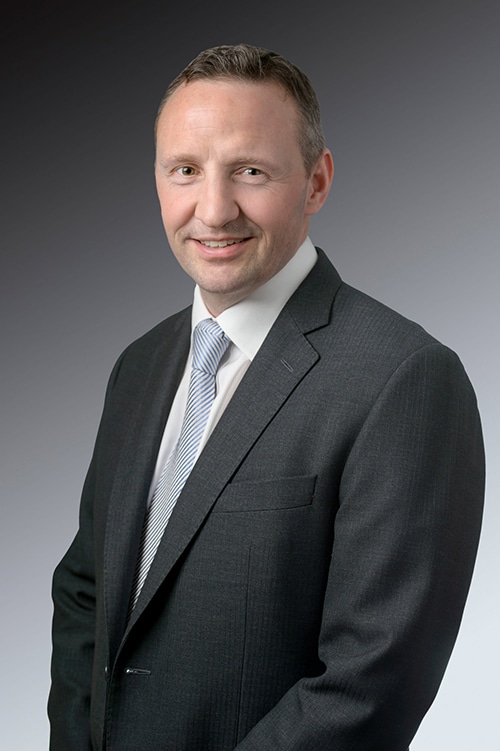
Dr Michael Kernohan is a Specialist Plastic & Reconstructive Surgeon with qualifications including MBBS, FRCS (Plast), MRCS and FRACS (Plas). He holds a senior consultant appointment at Liverpool Hospital and has trained and worked in both the United Kingdom and Australia.
From his clinic in Gregory Hills, he cares for patients from Gregory Hills, Campbelltown, Liverpool and the broader South West Sydney region. His practice includes a wide range of plastic and reconstructive procedures, including surgery after major weight loss.
Dr Kernohan places emphasis on clear communication, safety and realistic planning. He works with general practitioners, bariatric surgeons and other specialists to support patients with complex health backgrounds. During consultation he discusses the potential benefits and limitations of surgery, the location and extent of scars, the expected hospital stay, the recovery period and the possible risks and complications.
Patients are encouraged to consider not only the physical aspects of surgery, but also their overall health, work commitments, family responsibilities and support at home before choosing to proceed.

FAQs About Fleur De Lis Abdominoplasty Surgery
Arrange a Consultation
If you are considering Fleur De Lis abdominoplasty after major weight loss and would like individualised guidance, an in person consultation is the next step.
Dr Michael Kernohan, Specialist Plastic & Reconstructive Surgeon, welcomes patients from Gregory Hills, Campbelltown, Liverpool and the greater South West Sydney area. You can visit the clinic at Suite 17, Level 2, 13 Digitaria Drive, Gledwood Hills NSW 2557, call 1300 393 899 or email [email protected] to arrange a confidential consultation and discuss your options in detail.